Photo: Wikipedia
Political ClimatePolitical Climate in Buncombe County
Showing district-level results — no local-only data available.
Local Political AnalysisPolitical Analysis of Buncombe County
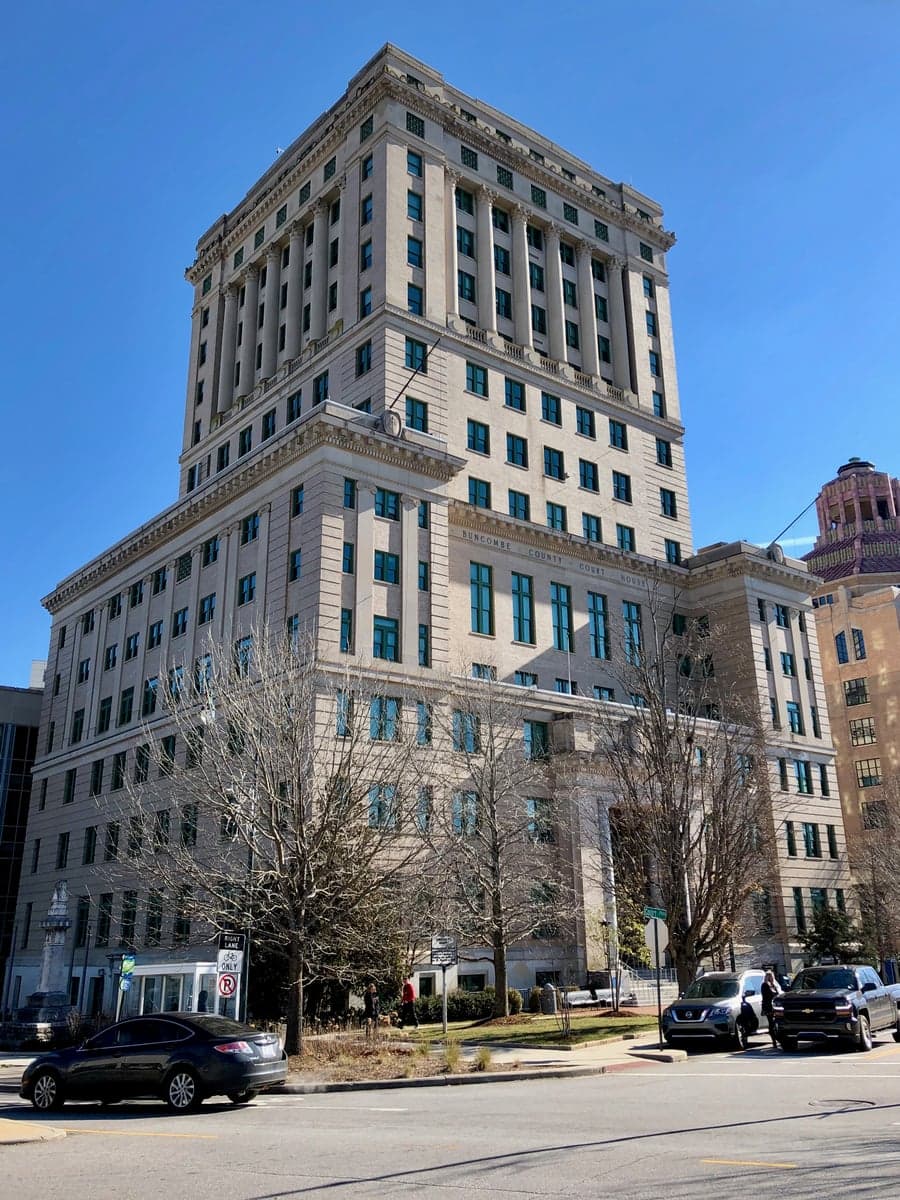
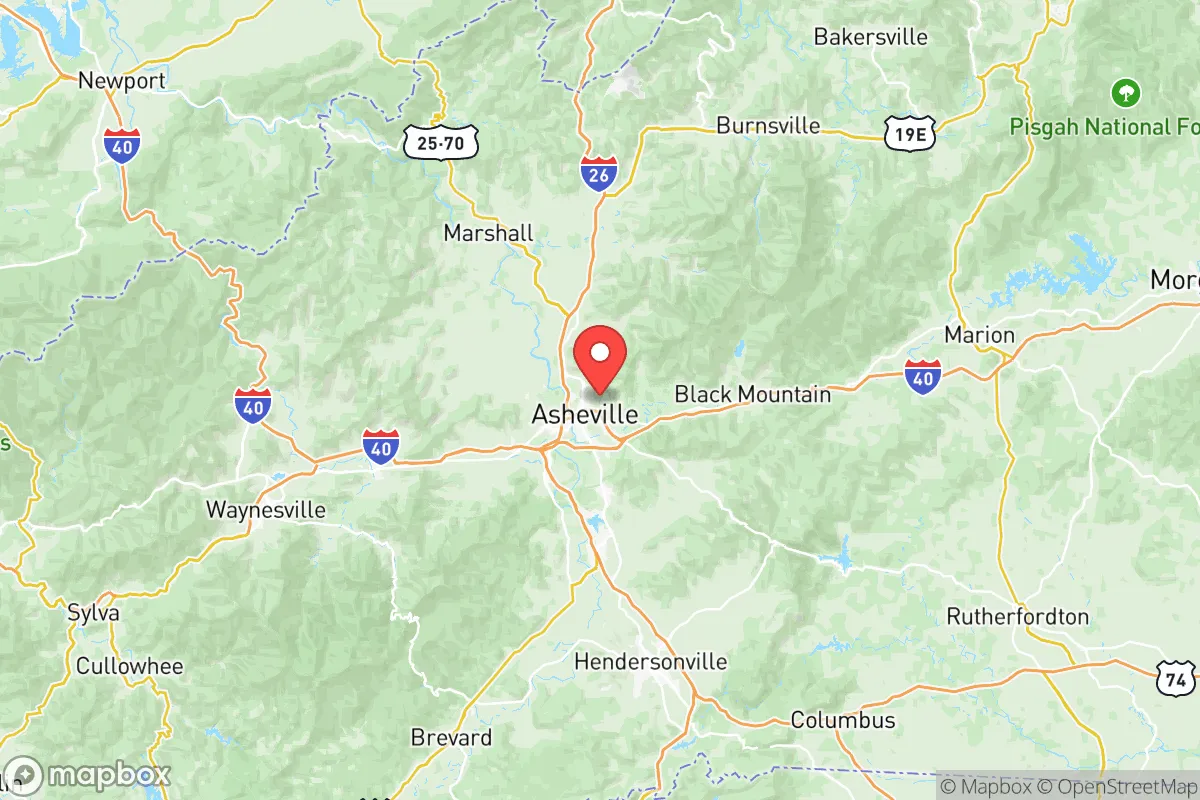
Buncombe County has become a classic urban-rural political battleground within a state that's itself evenly divided. The county's Cook Partisan Voting Index (PVI) of R+5 might suggest a solidly Republican area, but that number is misleading because it reflects the entire county's historical voting patterns, including its deep-red rural precincts. In reality, the county is split between the heavily Democratic city of Asheville and the surrounding conservative towns and unincorporated areas, creating a political landscape that has shifted dramatically over the past two decades. The county voted for Barack Obama in 2008, then flipped to Donald Trump in 2016 and 2020, before swinging back to support Joe Biden in 2024 by a narrow margin, illustrating just how competitive and volatile this area has become.
How it compares
When you compare Buncombe County to North Carolina as a whole, the contrast is stark. The state has a Cook PVI of R+1, meaning it leans slightly Republican overall, but Buncombe County's R+5 rating makes it appear more conservative than the state average. That's because the PVI calculation includes the entire county's population, including the rural precincts that vote heavily Republican. In practice, Asheville and its immediate suburbs vote reliably Democratic, while towns like Black Mountain, Swannanoa, and Weaverville lean Republican, and the far-flung rural areas around Leicester and Candler are deeply red. The swing precincts are in the suburban ring around Asheville, particularly in areas like the Haw Creek and Oakley neighborhoods, where voters have shifted between parties in recent elections. This internal division means Buncombe County is a microcosm of North Carolina's broader political split: urban centers voting blue, rural areas voting red, and the suburbs deciding the outcome.
What this means for residents
For conservative residents, the county's R+5 lean means they have a reliable base of support in local elections for county commission and school board, particularly in the rural precincts. However, they face an uphill battle in city-level elections in Asheville, where Democratic candidates consistently win. For liberal residents, the situation is reversed: they dominate Asheville city politics but struggle to win countywide races. This creates a dynamic where policy outcomes depend heavily on which level of government you're looking at. The county commission, which controls land use, zoning, and the budget for schools and roads, has been controlled by Republicans for most of the past decade, while the Asheville city council has been solidly Democratic. This split means that residents in different parts of the county experience very different levels of government responsiveness to their political priorities.
The cultural and policy distinctions between Asheville and the rest of Buncombe County are significant. Asheville has become known as a progressive enclave with a strong emphasis on environmental sustainability, affordable housing initiatives, and social justice programs, while the rural areas tend to prioritize property rights, lower taxes, and traditional values. This divide plays out in debates over short-term rental regulations, development density, and school funding. The county's political trajectory suggests this split will continue to deepen as Asheville attracts more out-of-state transplants, many of whom are younger and more liberal, while the rural areas remain stable or lose population. For anyone moving here, understanding this internal political geography is essential: your experience of local government will depend almost entirely on whether you live inside the Asheville city limits or in one of the surrounding towns or unincorporated areas.

State Political ClimatePolitical Climate in North Carolina
State Political AnalysisPolitical Environment in the State
North Carolina is a classic purple state that has been trending rightward in presidential elections, with a Cook PVI of R+1, but it remains one of the most competitive battlegrounds in the country. The state is defined by a coalition of rural and exurban conservatives, particularly in the Piedmont and coastal plain, pushing back against the rapid growth of the Research Triangle and Charlotte metros. Over the last 20 years, the state has gone from a reliably Republican stronghold in presidential races to a toss-up, with Trump winning it by just 1.3 points in 2024 after a 1.3-point loss in 2020, reflecting a deeply entrenched partisan stalemate.
Urban vs. rural divide
The political map of North Carolina is a textbook case of the urban-rural split. The major Democratic strongholds are the Research Triangle (Raleigh, Durham, Chapel Hill) and Mecklenburg County (Charlotte), which together account for roughly a third of the state's vote. These metros are powered by tech, biotech, and finance transplants, and they vote blue by 20-30 points. In contrast, the rural eastern counties like Robeson, Columbus, and Bladen, along with the western mountain counties like Mitchell and Yancey, vote Republican by similar margins. The real battlegrounds are the fast-growing suburban counties that have been shifting leftward: Wake County (Raleigh) is now solidly blue, while Mecklenburg is deep blue. The key swing counties are in the exurbs and smaller metros: Cabarrus County (Concord) and Union County (Waxhaw) are still red but tightening, while New Hanover County (Wilmington) and Buncombe County (Asheville) have become competitive or even lean Democratic. The state's political future hinges on whether the GOP can hold these suburban and exurban areas as they fill with out-of-state transplants.
Policy environment
North Carolina's policy environment is a mixed bag that reflects its purple status. The state has a flat income tax rate of 4.5%, which is scheduled to drop to 3.99% by 2027, making it one of the more tax-friendly states in the region. There is no state tax on Social Security benefits, and the standard deduction is generous, which appeals to retirees. The regulatory posture is generally business-friendly, with a right-to-work law and a relatively low minimum wage that tracks the federal floor of $7.25. On education, the state has a robust charter school sector and a growing school voucher program (the Opportunity Scholarship Program), which was expanded in 2023 to be universal, meaning any family can use public funds for private school tuition. Healthcare policy is a flashpoint: the state finally expanded Medicaid in 2023 under a bipartisan deal, adding 600,000 low-income adults to the rolls, but the state legislature has not expanded abortion access beyond the current 12-week ban. Election laws are moderately restrictive: voter ID is required (implemented in 2023 after a court battle), and early voting is generous with 17 days. The state has a Republican-controlled General Assembly that has been able to override Democratic Governor Roy Cooper's vetoes with a supermajority, though that supermajority was lost in the 2024 elections.
Recent policy direction
The last few years have seen a clear conservative shift on several fronts. In 2023, the legislature passed a 12-week abortion ban (Senate Bill 20), overriding Cooper's veto, which was a major win for the anti-abortion movement. On gun rights, the state enacted permitless concealed carry (House Bill 189) in 2023, allowing any legal gun owner to carry a concealed handgun without a permit, and also passed a law allowing guns on school grounds for concealed carry holders with a permit. Parental rights were strengthened with the Parents' Bill of Rights (House Bill 755), which requires schools to notify parents about curriculum changes and prohibits instruction on gender identity and sexuality in K-4 classrooms. On property rights, the state has been aggressive in limiting local zoning control, passing a law in 2024 that prohibits cities from banning accessory dwelling units and requires them to allow duplexes and triplexes in single-family zones, a move that libertarian-leaning conservatives and YIMBYs both supported. Voting access saw a tightening with the 2023 voter ID law, which was upheld by the state Supreme Court after the court flipped to a 5-2 Republican majority. On privacy and surveillance, the state has not passed any major police reform or data privacy laws, leaving it as a relatively permissive environment for law enforcement. Medical and bodily autonomy is limited by the abortion ban, but the state has not restricted gender-affirming care for adults, though it did ban such care for minors in 2023.
Civil unrest & political movements
North Carolina has a history of visible political activism on both sides. The Moral Monday protests of 2013-2014, led by the NAACP, were a major left-wing movement against the conservative policies of the McCrory administration, and they set the template for progressive activism in the state. More recently, the 2020 protests over the killing of George Floyd were large in Charlotte and Raleigh, but they were largely peaceful compared to other cities. On the right, the "We the People" movement and local Tea Party groups remain active, particularly in rural counties, and they have been vocal on election integrity issues. The 2020 election saw significant controversy in North Carolina, with the state's slow vote-counting and a close presidential race leading to unsubstantiated claims of fraud, but no major legal challenges succeeded. Immigration politics are less heated than in border states, but there is a sanctuary city debate: Durham and Orange County have declared themselves sanctuary jurisdictions, while the state legislature has passed laws banning sanctuary policies and requiring local law enforcement to cooperate with ICE. The state has a small but vocal secessionist movement in the western counties, with some activists pushing for a "State of Franklin" or joining West Virginia, but this remains fringe. A new resident would notice the ubiquity of political yard signs and bumper stickers, especially in the swing counties, and the intensity of local school board and county commission races.
Projection
Over the next 5-10 years, North Carolina is likely to remain a purple state with a slight rightward tilt, but the trajectory is uncertain. The key demographic driver is in-migration: the state is adding about 100,000 new residents per year, many from blue states like New York, California, and New Jersey. These newcomers tend to be more moderate or liberal, which is slowly shifting the suburbs and exurbs leftward. However, the state's rural and small-town population is also growing, and the GOP has been effective at turning out these voters. The 2024 election results suggest the state is still a toss-up, but the loss of the Republican supermajority in the legislature means that future conservative legislation will require Democratic buy-in or a governor's signature. The most likely scenario is a continuation of the current stalemate: a Republican-controlled legislature that can pass conservative bills but faces a Democratic governor (or a moderate Republican) who can veto them. This means that the policy environment will remain a patchwork: tax cuts and school choice will continue, but abortion and gun laws may be moderated slightly. For a new resident, the state will feel politically competitive and dynamic, with no single party dominating for long.
For someone moving to North Carolina, the bottom line is that you will live in a state where your vote genuinely matters, but where the political climate is polarized and the policy outcomes are a compromise between a conservative legislature and a moderate-to-liberal governor. If you are a conservative, you will find a tax-friendly, business-friendly environment with strong gun rights and school choice, but you will have to accept that the major cities are liberal and that the state is not a deep red stronghold. If you are a liberal, you will find welcoming urban enclaves and a competitive political landscape, but you will have to contend with a legislature that is often at odds with your values. The practical takeaway is that North Carolina offers a high quality of life for both sides, but you should expect to engage in the political process if you want to see your priorities reflected in state policy.
* Values derived from national, state, county, city and local statistics and may differ in a specific area. Last updated: 2026-06-17T17:12:44.000Z
Narrative content on this page is AI-generated and may contain mistakes. Verify any details that matter before acting on them.
ReloMaps may earn a commission from affiliate links at no extra cost to you.

