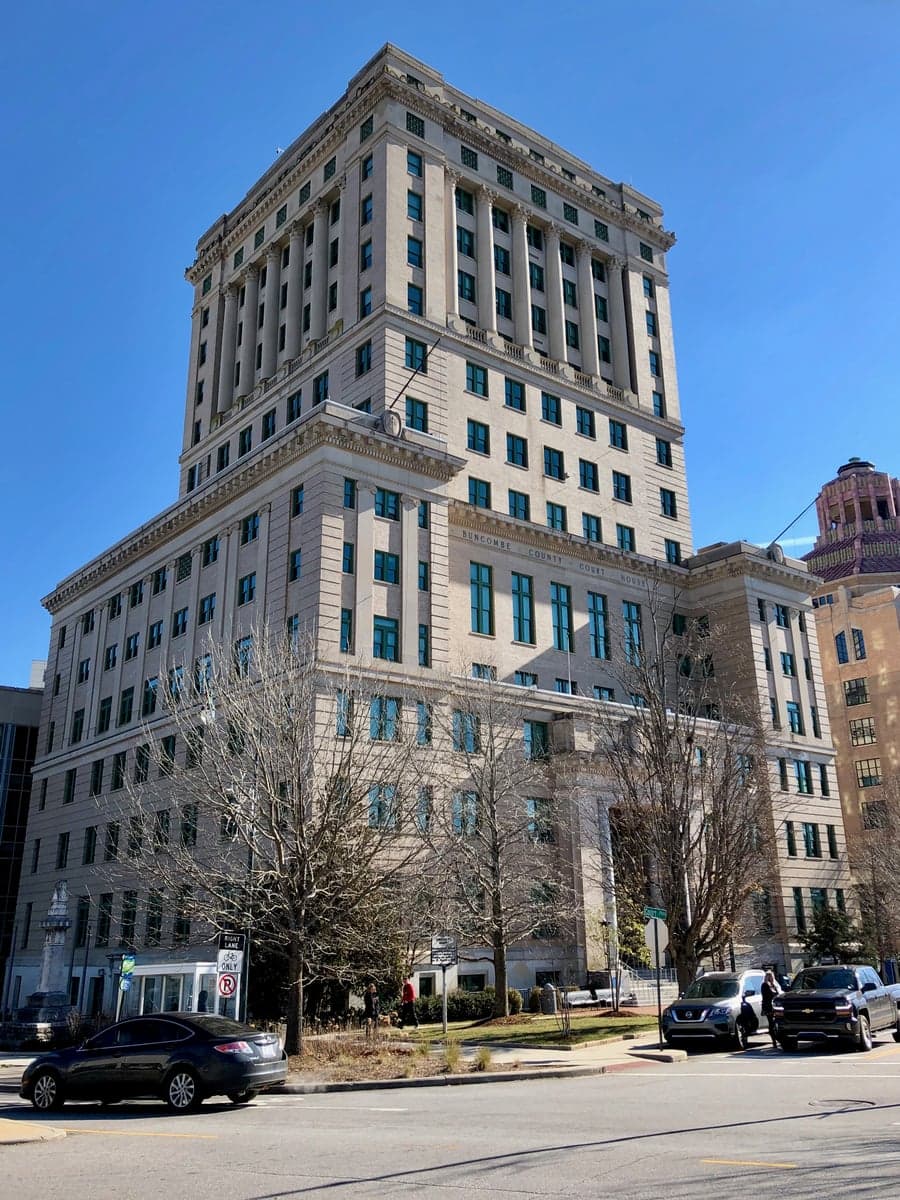
Photo: Wikipedia
Quality of Life in Buncombe County
A livable area that tracks near national norms for affordability, walkability, and neighborhood health.
What does Quality of Life tell us?
Quality of Life measures an area by evaluating factors like cost of living, nearby amenities, country club access, airport proximity, socioeconomic signals and neighborhood character. For large states, this is a general average — quality of life can vary dramatically between metro areas, suburbs, and rural communities within the same state.
What does this tell us?
Quality of Life measures an area by evaluating factors like cost of living, nearby amenities, country club access, airport proximity, socioeconomic signals and neighborhood character. For large states, this is a general average — quality of life can vary dramatically between metro areas, suburbs, and rural communities within the same state.
Cost of Living
17% above national average
69%
The Real Cost of Living in Buncombe County for 2026
| Tier | Individual | Family (4) |
|---|---|---|
| Survival | $20k | $38k |
| Comfortable | $70k | $103k |
| Luxury | $127k+ | $198k+ |
| Elite (Top 5%) | $164k+ | $254k+ |
Quality-of-Life Analysis
Buncombe County, anchored by the vibrant city of Asheville, offers a quality-of-life spectrum that ranges from dense, amenity-rich urban living to quiet, forested rural homesteads, drawing everyone from remote tech workers and artists to retirees and farming families. The county’s character shifts dramatically over its 660 square miles, with the Blue Ridge Parkway carving through the center and the French Broad River linking its communities. A cost of living index of 117 (100 = U.S. average) and a median home value of $360,000 place it above the national norm, but the trade-off is access to world-class outdoor recreation, a robust local food scene, and a temperate four-season climate.
Largest town(s) & population centers
Asheville is the undisputed hub, home to roughly 95,000 residents and the county’s economic engine. Daily life here revolves around a walkable downtown packed with independent breweries, farm-to-table restaurants, and music venues like the Orange Peel and the Grey Eagle. The city’s median rent of $1,281 reflects its desirability, though housing competition is fierce. Beyond downtown, neighborhoods like West Asheville offer a more laid-back, bungalow-lined vibe with vintage shops and taco joints, while North Asheville near the University of North Carolina Asheville attracts academics and families. The average commute of 20.8 minutes is remarkably short for a city of its cultural weight, allowing residents to live in town and still reach trailheads in Pisgah National Forest within 15 minutes. The city draws creatives, healthcare workers (Mission Hospital is the region’s largest employer), and retirees who want culture without a big-city pace.
Smaller towns & rural pockets
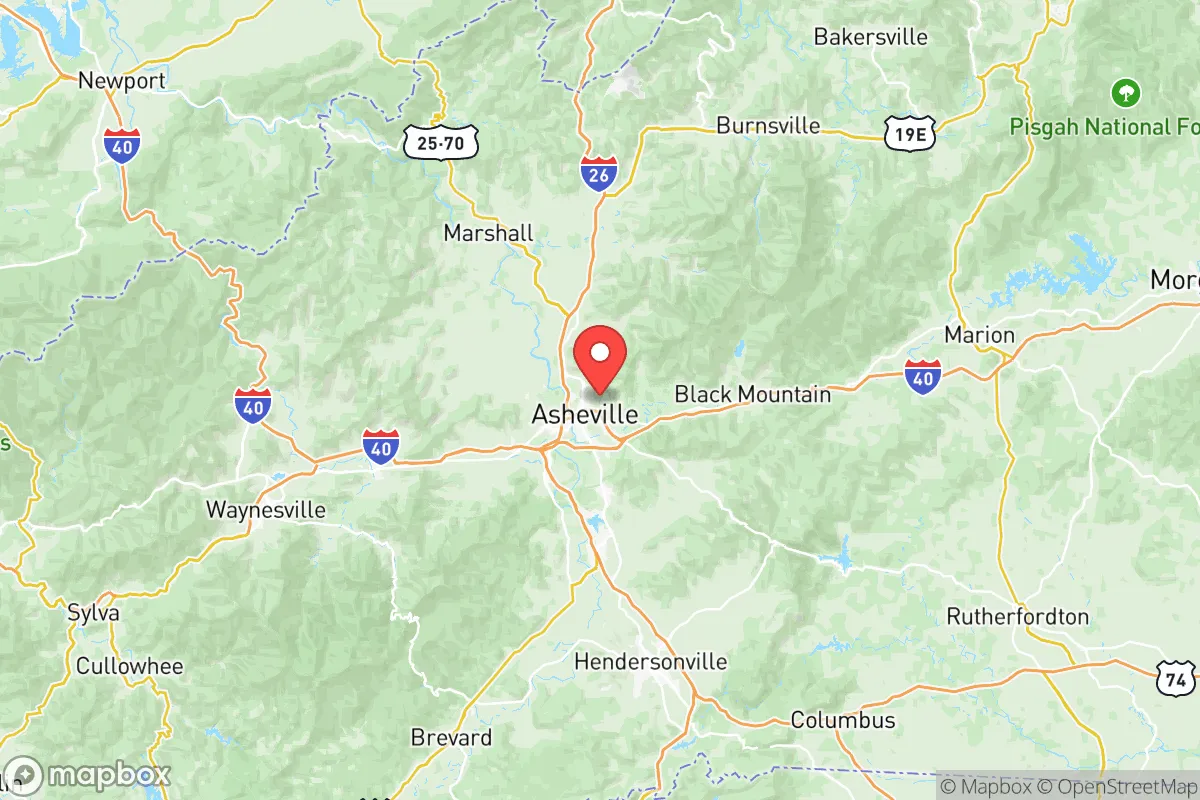
Outside Asheville, the county unfolds into distinct smaller communities. Black Mountain, 15 miles east, is a tight-knit town of about 8,000 with a historic downtown, the Lake Tomahawk park, and a strong arts-and-crafts tradition; it attracts families and second-home owners who want a quieter alternative to Asheville. Weaverville, just north of Asheville, retains a small-town main street with local hardware stores and diners, and offers more affordable housing than the city core. Fairview, southeast of Asheville, is largely unincorporated and rural, with horse farms, mountain views, and larger lots — popular with those who want acreage but still a 15-minute drive to downtown. Leicester, to the west, is a crossroads community with a mix of mobile homes, new subdivisions, and working farms, offering the lowest home prices in the county. Swannanoa, between Asheville and Black Mountain, is a former mill town seeing reinvestment, with a growing number of young families drawn by lower entry prices and proximity to Warren Wilson College.
Cost & lifestyle range
The cost spread across Buncombe County is significant. At the high end, Asheville’s downtown and historic neighborhoods (Montford, Grove Park) command median home values well above the county’s $360,000 average, often exceeding $600,000 for a renovated Craftsman. Rents in these areas push past $1,500 for a one-bedroom. At the moderate middle, Black Mountain and Weaverville offer median home values around $350,000–$400,000, with rents closer to $1,200, and residents trade some dining variety for quieter streets and better school ratios. On the affordable end, Leicester, Swannanoa, and parts of Fairview see home values in the $250,000–$320,000 range, and rents can dip below $1,000 for older units. Lifestyle follows the same gradient: downtown Asheville residents walk to galleries and breweries; Black Mountain families bike to Lake Tomahawk; Leicester homesteaders raise chickens and commute less than 25 minutes to city jobs. Property taxes remain relatively low (Burnett County’s rate is roughly 0.56% of assessed value), which helps offset the higher purchase prices for long-term owners.
Buncombe County best suits people who value outdoor access, local food, and a slower pace but still want urban amenities within a short drive. Remote workers, healthcare professionals, retirees, and artists all find their niche — whether that’s a downtown condo in Asheville, a farmhouse in Leicester, or a mountain cabin near Black Mountain. The trade-off is a competitive housing market and a cost of living that has risen sharply since 2020, but for those who can afford the entry, the county delivers a rare blend of cultural vitality and natural beauty.

Crime in Buncombe County
Crime rates similar to the national median for U.S. locations.
Violent CrimeViolent Crime Analysis
Property CrimeProperty Crime Analysis
Crime Analysis
Buncombe County, anchored by the city of Asheville, presents a mixed safety picture that requires careful examination. The county's overall crime rates are elevated compared to national benchmarks, with property crime posing a more significant concern than violent crime for most residents. While Asheville itself accounts for a disproportionate share of the county's crime, the surrounding towns of Black Mountain, Weaverville, and Woodfin offer notably different safety profiles, making neighborhood and municipal choice a critical factor for anyone considering a move to the area.
Crime in context
Buncombe County's violent crime rate stands at 310.5 incidents per 100,000 residents, which is slightly above the national average of roughly 380 per 100,000 but notably higher than the North Carolina state average of approximately 340 per 100,000. The property crime rate of 1,694.6 per 100,000 is a more pressing concern, as it exceeds both the national average (around 1,954) and the state average (approximately 1,850), though it remains below the rates seen in larger North Carolina metros like Charlotte or Durham. These figures are heavily influenced by Asheville, where the concentration of tourism, transient populations, and economic disparities drives crime upward. The Buncombe County District Attorney's office, operating under a progressive prosecutorial philosophy in recent years, has emphasized diversion programs and reduced incarceration for non-violent offenses. While intended to address systemic inequities, this approach has drawn criticism from law enforcement and residents who argue it has contributed to a revolving-door justice system that fails to deter repeat property offenders and, in some cases, violent criminals.
What residents experience
For those living in Asheville proper, particularly in downtown and the River Arts District, property crimes such as vehicle break-ins, bicycle theft, and package theft are a routine nuisance. Smash-and-grab incidents from cars parked at popular trailheads like the Blue Ridge Parkway access points are common. Violent crime, while less frequent, is concentrated in specific Asheville neighborhoods, including areas around Tunnel Road and parts of the Southside community. In contrast, residents of Black Mountain and Weaverville report significantly lower crime rates, with property crime in these towns running roughly 40-50% below the county average. Woodfin, a smaller town just north of Asheville, has seen a modest uptick in property crime in recent years but still maintains a violent crime rate well below the county figure. The disparity is stark: a family living in Black Mountain may go years without an incident, while a downtown Asheville resident might deal with multiple property crimes annually. The progressive policies of the Buncombe County District Attorney's office, which include declining to prosecute certain low-level thefts and drug possession cases, have been cited by local law enforcement as a factor in emboldening repeat offenders who cycle through the system with minimal consequences.
Neighborhood-level variation is pronounced across Buncombe County. The safest areas tend to be the smaller, more affluent towns and unincorporated communities such as Fairview and Swannanoa, where crime rates are a fraction of Asheville's. Conversely, the highest crime rates are found in central Asheville and along major commercial corridors. For prospective residents, the choice between living in Asheville's urban core versus one of its satellite towns is the single most important safety decision. Those who prioritize lower crime risk should strongly consider Black Mountain, Weaverville, or Fairview, while acknowledging that even in these areas, property crime is not zero. The county's overall safety trajectory will depend heavily on whether the current prosecutorial approach is maintained or adjusted in future elections.
* Values derived from national, state, county, city and local statistics and may differ in a specific area. Last updated: 2026-06-17T17:12:44.000Z
Narrative content on this page is AI-generated and may contain mistakes. Verify any details that matter before acting on them.
ReloMaps may earn a commission from affiliate links at no extra cost to you.

