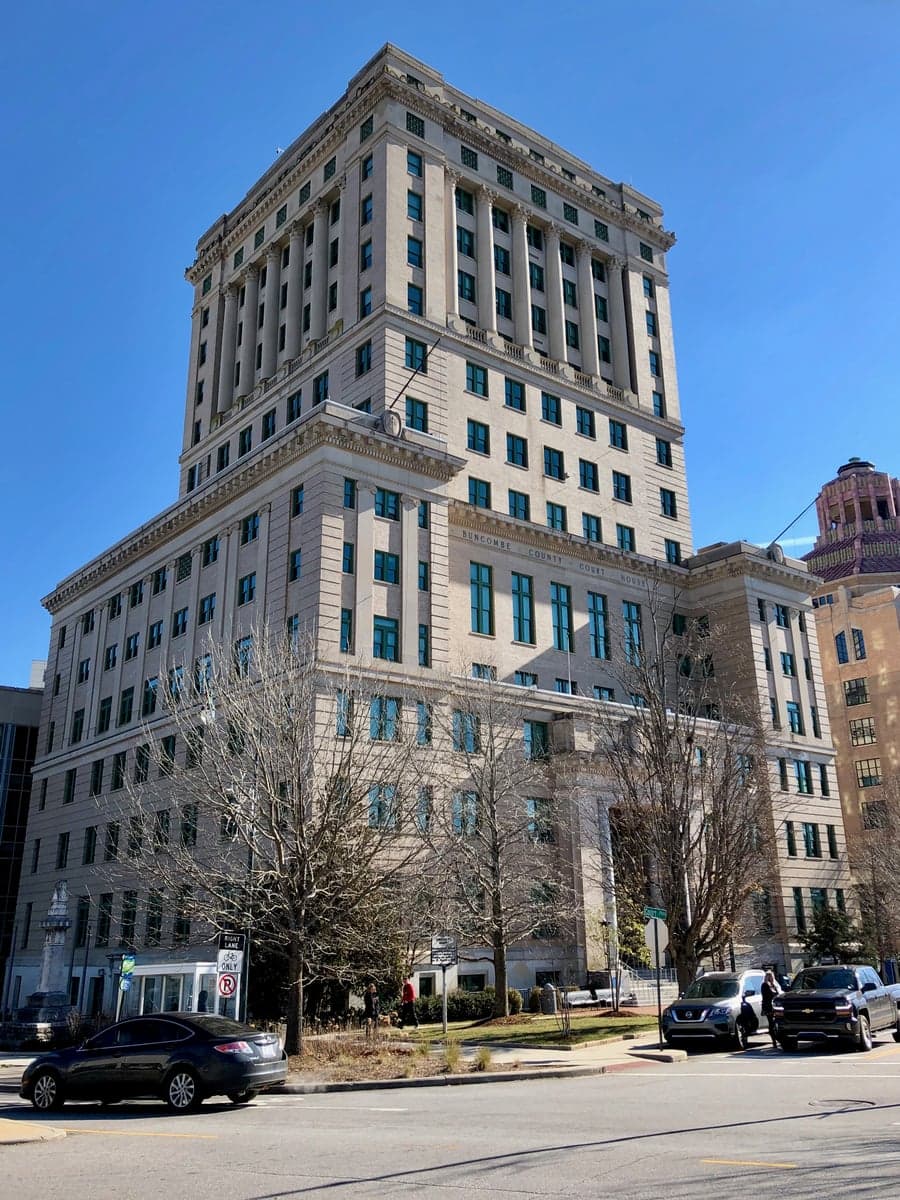
Photo: Wikipedia
Personal Sovereignty in Buncombe County
Viable for self-reliance. Generally workable, though some barriers may limit total independence.
What does Personal Sovereignty tell us?
Personal Sovereignty measures your capacity for self-reliance and independence with minimal government friction. Higher scores mean fewer barriers between you and the way you want to live... but it assumes you have the space you need and good neighbors.
What does this tell us?
Personal Sovereignty measures your capacity for self-reliance and independence with minimal government friction. Higher scores mean fewer barriers between you and the way you want to live... but it assumes you have the space you need and good neighbors.
State Policy
Energy independence: Importer (15% of energy produced in-state)
Personal Liberty
Homesteading

Personal Liberty Analysis
Buncombe County, anchored by Asheville, presents a complex personal sovereignty landscape where the rural-urban divide within the county creates dramatically different experiences of autonomy. While the City of Asheville leans heavily into progressive governance with higher taxes and more regulations, the unincorporated areas and smaller towns like Black Mountain, Weaverville, and Leicester offer a significantly lighter touch from local government, making the county a study in contrasts for those prioritizing personal freedom. For a relocation-minded individual or family, understanding these internal differences is critical, as your zip code can determine everything from your property tax rate to your ability to build a self-sufficient homestead.
Tax burden and regulatory posture across Buncombe County
The tax and regulatory environment in Buncombe County is bifurcated. The City of Asheville imposes a property tax rate of roughly 50 cents per $100 of assessed value (as of 2025-2026), plus the county's rate of approximately 61 cents, creating a combined burden near $1.11 for city residents. In contrast, property owners in unincorporated areas and towns like Woodfin or Swannanoa pay only the county rate, a significant savings. The county's regulatory posture is moderate by North Carolina standards, but Asheville's city government is notably more interventionist, with strict tree canopy ordinances, short-term rental caps, and a rigorous permitting process for new construction. For those seeking to minimize government interaction, the county's rural pockets—particularly areas near Fairview and Alexander—offer a more permissive environment where county-level zoning is minimal and building codes are enforced with a lighter touch. North Carolina's state-level tax climate is favorable, with a flat personal income tax rate of 4.5% (declining to 3.99% by 2027) and a state sales tax of 4.75%, plus a local option that brings the total to around 7% in Buncombe County. The state's right-to-work laws and lack of a state property tax further bolster the autonomy picture, but the county's recent trend toward more stringent environmental regulations on hillside development and watershed protection can frustrate landowners who want maximum flexibility with their property.
Self-defense and gun law specifics in Buncombe County
North Carolina is a shall-issue state for concealed carry permits, and Buncombe County's sheriff's office processes applications in a straightforward manner, typically within the 45-day statutory window. The county has a strong gun culture, particularly in the rural areas around Candler and Leicester, where firearm ownership is common and shooting ranges are accessible. Open carry of handguns is legal without a permit for anyone who can legally possess a firearm, though Asheville's city council has passed symbolic resolutions supporting stricter gun control—these have no legal force but signal a cultural divide. Stand-your-ground laws apply statewide, and there is no duty to retreat in any place where the individual is lawfully present. The county's gun-friendly posture is reinforced by the state's preemption law, which prohibits local governments from enacting ordinances that regulate the possession, ownership, or carrying of firearms. This means Asheville cannot impose its own gun bans or magazine capacity limits, preserving a uniform standard across the county. For those prioritizing self-defense rights, Buncombe County offers a solid legal foundation, though the cultural atmosphere in Asheville proper can feel less welcoming to open carriers than the surrounding rural communities.
Self-reliance and homesteading viability: lot sizes, zoning, and off-grid feasibility
Homesteading and off-grid living are viable in Buncombe County, but feasibility varies sharply by location. In the unincorporated areas, minimum lot sizes are typically 1-2 acres for a single-family home, though agricultural parcels can be larger. Areas like Leicester and the Sandy Mush community are known for their rural character and tolerance for alternative lifestyles, including small-scale farming, rainwater collection, and composting toilets. However, the county's health department requires permits for septic systems, and the mountain terrain can make perc testing challenging. Off-grid solar is legal and common, with net metering available through Duke Energy, but going fully off-grid (disconnecting from the grid entirely) is permitted as long as the property meets building code requirements for a primary residence. The county's zoning ordinance allows for accessory dwelling units, home-based businesses, and agricultural structures with relative ease in rural zones. In contrast, Asheville's city limits impose stricter rules: backyard chickens are limited to six hens (no roosters), beekeeping requires registration, and any structure over 200 square feet needs a permit. For serious homesteaders, the areas around Barnardsville and the Upper Hominy Valley offer the best combination of affordable land, lenient zoning, and community acceptance of self-sufficient living. The county's soil quality varies, with clay-heavy soils in many areas requiring raised beds or significant amendment for gardening, but the long growing season (roughly 180 days) supports a wide range of crops.
Personal liberties: parental rights, medical autonomy, speech, and property
North Carolina's legal framework provides strong protections for parental rights, including the right to direct a child's education, medical care, and religious upbringing. Homeschooling is well-established, with a simple notification process and no mandatory curriculum requirements beyond standardized testing every year. Buncombe County has a robust homeschooling community, with numerous co-ops and support groups operating freely. Medical autonomy is more constrained: North Carolina has not expanded Medicaid fully (as of 2026), and the state's certificate-of-need laws limit healthcare competition, though these are being gradually phased out. Vaccine mandates are not enforced at the state level for adults, and religious exemptions are available for schoolchildren. Property rights are protected by North Carolina's eminent domain laws, which require just compensation and a public purpose, though the state's mountain region has seen disputes over watershed protection regulations that limit development on steep slopes. Free speech is fully protected under the First Amendment, and Buncombe County has no local ordinances that restrict political speech or assembly beyond standard time-place-manner regulations. The county's political diversity—from libertarian-leaning rural residents to progressive urbanites—means that expressing unconventional views is generally tolerated, though the social climate in Asheville can be less hospitable to conservative perspectives than the surrounding areas.
Overall, Buncombe County offers a mixed sovereignty profile that ranks moderately high compared to other North Carolina counties, but well below the most libertarian-leaning rural counties in the western part of the state. The key variable is location: choosing Asheville city limits means accepting higher taxes and more regulations, while settling in the county's rural towns like Black Mountain, Weaverville, or Leicester provides a much lighter regulatory touch. For the relocation-minded individual or family who values personal freedom, the county's rural and small-town areas offer a solid foundation for self-reliance, with good gun laws, viable homesteading options, and strong property rights, all within a state that respects individual autonomy more than many of its Southern peers.

* Values derived from national, state, county, city and local statistics and may differ in a specific area. Last updated: 2026-06-17T17:12:44.000Z
Narrative content on this page is AI-generated and may contain mistakes. Verify any details that matter before acting on them.
ReloMaps may earn a commission from affiliate links at no extra cost to you.

