Photo: Wikipedia
Political ClimatePolitical Climate in Newton, NC
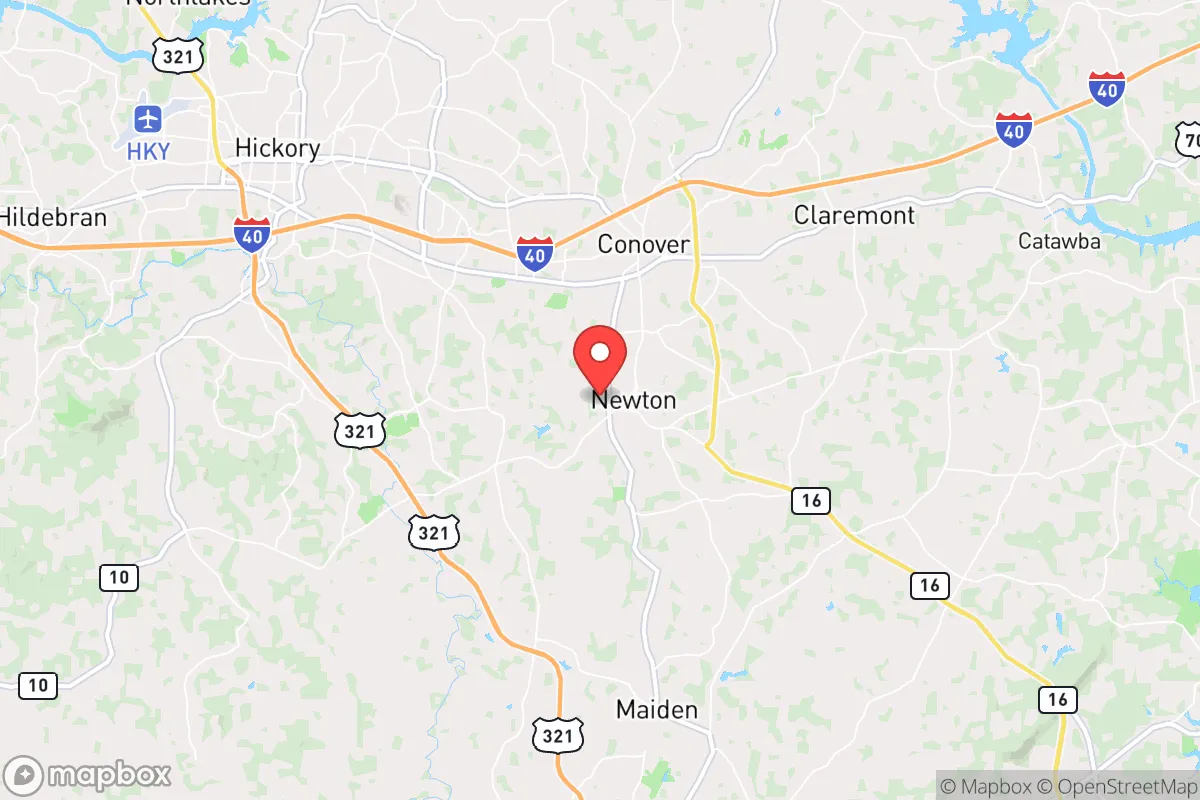
District shown is the primary district for this city’s centroid. Cities may span multiple districts.
Local Political AnalysisPolitical Analysis of Newton, NC
Newton sits solidly in the red, with a Cook PVI of R+9 that makes it one of the more reliably Republican towns in the western Piedmont. That’s a full eight points more conservative than the state as a whole, which sits at R+1. If you’ve been around here long enough, you’ve watched the shift happen gradually—Newton used to be a place where a Democrat could win a county commission seat without too much trouble, especially if they were a known local. Those days are mostly gone. The area has been trending right for the better part of two decades, and the 2024 election only reinforced that. You’ll see Trump signs in yards from the historic downtown out to the rural fringes, and local races tend to be decided in the Republican primary, not the general.
How it compares
Drive 20 minutes east to Hickory and you’ll find a similar political flavor, though Hickory’s larger population and more diverse economy give it a slightly more moderate edge in city council races. Head south toward Lincolnton or west toward Morganton, and the picture stays pretty consistent—R+8 to R+10 territory across the board. The real contrast comes if you go east toward Statesville or, further still, toward Charlotte. Mecklenburg County is a deep blue island in a red sea, and the cultural and political divide between Newton and Charlotte is stark. In Newton, the conversation at the coffee shop is about property taxes and school funding; in Charlotte, it’s about transit and development. The state legislature, which has been under Republican control for over a decade, draws districts that keep places like Newton firmly in conservative hands, so there’s not much pressure to moderate locally.
What this means for residents
For conservative residents, Newton is a comfortable place to live politically. Local government tends to lean toward low taxes, limited regulation, and a strong law-and-order stance. The Catawba County Commission and school board are reliably Republican, so if you’re aligned with that, you’ll feel represented. For liberal residents, it’s a different story. You’re not going to find a lot of visible progressive activism, and local elections can feel unwinnable. That said, Newton isn’t hostile—people are polite, and you can hold your own views without much friction, as long as you’re not trying to change the local political order. The real tension shows up in state-level issues: abortion access, gun laws, and education funding are all decided in Raleigh, and Newton’s representatives vote with the majority. If you’re on the left, you learn to pick your battles and focus on community work rather than electoral politics.
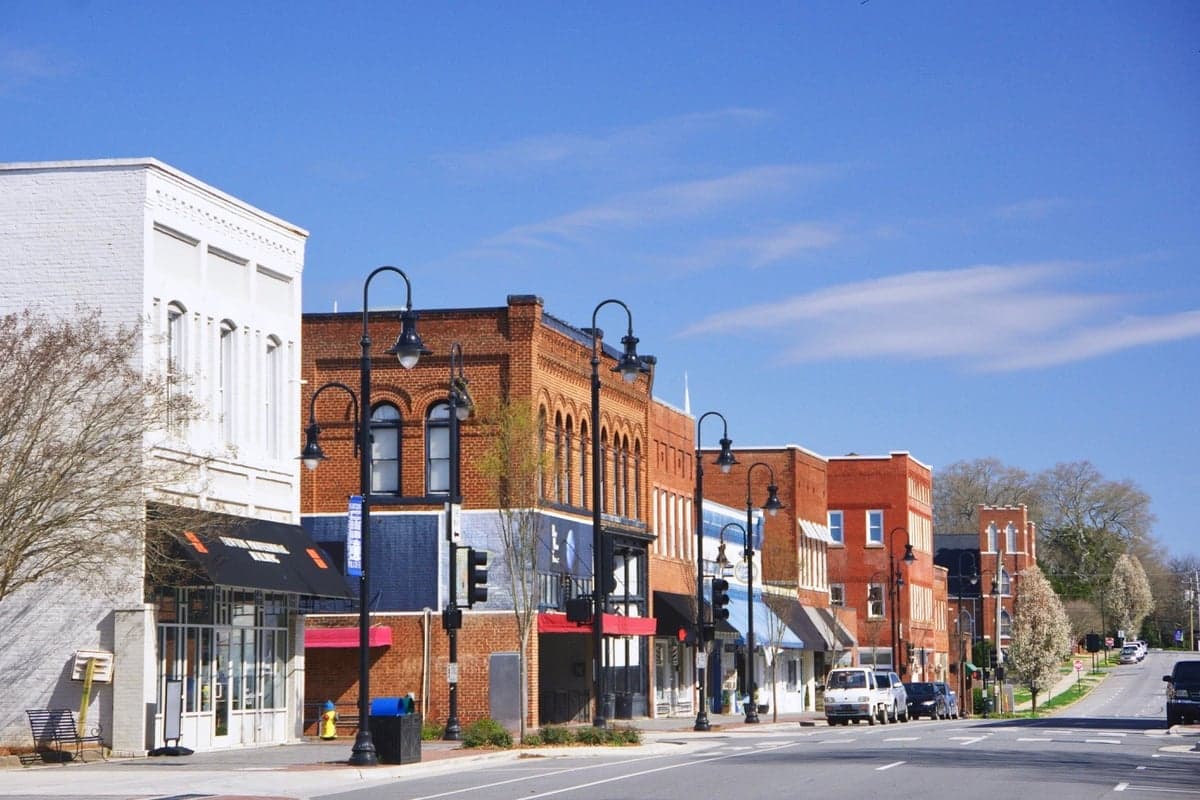
Culturally, Newton is a place where church involvement, hunting, and high school football are still central to social life. The city has a historic downtown that’s seen some reinvestment, but it’s not a hub for the kind of arts or counterculture scenes you’d find in Asheville or Durham. Policy-wise, the area is notable for its resistance to zoning reform and its emphasis on property rights—you can still keep livestock on a residential lot in parts of town, which tells you something about the local priorities. Looking ahead, Newton will likely stay R+9 or even drift a point or two further right as the rural-urban divide widens nationally. The biggest wildcard is growth: if Charlotte’s sprawl pushes more people into Catawba County, the political math could shift slightly, but that’s a decade away at best.

State Political ClimatePolitical Climate in North Carolina
State Political AnalysisPolitical Environment in the State
North Carolina is a classic swing state that has been slowly trending rightward over the past decade, with a Cook PVI of R+1 that masks a deeply competitive and polarized political landscape. The state’s dominant coalition is a mix of rural and suburban conservatives, particularly in the Piedmont and coastal plain, balanced against a growing, diverse urban vote in the Research Triangle and Charlotte. Over the last 20 years, the state has gone from a reliably Republican presidential pick (winning it for Bush in 2004) to a true battleground (Obama won it in 2008, Trump in 2016 and 2020, and it was a nail-biter in 2024). The real story is the suburban shift: once-solid GOP strongholds like Wake County (Raleigh) and Mecklenburg County (Charlotte) have become reliably blue, while exurban and rural counties have hardened their Republican margins.
Urban vs. rural divide
The political map of North Carolina is a textbook example of the urban-rural split. The three major metros—Charlotte, Raleigh-Durham (the Triangle), and Greensboro-Winston-Salem (the Triad)—drive the Democratic vote. Mecklenburg County (Charlotte) and Wake County (Raleigh) are now solidly blue, with Democrats winning them by double digits in recent cycles. The Triangle, anchored by the University of North Carolina at Chapel Hill, Duke University, and North Carolina State University, is a liberal stronghold fueled by tech, biotech, and academia. In contrast, the rural eastern part of the state—places like Robeson County, Pitt County (Greenville), and the coastal counties—has trended red, driven by conservative values and a shrinking population. The western mountains, including counties like Watauga (Boone) and Buncombe (Asheville), are a mix: Asheville is a liberal enclave, but the surrounding rural areas are deeply conservative. The real battlegrounds are the fast-growing exurbs like Union County (south of Charlotte) and Johnston County (east of Raleigh), which have shifted rightward as new residents from blue states move in but often bring conservative fiscal and social views.
Policy environment
North Carolina’s policy environment is a mix of conservative governance and pragmatic moderation. The state has a flat income tax rate of 4.5% (down from 7% in 2013), with a scheduled reduction to 3.99% by 2027, making it attractive for relocators looking to keep more of their paycheck. The corporate tax rate is also low at 2.5%, and there’s no state tax on Social Security benefits. Education policy is a flashpoint: the state has a robust school choice program, including charter schools and a voucher-like Opportunity Scholarship program that has expanded under Republican control. Healthcare is a mixed bag—North Carolina expanded Medicaid in 2023 under a bipartisan deal, covering hundreds of thousands of low-income adults, but the state still has a high uninsured rate compared to the Northeast. Election laws are moderately restrictive: voter ID is required (passed in 2018, implemented in 2023), early voting is generous (17 days), and same-day registration is available during early voting. The state’s legislative and congressional maps have been subject to frequent legal challenges over partisan gerrymandering, with courts occasionally stepping in to redraw them.
Recent policy direction
Over the last five years, North Carolina has moved decisively in a conservative direction on several fronts. In 2023, the Republican supermajority (since narrowed) passed a 12-week abortion ban, overriding the governor’s veto, which was a significant shift from the previous 20-week limit. Gun laws are permissive: the state is a “shall-issue” for concealed carry, has no permit requirement for open carry, and in 2023 passed a law allowing permitless concealed carry (effective 2024). On parental rights, the legislature passed the “Parents’ Bill of Rights” in 2023, requiring schools to notify parents about instructional materials involving sexuality and to get parental consent for changes to a child’s name or pronouns. Property rights are strong, with no state-level rent control and a relatively low property tax burden (average effective rate around 0.8%). On voting access, the state has tightened rules: the 2023 omnibus election law shortened the absentee ballot return window and banned private funding of election administration. Medical and bodily autonomy is limited by the abortion ban, but the state has not restricted gender-affirming care for adults, though a 2023 law bans it for minors. Privacy and surveillance are moderate—the state has no broad data privacy law, but it does have a biometric privacy law for private employers. Overall, the direction is toward more individual liberty on guns and taxes, but less on reproductive and transgender rights.
Civil unrest & political movements
North Carolina has a history of civil unrest, particularly around racial justice and police reform. The 2020 protests in Charlotte and Raleigh over George Floyd’s death were large but mostly peaceful, though there were some instances of property damage. The state has active movements on both sides: the left is organized around groups like the NC NAACP and the Poor People’s Campaign, while the right has strong grassroots through groups like the NC GOP and the John Locke Foundation. Immigration politics are relatively muted compared to border states, but there are sanctuary policy debates—Charlotte and Durham have “welcoming city” policies that limit cooperation with ICE, while the state legislature has passed laws banning sanctuary jurisdictions. Election integrity has been a major flashpoint since 2020, with the state’s 9th congressional district race in 2018 (involving absentee ballot fraud) leading to a new election and ongoing distrust. The “Moral Monday” protests at the state legislature, starting in 2013, were a recurring feature of the political landscape, with thousands arrested over issues like voting rights and Medicaid expansion. A new resident would notice the political polarization in yard signs, bumper stickers, and local news coverage, but the state is generally civil in daily life.
Projection
Over the next 5-10 years, North Carolina is likely to remain a competitive swing state, but the trend lines favor a slight rightward shift. In-migration is a key factor: the state is gaining about 100,000 new residents per year, many from blue states like New York and California, but these newcomers are often fiscally conservative and socially moderate, not hard-left. The urban cores (Charlotte, Raleigh, Durham) will continue to get bluer, but the exurbs and rural areas are growing faster and getting redder. The 2024 election results showed that Trump improved his margins in rural counties while losing ground in the suburbs, a pattern that could persist. The state’s legislative maps are likely to remain under Republican control, meaning conservative policies on taxes, guns, and education will continue. However, the abortion issue could be a wild card—if Democrats can turn out suburban women, the state could flip in presidential elections. A relocator moving in now should expect a state that is politically divided but functionally conservative on most policy issues, with a growing economy and a low-tax environment that attracts both businesses and retirees.
For a new resident, the bottom line is that North Carolina offers a low-tax, business-friendly environment with a strong job market, but you’ll need to navigate a polarized political landscape. If you’re conservative, you’ll find a welcoming policy environment on guns, taxes, and school choice. If you’re liberal, you’ll have vibrant urban communities and a growing political base, but you’ll face headwinds on abortion and voting access. The state is a true battleground, so your vote will matter more here than in most places. Just be prepared for the occasional heated debate at a barbecue joint in Greensboro or a coffee shop in Asheville.
* Values derived from national, state, county, city and local statistics and may differ in a specific area. Last updated: 2026-09-28T20:36:42.000Z
Narrative content on this page is AI-generated and may contain mistakes. Verify any details that matter before acting on them.
ReloMaps may earn a commission from affiliate links at no extra cost to you.

