Photo: Wikipedia
Strategic Assessment of Newton, NC
Meaningful friction. Expect exposure to either population pressure, blast zones, or natural disaster risk. Consider buying a retreat property.
What does the Strategic Assessment tell us?
Our Strategic Assessment grades tactical survivability of an area. Major population centers, military targets, fallout zones, natural disasters, and border exposure all drive risk — lower exposure means a more defensible position in a crisis.
This is heavily inspired by Joel Skousen's Strategic Relocation book. Highly recommended you checkout the book ($)What does this tell us?
Our Strategic Assessment grades tactical survivability of an area. Major population centers, military targets, fallout zones, natural disasters, and border exposure all drive risk — lower exposure means a more defensible position in a crisis.
This is heavily inspired by Joel Skousen's Strategic Relocation book. Highly recommended you checkout the book ($)Strategic Pillars

Key Distances
Regional Safe Places
Below is our recommended "safe zones" in North Carolina and the surrounding area based on our strategic heuristics. For most people, it's unrealistic to live in a “safe zone” full-time due to work, family or other personal reasons. They tend to be more rural. However, many of these areas are perfect for second homes and retreat properties that double as a vacation home or even a short-term rental.

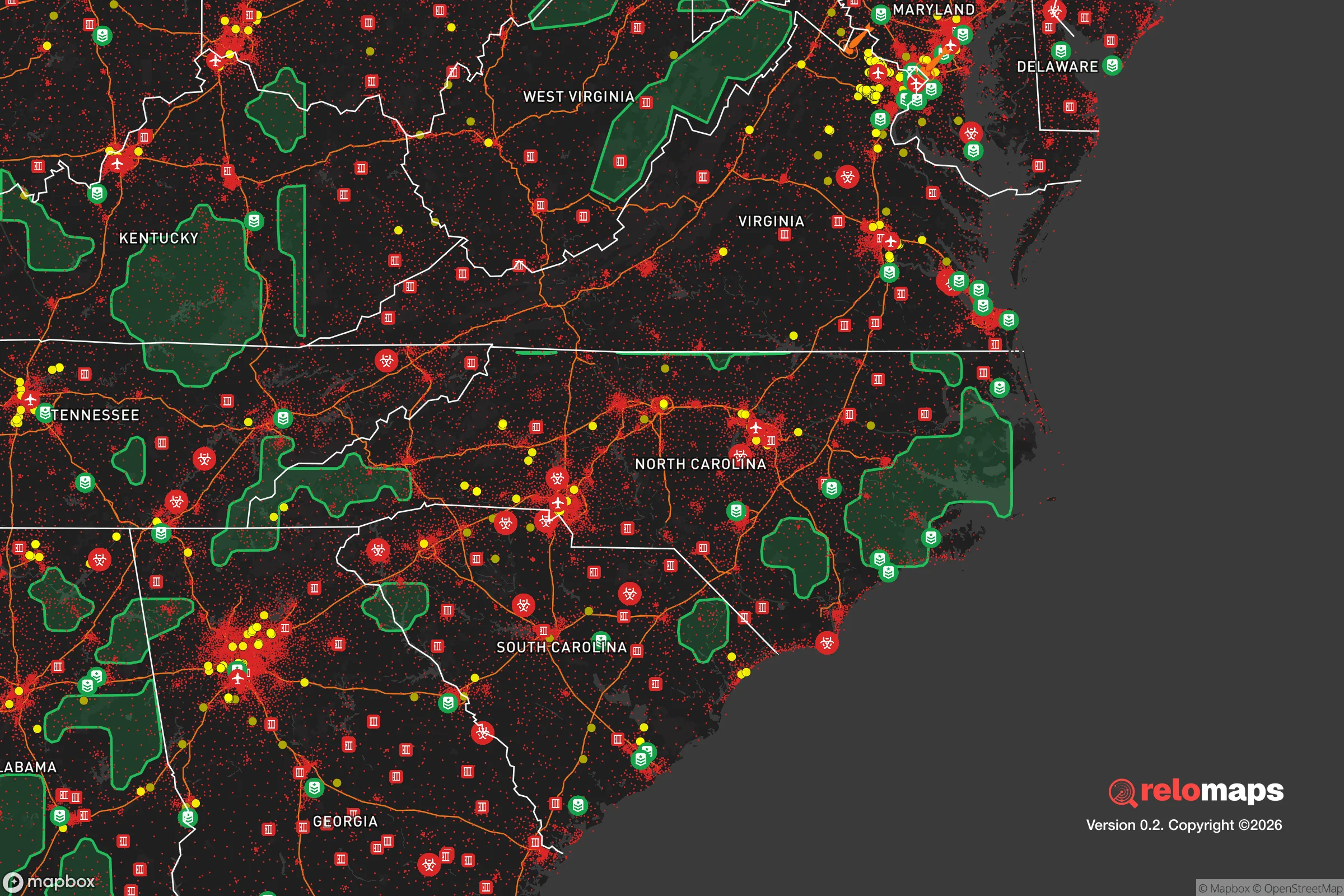


Important Note: For informational purposes only. This does not mean nothing bad ever happens in the green zones. Please use common sense. This is based on public data and modeled with AI. We tried to take a conservative approach but mistakes happen. We update this regularly as new information becomes available.
Solar Generator Recommendations
Backup power matters more here than in safer locations. We've picked three solar generators across budgets and capacity tiers — start with the budget unit if you only need a few essentials, or step up if you want to run a fridge and HVAC for days at a time.

Jackery Portable Power Station Explorer 300
Budget OptionPower on the Go: Weighing only 11 lbs, it's convenient to set up and store with book-sized foldable solar panels

BLUETTI Portable Power Station AC180
Designed for both indoor and outdoor scenarios, AC180 is highly capable as it has a robost capacity and continuous output power.

EF ECOFLOW DELTA Pro Ultra Power Station
Upgraded PickEcoFlow DELTA Pro Ultra is a whole-home energy system designed to grow with your family. Integrated with the Smart Home Panel 2, it scales to meet your evolving energy needs — keeping your home powered, intelligent, and secure through every stage of life.
We earn a commission, at no additional cost to you.
Strategic Assessment Analysis
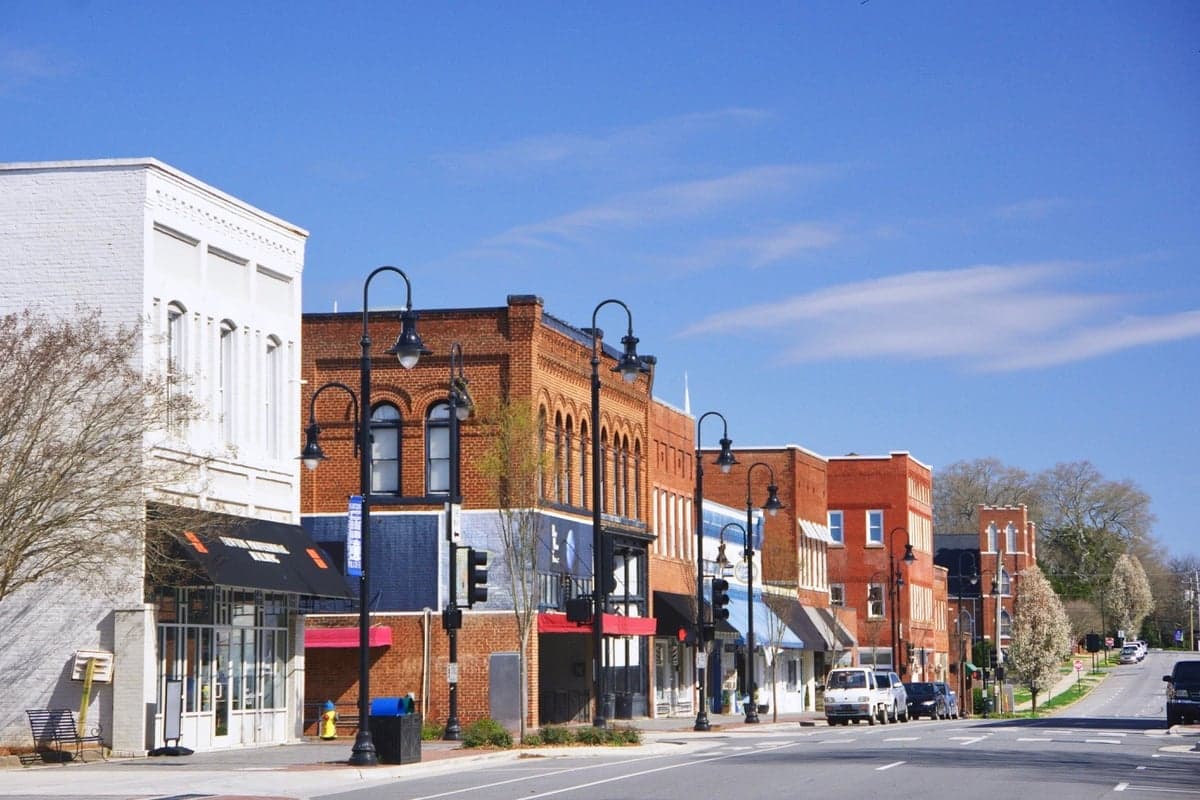
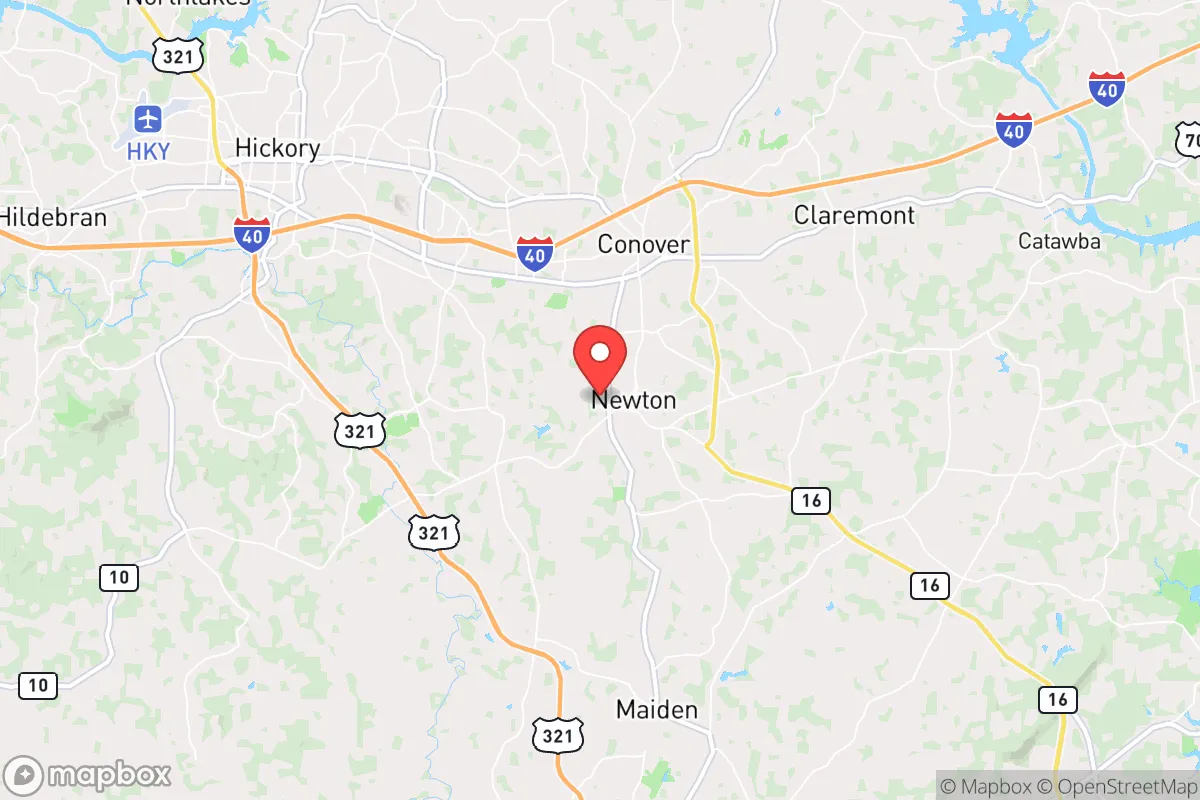
Newton, North Carolina, offers a strategic balance of rural self-sufficiency and practical proximity to regional infrastructure, making it a defensible base for those prioritizing disaster readiness. Located in Catawba County, roughly 45 minutes northwest of Charlotte and 30 minutes east of the Blue Ridge Mountains, the town sits outside the immediate blast and fallout zones of major metropolitan targets while remaining close enough for supply runs or medical access. Its position in the Piedmont region, away from the coast's hurricane landfall zones and the mountains' landslide-prone terrain, provides a middle-ground resilience that appeals to relocators seeking a stable, long-term homestead.
Geographic position and natural advantages for long-term stability
Newton's inland Piedmont location is a key asset for disaster resilience. The area is far enough from the Atlantic coast to avoid the worst of hurricane storm surge and the most destructive wind fields—Hurricane Hugo in 1989 remains the benchmark, and even then, Catawba County saw mostly tree damage and power outages rather than structural devastation. The region's rolling hills and clay-based soils drain well, reducing flood risk compared to low-lying river towns, though low-lying areas near the Catawba River and Lake Norman should still be evaluated on a property-by-property basis. The local climate supports a long growing season (roughly 200 frost-free days), which is a practical advantage for anyone serious about food self-sufficiency. The area's underlying geology—primarily granite and metamorphic rock—also means groundwater is generally accessible via wells, and the terrain offers natural defensibility through elevation changes and wooded cover without being so rugged that it impedes travel or construction.
Risks, exposures, and proximity to fallout-relevant landmarks
The primary risk for Newton relocators is its proximity to Charlotte, a major financial hub and transportation node that would be a high-priority target in a national security crisis. Newton sits roughly 40 miles from Charlotte's urban core, which places it within the outer bands of potential fallout patterns depending on wind direction and yield. The McGuire Nuclear Station, located about 20 miles southeast on Lake Norman, is another consideration—while modern containment structures are robust, any incident there would place Newton within a plausible evacuation or contamination zone. On the natural disaster side, the area faces occasional tornadoes (Catawba County averages 2-3 per year, typically EF0-EF2), ice storms that can knock out power for days, and the rare but real risk of earthquakes from the Eastern Tennessee Seismic Zone, though these are typically low-magnitude. Flooding is localized and generally tied to creek overflows after heavy rain, not widespread inundation. The broader region's industrial infrastructure—including chemical plants and rail lines along the I-40 corridor—adds a secondary risk of hazardous material spills, though this is more of a localized concern than a strategic one.
Practical resilience for a relocator: food, water, energy, and defensibility
For someone looking to build a resilient homestead, Newton's practical assets are solid but require active preparation. The area is surrounded by active farmland—Catawba County ranks among North Carolina's top producers of poultry, cattle, and hay—which means local food sources are available through farmers' markets, CSAs, and direct relationships with growers. Soil quality varies, with clay-heavy earth that benefits from raised beds or amending, but the growing season is reliable enough for staple crops like corn, beans, squash, and leafy greens. Water access is a strong point: the Catawba River and Lake Norman provide surface water, and many rural properties have viable well water, though new well drilling can cost $5,000–$15,000 depending on depth. Municipal water in Newton itself is treated and reliable, but a relocator should plan for a backup well or rainwater catchment system for true self-sufficiency. Energy resilience is more of a mixed picture. Duke Energy provides grid power, and outages during storms are common enough that many locals already own generators. Solar potential is moderate—the region gets about 210 sunny days per year, slightly below the national average—but a grid-tied solar system with battery backup is feasible and increasingly common in the area. Wood heating is a practical option given the surrounding forests, and many older homes still have functional fireplaces or wood stoves. Defensibility is decent: Newton's layout is a traditional small town with a compact downtown and spread-out rural subdivisions, meaning a relocator can choose a property with good sightlines, limited road access, and natural barriers like creeks or wooded ridges. The local law enforcement presence is adequate for a town of roughly 13,000, but response times in outlying areas can stretch to 15–20 minutes, so personal security planning is advisable. The broader community culture leans toward self-reliance and mutual aid, which is a soft but real resilience asset—neighbors in Catawba County tend to know each other and share resources during emergencies.
Overall, Newton presents a pragmatic option for the disaster-conscious relocator who wants to be close enough to urban resources for supply runs and medical care but far enough to avoid the worst of a metropolitan collapse scenario. Its inland position, working farmland, and accessible water make it a viable base for long-term self-sufficiency, provided the relocator invests in backup power, well water, and food storage. The proximity to Charlotte and the McGuire Nuclear Station are real but manageable risks—anyone serious about resilience should map fallout patterns, identify evacuation routes, and build a network of local contacts before committing. For the reader who values a quiet, defensible location with a strong agricultural backbone and a community that still remembers how to can vegetables and split firewood, Newton is worth a hard look.

* Values derived from national, state, county, city and local statistics and may differ in a specific area. Last updated: 2026-09-28T20:36:42.000Z
Narrative content on this page is AI-generated and may contain mistakes. Verify any details that matter before acting on them.
ReloMaps may earn a commission from affiliate links at no extra cost to you.

