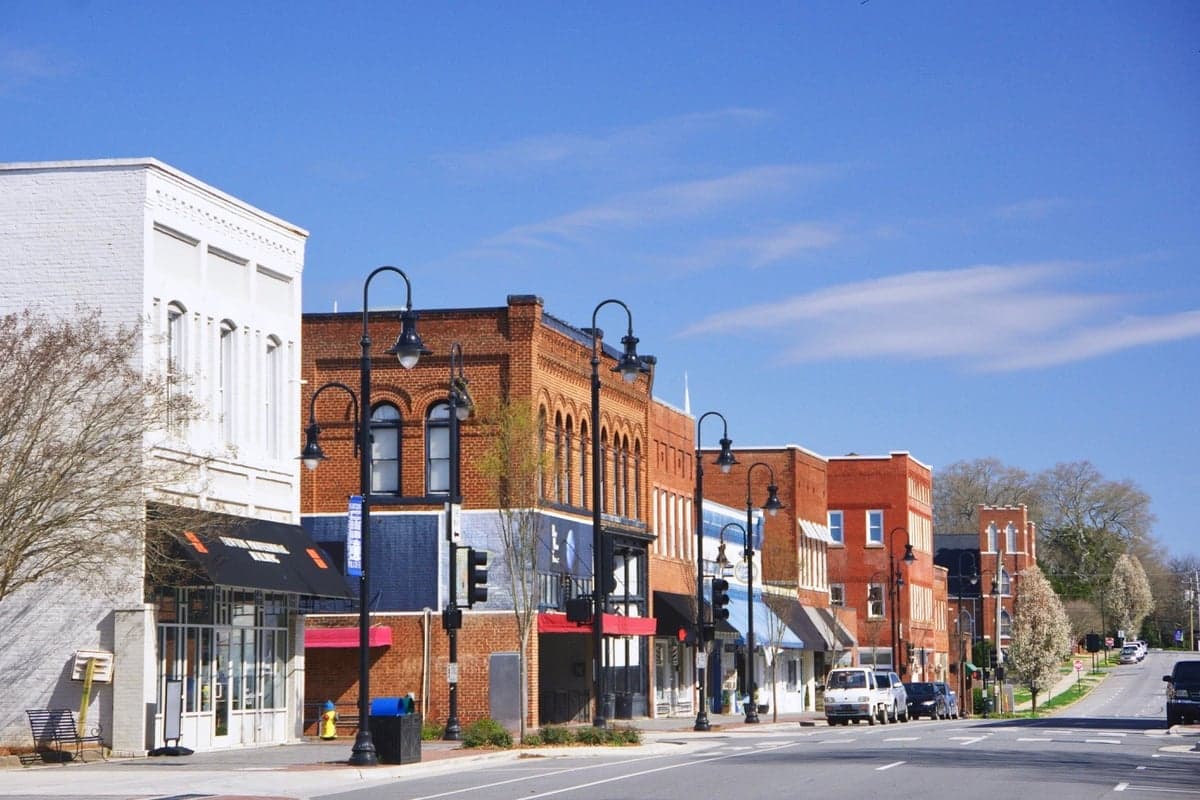
Photo: Wikipedia
Personal Sovereignty in Newton, NC
Viable for self-reliance. Generally workable, though some barriers may limit total independence.
What does Personal Sovereignty tell us?
Personal Sovereignty measures your capacity for self-reliance and independence with minimal government friction. Higher scores mean fewer barriers between you and the way you want to live... but it assumes you have the space you need and good neighbors.
What does this tell us?
Personal Sovereignty measures your capacity for self-reliance and independence with minimal government friction. Higher scores mean fewer barriers between you and the way you want to live... but it assumes you have the space you need and good neighbors.
State Policy
Energy independence: Importer (15% of energy produced in-state)
Personal Liberty
Homesteading

Personal Liberty Analysis
Newton, North Carolina, offers a personal sovereignty environment that is shaped more by state-level protections than by local municipal policy, creating a baseline of autonomy that appeals to those prioritizing individual decision-making. As the seat of Catawba County, Newton sits within a state that has consistently moved toward preempting local control on issues ranging from firearms to pandemic mandates, meaning residents experience a relatively uniform set of freedoms regardless of which county they choose. For a relocation researcher evaluating personal liberty, Newton presents a mixed picture: strong constitutional protections at the state level, a moderate-to-low tax burden compared to national averages, and a regulatory posture that generally favors property rights and self-reliance, though with some local zoning constraints that warrant attention.
Tax burden and regulatory posture in Catawba County
North Carolina’s tax structure is among the more favorable for personal sovereignty in the Southeast, and Newton residents benefit directly from this. The state levies a flat income tax of 4.5% (as of 2025, with scheduled reductions toward 3.99% by 2027), and there is no state-level tax on Social Security benefits. Catawba County’s property tax rate is approximately 0.58 per $100 of assessed value, which is below the state median and translates to roughly $1,160 annually on a $200,000 home — a figure that leaves more capital in the hands of homeowners for self-directed investments. Sales tax in Newton is 7%, composed of the state’s 4.75% rate plus local add-ons, which is moderate but not punitive. The regulatory environment at the county level is described by local business owners as “light-touch” for most commercial activities, with no county-level business privilege tax and a straightforward permitting process for home-based enterprises. However, Newton’s municipal zoning code does impose restrictions on things like front-yard fencing height (max 4 feet) and accessory structure placement, which can feel intrusive to those accustomed to rural county jurisdiction. The key takeaway: the state’s preemption laws limit local overreach, but Newton’s city ordinances are more hands-on than the surrounding unincorporated areas of Catawba County.
Self-defense and gun law specifics in Newton and North Carolina
North Carolina is a “shall-issue” state for concealed carry permits, meaning that if a resident meets objective criteria (age 21, no disqualifying criminal record, completion of a firearms safety course), the sheriff’s office must issue the permit — no subjective “good cause” requirement exists. Newton residents can carry a concealed handgun in their vehicle without a permit under state law, and open carry is legal without a license for anyone who can legally possess a firearm. The state’s Stand Your Ground law, codified in N.C. Gen. Stat. § 14-51.3, removes any duty to retreat before using deadly force in any place where the person is lawfully present, which includes one’s home, vehicle, or workplace. This is a significant sovereignty protection for those who prioritize self-defense autonomy. One practical note: Newton’s city parks and government buildings are posted with “no weapons” signs, but these carry the force of law only if proper signage and notification are provided — and even then, the penalty is typically a misdemeanor rather than a felony. For those considering relocation, the key distinction is that North Carolina’s preemption statute (N.C. Gen. Stat. § 14-409.40) prohibits local governments from passing ordinances that regulate the possession, ownership, or carrying of firearms, meaning Newton cannot create its own gun bans or magazine capacity limits. This preemption is a strong bulwark against local sovereignty erosion on the Second Amendment front.
Self-reliance and homesteading viability: lot sizes, zoning, and off-grid feasibility
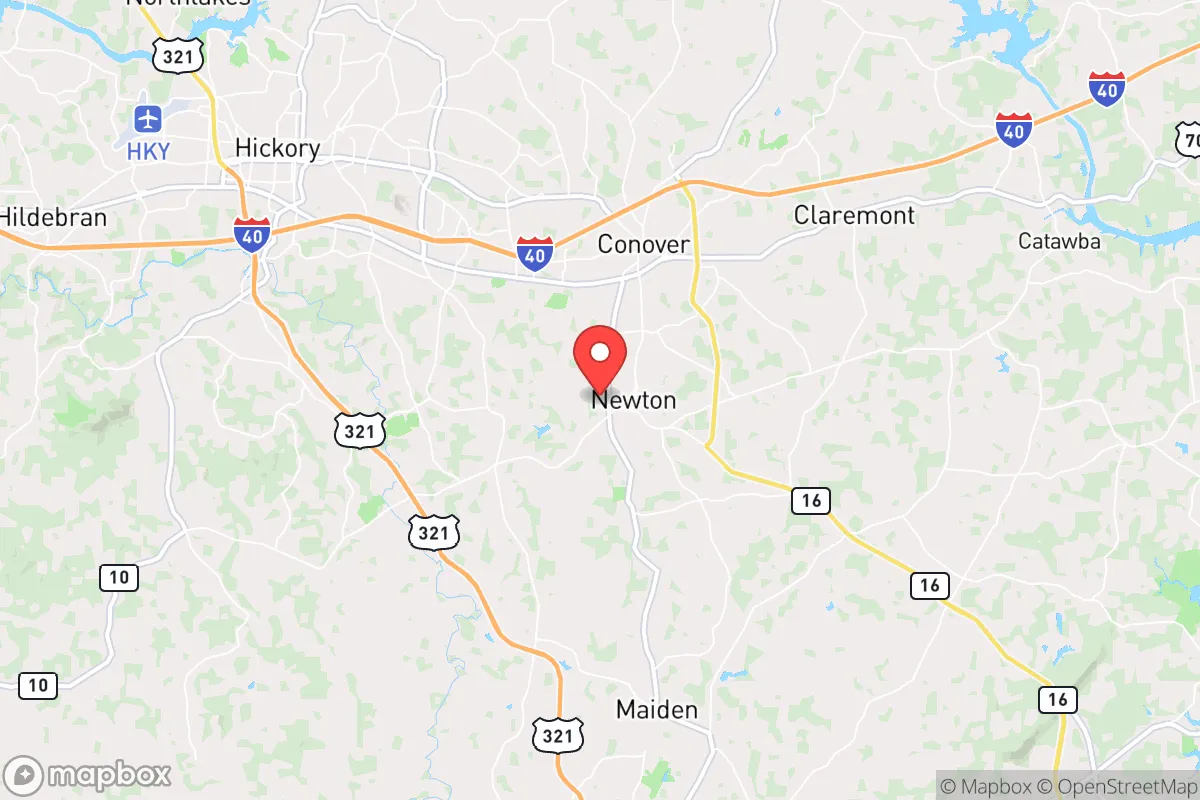
For the reader interested in homesteading, off-grid living, or significant self-reliance, Newton’s viability depends heavily on whether you choose city limits or the surrounding Catawba County jurisdiction. Inside Newton, minimum lot sizes in residential zones are typically 0.25 to 0.5 acres, which is sufficient for a substantial garden and small livestock (chickens are allowed with a permit, but no roosters within city limits). However, the city’s zoning code explicitly prohibits “agricultural uses” in residential districts, which means no goats, pigs, or horses, and no commercial sale of produce from a home garden. For those seeking true homesteading autonomy — think rainwater collection, solar panels, composting toilets — Newton’s building code requires connection to municipal water and sewer where available, and the city’s inspection department enforces the state’s residential building code, which can complicate off-grid systems. The better bet for self-reliance is the unincorporated areas of Catawba County, particularly along Highway 10 toward Claremont or south toward Maiden, where lot sizes of 1-5 acres are common and there is no county-level zoning for agricultural uses. In those areas, residents can install solar arrays without special permits (provided they meet electrical code), collect rainwater (legal in North Carolina with no state-level restrictions), and keep livestock without municipal interference. The county does enforce septic system regulations and well water testing, which are reasonable public health measures rather than sovereignty infringements. For the serious homesteader, the recommendation is to look outside Newton’s city limits but within a 10-minute drive of its amenities.
Personal liberties: parental rights, medical autonomy, speech, and property
North Carolina has been a battleground for several personal liberty issues, and the current legal landscape in Newton reflects the state’s conservative tilt. On parental rights, the state’s “Parents’ Bill of Rights” (enacted in 2023) requires school districts to notify parents of any changes in a student’s health or well-being and prohibits instruction on gender identity and sexual orientation in grades K-4 — a policy that aligns with the values of many conservative families. Catawba County Schools, which serves Newton, has implemented these policies without local modification, meaning parents have a statutory right to opt their children out of any curriculum they find objectionable. On medical autonomy, North Carolina does not have a state-level vaccine mandate for adults, and COVID-era executive orders that required masking in schools have expired. The state does not have a “right to try” law for terminally ill patients (that is federal), but it does allow direct primary care agreements, which let patients contract directly with physicians outside insurance networks — a small but meaningful autonomy win. Speech protections are robust: North Carolina is a “no prior restraint” state, and Newton has no local ordinances restricting signs, leafleting, or public assembly beyond standard time-place-manner regulations. Property rights are protected by the state’s “takings” law, which requires just compensation for any regulatory taking that reduces property value by more than 20%. One notable limitation: Newton does enforce a rental registration ordinance, requiring landlords to register units and pass inspections every three years, which some property owners view as an overreach. Overall, the personal liberties environment in Newton is strong for those who align with the state’s current political trajectory, with the caveat that municipal code can feel more restrictive than the county’s laissez-faire approach.
In the broader context of the Southeast, Newton offers a personal sovereignty profile that is above average for a small city but not as libertarian as truly rural counties in the western part of the state. The combination of state-level preemption on firearms, a flat income tax with a downward trajectory, and a legal framework that favors parental rights and property owners creates a baseline of autonomy that is difficult for local governments to erode. The trade-off is that Newton’s municipal zoning and code enforcement are more active than in the surrounding unincorporated areas, meaning the highest sovereignty is found just outside the city limits. For the relocation researcher advising a conservative-leaning individual or family, the strategic recommendation is clear: choose a property in the county jurisdiction within Newton’s commuting shed, and you gain the benefits of the city’s services (hospital, schools, utilities) without the regulatory overhead. For those who prioritize maximum personal freedom — the ability to build, grow, carry, and live without asking permission — the unincorporated areas of Catawba County represent a stronger bet than Newton proper, but both options place you in a state that has, for now, chosen to prioritize individual sovereignty over local control.

* Values derived from national, state, county, city and local statistics and may differ in a specific area. Last updated: 2026-09-28T20:36:42.000Z
Narrative content on this page is AI-generated and may contain mistakes. Verify any details that matter before acting on them.
ReloMaps may earn a commission from affiliate links at no extra cost to you.

