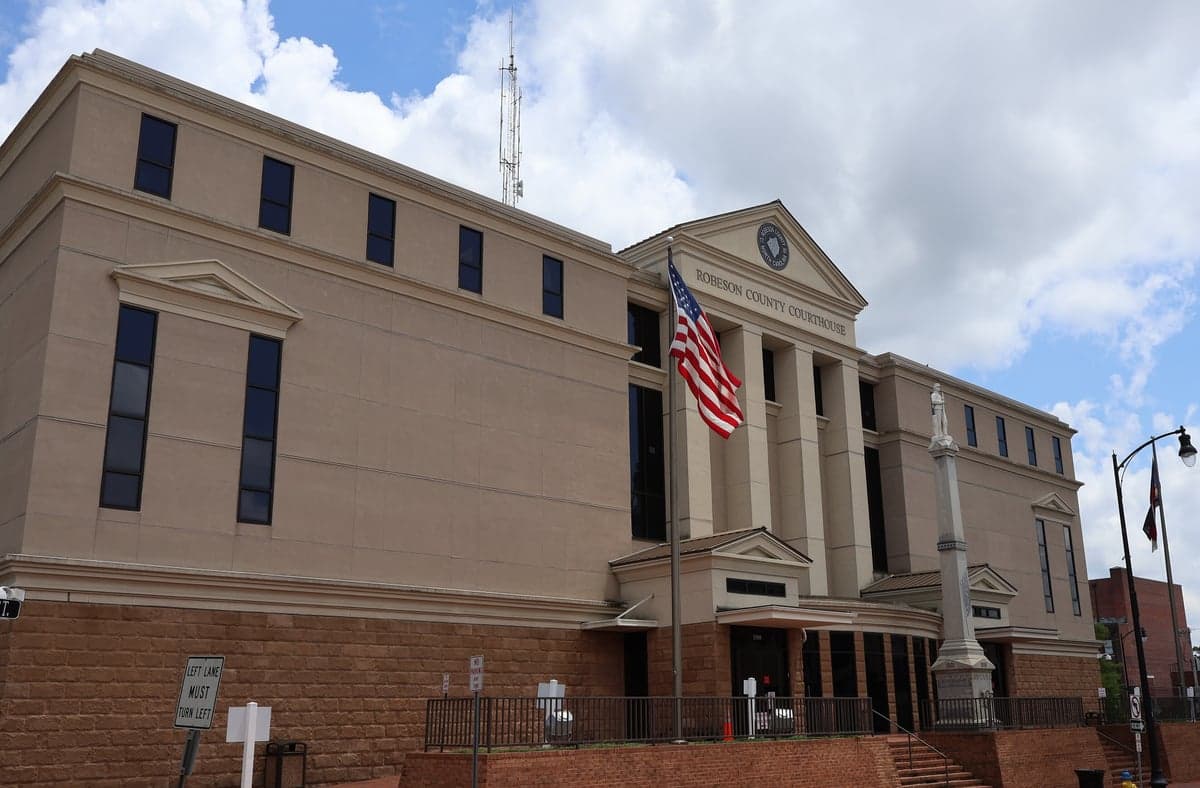
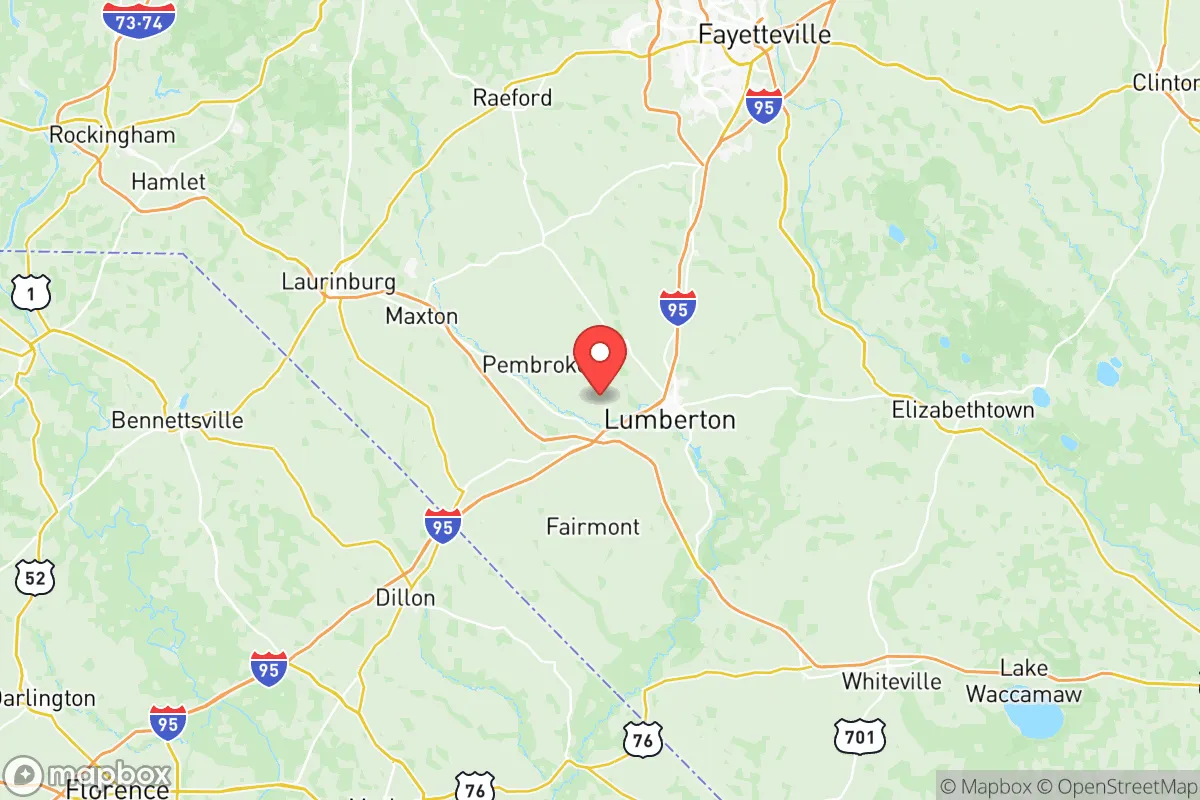
Photo: Wikipedia
Find The Best Places To Live in Robeson County
PRO TIP! You can paste a Zillow or Redfin link to get info on that property.
Best Places to Live in Robeson County

Cities & Towns in Robeson County
Cities in Robeson County
What It's Like Living in Robeson County, NC
Living in Robeson County means settling into a place where the pace slows down, family ties run deep, and the landscape shifts from the pine forests of Lumberton to the farmland around Fairmont and St. Pauls. It’s a part of North Carolina where a $40,318 median household income goes further than it would in most of the country, thanks to a cost of living index of 53—roughly half the national average. But that affordability comes with trade-offs, from limited job options to a violent crime rate that sits above state averages, making it a choice that works best for people who value space, tradition, and a slower rhythm over urban convenience.
Daily Rhythm in the County Seat and Beyond
Most days in Robeson County revolve around work, school, and family, with the commute averaging about 25 minutes—short enough that you’re not burning half your evening in the car. Lumberton serves as the commercial hub, where you’ll find the big-box shopping along Fayetteville Road and the Walmart that seems to be everyone’s default stop. For a quieter morning, locals head to the Coffee Scene on Chestnut Street or grab a plate of fried fish and hushpuppies at Fuller’s Old-Fashioned BBQ, a spot that’s been around long enough to feel like a institution. In smaller towns like Pembroke and Maxton, daily life centers more on local churches, family-owned diners, and the kind of front-porch conversations that don’t happen in subdivisions. The median age here is 36.5, slightly younger than the national figure, and you see that in the number of young families at the county parks on weekends. But with only 14.6% of adults holding a college degree, the professional job market is thin—most people work in healthcare, education, manufacturing, or retail, with the local hospital and the public school system being the largest employers.
Sports, Friday Nights, and Community Pride
If you want to understand what matters in Robeson County, show up at a high school football game on a Friday night. The stands at Lumberton High School’s Alton G. Brooks Stadium fill up with parents, alumni, and neighbors who’ve known each other for decades. The same energy carries over to basketball season at Purnell Swett High School in Pembroke, where the Rams draw crowds that rival some small colleges. There’s no pro sports team in the county, but the University of North Carolina at Pembroke (UNCP) brings a college-town feel to its corner of the region, with Braves athletics—especially basketball and wrestling—giving locals a reason to gather on campus. For a different kind of competition, the annual Lumberton Dogwood Festival in April draws people from across the county for a parade, carnival rides, and live music that turns the downtown area into a block party. It’s the kind of event where you run into people you haven’t seen since last year’s festival, which is exactly the point.
What’s There to Do—and What’s Missing
Outdoor life here is defined by the Lumber River, which runs through the county and offers canoeing, fishing, and the kind of flat-water paddling that doesn’t require much skill to enjoy. The Lumber River State Park, with its trails and picnic areas, is a go-to for families on summer weekends. Hunters head to the vast tracts of farmland and swamp in the southern part of the county, especially around Fairmont and Rowland, where deer and turkey are plentiful. For entertainment beyond the outdoors, options are limited. Lumberton has a multiplex cinema and a few chain restaurants, but for concerts, nightlife, or a serious shopping mall, most people drive 45 minutes north to Fayetteville or an hour south to Myrtle Beach. That isolation is both a blessing and a frustration—it keeps the county quiet and affordable, but it also means that younger singles and couples without deep local roots sometimes feel like there’s not enough to do on a Saturday night. The local music scene is small but real, with country and gospel acts playing at venues like the Carolina Civic Center in Lumberton, a restored 1920s theater that hosts plays, concerts, and community events throughout the year.
Pros and Cons of Living Here
- Pro: Housing is genuinely affordable. The median home value sits at $88,600, meaning a family earning the median income can actually buy a house without being house-poor. You can find a three-bedroom in St. Pauls or Parkton for under $100,000 that needs cosmetic work but is structurally sound.
- Con: Crime is a real concern. The violent crime rate of 311.3 per 100,000 residents is higher than the national average, and property crime is an issue in parts of Lumberton. Longtime residents will tell you it’s neighborhood-specific, but it’s not something to ignore when choosing where to live.
- Pro: The cost of living stretches your dollar. With a cost of living index of 53, everyday expenses—groceries, utilities, gas—are noticeably cheaper than in most of the country. That $40,318 median income buys a lifestyle that would require $75,000 or more in Raleigh or Charlotte.
- Con: Job opportunities are limited. The economy leans heavily on low-wage retail, manufacturing, and agriculture. If you work in tech, finance, or specialized trades, you’ll likely be commuting to Fayetteville or beyond, or working remotely if your internet connection can handle it.
- Pro: The community is tight-knit. In towns like Pembroke and Maxton, people know their neighbors, and the Lumbee Tribe’s cultural presence adds a layer of tradition and identity that you don’t find in most Southern counties. The annual Lumbee Homecoming in July is a major event, drawing thousands for a week of parades, powwows, and reunions.
- Con: Amenities are sparse. There’s no Whole Foods, no Trader Joe’s, no major music venue, and no airport with commercial flights. For everyday shopping, you’re looking at Walmart, Food Lion, and a handful of local grocers. Specialty shopping or fine dining requires a drive.

* Values derived from national, state, county, city and local statistics and may differ in a specific area. Last updated: 2026-07-21T18:06:10.000Z
Narrative content on this page is AI-generated and may contain mistakes. Verify any details that matter before acting on them.
ReloMaps may earn a commission from affiliate links at no extra cost to you.

