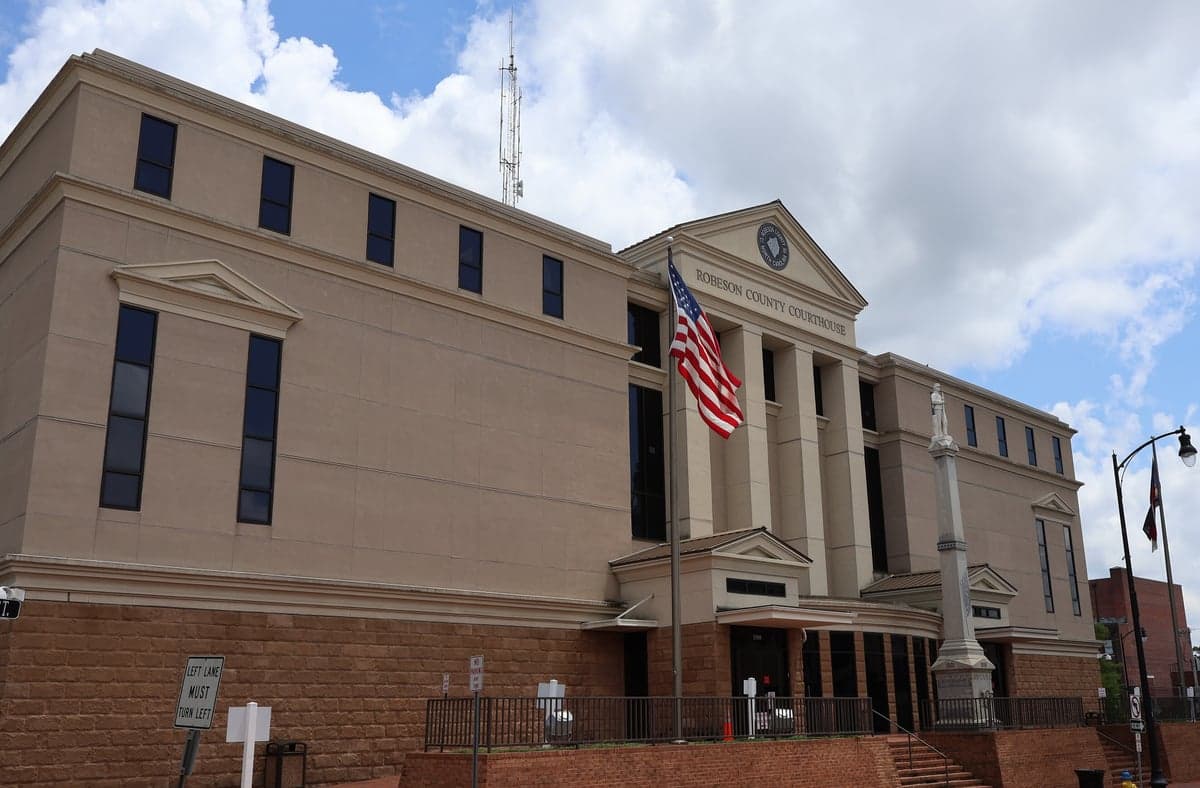
Photo: Wikipedia
Quality of Life in Robeson County
A livable area that tracks near national norms for affordability, walkability, and neighborhood health.
What does Quality of Life tell us?
Quality of Life measures an area by evaluating factors like cost of living, nearby amenities, country club access, airport proximity, socioeconomic signals and neighborhood character. For large states, this is a general average — quality of life can vary dramatically between metro areas, suburbs, and rural communities within the same state.
What does this tell us?
Quality of Life measures an area by evaluating factors like cost of living, nearby amenities, country club access, airport proximity, socioeconomic signals and neighborhood character. For large states, this is a general average — quality of life can vary dramatically between metro areas, suburbs, and rural communities within the same state.
Cost of Living
47% below national average
128%
The Real Cost of Living in Robeson County for 2026
| Tier | Individual | Family (4) |
|---|---|---|
| Survival | $13k | $24k |
| Comfortable | $21k | $32k |
| Luxury | $73k+ | $113k+ |
| Elite (Top 5%) | $104k+ | $161k+ |
Quality-of-Life Analysis
Robeson County, North Carolina, offers a broad spectrum of quality-of-life options, from the modest urban conveniences of its largest town, Lumberton, to the deep quiet of unincorporated rural communities like Fairmont and St. Pauls. With a cost of living index of 53 (well below the U.S. average of 100), a median home value of just $88,600, and a median rent of $784, the county attracts a mix of first-time homebuyers, retirees on fixed incomes, and families seeking affordable land. The character of daily life shifts dramatically depending on whether a resident lives in the commercial hub of Lumberton, a smaller town like Pembroke, or a sparsely populated rural pocket near the Lumber River.
Largest town(s) & population centers
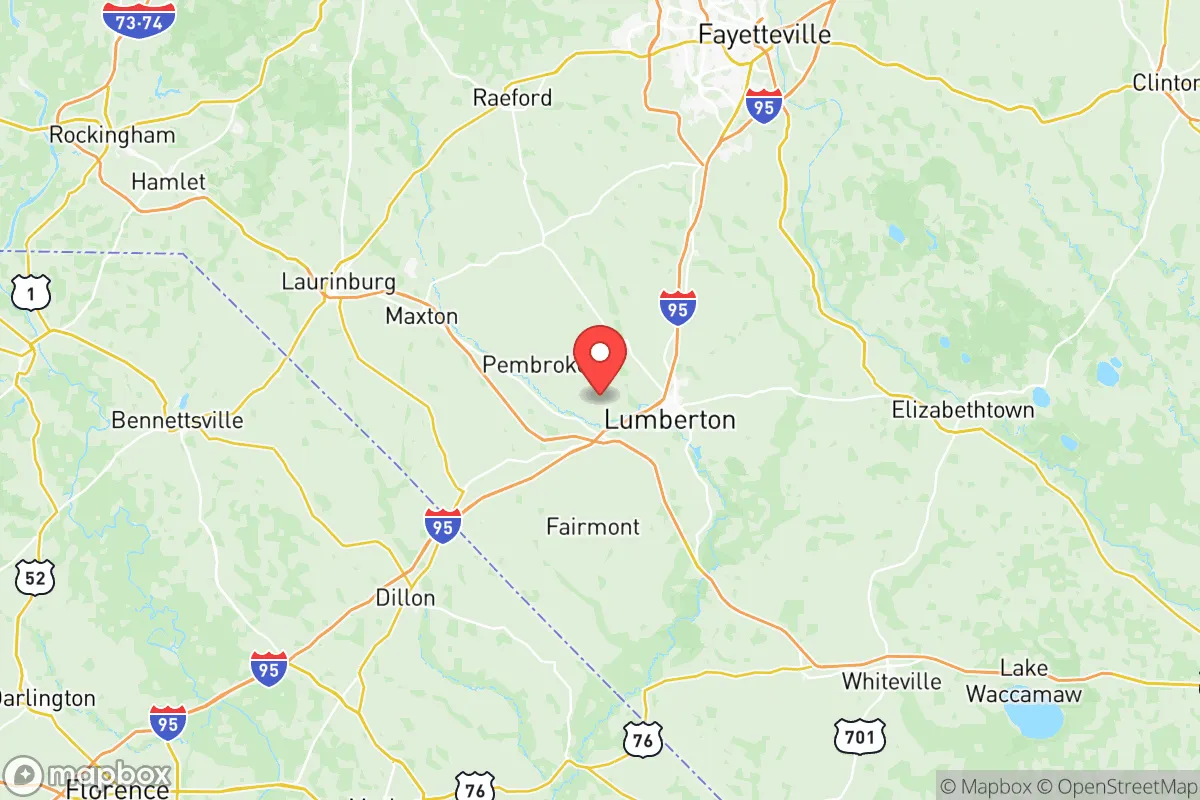
Lumberton, the county seat and largest municipality (population roughly 19,000), is the primary commercial and retail center. Daily life here revolves around the corridor of Roberts Avenue and Interstate 95, with access to chain retailers, the Southeastern Regional Medical Center, and Robeson Community College. The average commute in the county is 25 minutes, and for Lumberton residents, many jobs are within that radius, including positions at the county government complex, local schools, and manufacturing plants. Pembroke, home to the University of North Carolina at Pembroke (UNCP), offers a distinctly different, college-town atmosphere with a strong Lumbee cultural presence. The town's economy and social life are anchored by the university, providing cultural events, a younger demographic, and a walkable campus core that contrasts with Lumberton's strip-mall layout. Both towns provide the county's most reliable access to grocery stores, medical clinics, and public services, but they also carry higher crime rates than the county's rural areas.
Smaller towns & rural pockets
Outside the population centers, Robeson County is defined by its small towns and unincorporated rural communities. Fairmont (pop. ~2,600) sits in the southern part of the county and offers a quiet, self-contained lifestyle with a historic downtown and a strong sense of local identity, though residents typically commute to Lumberton or into South Carolina for work. St. Pauls (pop. ~2,000) provides a similar small-town feel with its own school system and a handful of local businesses. Maxton, straddling the Scotland County line, is one of the county's most affordable spots, with home values often below the county median. The most rural pockets lie along the Lumber River and in the unincorporated areas around Proctorville and Rennert, where homes sit on acreage, neighbors are spaced far apart, and the nearest grocery store may be a 15-20 minute drive. These areas appeal to those seeking privacy, land for gardening or hunting, and the lowest possible housing costs.
Cost & lifestyle range
The cost spread across Robeson County is narrow by national standards but meaningful locally. At the higher end, newer subdivisions on the outskirts of Lumberton—such as those near the Pinehurst Country Club area—can see home values approaching $150,000–$200,000, still far below the national median. Renters in Lumberton and Pembroke typically pay near the county median of $784, with apartments closer to UNCP commanding a slight premium. At the lower end, rural properties in areas like Fairmont or Maxton can be purchased for under $70,000, and older mobile homes on land can fall below $50,000. The trade-off is clear: Lumberton and Pembroke offer jobs, shopping, and healthcare within a short drive, while rural residents trade convenience for space, quiet, and the lowest property taxes in the region. Utility costs and insurance rates are relatively uniform across the county, but rural homes often rely on well water and septic systems, adding maintenance responsibilities that urban renters avoid.
Robeson County best suits those who prioritize extreme affordability and a slower pace over urban amenities and career density. First-time homebuyers priced out of the Raleigh or Fayetteville markets can find a move-in-ready home here for under $100,000. Retirees and remote workers are drawn to the rural pockets for the low cost of living and proximity to the Lumber River State Park. Families who value a tight-knit school community often settle in St. Pauls or Fairmont, while those who need daily access to retail and healthcare will find Lumberton or Pembroke more practical. The county's diversity—anchored by the Lumbee Tribe's cultural influence—adds a layer of community identity that is rare in other low-cost rural areas of North Carolina.

Crime in Robeson County
Crime rates similar to the national median for U.S. locations.
Violent CrimeViolent Crime Analysis
Property CrimeProperty Crime Analysis
Crime Analysis
Robeson County, located in southeastern North Carolina along the South Carolina border, presents a mixed safety picture that demands careful attention from potential residents. The county's violent crime rate of 311.3 incidents per 100,000 residents sits notably higher than the national average of roughly 380 per 100,000, while its property crime rate of 1,699.6 per 100,000 significantly exceeds both the state and national benchmarks. These figures reflect real challenges across the county's communities, from the county seat of Lumberton to smaller towns like Pembroke, St. Pauls, Fairmont, and Red Springs.
Crime in context
When compared to North Carolina's statewide violent crime rate of approximately 350 per 100,000, Robeson County's 311.3 figure is slightly below average, but this masks considerable variation within the county. The property crime rate of 1,699.6 per 100,000, however, is roughly 40% higher than the North Carolina average of about 1,200 per 100,000 and nearly double the national median. Lumberton, the largest municipality with roughly 21,000 residents, historically accounts for a disproportionate share of reported offenses, particularly property crimes like larceny and burglary. The county's rural geography and proximity to Interstate 95 create conditions where property crime, including vehicle theft and break-ins, remains a persistent concern for law enforcement.
What residents experience
Daily life in Robeson County varies dramatically by location and neighborhood. In Pembroke, home to the University of North Carolina at Pembroke, residents report a generally safer environment than in Lumberton, though property crime still occurs. St. Pauls and Fairmont, smaller towns with populations under 3,000 each, experience lower overall crime volumes but face challenges with drug-related offenses and occasional violent incidents. The county's judicial system, operating under the 16th Prosecutorial District, has seen shifts in prosecution philosophy in recent years. Progressive district attorneys and judges in some North Carolina jurisdictions have adopted policies that prioritize diversion programs and reduced sentencing for property and drug offenders, a trend that critics argue contributes to recidivism and keeps repeat offenders on the streets. In Robeson County specifically, the balance between rehabilitation and public safety remains a contentious local issue, with some residents expressing frustration over perceived leniency in the courts.
Neighborhood-level data reveals that areas immediately surrounding downtown Lumberton and along the I-95 corridor experience the highest concentrations of both violent and property crime. Conversely, outlying rural subdivisions and communities like Parkton and Rowland tend to report fewer incidents, though residents still face risks from property crime. The county's poverty rate, hovering around 28%, correlates strongly with crime patterns, as economically distressed neighborhoods in Lumberton and Red Springs see elevated rates of theft and assault. For those considering relocation, consulting local crime maps and speaking with residents in specific neighborhoods is essential, as block-by-block variation can be substantial even within high-crime areas. The presence of the Lumbee Tribe's cultural influence and community organizations in Pembroke and surrounding areas provides some protective social cohesion, though it does not eliminate the underlying economic and judicial challenges that drive crime in the region.
* Values derived from national, state, county, city and local statistics and may differ in a specific area. Last updated: 2026-07-21T18:06:10.000Z
Narrative content on this page is AI-generated and may contain mistakes. Verify any details that matter before acting on them.
ReloMaps may earn a commission from affiliate links at no extra cost to you.

