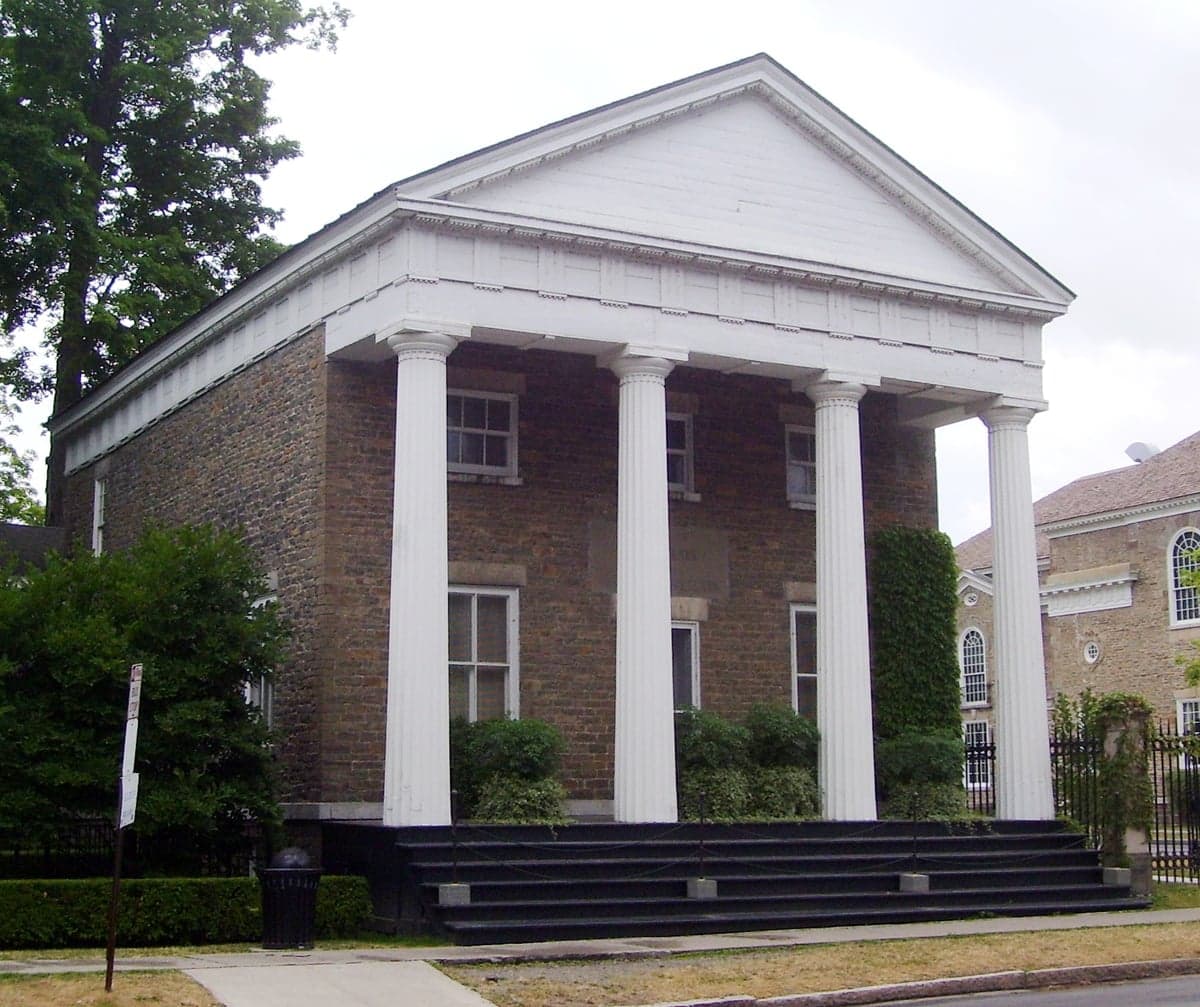
Photo: Wikipedia
Political ClimatePolitical Climate in Otsego County
Showing county-level results — no local-only data available.
Lean and PVI are calculated from this county’s 2020 and 2024 presidential results, Cook-style.
Political rankings in New York
- Most Conservative Cities in New York
- Most Liberal Cities in New York
- Best Conservative-Leaning Towns in the Northeast
- Best Conservative-Leaning Towns in the Mid-Atlantic
- Safest Liberal-Leaning Towns on the East Coast
- Safest Conservative-Leaning Towns on the East Coast
- Most Affordable Liberal-Leaning Small Towns in the U.S.
- Safest Liberal-Leaning Cities in the U.S.
- Most Conservative Counties in New York
- Most Liberal Counties in New York
Local Political AnalysisPolitical Analysis of Otsego County
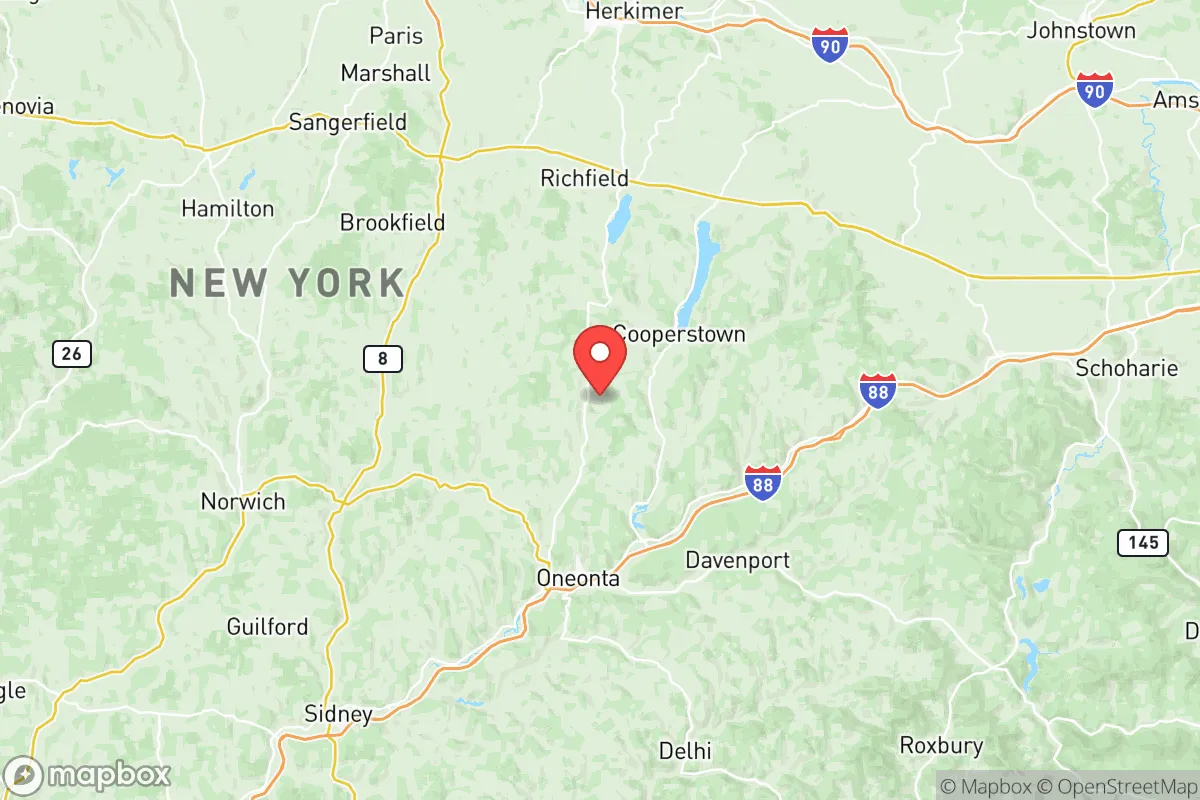
Otsego County, New York, sits in a fascinating political middle ground, with a Cook PVI of D+1 that makes it one of the most evenly divided counties in the state. This isn't a deep-blue bastion like Manhattan or a ruby-red stronghold like some of the Finger Lakes counties to the west. Instead, it's a true swing county where the margin between Democrats and Republicans in presidential elections has often been within a few percentage points. The trajectory over the last decade has been a slow, steady shift to the right, driven largely by the rural towns outside of Cooperstown, while the village of Cooperstown itself and the college town of Oneonta have held firm as Democratic anchors.
How it compares
The contrast with New York City is stark. In the 2024 presidential election, Otsego County voted for Donald Trump by a slim margin, while New York City’s five boroughs delivered a massive landslide for Joe Biden. The difference isn't just in the vote totals—it's in the texture of political life. In New York City, you can go days without hearing a conservative viewpoint in casual conversation. In Otsego County, you'll find both sides at the same diner counter. The real divide here is geographic: Oneonta, home to SUNY Oneonta and Hartwick College, votes reliably blue, often by 20-30 points. Cooperstown, despite its tourism and cultural institutions, is more of a purple town, with its village precincts leaning Democratic but the surrounding town of Otsego trending red. Towns like Richfield Springs, Cherry Valley, and Worcester are solidly Republican, often voting 60-40 or more for GOP candidates. The swing precincts are in the more populated but still rural areas around Milford and Laurens, where local issues like school funding and property taxes often outweigh national party loyalty.
What this means for residents
For a conservative resident, Otsego County offers a comfortable environment where Republican values are respected in local government and daily life. The county legislature has a Republican majority, and the sheriff's office is consistently GOP-led. Gun rights are widely supported, and you'll see "Let's Go Brandon" flags flying from pickup trucks in the parking lots of the Tractor Supply in Oneonta. For a liberal resident, the picture is more mixed. You'll find your people in Oneonta's coffee shops and at the farmers' market in Cooperstown, but you'll also encounter plenty of Trump signs and conservative bumper stickers. The practical effect is that political conversations are more common and more civil than in the city—people here tend to know their neighbors across the aisle. The downside for liberals is that progressive policies on housing, zoning, and environmental regulation often face an uphill battle at the county level, even if the village of Oneonta passes its own ordinances.
Culturally, Otsego County feels more like a piece of the Midwest dropped into upstate New York. The pace is slower, the politics are more personal, and the issues that dominate—farmland preservation, school district consolidation, and the cost of heating oil—are shared across party lines. Unlike New York City, where politics is a spectator sport played by professional politicians and pundits, here it's something you live with every day at the town board meeting or the county fair. The county's D+1 rating isn't just a statistic; it's a reflection of a community that hasn't sorted itself into ideological enclaves the way much of the country has. That's likely to persist, even as national trends pull the rural areas further right and the college towns further left. For now, Otsego County remains one of the last genuinely competitive places in New York State, where your vote actually feels like it could tip the balance.

State Political ClimatePolitical Climate in New York
State Political AnalysisPolitical Environment in the State
New York State has been a solidly Democratic stronghold for decades, but the picture is more complicated than the statewide numbers suggest. The state hasn't voted Republican in a presidential election since 1984, and Democrats hold supermajorities in both legislative chambers. However, the 10-20 year arc shows a deepening urban-rural chasm, with the five boroughs of New York City and a handful of downstate suburbs driving the blue wave, while vast stretches of upstate New York have shifted sharply red. A conservative moving here will find a deeply polarized environment, where your experience depends almost entirely on which of the state's 62 counties you call home.
Urban vs. rural divide
The political map of New York is a tale of two states. Downstate, New York City (population 8.3 million) and its immediate suburbs—Westchester County, Nassau County on Long Island, and Rockland County—provide the Democratic majority. In 2024, Manhattan voted 84% Democratic, while the Bronx hit 83%. Drive two hours north, and you hit Orange County, which flipped from blue to red in 2016 and has stayed there; it voted +9 Republican in 2024. Further up, Erie County (Buffalo) is a Democratic island in a sea of red, but even there, the rural townships outside the city limits vote heavily Republican. The Finger Lakes region, including Ontario County (Canandaigua), is reliably red, while the North Country (St. Lawrence, Jefferson counties) is deep red. The Capital District around Albany leans blue but is surrounded by conservative rural counties like Rensselaer and Saratoga. The practical takeaway: a conservative family moving to Manhattan will feel like a political minority; moving to Chemung County (Elmira) or Steuben County (Bath) will feel like a red state enclave.
Policy environment
New York's policy environment is among the most progressive in the nation, and it's codified in law. The state has a progressive income tax with rates from 4% to 10.9% on income over $25 million, plus a property tax that ranks among the highest in the U.S. (median effective rate around 1.7%). There is no right-to-work law; union density is high, especially in public sector and construction. Education policy is centralized: the state sets curriculum standards, and there is a robust school choice debate, but charter schools are capped outside NYC. Healthcare is heavily regulated; the state expanded Medicaid under the ACA and runs its own health insurance exchange. Election laws are liberal: no-excuse absentee voting, early voting, same-day registration, and automatic voter registration are all in place. The state also has a sanctuary city policy (the "Green Light Law") that prevents state and local law enforcement from cooperating with federal immigration authorities except in limited circumstances. For a conservative, this environment means higher taxes, strong union influence, and a regulatory posture that can feel stifling, especially for small business owners.
Recent policy direction
The last five years have seen a sharp leftward acceleration. In 2019, the state passed the Reproductive Health Act, codifying abortion rights up to viability and allowing non-physicians to perform procedures. The New York Health Act (single-payer) has been introduced repeatedly but hasn't passed. On gun rights, the state passed the SAFE Act in 2013 (expanded assault weapons ban, universal background checks, magazine capacity limits) and then the Concealed Carry Improvement Act in 2022, which restricted where licensed gun owners can carry (sensitive locations like Times Square, subways, and private businesses unless posted otherwise). This law was partially struck down by a federal court in 2024 but remains largely in effect. On parental rights, the state passed a law in 2022 requiring schools to notify parents if a child changes gender identity or pronouns, but it was vetoed by Governor Hochul. Property rights are constrained by rent stabilization laws in NYC and some suburbs, and by the Climate Leadership and Community Protection Act, which mandates net-zero emissions by 2050 and has driven up energy costs. Voting access expanded with early voting and no-excuse absentee ballots. For a relocator, the key takeaway is that the state's policy direction is clearly toward more regulation, higher taxes, and expanded social services, with no sign of reversal.
Civil unrest & political movements
New York has a long history of political activism, and recent years have been no exception. The Black Lives Matter protests in summer 2020 were massive, especially in NYC, with some demonstrations turning into looting and property damage. The anti-lockdown movement was strong upstate, with large protests in Albany and Buffalo against Governor Cuomo's COVID restrictions. The Second Amendment movement is active, with groups like the New York State Rifle & Pistol Association filing constant lawsuits. Immigration politics are a flashpoint: the Green Light Law has led to tensions between state and federal authorities, and the influx of asylum seekers to NYC since 2022 has strained resources and sparked local backlash in some neighborhoods. Election integrity controversies have been muted compared to swing states, but there were disputes over the 2020 absentee ballot counting in some upstate counties. The secession movement is real but fringe: the "New York City secession" idea pops up periodically, and there's a small "Upstate New York" secession movement that wants to form a 51st state. A new resident will notice the political signs: "Fuck Biden" flags in rural areas, "Abolish ICE" stickers in Brooklyn. The divide is visible and sometimes raw.
Projection
Over the next 5-10 years, the trajectory is clear: New York will remain a Democratic stronghold, but the internal polarization will intensify. Downstate population is growing slowly, while upstate is shrinking or stagnant. The New York City metro will continue to drive the state's politics, meaning more progressive policies on housing (rent control, tenant protections), climate (green energy mandates), and social issues. The upstate exodus of conservatives to red states like Florida and Texas will accelerate, as will the influx of liberal-leaning remote workers from NYC to upstate small towns like Hudson or Beacon, slowly shifting some rural areas purple. The state's fiscal situation is a wildcard: high taxes and out-migration could force a reckoning, but the political will for tax cuts is minimal. A conservative moving in now should expect to live in a state where their vote in statewide elections is effectively meaningless, but where local control in red counties (like Livingston County or Wyoming County) still gives them a voice on school boards, town councils, and sheriff's races.
Bottom line for a new resident: If you're a conservative, choose your county carefully. You can find a welcoming community in the Southern Tier, the North Country, or the Finger Lakes, but you'll be living under state laws that you likely oppose on taxes, guns, and education. If you're a liberal, you'll find the state's policies align with your values, but you'll pay a premium in cost of living and taxes. Either way, New York is not a state for the politically indifferent—the divide is real, and it shapes everything from your property tax bill to your child's school curriculum.
* Values derived from national, state, county, city and local statistics and may differ in a specific area. Last updated: 2026-10-30T21:49:46.000Z
Narrative content on this page is AI-generated and may contain mistakes. Verify any details that matter before acting on them.
ReloMaps may earn a commission from affiliate links at no extra cost to you.

