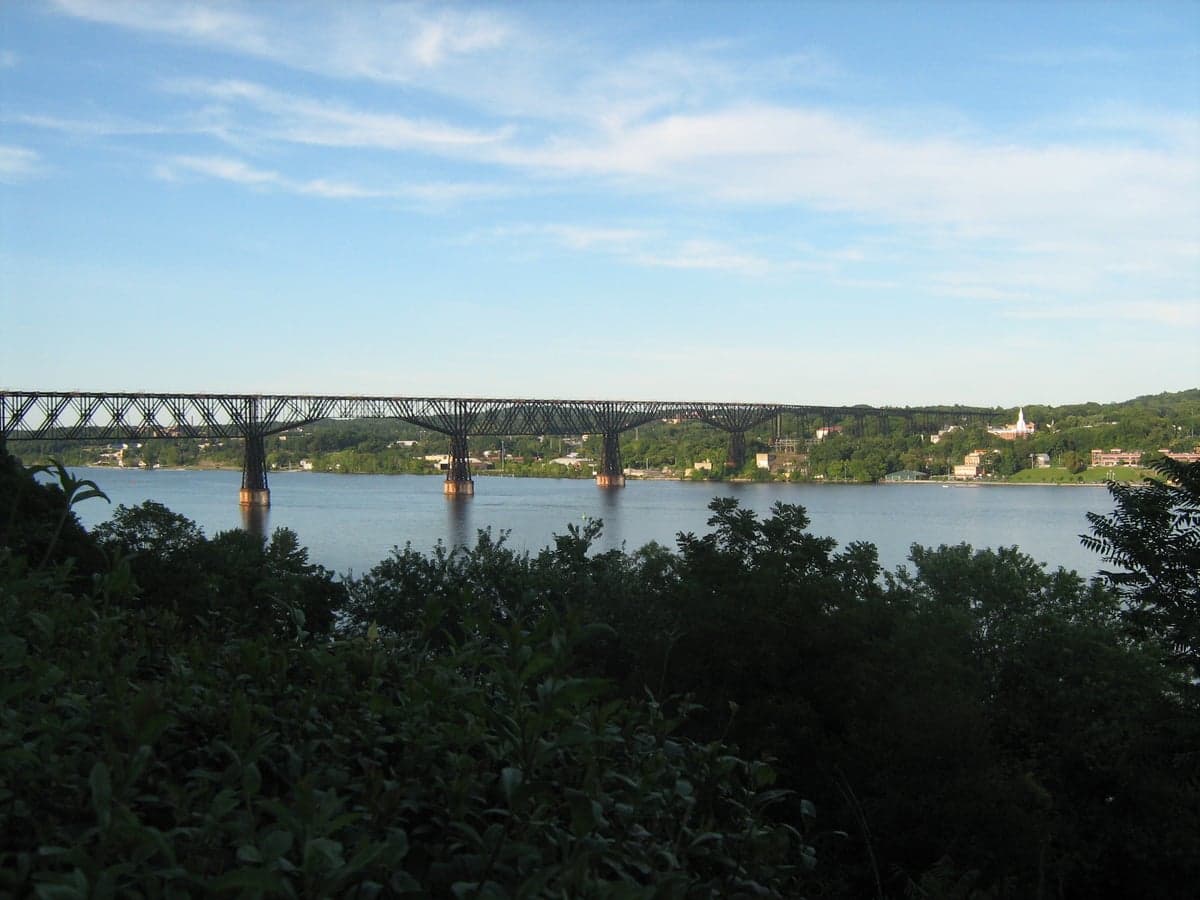
Photo: Wikipedia
Political ClimatePolitical Climate in Dutchess County
Showing district-level results — no local-only data available.
Local Political AnalysisPolitical Analysis of Dutchess County
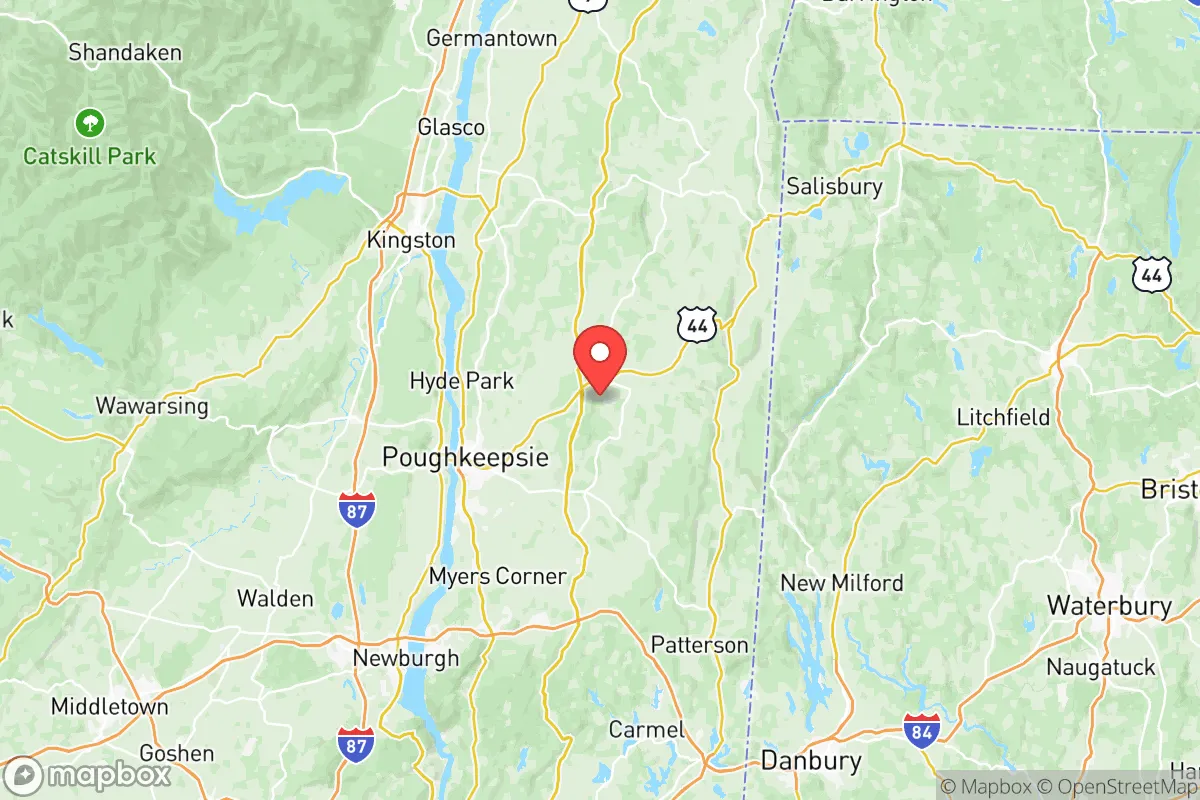
Dutchess County has shifted from a reliably Republican stronghold to a competitive battleground, now carrying a Cook Partisan Voting Index (PVI) of D+2 — meaning it leans about two points more Democratic than the nation as a whole. This is a dramatic change from just a decade ago, when the county was a solid R+4. The shift is driven largely by the growth of the Hudson Valley's commuter belt, with towns like Beacon and Rhinebeck turning deep blue, while more rural and exurban areas like Dover Plains and Millbrook remain staunchly red. The county's political center of gravity now sits in the swing precincts of Poughkeepsie and Hyde Park, where local races are often decided by a few hundred votes.
How it compares
Compared to New York City, Dutchess County is a political outlier. While New York, NY is overwhelmingly Democratic (with a PVI likely north of D+30), Dutchess is a true purple county. In the 2024 presidential election, Dutchess County voted for the Democratic candidate by roughly 52% to 46%, a far narrower margin than the city's 80%+ Democratic share. The county's Republican base is concentrated in the eastern towns — Pawling, Dover, and Stanford — where Trump won by 20 points or more. Meanwhile, the western Hudson River towns, especially Cold Spring and Garrison, vote like mini-Brooklyns. This internal split means Dutchess is often a bellwether for statewide races: it voted for Andrew Cuomo in 2018, but also for Lee Zeldin in 2022, reflecting its independent streak.
What this means for residents
For conservative residents, Dutchess County offers a political environment where their votes still matter. The county's Republican Party remains well-organized, particularly in the eastern towns, and local offices like county legislature seats and town boards are often split. For liberal residents, the county's leftward trend means they can feel increasingly at home in Beacon, Rhinebeck, or the city of Poughkeepsie, but they'll still encounter plenty of Trump signs in the rural areas. The practical effect is that local policy debates — from school funding to zoning laws — are genuinely contested, with neither side holding a permanent majority. This keeps the political temperature moderate compared to the city's more uniform liberal consensus.
Culturally, Dutchess County is a study in contrasts. The county's Democratic strongholds, like Beacon and Rhinebeck, have embraced progressive policies such as sanctuary city status and local climate action plans. In contrast, the Republican towns of Pawling and Millbrook prioritize property rights, low taxes, and Second Amendment protections. The county government itself is often a compromise: the county executive is a Democrat, but the legislature is closely divided. This balance means that neither side gets everything it wants, which can frustrate activists but also prevents the kind of policy whiplash seen in more partisan counties. For a resident, the takeaway is simple: Dutchess is a place where your vote actually counts, and where the political conversation is still about local issues — not just national cable news talking points.

State Political ClimatePolitical Climate in New York
State Political AnalysisPolitical Environment in the State
New York State is a solidly Democratic stronghold at the statewide level, but that label hides a fierce internal tug-of-war. The state hasn't voted Republican in a presidential race since 1984, and Democrats hold supermajorities in both legislative chambers and every statewide office. But the 20-year arc tells a story of growing polarization: the five boroughs of New York City and their inner suburbs have moved further left, while huge swaths of Upstate New York—places like Erie County (Buffalo), Monroe County (Rochester), and Onondaga County (Syracuse)—have shifted rightward, even flipping some county-level offices. The result is a state where the political center of gravity is in Manhattan and Brooklyn, but the geographic landmass and cultural identity of the state is increasingly conservative.
Urban vs. rural divide
The political map of New York is a textbook case of the urban-rural chasm. New York City alone accounts for roughly 40% of the state's vote, and it delivers margins of 70-80% for Democrats. The immediate suburbs—Nassau, Westchester, and Suffolk counties on Long Island—were once swing areas but have trended blue, especially after the Trump era. Westchester County now votes about 65% Democratic, while Suffolk County on eastern Long Island is more competitive, flipping between parties in local races. Head north of the NYC metro area, and the picture flips. Albany and the Capital Region lean Democratic but are more moderate, while the Southern Tier (counties like Steuben, Chemung, and Chautauqua) and the North Country (St. Lawrence, Jefferson, Lewis) vote Republican by 20-30 points. Buffalo and Rochester are blue cities surrounded by red suburbs and rural areas, creating a donut effect. The Hudson Valley is a mixed bag: Ulster and Dutchess counties are purple trending blue, while Orange and Putnam counties lean red. The divide isn't just about geography—it's about density, economy, and culture. The city and its close-in suburbs are global, diverse, and service-economy driven; the rest of the state is older, whiter, and more reliant on manufacturing, agriculture, and tourism.
Policy environment
New York's policy environment is shaped by one-party Democratic control in Albany, and it shows. The state has the highest combined state and local tax burden in the nation, with a progressive income tax that tops out at 10.9% for income over $25 million, plus a separate NYC income tax for city residents. Property taxes are among the highest in the country, especially in Upstate counties like Monroe and Erie, where rates can exceed 3% of assessed value. The regulatory posture is aggressive: New York has strict rent control laws in NYC and some suburbs, a statewide ban on fracking, and some of the nation's toughest environmental regulations. On education, the state spends more per pupil than almost any other, but outcomes vary wildly—wealthy suburban districts like Scarsdale and Jericho are top-tier, while many Upstate and city schools struggle. Healthcare is heavily regulated, with a state-run health insurance exchange and strong Medicaid expansion. Election laws are among the most progressive: no-excuse absentee voting, early voting, automatic voter registration, and same-day registration are all in place. The state also has a "sanctuary" law limiting cooperation between local law enforcement and federal immigration authorities.
Recent policy direction
Over the past five years, Albany has moved decisively left on a range of issues. On gun and self-defense law, the state passed the SAFE Act in 2013 (expanded in 2022 after the Bruen decision), which bans "assault weapons," limits magazine capacity to 10 rounds, and requires a permit to purchase ammunition. The 2022 Concealed Carry Improvement Act (CCIA) made New York a "may-issue" state with strict "good moral character" requirements, effectively banning concealed carry in most public places. On parental and education rights, the state has expanded gender identity protections in schools and requires schools to allow transgender students to use facilities matching their identity, which has sparked backlash in conservative districts. On speech and privacy, New York has a strong shield law for journalists but also passed a "hate speech" hotline and expanded surveillance powers under the NYPD's counterterrorism unit. On medical and bodily autonomy, the state codified abortion rights in 2019 (the Reproductive Health Act) and expanded access to gender-affirming care for minors. On property rights, the state's rent stabilization laws have been tightened, and a 2019 law eliminated vacancy decontrol, locking in rent regulation for millions of units. On taxation, the state has not cut income tax rates for top earners but did pass a modest middle-class tax cut in 2023. On voting and ballot access, New York expanded early voting and no-excuse absentee voting, but still has one of the latest primary dates in the country, which critics say disenfranchises military and overseas voters.
Civil unrest & political movements
New York has a long history of political activism, and recent years have been no exception. The Black Lives Matter protests in summer 2020 were massive, especially in NYC, Buffalo, and Rochester, leading to calls to defund the police and the eventual passage of police reform laws (including the repeal of 50-a, which had shielded police disciplinary records). On the right, the Second Amendment sanctuary movement has spread across Upstate counties—over 30 counties have passed resolutions declaring themselves "sanctuaries" for gun rights, though these are symbolic. The anti-vaccine mandate protests in 2021-2022 were particularly intense in the North Country and Southern Tier, with some school boards and county legislatures refusing to enforce state mandates. Immigration politics are a flashpoint: the state's sanctuary law means local police generally don't ask about immigration status, but the influx of asylum seekers to NYC since 2022 has strained resources and sparked backlash in some outer-borough neighborhoods and suburban towns. There have been scattered calls for secession—the "Break Up NY" movement in the Southern Tier and the "New Amsterdam" proposal for NYC to become its own state—but these remain fringe. Election integrity controversies have been relatively muted compared to other states, though the 2020 and 2022 elections saw some localized disputes over absentee ballot counting in close races, particularly in the Hudson Valley.
Projection
Looking ahead 5-10 years, New York's political trajectory is likely to continue its current path: the NYC metro area will grow more dominant in statewide elections, while Upstate will become more Republican and more alienated. Demographic trends favor the Democrats: the city and its suburbs are gaining population (especially among younger, diverse, college-educated voters), while Upstate counties are aging and shrinking. The state's high taxes and regulatory climate are already driving out-migration of higher-income households, particularly to Florida and Texas, which could further concentrate political power in the city. However, the 2022 gubernatorial election showed that a moderate Republican (Lee Zeldin) could come within 6 points of winning, even in a blue wave year, by focusing on crime and affordability. If the state's population loss accelerates—especially in the suburbs—the political map could shift. For a new resident moving in now, expect the state to remain solidly Democratic at the statewide level, but with growing internal friction between the city and the rest of the state. The policy environment will likely continue to expand on gun control, rent regulation, and social issues, while tax cuts will remain modest. The practical takeaway: if you lean conservative, you'll find your political tribe in the suburbs and rural areas, but you'll be outvoted on most statewide issues. If you lean liberal, you'll find the state's policies largely aligned with your views, but you'll pay for it in taxes and cost of living.
For a conservative-leaning relocator, the bottom line is this: New York is a state where your vote for president or Senate will almost certainly be in the minority, but your local vote—for county executive, sheriff, school board, and state assembly—can still matter a lot. The state's high taxes and strict gun laws are real trade-offs, but the economic opportunities, especially in NYC and its suburbs, are unmatched. If you're looking for a place where your political views are the majority, you'd be better off in Texas or Florida. But if you're willing to live in a blue state with a strong red minority, and you value the cultural and economic advantages of the Northeast, New York can still work—as long as you know what you're signing up for.
* Values derived from national, state, county, city and local statistics and may differ in a specific area. Last updated: 2026-07-08T09:22:25.000Z
Narrative content on this page is AI-generated and may contain mistakes. Verify any details that matter before acting on them.
ReloMaps may earn a commission from affiliate links at no extra cost to you.

