 Popular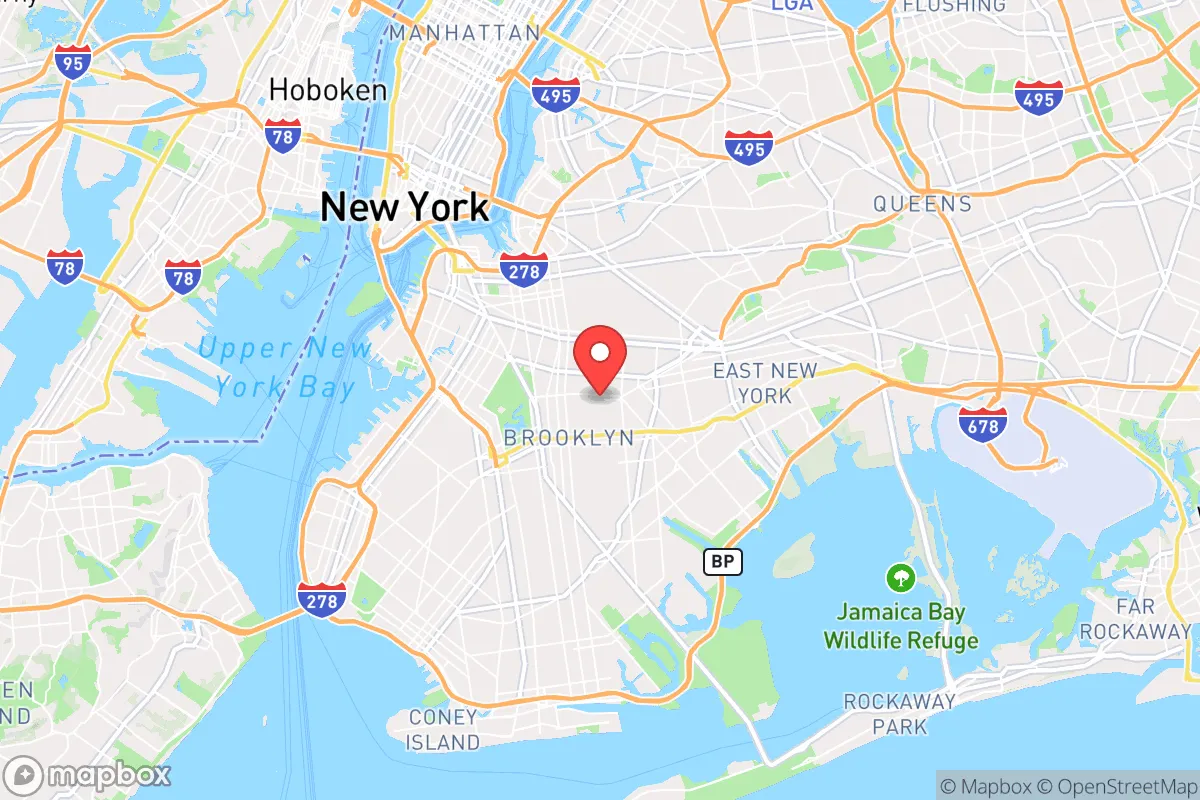
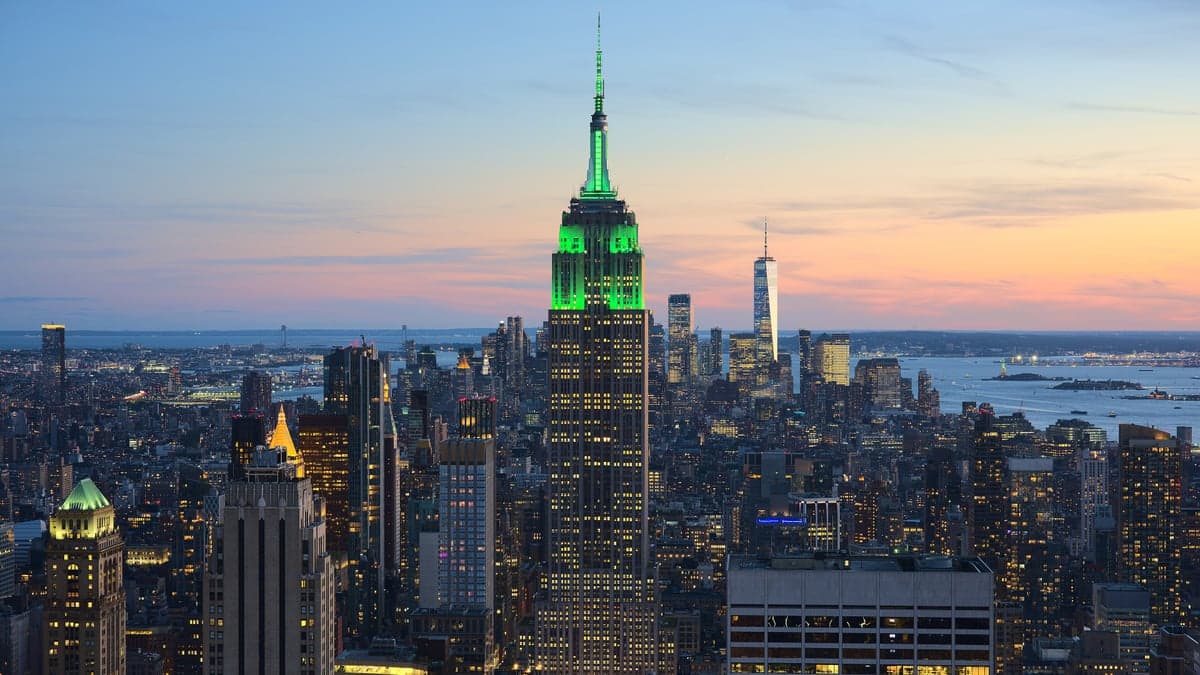
Photo: Wikipedia
Political ClimatePolitical Climate in New York City, NY
District shown is the primary district for this city’s centroid. Cities may span multiple districts.
Local Political AnalysisPolitical Analysis of New York City, NY
New York City is one of the most reliably Democratic major metros in the country, with a Cook Partisan Voting Index (PVI) of D+22, meaning it votes about 22 points more Democratic than the national average. That number isn't just a statistic—it's baked into the city's DNA. In the 2024 presidential election, the five boroughs delivered roughly 68% of their votes to the Democratic candidate, a margin that has held steady within a few points for the last three cycles. The real story, though, isn't the city's blue hue; it's the internal friction. While Manhattan and Brooklyn have become increasingly progressive, parts of Staten Island and southern Queens have drifted rightward, creating a political landscape that's more fractured than the top-line numbers suggest. The trajectory is toward a widening gap between the city's core and its outer edges, with housing, public safety, and school policy as the flashpoints.
How it compares
Comparing New York City to the rest of New York State is like comparing two different countries. The state as a whole leans Democratic—roughly D+10 in recent cycles—but that's almost entirely because of the city's weight. Drive an hour north to places like Orange County (Middletown, Newburgh) or Rockland County, and you'll find suburbs that have flipped from purple to reliably red over the past decade. In the 2024 race, Orange County voted about 54% Republican, a stark contrast to the city's 68% Democratic share. Even closer in, Nassau County on Long Island has trended right, with its eastern towns like Oyster Bay and Hempstead now consistently voting GOP in local races. The upstate cities—Buffalo, Rochester, Syracuse—are Democratic strongholds, but they're surrounded by vast rural and exurban areas that vote 60-40 or more Republican. So when people say "New York is a blue state," they're really saying "New York City and a handful of upstate cities are very blue, and the rest is red to purple." The state legislature's Democratic supermajority is a direct result of the city's population density, not statewide consensus.
What this means for residents
For liberal residents, the city's lean means their values are largely reflected in local policy—generous social services, strong tenant protections, sanctuary city status, and a public school system that prioritizes equity initiatives. But it also means high taxes and a regulatory environment that can feel stifling to small business owners. For conservative residents, the reality is more complicated. You can find your people in Staten Island's South Shore, Bay Ridge in Brooklyn, or parts of Howard Beach in Queens, where Republican city council members still get elected. But you'll also face a city government that often feels adversarial—from COVID-era restrictions that outlasted the rest of the state to zoning laws that limit car-centric development. The practical effect is that many conservative-leaning families eventually decamp to the suburbs or exurbs, which is a major driver of the city's population loss among school-age children. For everyone, the political climate means that local elections—especially for City Council and district attorney—have outsized impact on daily life, from how the NYPD patrols to how quickly a new bike lane gets built.
Culturally, the city's political identity is inseparable from its diversity. You'll see "Defund the Police" signs in Park Slope and "Back the Blue" banners in Howard Beach, sometimes on the same subway line. The policy distinction that matters most is housing: the city's rent stabilization system, which covers about half of all rental units, is a political third rail that doesn't exist in most of the state. Upstate, you can buy a three-bedroom house for what a studio costs in Manhattan. That gap—between the city's dense, regulated, transit-oriented reality and the rest of New York's car-dependent, lower-cost lifestyle—is the unspoken fault line in every statewide debate. It's not just about party labels; it's about fundamentally different ideas of what a good life looks like.

State Political ClimatePolitical Climate in New York
State Political AnalysisPolitical Environment in the State
New York State has been a solidly Democratic stronghold for decades, with no Republican presidential candidate winning its electoral votes since 1984. The state’s overall partisan lean is heavily blue, driven by New York City and its inner suburbs, but the political reality is far more complex than a simple label. Over the last 10-20 years, the state has shifted leftward on social and economic policy, while simultaneously seeing a dramatic geographic polarization: the five boroughs and their immediate neighbors have become more Democratic, while vast swaths of upstate have trended Republican. In 2024, Kamala Harris carried the state by roughly 12 points, down from Joe Biden’s 23-point margin in 2020, signaling a tightening that reflects growing discontent in the suburbs and exurbs.
Urban vs. rural divide
The political map of New York is a tale of two states. New York City — Manhattan, Brooklyn, Queens, the Bronx, and Staten Island — delivers roughly 40% of the state’s vote, with Manhattan and Brooklyn routinely giving Democrats 80-85% of the vote. The city’s massive population and high turnout make it the engine of Democratic dominance. The inner-ring suburbs of Westchester County, Nassau County on Long Island, and Rockland County lean Democratic but are more competitive, often flipping in close races. In contrast, the vast rural and exurban areas of upstate — from the Adirondacks to the Southern Tier — are deeply Republican. Counties like Otsego, Chenango, and Wyoming routinely vote 60-70% Republican. The divide is stark: in 2024, Erie County (Buffalo) went Democratic by 15 points, while neighboring Genesee County went Republican by 30. The Hudson Valley is a battleground zone, with Dutchess County and Ulster County swinging between parties depending on the race. This urban-rural split means that a conservative moving to Buffalo or Rochester will find a blue city, but a conservative moving to Binghamton or Plattsburgh will find a red community.
Policy environment
New York’s policy environment is among the most progressive in the nation, with high taxes, strong regulations, and expansive social programs. The state has a progressive income tax with rates up to 10.9% for top earners, plus a state sales tax averaging 8.5% when local levies are included. Property taxes are among the highest in the country, especially in the suburbs of Westchester and Nassau. The regulatory posture is heavy: New York has strict environmental laws, a robust rent stabilization system in NYC and some suburbs, and a paid family leave program that offers 12 weeks at 67% of pay. Education policy is centralized, with the state controlling curriculum standards and funding formulas; the Board of Regents sets graduation requirements. Healthcare is heavily regulated, with the state running its own health insurance exchange and expanding Medicaid under the Affordable Care Act. Election laws are relatively liberal: no-excuse absentee voting was enacted in 2020, and early voting is available for nine days. However, the state has strict campaign finance laws and a public matching system for small donations.
Recent policy direction
Over the last five years, New York has moved decisively left on several fronts. In 2022, the state passed the New York State Secure Ammunition and Firearms Enforcement (SAFE) Act updates, banning the sale of semi-automatic rifles to anyone under 21 and requiring background checks for ammunition purchases. In 2023, the Clean Slate Act automatically sealed certain criminal records after a waiting period. On education, the state implemented a universal school meal program and expanded free community college for students in certain programs. On gun rights, the state has been a national leader in restrictions, including a 2022 law requiring a “good moral character” standard for concealed carry permits, which was partially struck down by the Supreme Court but remains in effect in modified form. On parental rights, the state has moved to protect transgender youth, with a 2023 law prohibiting schools from disclosing a student’s gender identity to parents without the student’s consent. On property rights, the state has tightened rent control laws and expanded tenant protections. On voting, the state enacted automatic voter registration at DMVs and expanded early voting. On medical and bodily autonomy, New York has become a sanctuary for abortion access, passing the Reproductive Health Act in 2019 and allocating $25 million for abortion providers in 2023. For a conservative relocator, the practical takeaway is that the state’s policy direction is unambiguously progressive, with little sign of reversal.
Civil unrest & political movements
New York has a long history of political activism, and recent years have seen both left- and right-wing movements. The Black Lives Matter protests in 2020 were massive, particularly in NYC, where tens of thousands marched for weeks. The state responded with police reform legislation, including the repeal of 50-a, a law that had shielded police disciplinary records. On the right, the Second Amendment sanctuary movement has gained traction in upstate counties; as of 2025, over 30 counties have passed resolutions declaring themselves sanctuaries from state gun laws, though these are symbolic. The anti-vaccine mandate protests in 2021-2022 were significant, with large rallies in Albany and NYC against the state’s vaccine requirements for healthcare workers and public employees. Immigration politics are a flashpoint: New York is a sanctuary state, with laws limiting cooperation between local police and federal immigration authorities. The influx of asylum seekers to NYC since 2022 has strained resources and sparked local backlash, with some suburban counties like Rockland and Orange passing resolutions to block migrant shelters. Election integrity controversies have been relatively muted compared to other states, though some upstate counties have called for hand-counting ballots. A new resident will notice that political signs and bumper stickers are common in upstate areas, but in NYC and its suburbs, political expression is more subdued and often leans left.
Projection
Over the next 5-10 years, New York’s political trajectory is likely to remain leftward, but with growing friction. The state’s population has been declining since 2020, driven by out-migration to lower-tax states like Florida and Texas. This exodus is disproportionately from upstate and the outer suburbs, which are more conservative, meaning the remaining population is increasingly concentrated in the Democratic strongholds of NYC and its immediate suburbs. This demographic shift will likely make the state even more Democratic in statewide races, but it also risks deepening the urban-rural divide. The state’s fiscal situation is a wildcard: high taxes and spending have led to budget deficits, and the state may face pressure to cut services or raise taxes further, which could accelerate out-migration. On policy, expect continued expansion of social programs, stricter gun laws, and stronger protections for abortion and transgender rights. The congestion pricing plan in Manhattan, which began in 2024, will likely be a model for other urban areas. For a conservative moving in, the next decade will likely mean living in a state where your vote in statewide races is effectively meaningless, but where local control in upstate counties can provide a buffer. The practical implication is that if you’re moving to New York, you should choose your location carefully: a conservative will find a welcoming community in Orleans County or Steuben County, but will feel increasingly isolated in Albany or Syracuse.
For a new resident, the bottom line is that New York offers a stark choice. If you align with progressive policies on taxes, regulation, and social issues, the state is a comfortable fit, especially in NYC or its suburbs. If you lean conservative, you can still find a home in upstate counties like Allegany or Lewis, but you’ll be swimming against the tide of state policy. Your property taxes will be high, your gun rights limited, and your vote in state elections largely symbolic. The key is to pick a community that matches your values — and to understand that the state government in Albany will often be at odds with them.
* Values derived from national, state, county, city and local statistics and may differ in a specific area. Last updated: 2026-08-13T19:18:24.000Z
Narrative content on this page is AI-generated and may contain mistakes. Verify any details that matter before acting on them.
ReloMaps may earn a commission from affiliate links at no extra cost to you.

