 Popular
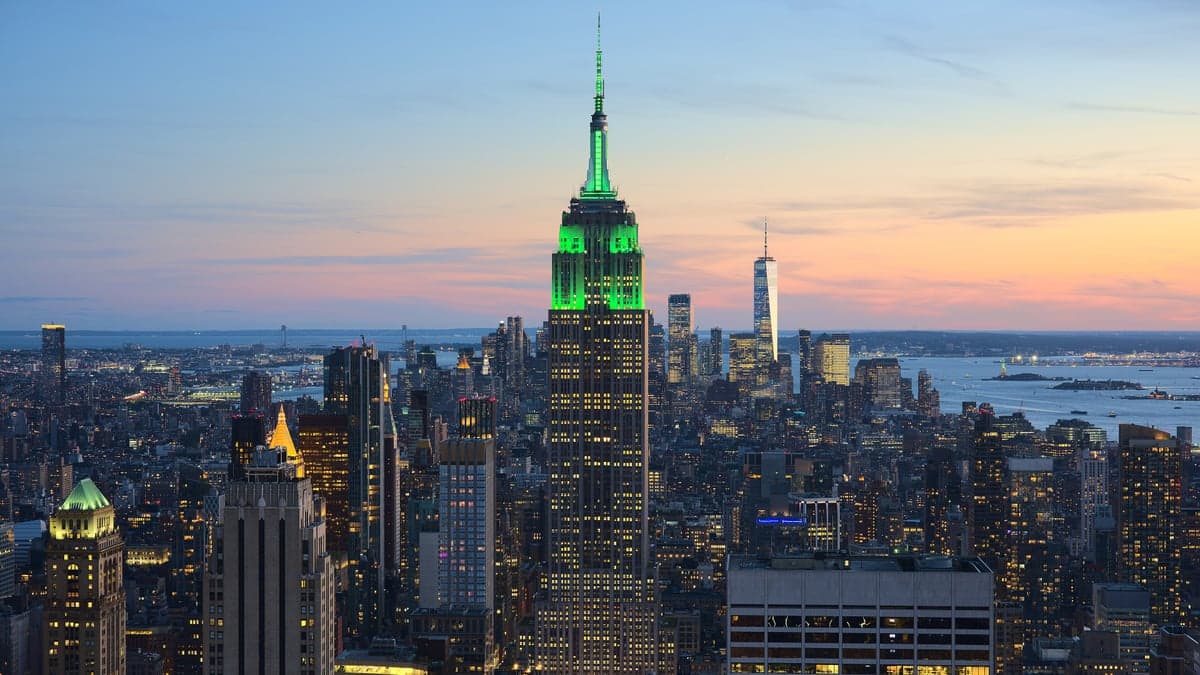
Photo: Wikipedia
Personal Sovereignty in New York City, NY
Moderate friction. Expect trade-offs in some aspect of personal liberty and independence.
What does Personal Sovereignty tell us?
Personal Sovereignty measures your capacity for self-reliance and independence with minimal government friction. Higher scores mean fewer barriers between you and the way you want to live... but it assumes you have the space you need and good neighbors.
What does this tell us?
Personal Sovereignty measures your capacity for self-reliance and independence with minimal government friction. Higher scores mean fewer barriers between you and the way you want to live... but it assumes you have the space you need and good neighbors.
State Policy
Energy independence: Importer (12% of energy produced in-state)
Personal Liberty
Homesteading

Personal Liberty Analysis
New York City presents one of the most heavily regulated personal sovereignty environments in the United States, where individual autonomy is frequently subordinated to collective governance and administrative oversight. For a relocation researcher assessing personal freedom, the city's dense regulatory framework, high tax burden, and restrictive laws on self-defense and property use create a landscape where independence requires deliberate navigation. While the city offers unparalleled economic and cultural opportunities, its governance model prioritizes public order and social welfare over individual discretion, making it a challenging fit for those who prioritize self-reliance and minimal government interference.
Tax burden and regulatory posture: what residents actually pay and face
New York City imposes one of the heaviest tax burdens in the nation, combining state and local income taxes, high property taxes, and a dense web of business and personal regulations. Residents pay a combined state and city income tax rate that can reach 12.52% for top earners, with the city's own marginal rate topping out at 3.876% on income over $500,000. Property taxes, while structured with complex assessment rules, average around 1.4% of market value for single-family homes, though effective rates vary widely by borough. The regulatory posture extends far beyond taxes: obtaining a simple building permit for a home renovation can take months, and operating a small business requires navigating layers of licensing from the Department of Consumer and Worker Protection, the Department of Buildings, and the Department of Health. The city's rent stabilization laws, covering roughly 1 million apartments, heavily restrict landlords' ability to set market rates or evict tenants, creating a landlord-tenant dynamic that tilts sharply toward tenant protections. For a self-reliant individual, this means every major financial or property decision—from starting a side business to renovating a kitchen—involves significant bureaucratic friction and cost.
Self-defense and gun law specifics: what is legally possible
New York City maintains some of the most restrictive firearm laws in the country, effectively limiting self-defense options for most residents. The city requires a premises license to keep a handgun in a home or business, which involves a lengthy application, background check, fingerprinting, and a 16-hour safety course. Carrying a concealed firearm in public is governed by the state's "proper cause" standard, which after the 2022 Supreme Court decision in NYSRPA v. Bruen shifted to a "shall-issue" framework, but the city still imposes strict "sensitive location" restrictions that effectively ban carry in most public spaces, including parks, subways, and Times Square. The NYPD's licensing division processes applications slowly, with wait times often exceeding six months. Long guns are less restricted but still require a permit for purchase. Non-lethal self-defense options are more accessible: pepper spray is legal with a permit, and tasers are legal for individuals 18 and older with no felony record, though they require a license from the NYPD. For a conservative-leaning reader prioritizing self-defense, the city's legal environment makes armed self-defense impractical for daily life, and reliance on non-lethal tools or situational awareness is the realistic path.
Self-reliance and homesteading viability: lot sizes, zoning, and off-grid feasibility
Homesteading and off-grid living are effectively non-viable within New York City's five boroughs due to extreme density, zoning restrictions, and infrastructure requirements. The typical residential lot in the outer boroughs—Staten Island, Queens, and parts of Brooklyn—ranges from 2,500 to 5,000 square feet, with single-family homes often on lots as small as 20 feet wide. Zoning is overwhelmingly R1 through R6, which permits single-family and small multi-family dwellings but prohibits agricultural uses, livestock, or commercial gardening beyond small community gardens. Off-grid systems like solar panels are legal but require permits from the Department of Buildings and must connect to the city's electrical grid; fully disconnecting from utilities is not permitted under the city's building code. Rainwater collection is legal for non-potable uses but limited by the city's water supply regulations. Composting toilets are allowed only in buildings with approved plumbing alternatives. For a family seeking self-sufficiency through gardening, livestock, or energy independence, the city's zoning code and building regulations make such pursuits impossible within the urban core. The closest viable homesteading options are in upstate counties like Ulster or Delaware, where lot sizes of 5-10 acres are common and agricultural zoning permits livestock and crop cultivation.
Personal liberties: parental rights, medical autonomy, speech, and property
New York City's approach to personal liberties reflects a progressive governance model that often prioritizes collective welfare over individual discretion. Parental rights are notably constrained: the city's Department of Education mandates a comprehensive sex education curriculum starting in elementary school, and parents cannot opt their children out of lessons on gender identity or sexual orientation. Medical autonomy is similarly limited: the city has a mandatory COVID-19 vaccine requirement for certain workers that remains in effect for city employees, and the state's public health law allows for compulsory vaccination during emergencies. Free speech is protected under the First Amendment, but the city enforces strict time, place, and manner restrictions on demonstrations, requiring permits for gatherings of more than 20 people in parks and public spaces. Property rights are heavily circumscribed by rent stabilization, which caps annual rent increases and restricts evictions, and by the city's land use review process, which can take years for major developments. The city also maintains a ban on new gas hookups in most new buildings, effective 2024, as part of its climate goals—a direct limit on property owners' energy choices. For a reader who values parental control over education, medical decision-making freedom, and unencumbered property use, these policies represent significant constraints on personal sovereignty.
Overall, New York City ranks among the most restrictive major U.S. cities for personal sovereignty, with a regulatory environment that touches nearly every aspect of daily life. Compared to cities like Houston or Phoenix, where lower taxes, looser zoning, and permissive gun laws create a lighter-touch governance model, New York's approach is fundamentally collectivist. For a conservative-leaning individual or family who prioritizes self-reliance, the city's high cost of compliance, limited self-defense options, and constrained property rights make it a poor fit unless the cultural and economic benefits outweigh the loss of autonomy. The city's governance is not a moral failing but a deliberate choice—one that residents accept in exchange for density, diversity, and opportunity. For those who find that trade-off unacceptable, the suburbs of New Jersey, Long Island, or upstate New York offer a more balanced sovereignty environment while remaining within commuting distance of the city's economic engine.

* Values derived from national, state, county, city and local statistics and may differ in a specific area. Last updated: 2026-08-13T19:18:24.000Z
Narrative content on this page is AI-generated and may contain mistakes. Verify any details that matter before acting on them.
ReloMaps may earn a commission from affiliate links at no extra cost to you.

