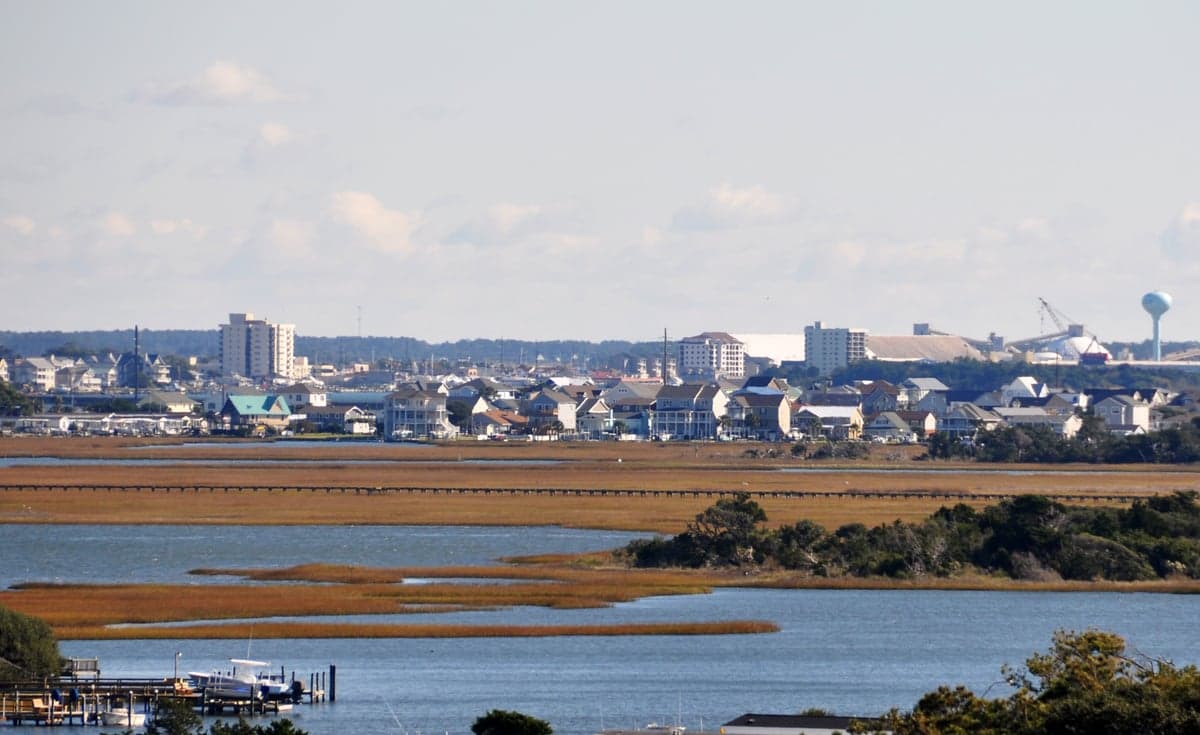
Photo: Wikipedia
Political ClimatePolitical Climate in Morehead City, NC
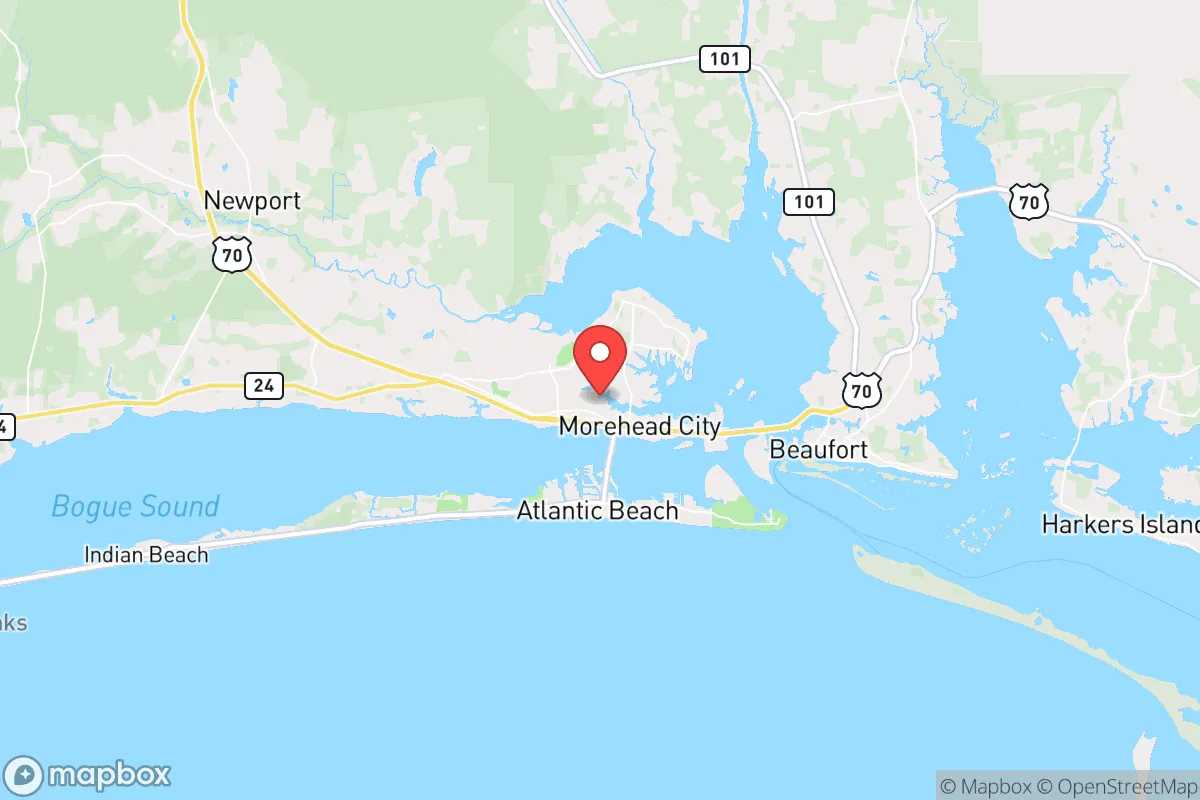
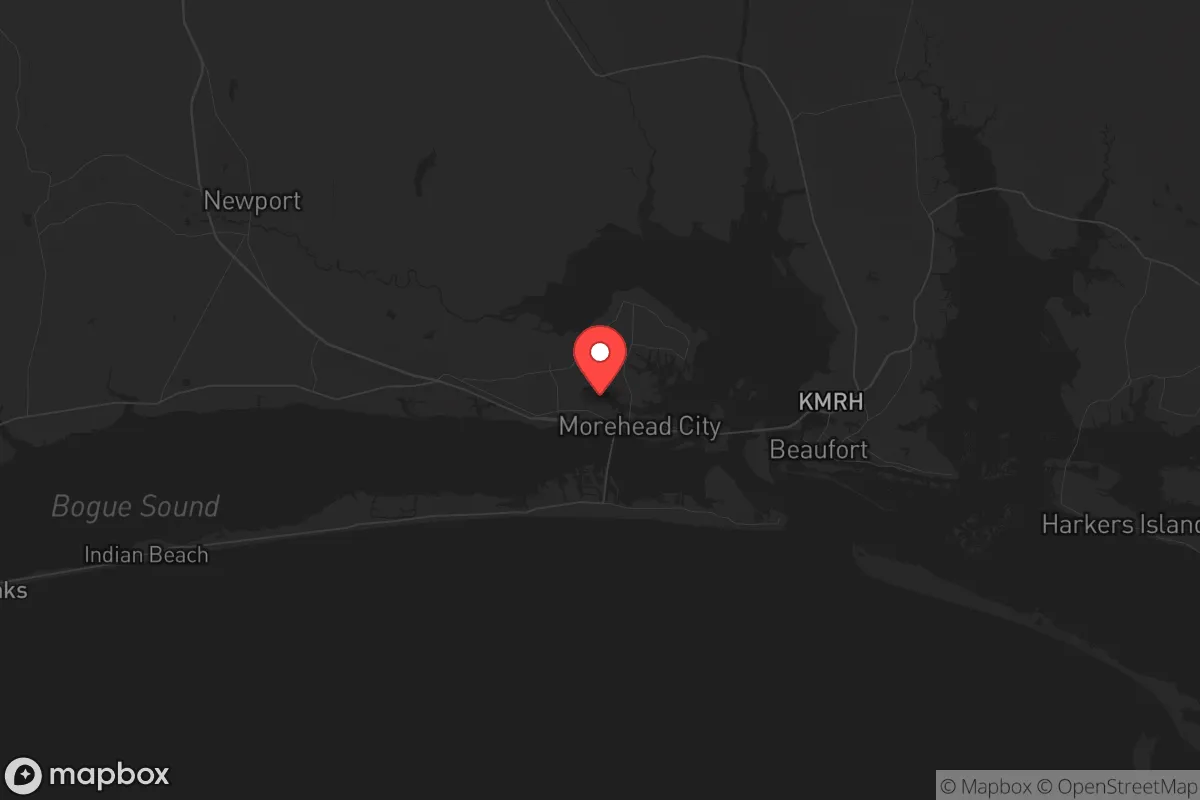
District shown is the primary district for this city’s centroid. Cities may span multiple districts.
Local Political AnalysisPolitical Analysis of Morehead City, NC
Morehead City has long been a reliably conservative stronghold on the North Carolina coast, and that hasn't changed much over the years. The area's Cook Partisan Voting Index (PVI) of R+10 puts it a full nine points to the right of the state as a whole, which sits at R+1. That's a pretty significant gap, and it reflects a community where Republican candidates regularly win by comfortable margins, even in years when statewide races are nail-biters. If you look at the 2024 presidential election, Carteret County—where Morehead City is the largest municipality—voted for Donald Trump by about 30 points, while the state overall was decided by just a few points. That kind of consistency isn't an accident; it's baked into the local culture and economy.
How it compares
To understand Morehead City's politics, it helps to look at the surrounding area. Drive 30 miles west to Jacksonville (Onslow County), and you'll find a similar conservative tilt, though with a strong military influence from Camp Lejeune that can shift priorities. Head north to Greenville (Pitt County), and you're in a more moderate-to-liberal college town anchored by East Carolina University. The real contrast, though, is with the state's urban centers: Raleigh and Charlotte are both competitive or lean Democratic, while Asheville is solidly blue. Morehead City feels like a different world from those places—less diverse, more rooted in fishing, tourism, and small business, with a slower pace of life that tends to favor traditional values. The coastal economy here is heavily tied to recreational boating and commercial fishing, industries that don't align with the progressive environmental regulations that sometimes gain traction in the state legislature. That's a big reason why the area has stayed red even as North Carolina has become a battleground state.
What this means for residents
For conservative residents, living in Morehead City means your vote carries weight locally. School board meetings, city council races, and county commission seats are all likely to be held by people who share your general worldview. You'll find plenty of churches, gun-friendly policies, and a general skepticism of big government. For liberal residents, the reality is more nuanced. You're not going to be ostracized—this is a tourist town that welcomes all kinds—but you'll be in the minority politically. Local elections can feel frustrating, and you might drive to Beaufort or even down to Wilmington for more progressive social circles. That said, the area's politics are less about culture-war intensity and more about practical conservatism: low taxes, limited regulation, and a focus on keeping the waterfront economy humming. The trajectory is stable—Morehead City isn't trending left like some coastal resort towns (think Outer Banks or Charleston). If anything, the influx of remote workers and retirees from the Northeast has been modest and hasn't shifted the needle much.
One cultural distinction worth noting: Morehead City's politics are deeply tied to its relationship with the water. Issues like beach access, dredging, and hurricane recovery dominate local discourse more than national hot-button topics. The state's recent moves to restrict development in coastal areas have been met with pushback here, regardless of party. So while the area votes Republican, it's a pragmatic, place-based conservatism—less about Fox News talking points and more about keeping the shrimp boats running and the piers open. That's the real story of politics in Morehead City: it's not just red; it's coastal red, with its own priorities and pace.

State Political ClimatePolitical Climate in North Carolina
State Political AnalysisPolitical Environment in the State
North Carolina is a classic swing state with a slight Republican lean (Cook PVI R+1), but calling it "purple" undersells the intensity of the fight here. Over the last 10-20 years, the state has shifted from a reliably red, Old South stronghold into a genuine battleground where Democrats have won gubernatorial races and presidential contests are decided by less than 1.5 points. The dominant coalition is a rural, conservative, and increasingly exurban Republican base versus a growing, diverse, and college-educated urban-suburban Democratic bloc. The trajectory is a slow squeeze: the GOP holds the legislature and most statewide offices, but the margins are tightening as the Research Triangle and Charlotte metro areas swell with transplants.
Urban vs. rural divide
The political map is a textbook case of the urban-rural chasm. The Democratic strongholds are the big metros: Charlotte (Mecklenburg County), the Raleigh-Durham-Chapel Hill Research Triangle (Wake, Durham, Orange counties), and Greensboro-Winston-Salem (Guilford and Forsyth counties). These three metro areas alone produce roughly 60% of the state's Democratic votes. In 2020, Biden won Wake County by 27 points and Mecklenburg by 30. Meanwhile, the rural east and the mountain west are deeply red. Counties like Johnston (just east of Raleigh), Brunswick (south of Wilmington), and Watauga (Boone area) are trending redder as exurban growth brings in conservative-leaning families. The real battleground is the suburban "collar counties" around the metros — places like Cabarrus (Concord), Union (Waxhaw), and Harnett (south of Raleigh) — which have flipped from blue-leaning to reliably red over the past decade. A new resident moving to Cary or Apex will find a purple-to-blue suburb; moving to Mooresville or Holly Springs will land them in red-leaning exurbia.
Policy environment
North Carolina's policy environment is a mixed bag that reflects its divided government. The state has a flat income tax rate of 4.5% (down from 7% in 2013), with a scheduled phase-down to 3.99% by 2027. There is no state property tax, but local rates vary widely — expect 0.6-1.0% of assessed value. Sales tax is 4.75% state plus local add-ons, typically totaling 6.75-7.25%. The regulatory posture is business-friendly: the state is a "right-to-work" state with no state-level minimum wage above the federal $7.25. Education policy is a flashpoint: the state funds a private school voucher program (the Opportunity Scholarship Program) that has expanded to universal eligibility by 2024, and it also has a robust charter school sector. Healthcare is a mixed story — the state finally expanded Medicaid in 2023 under a bipartisan deal, adding 600,000 people, but the legislature has not legalized medical marijuana or expanded abortion access beyond the current 12-week ban. Election laws are moderately restrictive: voter ID is required (with some exceptions), early voting is generous (17 days), and same-day registration is available during early voting. The state has a Republican-controlled legislature that has drawn congressional maps favoring the GOP, though courts have occasionally intervened.
Recent policy direction
The last five years have seen a clear rightward shift on several fronts, but with some surprising bipartisan compromises. On gun and self-defense law, North Carolina is a "shall-issue" state for concealed carry, with no permit required for open carry. In 2023, the legislature passed a law allowing permitless concealed carry (effective 2024), making it one of about 25 states with such a policy. On parental and education rights, the state passed the "Parents' Bill of Rights" in 2023, requiring schools to notify parents about instructional materials involving sexuality and to get parental consent for changes to a child's name or pronouns. On speech and privacy, the state has no broad privacy law, but it does have a data breach notification statute. On medical and bodily autonomy, abortion is banned after 12 weeks (with exceptions for rape, incest, and fetal anomalies up to 20 weeks, and a life-of-the-mother exception at any point). The state has not passed any transgender-related sports bans or healthcare restrictions for minors, though such bills have been introduced. On property rights, the state has strong eminent domain protections and no state-level rent control. On taxation, the trend is clearly downward: the corporate income tax is being phased out entirely by 2030. On voting and ballot access, the legislature has tightened rules: voter ID is now enforced, and the 2023 law reduced the time for absentee ballot return and eliminated the "same-day registration" grace period for mail-in ballots. The overall direction is a conservative tilt on social and election issues, with a libertarian-leaning tax and regulatory environment.
Civil unrest & political movements
North Carolina has a history of visible political activism, but it's less about street protests and more about organized movements. The Moral Monday protests (2013-2015) were a major left-wing movement against the legislature's conservative agenda, drawing thousands to the General Assembly. More recently, the 2020 protests in Charlotte and Raleigh over George Floyd's death were large but largely peaceful. On the right, the NC GOP and groups like Carolina Journal are highly organized, with a strong grassroots network in rural counties. Immigration politics are a flashpoint: the state has no "sanctuary" policies, and several counties (including Wake and Mecklenburg) have been sued by the state for refusing to honor ICE detainers. The NC Sheriffs' Association has been a key player, with some sheriffs (like in Durham) refusing to cooperate with federal immigration enforcement. Election integrity controversies have been a recurring theme: the 2020 election saw Trump narrowly lose the state by 1.3 points, leading to a GOP-led audit that found no widespread fraud but resulted in tighter voting laws. There is no serious secession or nullification rhetoric, but the state has a strong "10th Amendment" movement in some rural counties. A new resident will notice the political polarization most in the media landscape: local news is dominated by the News & Observer (Raleigh, left-leaning) and Carolina Journal (right-leaning), with a lot of partisan noise on social media.
Projection
Over the next 5-10 years, North Carolina is likely to become more competitive, not less. The key driver is in-migration: the state is adding about 100,000 new residents per year, mostly from blue states (New York, California, New Jersey) and red states (Florida, Texas). The newcomers tend to be younger, more educated, and more moderate-to-liberal on social issues, but they also bring economic conservatism. The Research Triangle and Charlotte will continue to grow, pushing the state's Democratic floor higher. However, the rural and exurban areas are also growing, and the GOP's base is solidifying. The wild card is the Hispanic population, which is growing fast (now about 10% of the state) and is politically mixed — more Democratic-leaning but not monolithic. The state's congressional maps will likely remain gerrymandered in favor of the GOP, but the state-level races (governor, legislature) could flip if Democrats turn out in the metros. A new resident moving in now should expect a state that is purple with a red tint for the next decade, with the possibility of becoming a true toss-up by 2030 if current trends hold. The practical implication: your vote will matter more here than in most states, and the political climate will feel like a constant campaign.
For a new resident, the bottom line is that North Carolina offers a low-tax, business-friendly environment with a conservative social tilt on most issues, but with enough urban and suburban diversity to keep things interesting. If you're a conservative, you'll find a state that generally aligns with your values on taxes, guns, and education, but you'll need to accept that the cities are blue and getting bluer. If you're a liberal, you'll find a state where your vote counts, but you'll face a legislature that is often hostile to your priorities. The key is to choose your location wisely: Cary and Raleigh feel like a blue island, while Mooresville and Wilmington are solidly red. The state's trajectory is toward a more competitive, polarized future — but that also means it's one of the few places in the country where your individual political engagement can actually make a difference.
* Values derived from national, state, county, city and local statistics and may differ in a specific area. Last updated: 2026-09-20T00:44:06.000Z
Narrative content on this page is AI-generated and may contain mistakes. Verify any details that matter before acting on them.
ReloMaps may earn a commission from affiliate links at no extra cost to you.

