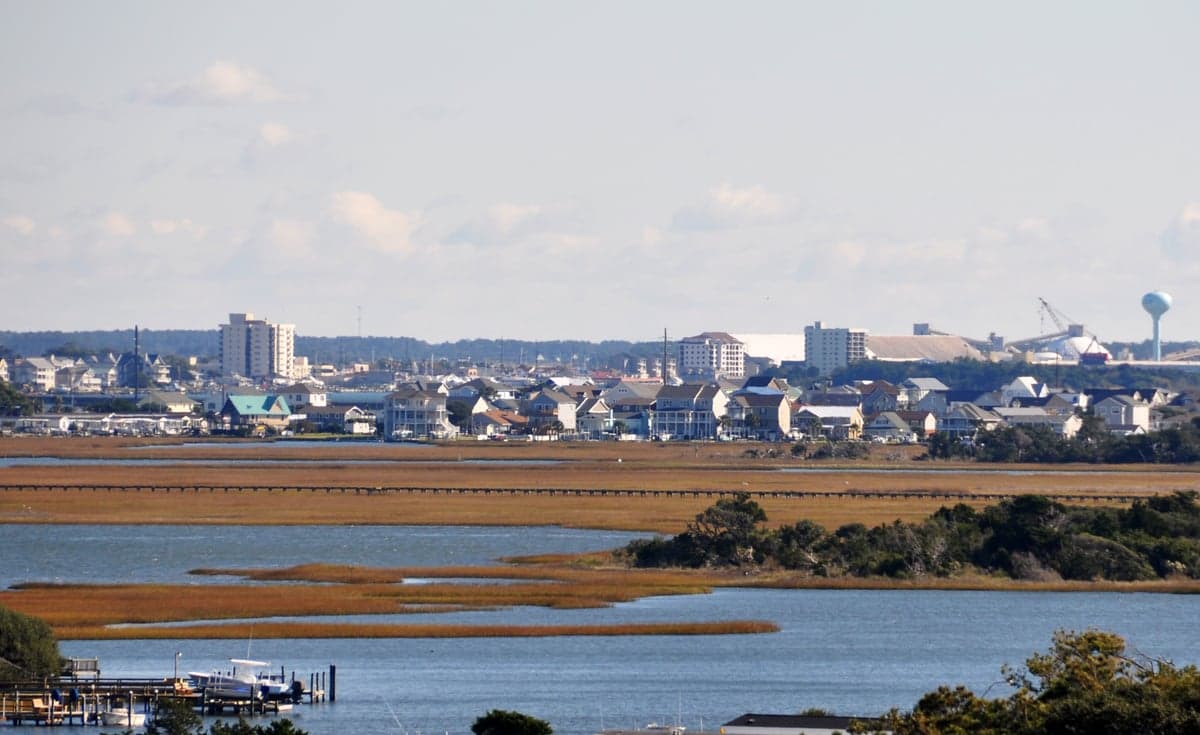
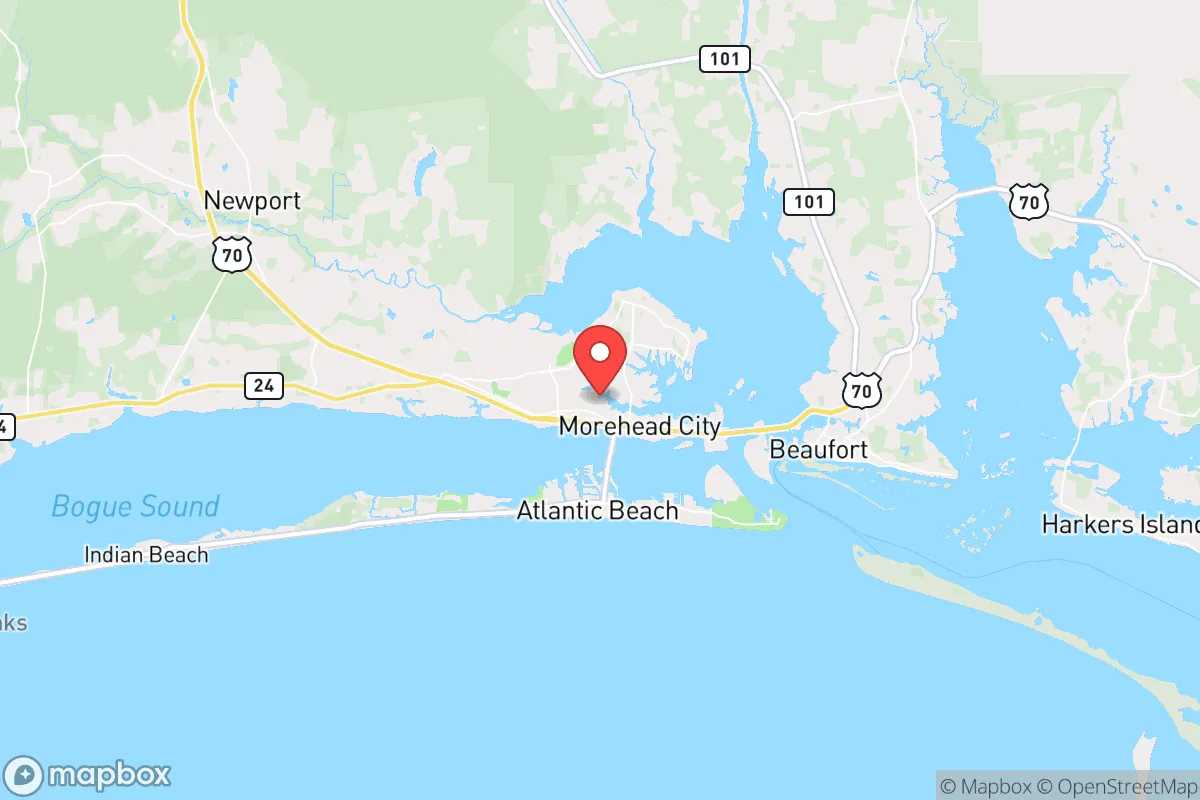
Photo: Wikipedia
Find The Best Places To Live
in Morehead City
PRO TIP! You can paste a Zillow or Redfin link to get info on that property.
What It's Like Living in Morehead City, NC
Morehead City feels like a working waterfront town that happens to be a vacation destination, not the other way around. The shrimping boats still outnumber the yachts at the municipal docks, and the smell of salt marsh and diesel fuel is just as common as sunscreen. It’s a place where the median age hovers around 44, and the pace of life is dictated more by tide charts and tourist seasons than by rush hour—the average commute clocks in at just 18 minutes.
Daily Rhythm: What Life Actually Looks Like Here
Most mornings start with coffee at The Grind on Bridges Street or a breakfast biscuit from Brogden’s, a local institution that’s been around since the 1950s. People here run errands early to beat the summer crowds, then spend the afternoon on the water—fishing the Bogue Sound, kayaking the White Oak River, or just sitting on the Atlantic Beach Causeway watching the boats go by. The median household income is $53,718, which means most residents aren’t wealthy by coastal standards; they’re teachers, commercial fishermen, healthcare workers at Carteret Health Care, or retirees who bought in before prices jumped. The median home value of $330,900 is steep for a town of 9,696 people, and that’s the biggest practical tension here—locals who remember $80,000 houses in the 1990s now watch newcomers from Raleigh and Virginia pay double that for a fixer-upper.
Weekends are built around the water. You’ll see families loading kayaks onto pickup trucks at Radio Island public beach access, or couples walking the Morehead City Rail-Trail that runs along the old railroad bed. The Morehead City Farmers Market on Saturdays at the waterfront park is a genuine community hub—not a curated boutique market, but a place to buy fresh shrimp straight off the boat, local honey, and boiled peanuts. In the evenings, the Sanitary Fish Market & Restaurant is the iconic spot for fried seafood and hushpuppies, though locals also swear by El’s Drive-In for a shrimp burger and the Beach Tavern for cold beer and live music.
Sports, Festivals, and the Local Identity
Sports here are less about pro teams and more about high school rivalries and watermen culture. West Carteret High School football games on Friday nights in the fall are a genuine community event—the stands are full of parents, grandparents, and former students who never left. There’s no major college or pro team within two hours, so the Morehead City Marlins (a summer collegiate baseball team in the Coastal Plain League) fill that gap. Games at O’Neal Field at Big Rock Stadium are cheap, family-friendly, and draw a crowd that’s equal parts locals and vacationing families.
The biggest event of the year is the Big Rock Blue Marlin Tournament in June, a week-long fishing competition that brings in serious offshore boats and even bigger crowds. It’s not just a tournament—it’s the town’s identity on display. The waterfront fills with spectators watching weigh-ins, and the prize money (often over a million dollars) makes national news. For a quieter scene, the NC Seafood Festival in October packs the same waterfront with live music, craft vendors, and more fried fish than you can eat. The cultural quirk here is that nobody calls it “Morehead” by itself—it’s always “Morehead City,” and locals pronounce it with a soft, coastal drawl that drops the “r” in “Carteret.”
What Works, What Doesn’t, and Who Fits In
The honest pros and cons are straightforward. Pros: the water access is world-class, the commute is trivial, and the community is tight-knit in a way that’s rare in 2026. You’ll know your neighbors, your mail carrier, and the guy who runs the tackle shop. The violent crime rate of 268.4 per 100,000 is slightly above the national average, but it’s almost entirely concentrated in a few blocks near the highway—most residential streets feel safe, and people still leave their doors unlocked during the day. Cons: the cost of living index of 105 is a real squeeze for anyone earning the median income. Housing is the main culprit, and rental inventory is tight. Summer traffic on Arendell Street (US-70) can turn a 10-minute errand into a 30-minute crawl, especially when the bridge to Atlantic Beach is up for a boat. The schools—Morehead City Elementary and West Carteret High—are solid but not exceptional; families who want top-tier academics often look toward private options or the magnet programs in Beaufort.
The kind of person who fits here is someone who doesn’t need a nightlife scene or a mall. The entertainment is outdoors: fishing, boating, beach days at Fort Macon State Park (a 10-minute drive), or exploring the Rachel Carson Reserve across the bridge in Beaufort. The restaurant scene is heavy on seafood and Southern comfort—think Floyd’s 1921 Restaurant for upscale Southern fare, or Rucker John’s for a dive-bar burger and pool table. There’s no movie theater in town (the nearest is in Havelock, 20 minutes away), and the closest real shopping is in Jacksonville, 45 minutes north. That isolation is a feature for some, a bug for others. The 34.6% college-educated rate reflects a town where many residents have degrees but don’t work in white-collar jobs—they’re marine biologists, charter captains, or remote workers who traded a higher salary for a shorter commute to the dock.
Seasonal rhythms are pronounced. From Memorial Day to Labor Day, the population swells with tourists and second-home owners, and locals brace for the crowds. Fall and spring are the sweet spots—perfect weather, empty beaches, and the sense that you have the place to yourself. Winter is quiet and gray, with many restaurants closing early or for the season, but that’s when the true locals come out: the oyster roasts, the bonfires on the beach, and the feeling that you’re part of a small, resilient community that doesn’t need the tourists to survive—just the shrimp boats and the tide.

Similar small towns to Morehead City
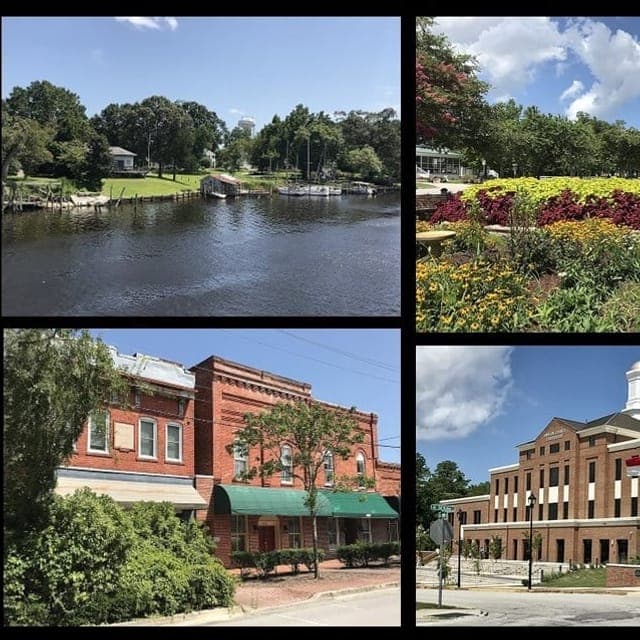
* Values derived from national, state, county, city and local statistics and may differ in a specific area. Last updated: 2026-09-20T00:44:06.000Z
Narrative content on this page is AI-generated and may contain mistakes. Verify any details that matter before acting on them.
ReloMaps may earn a commission from affiliate links at no extra cost to you.

