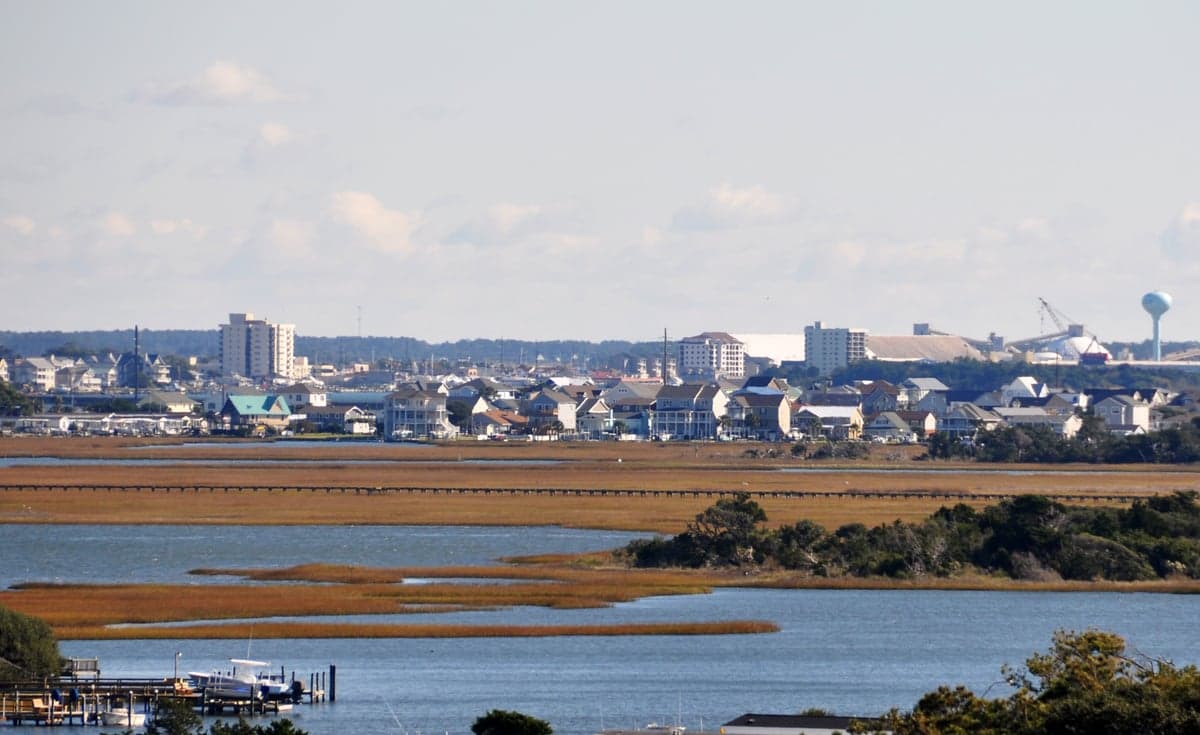
Photo: Wikipedia
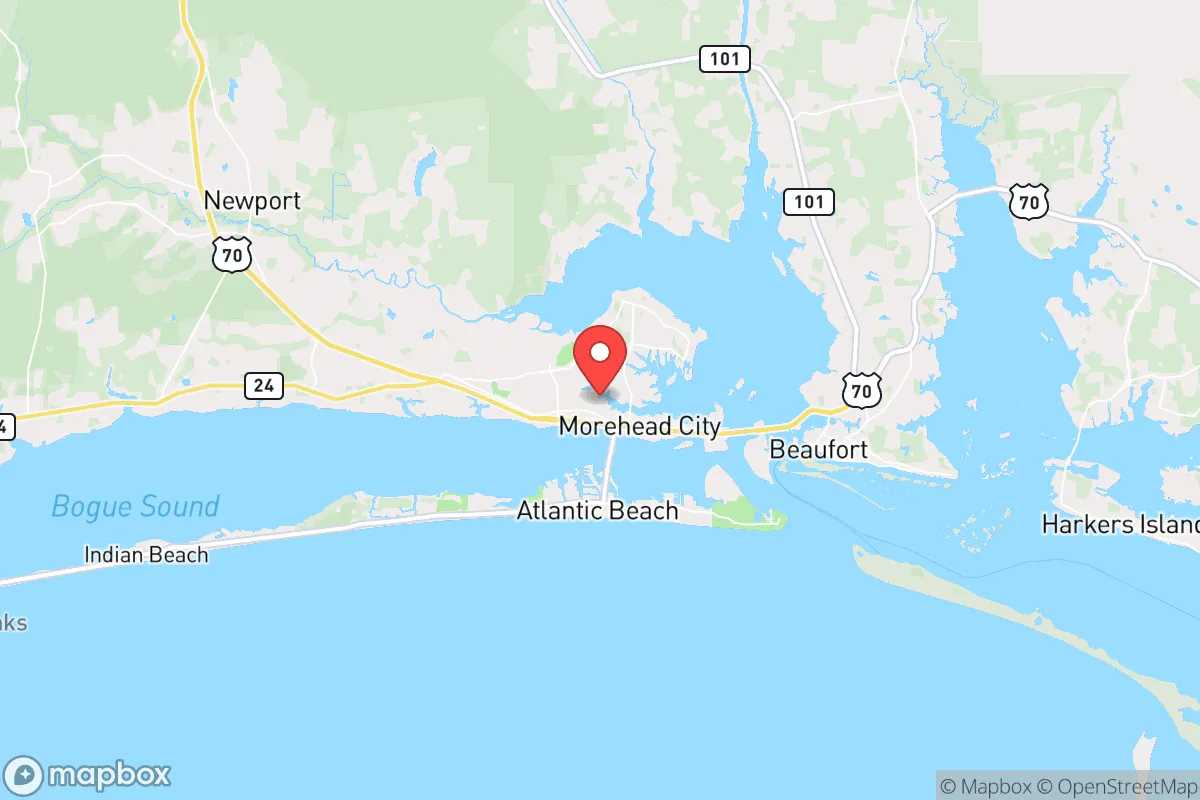
Personal Sovereignty in Morehead City, NC
Viable for self-reliance. Generally workable, though some barriers may limit total independence.
What does Personal Sovereignty tell us?
Personal Sovereignty measures your capacity for self-reliance and independence with minimal government friction. Higher scores mean fewer barriers between you and the way you want to live... but it assumes you have the space you need and good neighbors.
What does this tell us?
Personal Sovereignty measures your capacity for self-reliance and independence with minimal government friction. Higher scores mean fewer barriers between you and the way you want to live... but it assumes you have the space you need and good neighbors.
State Policy
Energy independence: Importer (15% of energy produced in-state)
Personal Liberty
Homesteading

Personal Liberty Analysis
Morehead City, North Carolina, offers a notably high degree of personal sovereignty, grounded in the state’s strong tradition of limited government, low taxation, and robust protections for individual rights. For those prioritizing autonomy, the area presents a regulatory environment that is generally light-touch, with a tax burden well below the national average and a legal framework that actively supports self-defense, parental authority, and property rights. While not a libertarian enclave, the combination of state-level preemption laws, a pro-business county commission, and a culture of self-reliance makes it a compelling choice for families and individuals seeking to minimize government interference in daily life.
Tax burden and regulatory posture in Carteret County
North Carolina’s flat income tax rate of 4.75% (as of 2025) and a state sales tax of 4.75% (with local options bringing Carteret County’s total to 7%) keep the overall tax burden low. Property taxes in Morehead City are assessed at a rate of approximately $0.54 per $100 of valuation, which is moderate for coastal North Carolina but significantly lower than many Northeastern or West Coast jurisdictions. The state’s regulatory posture is generally business-friendly, with no state-level minimum wage above the federal $7.25, and a right-to-work law that limits union influence. Zoning in Morehead City is managed at the municipal level, but the county’s approach is permissive for most residential and small commercial uses. There are no county-level building codes beyond state minimums, and the permitting process for home additions or small businesses is straightforward, typically taking 2-4 weeks. The state’s regulatory climate index, as measured by the Mercatus Center, ranks North Carolina in the bottom third of states for regulatory restrictiveness, meaning fewer rules and less bureaucratic friction.
Self-defense and gun law specifics in North Carolina
North Carolina is a shall-issue state for concealed carry permits, meaning the sheriff’s office must issue a permit if the applicant meets statutory requirements (age 21, no felony convictions, completion of a firearms safety course). Open carry is legal without a permit for anyone who can legally possess a firearm. The state also has a strong Castle Doctrine law (G.S. 14-51.2) that presumes a reasonable fear of death or great bodily harm if an intruder unlawfully enters a home, vehicle, or workplace, and there is no duty to retreat in those locations. Stand Your Ground protections extend to any place where the individual has a lawful right to be. Morehead City itself has no local gun ordinances beyond state law, as North Carolina preempts local firearm regulations (G.S. 14-409.40). This means no city-level bans on magazine capacity, no waiting periods beyond the state’s 3-day handgun purchase permit requirement (which is being phased out under 2023 legislation), and no restrictions on carrying in parks or public spaces unless posted. The sheriff’s office in Carteret County processes permits efficiently, with most applications approved within 30-45 days.
Self-reliance and homesteading viability: lot sizes, zoning, and off-grid feasibility
For those interested in homesteading or off-grid living, Morehead City’s suburban and rural fringe offers viable options. Within city limits, minimum lot sizes are typically 6,000 to 10,000 square feet for single-family homes, but unincorporated Carteret County allows lots as small as 1 acre for agricultural use. Zoning in the county’s rural areas (RA-20 and RA-40 districts) permits livestock, poultry, and beekeeping without special permits, though structures like chicken coops must be set back 20 feet from property lines. Off-grid feasibility is moderate: the county does not require connection to municipal water or sewer if a private well and septic system are installed, and solar panels are permitted without restriction. However, the state’s building code requires a minimum of 400 square feet for a dwelling, and composting toilets are not explicitly allowed under county health regulations (standard septic is required). Rainwater collection is legal for outdoor use but not for potable water without treatment. The area’s mild climate (average 60°F) reduces heating and cooling costs, and the growing season runs 220+ days, making year-round gardening practical. For those seeking true self-sufficiency, properties in the nearby rural communities of Smyrna or Marshallberg offer larger parcels (5-20 acres) at $8,000-$15,000 per acre, with minimal county oversight.
Personal liberties: parental rights, medical autonomy, speech, and property
North Carolina law strongly protects parental rights in education and healthcare. The state’s Parents’ Bill of Rights (SB 49, enacted 2023) requires schools to notify parents of any changes in a child’s physical or mental health, and prohibits instruction on gender identity or sexual orientation in grades K-4. Parents have the right to opt their children out of any school activity they find objectionable, and the state does not require parental consent for routine medical care for minors (though vaccines are required for school attendance unless a medical or religious exemption is filed). Medical autonomy for adults is robust: North Carolina has no state-level vaccine mandate, no mask mandates in effect, and no restrictions on alternative or complementary medicine (naturopaths and chiropractors are licensed). Telehealth is widely available, and the state does not require a prescription for most supplements or herbal remedies. Free speech protections are strong, with no state-level hate speech laws or restrictions on political expression in public spaces. Property rights are reinforced by the state’s eminent domain laws, which require just compensation and a public purpose, and by the absence of rent control or statewide landlord-tenant regulations beyond basic habitability standards. The county’s planning board has limited authority to deny building permits based on aesthetic or community character concerns, so homeowners generally have wide latitude in how they use their land.
Overall, Morehead City’s personal sovereignty environment ranks among the strongest in the Southeast, comparable to rural Tennessee or Texas but with the added benefit of coastal access and a moderate climate. The combination of low taxes, permissive gun laws, minimal zoning in unincorporated areas, and strong parental and property rights creates a framework where individuals and families can largely live as they see fit, with minimal government interference. For those who prioritize autonomy over urban amenities, this area offers a rare balance of freedom and practicality.

* Values derived from national, state, county, city and local statistics and may differ in a specific area. Last updated: 2026-09-20T00:44:06.000Z
Narrative content on this page is AI-generated and may contain mistakes. Verify any details that matter before acting on them.
ReloMaps may earn a commission from affiliate links at no extra cost to you.

