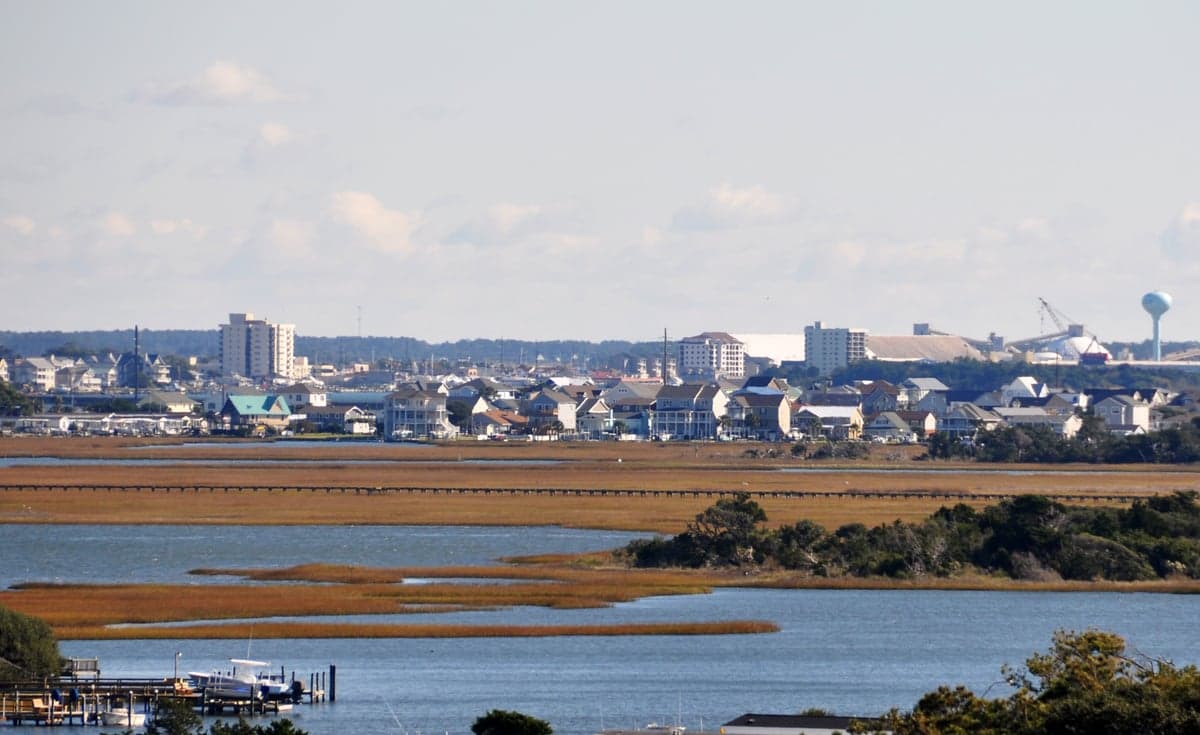
Photo: Wikipedia
Strategic Assessment of Morehead City, NC
Multiple tactical vulnerabilities. Population density, target proximity, or disaster risk are likely compounding. A retreat property and exit planning is required.
What does the Strategic Assessment tell us?
Our Strategic Assessment grades tactical survivability of an area. Major population centers, military targets, fallout zones, natural disasters, and border exposure all drive risk — lower exposure means a more defensible position in a crisis.
This is heavily inspired by Joel Skousen's Strategic Relocation book. Highly recommended you checkout the book ($)What does this tell us?
Our Strategic Assessment grades tactical survivability of an area. Major population centers, military targets, fallout zones, natural disasters, and border exposure all drive risk — lower exposure means a more defensible position in a crisis.
This is heavily inspired by Joel Skousen's Strategic Relocation book. Highly recommended you checkout the book ($)Strategic Pillars

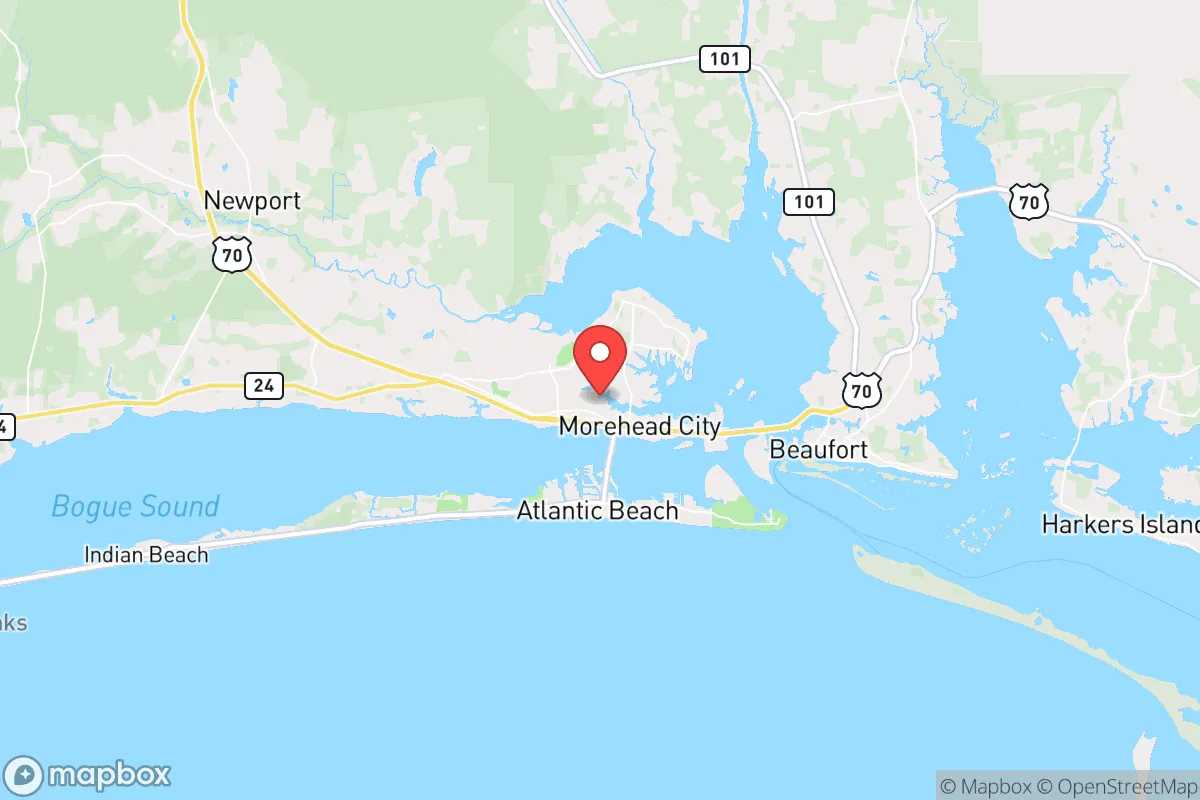
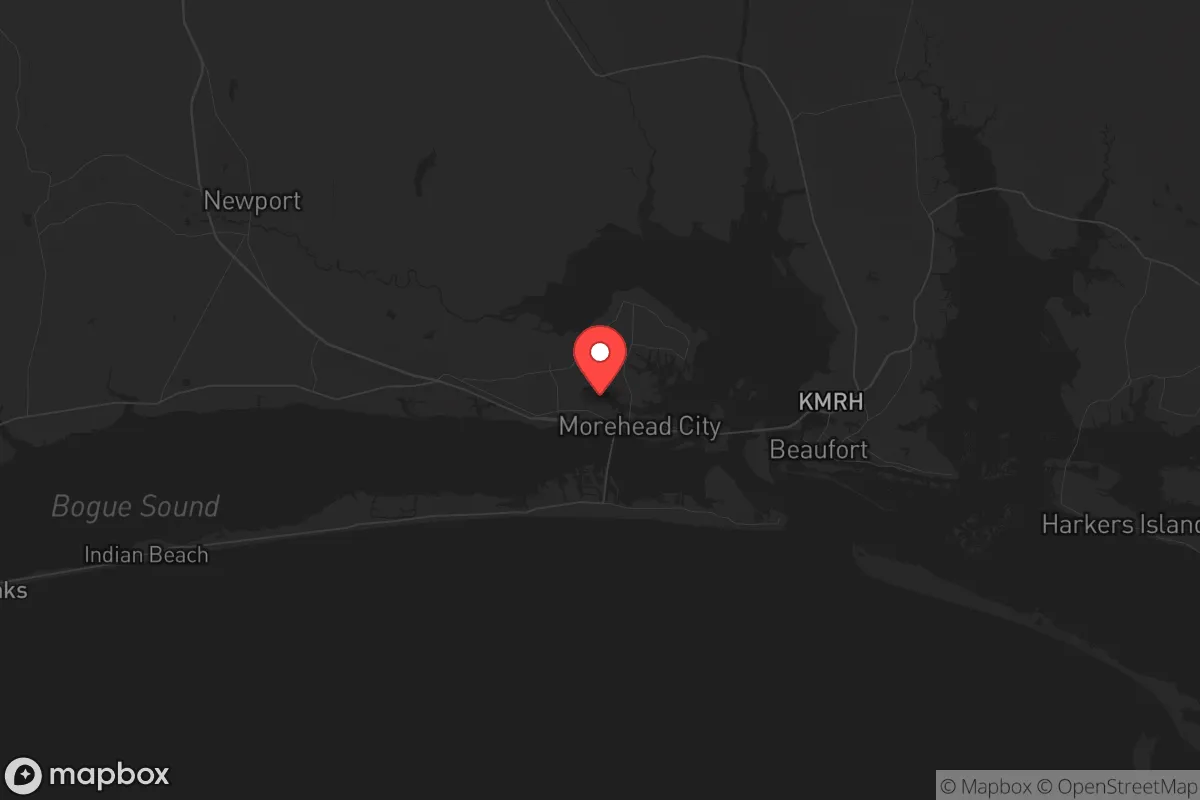
Key Distances
Regional Safe Places
Below is our recommended "safe zones" in North Carolina and the surrounding area based on our strategic heuristics. For most people, it's unrealistic to live in a “safe zone” full-time due to work, family or other personal reasons. They tend to be more rural. However, many of these areas are perfect for second homes and retreat properties that double as a vacation home or even a short-term rental.

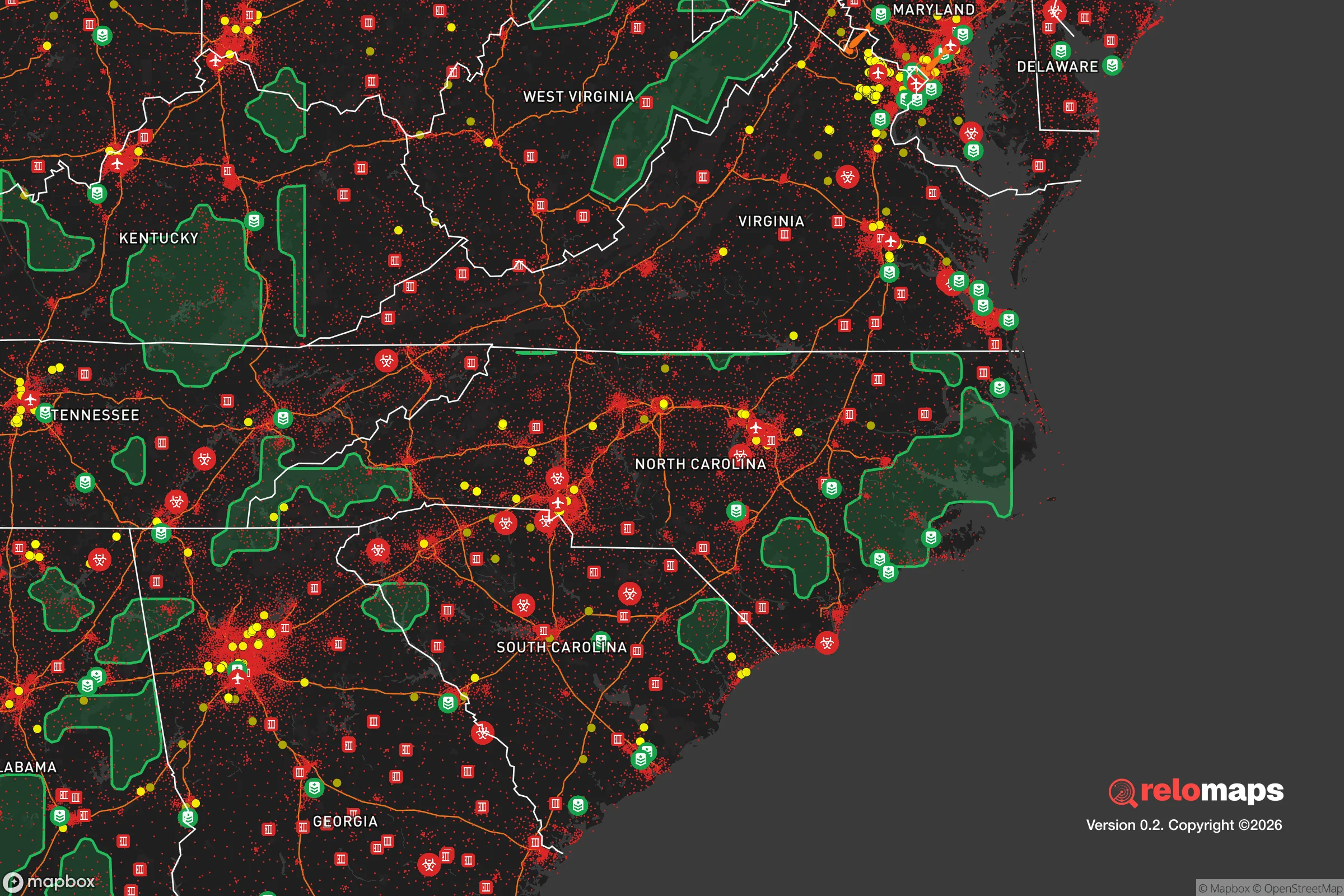


Important Note: For informational purposes only. This does not mean nothing bad ever happens in the green zones. Please use common sense. This is based on public data and modeled with AI. We tried to take a conservative approach but mistakes happen. We update this regularly as new information becomes available.
Solar Generator Recommendations
Backup power matters more here than in safer locations. We've picked three solar generators across budgets and capacity tiers — start with the budget unit if you only need a few essentials, or step up if you want to run a fridge and HVAC for days at a time.

Jackery Portable Power Station Explorer 300
Budget OptionPower on the Go: Weighing only 11 lbs, it's convenient to set up and store with book-sized foldable solar panels

BLUETTI Portable Power Station AC180
Designed for both indoor and outdoor scenarios, AC180 is highly capable as it has a robost capacity and continuous output power.

EF ECOFLOW DELTA Pro Ultra Power Station
Upgraded PickEcoFlow DELTA Pro Ultra is a whole-home energy system designed to grow with your family. Integrated with the Smart Home Panel 2, it scales to meet your evolving energy needs — keeping your home powered, intelligent, and secure through every stage of life.
We earn a commission, at no additional cost to you.
Strategic Assessment Analysis
Morehead City, North Carolina, occupies a strategic position on the Crystal Coast that offers a compelling mix of natural resilience and practical self-sufficiency for those serious about disaster readiness. Its location on Bogue Sound, shielded from the open Atlantic by the barrier islands of Bogue Banks, provides a rare combination of maritime access and natural protection that few coastal towns can match. For the relocator weighing security, sustainability, and long-term viability, Morehead City presents a defensible, resource-rich environment that remains close enough to regional infrastructure without being swallowed by the vulnerabilities of a major metropolitan area.
Geographic position and natural advantages for long-term security
Morehead City sits at the confluence of the Newport River, Bogue Sound, and the Atlantic Intracoastal Waterway, giving it a natural moat-like quality that complicates any large-scale approach by land. The town is built on a relatively high, well-drained peninsula compared to much of the surrounding coastal plain, which reduces flood risk in the core downtown and residential areas. The barrier islands of Bogue Banks—specifically Atlantic Beach and Emerald Isle—act as a first line of defense against storm surge, absorbing the brunt of hurricane energy before it reaches the mainland. This geographic layering means that while Morehead City is undeniably coastal, it is not the most exposed spot on the North Carolina shore. The area also benefits from the proximity of the Croatan National Forest to the north and the vast pocosin wetlands of the Inner Banks, which create a buffer of undeveloped, low-population terrain that limits urban sprawl and provides natural resources for hunting, foraging, and timber. For a relocator thinking about strategic depth, the Crystal Coast offers a rare combination: saltwater access for trade and protein, freshwater from the Newport River and numerous creeks, and a climate that supports year-round agriculture in the surrounding Carteret County farmland.
Risks, exposures, and proximity to fallout-relevant landmarks
No honest assessment can ignore the risks. Morehead City sits in Hurricane Alley, and while the barrier islands provide some protection, the town is not immune to direct hits. Hurricane Florence in 2018 caused significant flooding in low-lying areas, particularly along the Newport River and in the more exposed neighborhoods near the waterfront. Storm surge from a major Category 3 or higher storm could still inundate parts of the downtown and the causeway connecting to Atlantic Beach. The town is also vulnerable to nor'easters, which can bring prolonged coastal flooding and wind damage without the warning time of a hurricane. Beyond weather, the area's strategic value as a deepwater port—Morehead City is home to the North Carolina State Port, a major facility for bulk cargo including phosphate, coal, and forest products—makes it a potential target in a conflict scenario. The port is also adjacent to the Marine Corps' Camp Lejeune and the Cherry Point Marine Corps Air Station, both of which are high-value military installations. For a relocator concerned about man-made risks, being within 30 miles of these bases is a double-edged sword: the military presence provides security and economic stability, but it also makes the region a plausible target for long-range strikes or sabotage. The nearby Morehead City–Beaufort area also hosts NOAA's National Centers for Coastal Ocean Science and the Duke University Marine Lab, which are low-risk but add to the area's profile. On balance, the risks are real but manageable for a prepared individual—the hurricane threat is the primary concern, and the military proximity is more of a strategic asset than a liability for most relocators.
Practical resilience for a relocator: food, water, energy, and defensibility
For the self-sufficient relocator, Morehead City offers strong fundamentals. Food security is excellent: the town sits at the heart of one of the most productive fishing grounds on the East Coast, with year-round access to flounder, shrimp, blue crabs, oysters, and a variety of pelagic fish from the Gulf Stream just 30 miles offshore. The surrounding Carteret County farmland produces sweet potatoes, corn, soybeans, and livestock, and there are multiple farmers' markets and local meat processors within a 20-minute drive. Water is abundant but requires treatment: the area's shallow aquifer is high in iron and tannins, and while municipal water is treated, well water is common in rural areas and needs filtration. The Newport River and Bogue Sound provide surface water for those with the means to purify it. Energy resilience is moderate: the grid is served by Duke Energy Progress, and power outages are common during storms, sometimes lasting days. Solar potential is good—the area averages over 200 sunny days per year—but salt spray and hurricane winds require robust mounting systems. Propane and generator fuel are widely available at local suppliers, and the port ensures a steady supply of diesel and gasoline even during disruptions. Defensibility is a mixed picture: the town's layout, with its narrow causeways and bridges to the barrier islands, creates natural chokepoints that could be controlled by a determined group. The downtown is compact and walkable, with a mix of older brick buildings that offer cover and concealment. However, the suburban sprawl along Highway 24 and the more exposed neighborhoods near the water are harder to secure. The local law enforcement presence is solid—Carteret County has a well-funded sheriff's office and the town has its own police department—but in a prolonged crisis, the population of roughly 10,000 in the town and 70,000 in the county would strain resources. The key advantage is the area's relative isolation: the nearest major city, Jacksonville (home to Camp Lejeune), is 45 minutes west, and Raleigh is over two hours away. This distance from large population centers reduces the risk of refugee flows and resource competition in a collapse scenario.
Overall, Morehead City presents a strong strategic picture for the relocator who values coastal access, natural resources, and a manageable risk profile. The hurricane threat is real but can be mitigated with proper construction, supplies, and an evacuation plan. The military presence adds a layer of security and economic stability that most coastal towns lack. The food and water situation is among the best on the East Coast for a self-sufficient household. The town's geography—protected by barrier islands, surrounded by water and forest, and distant from major urban centers—gives it a natural defensibility that is rare in the modern Southeast. For the reader who is serious about disaster readiness and willing to invest in storm-hardening, water treatment, and energy independence, Morehead City offers a balanced, livable base of operations that can weather both natural and man-made disruptions without requiring a complete retreat from modern life. It is not a bunker, but it is a smart, strategic choice for those who want to be prepared without living in fear.

* Values derived from national, state, county, city and local statistics and may differ in a specific area. Last updated: 2026-09-20T00:44:06.000Z
Narrative content on this page is AI-generated and may contain mistakes. Verify any details that matter before acting on them.
ReloMaps may earn a commission from affiliate links at no extra cost to you.

