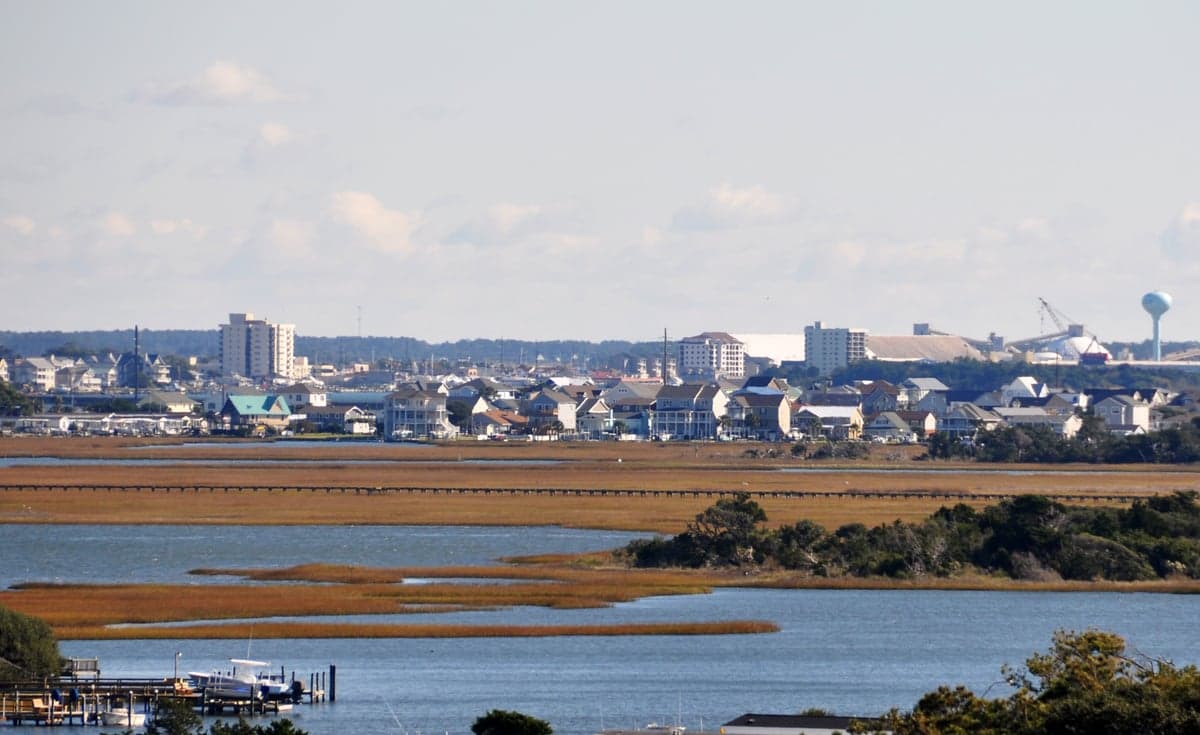
Photo: Wikipedia
Quality of Life in Morehead City, NC
A high quality of life with strong walkability, manageable living costs, healthy neighborhood signals, and solid amenity access.
What does Quality of Life tell us?
Quality of Life blends cost of living, nearby amenities, socioeconomic signals, and neighborhood character. City-level scores represent the whole municipality; individual neighborhoods can differ.
What does this tell us?
Quality of Life blends cost of living, nearby amenities, socioeconomic signals, and neighborhood character. City-level scores represent the whole municipality; individual neighborhoods can differ.
Cost of Living
5% above national average
The Real Cost of Living in Morehead City, NC for 2026
| Tier | Individual | Family (4) |
|---|---|---|
| Survival | $18k | $34k |
| Comfortable | $64k | $95k |
| Luxury | $97k+ | $150k+ |
| Elite (Top 5%) | $133k+ | $207k+ |
57%
The Area Signal
A metric tracking the socioeconomic signals of the area.
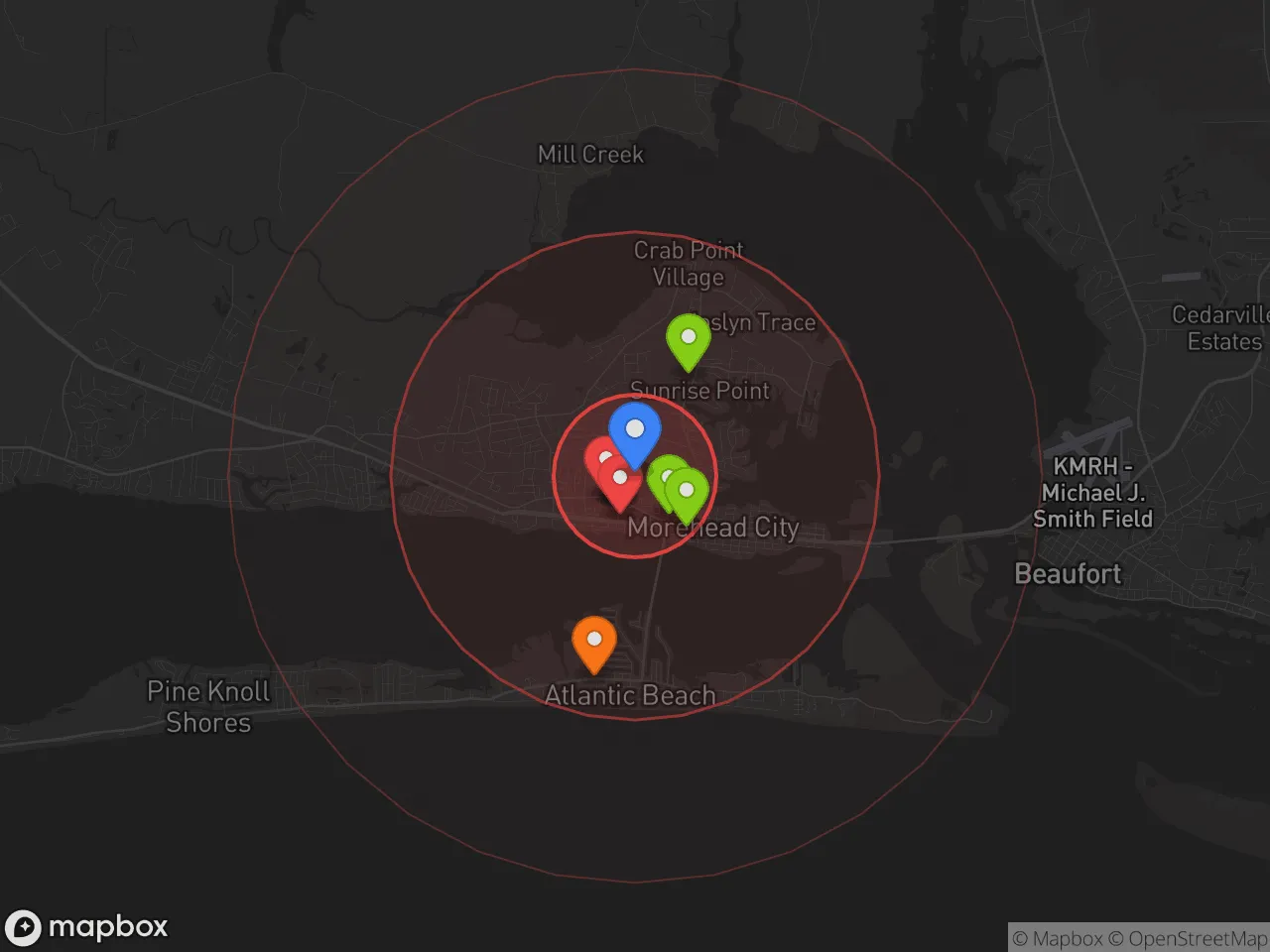
Hobbies
Explore the areaGroceries
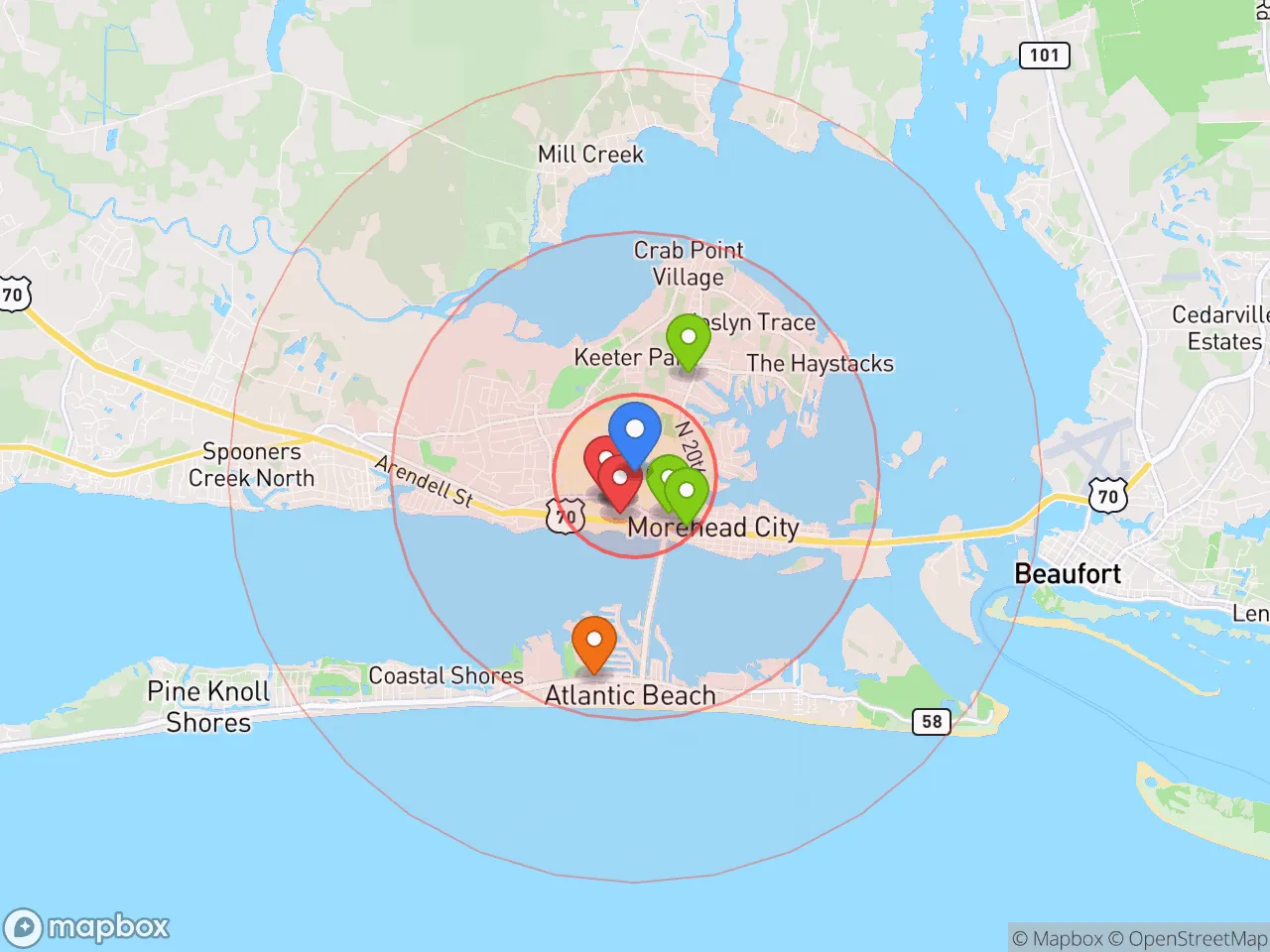
4 within 10 miles
Gas
7 within 10 miles
Hospital
1 within 20 miles
Airport
RDU — Raleigh–Durham International
Post Office
USPS — Morehead City, NC
Critical Amenities
Quality-of-Life Analysis
Morehead City, North Carolina, presents a quality of life defined by coastal access and a moderately higher cost of living that attracts a mix of retirees, second-home owners, and marine-industry professionals. With a cost-of-living index of 105 (just above the national average of 100), the area offers a more affordable entry point than many other beach towns along the Eastern Seaboard, while still commanding a premium over inland Carteret County communities. The median home value of $330,900 and median rent of $1,122 reflect a market where housing is the primary driver of the index, but where wages and local employment in fishing, tourism, and the nearby Marine Corps Air Station Cherry Point help sustain a stable, year-round population.
Cost of living, housing affordability, and how it compares to nearby areas
Morehead City’s cost-of-living index of 105 is noticeably lower than that of Wilmington (index ~108) or the Outer Banks communities (index often above 120), making it a relative bargain for coastal North Carolina. The median home value of $330,900 is roughly 15% below the statewide median for beach-adjacent towns, though it has risen steadily since 2020 as remote workers and retirees from higher-cost states like New York and Virginia have moved in. Renters face a median of $1,122 per month, which is about $200 less than comparable units in Beaufort or Atlantic Beach just across the bridge. The average commute of just over 18 minutes is significantly shorter than the national average of 26 minutes, a practical advantage for workers in the local seafood processing plants, the port, or the tourism sector. However, property taxes in Carteret County are moderate (around 0.58% of assessed value), and there is no state income tax on Social Security benefits, which helps stretch retirement budgets further.
Amenities, schools, and what daily life feels like for families and retirees
Daily life in Morehead City revolves around the waterfront: the Morehead City Port is a working harbor that supports commercial fishing and shipping, while the Railroad Depot District offers a walkable cluster of restaurants, breweries, and boutiques along Arendell Street. For families, Carteret County Public Schools are generally well-regarded, with Morehead City High School and West Carteret High School both earning B ratings from Niche and offering strong STEM and maritime science programs. The North Carolina Aquarium at Pine Knoll Shores is a 10-minute drive, and the Crystal Coast beaches (Atlantic Beach, Emerald Isle) are within 15 minutes, providing year-round recreation from fishing and boating to birding and kayaking. Healthcare is anchored by Carteret Health Care Medical Center, a 135-bed facility that handles most routine and emergency needs, though residents travel to Greenville or Raleigh for specialized care. The pace is noticeably slower than in Raleigh or Charlotte; restaurants close early, and the social calendar is driven by seasonal events like the Big Rock Blue Marlin Tournament and the Morehead City Seafood Festival.
Who thrives here? Retirees and remote workers who want a quieter coastal lifestyle without the crowds and costs of Myrtle Beach or the Outer Banks will find Morehead City a practical fit. Families with school-age children benefit from the short commutes and strong local schools, while marine-industry workers (fishermen, boat builders, port employees) form the backbone of the year-round community. Those seeking nightlife, cultural diversity, or a fast-paced urban environment should look elsewhere; Morehead City is a small town (population roughly 10,000) where the biggest decision of the day is often whether to eat fried shrimp or grilled tuna. For anyone who values water access, moderate costs, and a tight-knit community, it delivers a high quality of life at a price that remains within reach for many middle-class households.

Crime in Morehead City, NC
Generally safer than 72% of comparable U.S. locations.
Violent CrimeViolent Crime Analysis
Property CrimeProperty Crime Analysis
Crime Analysis
Morehead City, North Carolina, presents a mixed safety profile for prospective residents. While its violent crime rate of 268.4 per 100,000 residents is notably lower than the national average, its property crime rate of 2,008 per 100,000 is significantly higher, creating a situation where theft and burglary are more pressing daily concerns than violent assault. The city's status as a coastal tourism and commercial fishing hub introduces seasonal fluctuations in crime, with summer months typically seeing an uptick in property-related offenses.
Crime in context
When compared to state and national benchmarks, Morehead City's violent crime rate of 268.4 per 100,000 is roughly 28% lower than the U.S. average of approximately 380 per 100,000 and aligns closely with North Carolina's statewide rate. However, the property crime rate of 2,008 per 100,000 is about 40% higher than the national average of roughly 1,950 per 100,000 and exceeds the North Carolina average by a similar margin. This disparity means residents are far more likely to experience a break-in, vehicle theft, or larceny than a violent confrontation. The city's position within Carteret County, which has historically leaned conservative in its judicial elections, may provide some reassurance: local district attorneys and judges in this region have generally pursued tougher sentencing guidelines compared to more progressive urban jurisdictions, which can act as a deterrent for repeat offenders. In contrast, larger metro areas with liberal prosecutors often see higher recidivism rates due to lenient plea deals and reduced incarceration, a dynamic that does not currently define Morehead City's justice environment.
What residents experience
Daily life in Morehead City involves a heightened awareness of property security. Residents commonly install outdoor lighting, security cameras, and deadbolt locks as standard precautions. The most frequent property crimes include theft from vehicles (especially in waterfront parking areas), bicycle theft, and burglaries of unoccupied seasonal homes. Violent crime is rare but not absent, with incidents typically concentrated in late-night hours near bars and entertainment venues along Arendell Street and the waterfront boardwalk. The Carteret County Sheriff's Office and Morehead City Police Department maintain a visible presence, with response times averaging under 10 minutes in the city core. Community policing initiatives, including neighborhood watch programs in areas like the Country Club Hills and Harborwalk subdivisions, have helped keep violent crime contained.
Neighborhood-level variation is notable. The more affluent waterfront areas along Bogue Sound and the Atlantic Beach Causeway see the lowest crime rates, while older residential blocks near the downtown commercial corridor and the Morehead City Port area report higher property crime incidents. The Bridges Street and 9th Street corridors have historically seen more police activity, though violent incidents remain sporadic. Prospective renters and buyers should prioritize properties with off-street parking and secure storage, as opportunistic theft is the primary risk across all neighborhoods. Overall, Morehead City offers a safe environment for families and retirees who take standard urban precautions, with the caveat that property crime requires consistent vigilance.
* Values derived from national, state, county, city and local statistics and may differ in a specific area. Last updated: 2026-09-20T00:44:06.000Z
Narrative content on this page is AI-generated and may contain mistakes. Verify any details that matter before acting on them.
ReloMaps may earn a commission from affiliate links at no extra cost to you.

