 Popular
Photo: Wikipedia
Find The Best Places To Live
in Holly Springs
PRO TIP! You can paste a Zillow or Redfin link to get info on that property.
What It's Like Living in Holly Springs, NC
If you picture a place that feels like a permanent Saturday morning in early fall—neighbors out walking dogs, kids on bikes, the smell of a grill firing up—you’re picturing Holly Springs. It’s a fast-growing Wake County town of about 43,400 people that has somehow held onto a small-town, family-first identity even as new subdivisions and shopping centers seem to pop up every few months. The vibe is decidedly suburban, affluent, and oriented around raising kids, but there’s enough local character and outdoor access to keep it from feeling like a generic bedroom community.
The Daily Rhythm: Work, School, and the Weekend Reset
Most people here live by the commute clock. The average drive to work is about 28 minutes, which usually means heading up US-1 or NC-55 toward Raleigh, Cary, or the Research Triangle Park. That’s a real chunk of the day, but residents will tell you it’s a trade-off they accept for the space and safety they get at home. The median household income sits at $132,435, and with 67.7% of adults holding a college degree, the workforce is heavy on tech, healthcare, and biotech professionals. You see a lot of Subarus and minivans in school drop-off lines, and a lot of remote workers setting up home offices in those new-build neighborhoods.
Weekends here are active but low-key. Holly Springs has a strong network of greenways and parks—Bass Lake Park with its walking trail and fishing pier is a favorite, and the Holly Springs Cultural Center hosts everything from community theater to concerts. The Holly Springs Farmers Market runs from spring through fall and is a genuine social hub, not just a place to buy tomatoes. For errands and shopping, most people head to the Waverly Place shopping center in nearby Cary or the newer retail along NC-55, but there’s a growing local restaurant scene—Mamma Mia’s for Italian, La Cocina de Doña Mary for authentic Mexican, and Bottle Theory Brewing for a post-hike beer.
Sports, Schools, and What Binds the Community
School sports are a genuinely big deal here. Holly Springs High School and the newer Willow Spring High School draw big crowds for Friday night football, and the local youth soccer and baseball leagues are well-organized and competitive. There’s no major pro team in town, but residents are passionate about the Carolina Hurricanes (NHL) and NC State Wolfpack—you’ll see plenty of red and black on game days. The Holly Springs Salamanders, a collegiate summer baseball team, play at the North Main Athletic Complex and offer a cheap, family-friendly night out that feels like a throwback.
The schools themselves are a major reason people move here. The Wake County Public School System is one of the largest and most diverse in the country, and Holly Springs’ elementary and middle schools consistently rank well. The median age of 36.3 reflects a town full of families with young children, and the school calendar—with its traditional and year-round tracks—shapes the entire community’s rhythm. PTA meetings and school fundraisers are well-attended, and it’s common to see neighbors helping with carpool or coaching youth teams.
What Frustrates People, and What They’d Never Trade
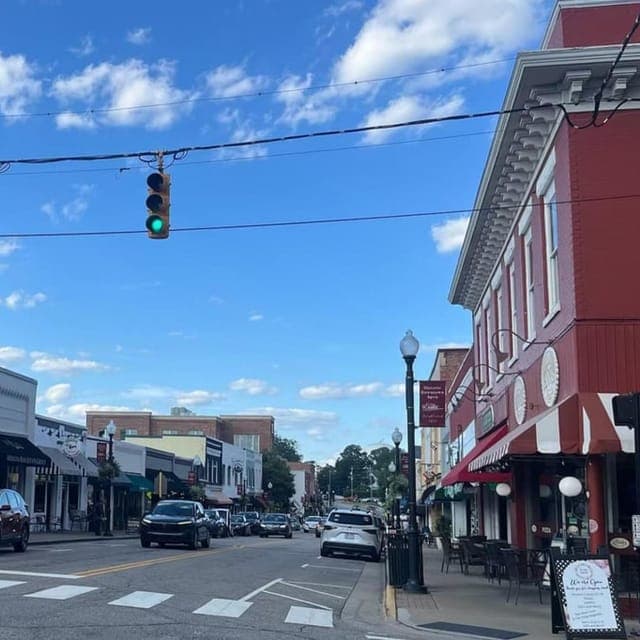
Let’s be honest: the biggest complaint is traffic. US-1 and NC-55 can back up badly during rush hour, and the rapid construction of new homes has outpaced road improvements. The cost of living index sits at 165 (well above the national average of 100), and the median home value of $485,500 puts homeownership out of reach for many younger singles or renters. If you’re looking for a vibrant nightlife scene or a walkable downtown, this isn’t it—most restaurants close by 9 or 10 p.m., and the “downtown” area is a handful of blocks.
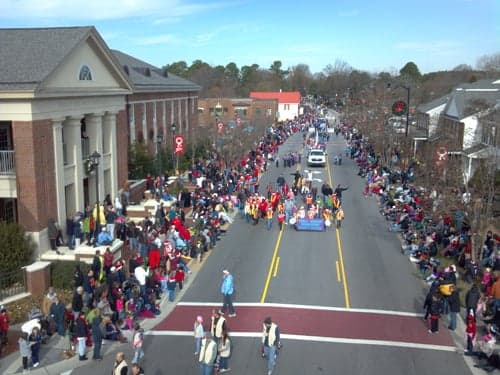
What residents love, though, is the safety and predictability. The violent crime rate is 88.9 per 100,000 people—dramatically lower than the national average—and people genuinely feel comfortable letting kids play outside or walk to a friend’s house. The town’s events, like the Holly Springs Christmas Parade and the Fourth of July celebration at Sunset Lake, draw thousands and feel like genuine community gatherings, not tourist attractions. There’s a strong sense that people here are looking for the same thing: a calm, safe, well-run place to raise a family, with good schools and neighbors who wave.
One cultural quirk: Holly Springs has a bit of a reputation for being “too perfect” or homogeneous. It’s overwhelmingly family-oriented, and single adults or empty-nesters sometimes feel a little out of place. But for the target audience—families and conservative-leaning professionals who value stability, space, and good schools—it delivers exactly what it promises. The weather follows a classic four-season pattern: hot, humid summers, mild falls, chilly but not brutal winters, and a beautiful, blooming spring. The main seasonal rhythm is the school year, and the town’s social calendar revolves around it.

Similar towns to Holly Springs
* Values derived from national, state, county, city and local statistics and may differ in a specific area. Last updated: 2026-10-10T16:27:40.000Z
Narrative content on this page is AI-generated and may contain mistakes. Verify any details that matter before acting on them.
ReloMaps may earn a commission from affiliate links at no extra cost to you.

