 Popular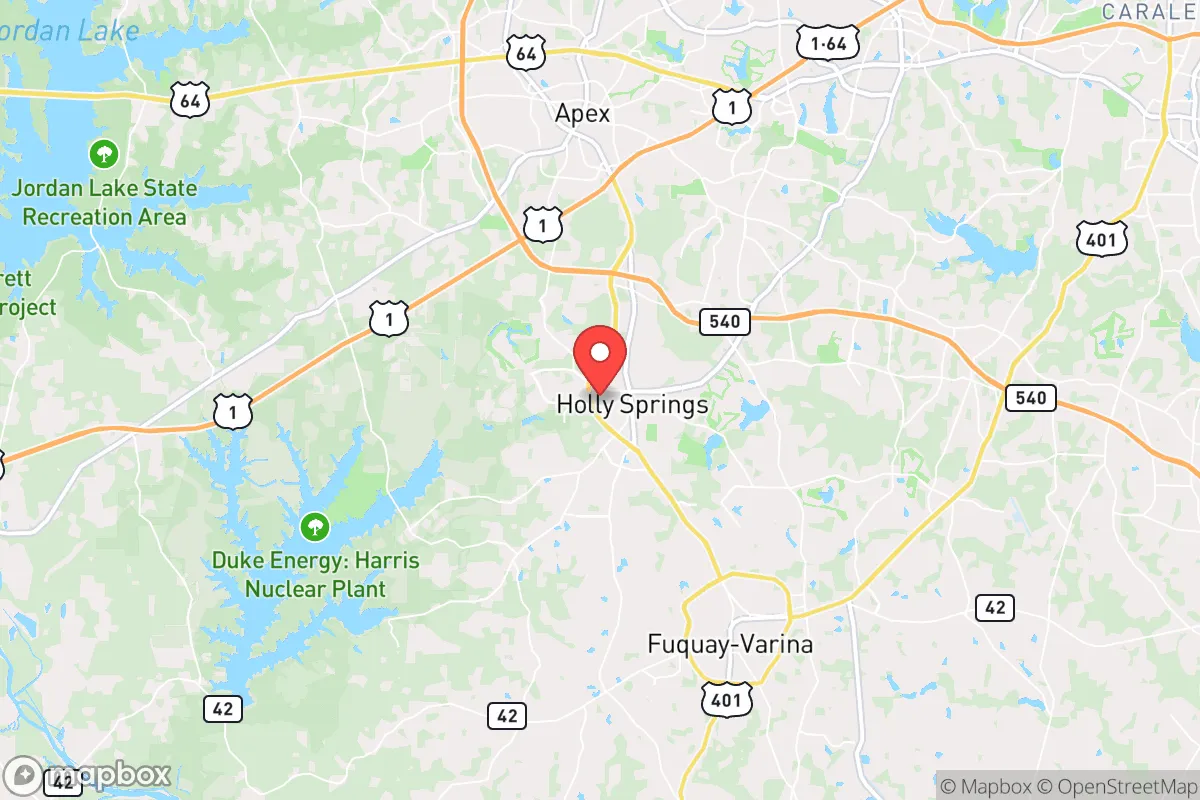
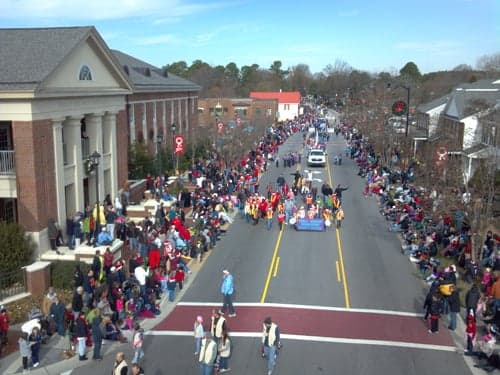
Photo: Wikipedia
Political ClimatePolitical Climate in Holly Springs, NC
District shown is the primary district for this city’s centroid. Cities may span multiple districts.
Local Political AnalysisPolitical Analysis of Holly Springs, NC
Holly Springs is a deep blue island in a purple-to-red state, and that’s not an accident—it’s a story of explosive growth and demographic change. The town’s Cook Partisan Voting Index (PVI) of D+23 means it votes about 23 points more Democratic than the national average, a stark contrast to North Carolina’s overall PVI of R+1. This isn’t a sleepy Southern town that shifted overnight; it’s a place that has been reshaped by waves of newcomers—tech workers, research professionals, and families drawn to the Research Triangle’s jobs and schools. If you’d visited twenty years ago, you’d have found a much more conservative, rural-leaning community. Today, the politics here feel more like a suburb of Boston or Seattle than a town in the Piedmont.
How it compares
To understand Holly Springs, you have to look at its neighbors. Drive ten miles north to Apex or Cary, and you’ll find similarly blue-leaning suburbs—Cary’s PVI is around D+15. But head west to Fuquay-Varina or south to Dunn, and the political landscape shifts noticeably redder. The real contrast is with rural Wake County’s fringes and exurbs like Zebulon or Wendell, where conservative values still dominate. Statewide, North Carolina’s R+1 rating reflects a near-even split, but that’s a composite of deep-red rural counties (like Johnston County, just east of Holly Springs, which votes R+20+) and deep-blue urban centers (like Durham, D+30+). Holly Springs sits firmly in the blue camp, but its politics are more moderate than Durham’s—think pragmatic, educated professionals who lean left on social issues but are fiscally cautious. The town’s rapid growth (population nearly doubled since 2010) has been fueled by Lenovo, IBM, and Epic Games in nearby Cary and Raleigh, bringing in a workforce that tends to vote Democratic. Meanwhile, the surrounding state legislature has remained Republican-controlled, creating a constant tension between local and state policy.
What this means for residents
For liberal residents, Holly Springs feels like a comfortable bubble. You’ll see Harris-Walz yard signs in many neighborhoods, and local schools and town council tend to reflect progressive priorities—like investments in green spaces, bike lanes, and diversity initiatives. Conservative residents, however, aren’t invisible; they’re a vocal minority, especially in older neighborhoods and among long-time families. They’ll tell you they feel outnumbered at town hall meetings but still find their values represented in state-level politics, from gun laws to tax policy. The practical reality is that Holly Springs is a place where you can live your political life without much friction, but the broader state context means that abortion access, voting laws, and education funding are battleground issues that affect everyone here, regardless of local lean. The town’s trajectory is almost certainly toward becoming even more Democratic as new housing developments fill up with young families and remote workers from blue states. By 2030, Holly Springs could easily hit D+30, mirroring the trend seen in Cary over the past decade.
Culturally, Holly Springs has a few quirks that set it apart from both its red neighbors and its blue peers. The town’s annual HollyFest and Farmers Market are proudly local, but you’re just as likely to hear someone discussing RTP’s latest biotech IPO as you are to hear about high school football. There’s a noticeable lack of the “Old South” trappings you’d find in smaller towns—no Confederate monuments in the town square, for instance—but also a pragmatic, “let’s get things done” attitude that avoids the more activist edge of Durham or Chapel Hill. Policy-wise, the town council has focused on managing growth (zoning, traffic, school capacity) rather than hot-button social issues, which keeps the temperature low. For a newcomer, the biggest surprise might be how apolitical daily life feels—neighbors help each other regardless of party, and the biggest local debates are about roundabouts versus traffic lights, not national politics. That’s the Holly Springs way: blue on the ballot, but purple in the streets.

State Political ClimatePolitical Climate in North Carolina
State Political AnalysisPolitical Environment in the State
North Carolina is a classic purple state that has been trending rightward in recent cycles, with a Cook PVI of R+1 that masks a deeply competitive and polarized electorate. The state’s political identity is shaped by a coalition of rural and small-town conservatives, suburban moderates, and a rapidly growing urban liberal base, creating a volatile mix that has swung from Obama in 2008 to Trump in 2024. Over the past 10-20 years, the state has shifted from a reliably Republican stronghold in presidential races to a true battleground, driven by massive in-migration to the Charlotte and Raleigh-Durham metros, while the rural east and mountain west have hardened their GOP allegiance.
Urban vs. rural divide
The political map of North Carolina is a textbook study in urban-rural polarization. The major metros—Charlotte (Mecklenburg County), Raleigh and Durham (Wake and Durham Counties), and Greensboro and Winston-Salem (Guilford and Forsyth Counties)—are solidly Democratic, powered by young professionals, university communities, and diverse populations. In 2024, Mecklenburg County gave Kamala Harris a 30-point margin, while Wake County delivered a 25-point win. These metros are the engine of the state’s liberal growth, with transplants from blue states accelerating the trend. In contrast, the rural east—places like Greenville (Pitt County) and Fayetteville (Cumberland County)—leans Republican, though Fayetteville’s military presence adds a moderate streak. The mountain and foothill counties, including Asheville (Buncombe County), are a fascinating exception: Asheville itself is a deep-blue liberal enclave, but the surrounding rural counties are among the most conservative in the state. The suburbs are the true battlegrounds: Wake Forest and Apex outside Raleigh, and Concord and Huntersville near Charlotte, have been trending left as they densify, but still host competitive races that decide statewide outcomes.
Policy environment
North Carolina’s policy environment is a mix of conservative governance and pragmatic moderation. The state has a flat income tax rate of 4.5%, down from 7% in 2013, with a scheduled drop to 3.99% by 2027—a clear draw for conservative relocators. There is no state property tax, but local rates vary widely; Charlotte’s combined rate is around 1.2%, while rural counties like Columbus can exceed 1.5%. The regulatory posture is business-friendly, with a right-to-work law and a corporate tax rate of 2.5%, among the lowest in the nation. Education policy is a flashpoint: the state funds a private school voucher program (the Opportunity Scholarship Program) that has expanded to all income levels, and charter schools are plentiful. Healthcare is a mixed bag—the state did not expand Medicaid until 2023, and only after a bipartisan deal, leaving roughly 600,000 uninsured before expansion. Election laws are moderately restrictive: voter ID is required (a 2018 law upheld by the courts), early voting is generous (17 days), and same-day registration is available during early voting. The state’s 2023 redistricting map was drawn by the Republican legislature and is widely seen as gerrymandered, giving the GOP a 10-4 advantage in the U.S. House delegation despite a near-50/50 statewide vote.
Recent policy direction
The last five years have seen North Carolina move decisively right on several fronts, though with notable compromises. In 2023, the Republican supermajority passed a 12-week abortion ban (down from the previous 20-week limit), overriding Governor Roy Cooper’s veto. Gun laws remain permissive: permitless carry of concealed handguns became law in 2023, and the state has a Castle Doctrine and Stand Your Ground statute. On education, the 2024 Parents’ Bill of Rights (HB 755) requires schools to notify parents of curriculum changes and restricts instruction on gender identity in K-4 classrooms. Property rights are strong, with no statewide rent control and a streamlined process for annexation. On privacy and surveillance, the state passed a 2023 law restricting the use of facial recognition by law enforcement without a warrant. Voting access saw a tightening in 2024 with a new law reducing the time to cure absentee ballot errors from 9 days to 3. The state has not legalized recreational marijuana, though medical use is limited to a pilot program for severe conditions. For a relocator, the practical takeaway is that North Carolina is a state where conservative priorities on taxes, guns, and parental rights have been enacted, but where Democratic governors (Cooper until 2025, now Republican Josh Stein) have moderated the most extreme proposals.
Civil unrest & political movements
North Carolina has a history of visible political activism on both sides. The 2020 protests in Charlotte and Raleigh over George Floyd’s death were large but largely peaceful, though property damage occurred in Charlotte’s Uptown area. The state has a strong organized left, with groups like the NC NAACP and the progressive advocacy group Democracy NC pushing for voting rights and criminal justice reform. On the right, the state has a robust Second Amendment movement, with groups like Grass Roots North Carolina holding annual rallies at the state capitol. Immigration politics are less heated than in border states, but Charlotte and Durham have sanctuary-style policies limiting cooperation with ICE, which has drawn legislative pushback—a 2024 bill (HB 10) would have mandated full compliance but failed in the Senate. Election integrity remains a live issue: the 2020 and 2024 elections saw no major fraud, but the GOP-led legislature has pursued audits and tightened ballot rules, fueling ongoing debate. A new resident would notice the political energy most in the Raleigh-Durham area, where yard signs and bumper stickers are ubiquitous, and in the rural counties, where Trump flags still fly. The state’s motto, “Esse Quam Videri” (To be, rather than to seem), feels apt—the polarization is real but rarely boils over into daily life.
Projection
Over the next 5-10 years, North Carolina is likely to remain a competitive purple state, but with a slight rightward tilt. In-migration from blue states—roughly 100,000 new residents per year—is concentrated in the urban metros, which will continue to boost Democratic margins in Charlotte and Raleigh. However, these newcomers are often moderate or conservative-leaning professionals who may not shift the needle as much as expected; many are drawn by the low taxes and business climate. The rural population is aging and shrinking, but the GOP’s structural advantages in redistricting and the state legislature (where maps are drawn by the legislature, not an independent commission) will likely preserve Republican control of the General Assembly through 2030. The wildcard is the growing Hispanic population, now 10% of the state, which leans Democratic but is less partisan than national averages. A new resident moving in now should expect a state that will continue to elect Republican legislatures and occasionally Democratic governors, with policy battles over abortion, education, and voting rights remaining central. The practical implication: if you’re conservative, you’ll find a state that largely aligns with your values on taxes, guns, and school choice; if you’re liberal, you’ll find strong communities in the cities and a chance to influence a close state, but you’ll face an uphill battle on statewide policy.
For someone choosing North Carolina, the bottom line is that you’re getting a state where your vote truly matters—presidential elections are decided by 1-2 points, and state legislative races are often decided by a few hundred votes. The political climate is intense but functional, with a strong economy and low cost of living that soften the edges. Whether you’re a conservative family looking for low taxes and school choice, or a liberal professional seeking a vibrant urban scene, you’ll find your tribe here—just be prepared for your neighbors to have a different one.
* Values derived from national, state, county, city and local statistics and may differ in a specific area. Last updated: 2026-10-10T16:27:40.000Z
Narrative content on this page is AI-generated and may contain mistakes. Verify any details that matter before acting on them.
ReloMaps may earn a commission from affiliate links at no extra cost to you.

