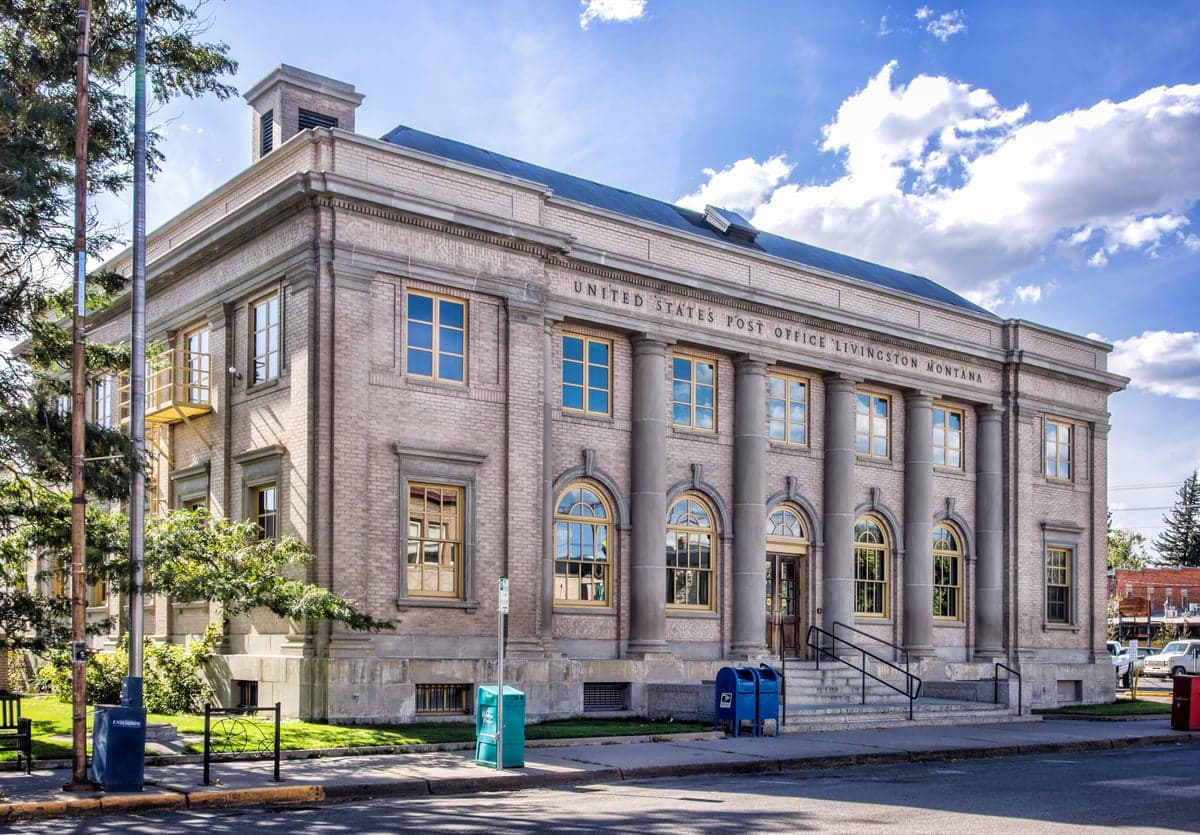
Photo: Wikipedia
Political ClimatePolitical Climate in Park County
Showing district-level results — no local-only data available.
Local Political AnalysisPolitical Analysis of Park County
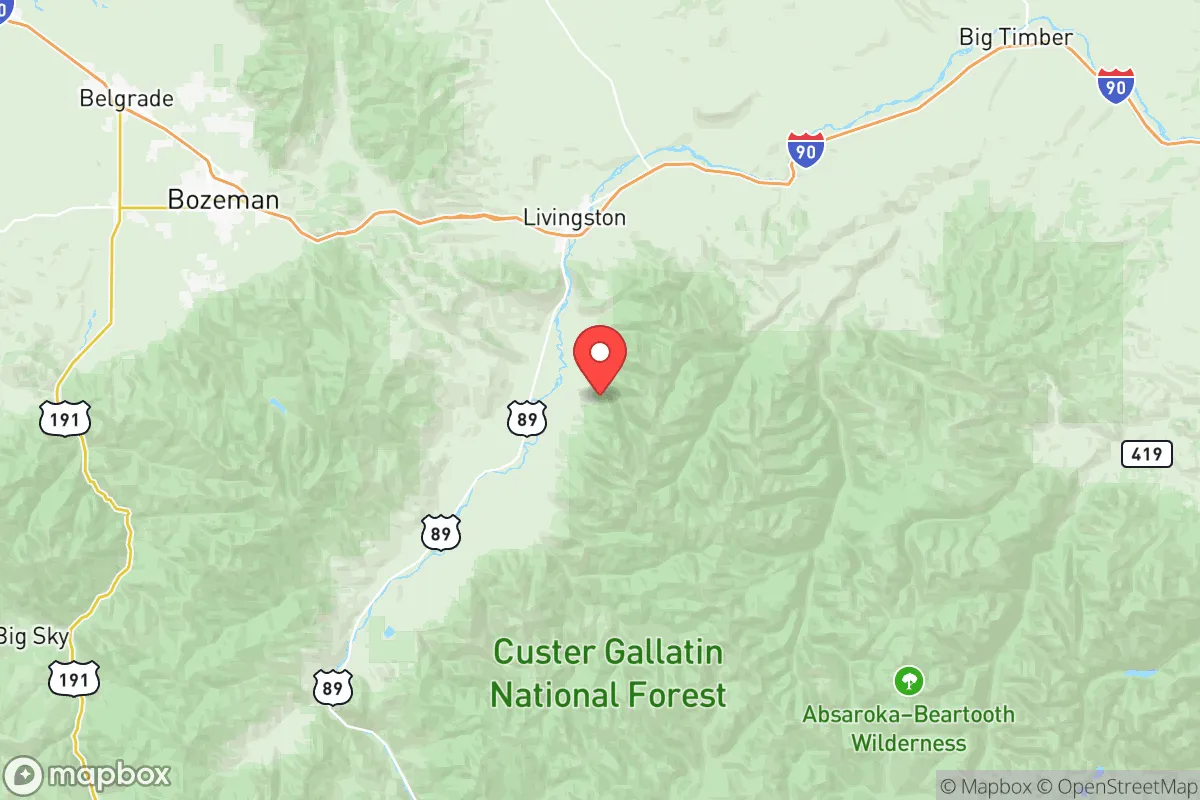
Park County, Montana, is a reliably Republican stronghold with a Cook PVI of R+15, making it significantly more conservative than the state of Montana as a whole, which sits at R+10. This isn't a new development—the county has voted Republican in every presidential election since 2000, often by double-digit margins. However, the political landscape isn't monolithic; you'll find a noticeable split between the more moderate, tourist-driven town of Livingston and the deeply conservative rural areas and smaller communities like Clyde Park and Wilsall.
How it compares
The R+15 rating places Park County about five points to the right of Montana's statewide average. That gap is real and visible on the ground. In the 2024 election, the county gave the Republican presidential candidate roughly 62% of the vote, while the state as a whole landed around 57%. The difference is driven by the rural precincts. Towns like Clyde Park and Wilsall, with their strong agricultural and ranching roots, routinely vote 70-80% Republican. Livingston, the county seat and only real population center, is the swing precinct. It's a classic Western town with a growing arts and outdoor recreation scene, and its precincts often split closer to 50-50 or even lean slightly Democratic in local races. This creates a dynamic where the county's overall conservative tilt is undeniable, but the political conversation inside Livingston city limits can feel much more balanced than the countywide numbers suggest.
What this means for residents
For conservative residents, Park County is a comfortable place to live. Local offices—county commissioners, sheriff, school board—are almost always held by Republicans. The local Republican Party is active and well-organized, and conservative values are the default in most public forums. For liberal residents, the reality is more nuanced. You'll find a vocal and organized Democratic presence in Livingston, and the local Democratic Party has a small but dedicated base. However, they are a clear minority countywide. This means liberal residents often focus their energy on local issues—like land use, water rights, and school funding—where they can find common ground with moderate conservatives, rather than on national partisan battles. The practical effect is that while you won't feel politically isolated in Livingston, you will be in the minority in most county-level decisions.
Culturally, the political divide is softened by a shared identity rooted in the outdoors and a fierce independence. Both conservatives and liberals in Park County tend to be skeptical of heavy-handed government regulation, whether it's from Helena or Washington, D.C. This creates a unique political culture where a rancher and a fly-fishing guide might disagree on national politics but unite to fight a proposed dam or a federal land-use restriction. The county's strong libertarian streak means that policy debates often center on local control and property rights, not just party labels. This shared frontier ethos is the real political story of Park County—a place where the R+15 label is accurate, but the daily political reality is more about pragmatism and community than pure partisanship.

State Political ClimatePolitical Climate in Montana
State Political AnalysisPolitical Environment in the State
Montana is a reliably Republican state at the federal level, with a Cook PVI of R+10, but it’s far from a monolith. The state has shifted rightward over the past 20 years, driven largely by an influx of conservative-leaning newcomers and a rural exodus from the Democratic Party, though a stubbornly competitive Democratic streak survives in a few key population centers and among Native American voters. The practical result is a state that votes for Republicans by comfortable margins in presidential and Senate races, but where the governor’s mansion and legislature have been firmly in GOP hands for most of the last two decades, with the party’s dominance deepening since the 2010s.
Urban vs. rural divide
The political map of Montana is a textbook study in the urban-rural split. The state’s largest city, Billings (Yellowstone County), is a Republican stronghold that has grown more conservative as it’s absorbed out-of-state transplants from places like California and Washington. Missoula (Missoula County) is the clear blue anchor, home to the University of Montana and a reliably Democratic voting bloc that can swing county-level races. Bozeman (Gallatin County) was once a swing area but has moved right in recent cycles as tech and remote workers have poured in, though it still elects some moderate Democrats locally. Helena (Lewis and Clark County), the state capital, leans slightly Democratic due to a concentration of state employees and government workers. The rural counties—like McCone, Garfield, and Petroleum—routinely deliver 80-90% of their votes to Republicans, while the seven Indian reservations (including the Crow and Northern Cheyenne) vote overwhelmingly Democratic, though their turnout is often suppressed by distance and lack of polling access. The divide isn’t just about population density; it’s cultural, with the urban islands of Missoula and parts of Helena feeling distinctly more progressive on social issues than the rest of the state.
Policy environment
Montana’s policy environment is defined by a low-tax, low-regulation posture that appeals to the conservative-leaning relocator. There is no state sales tax, and the income tax is a flat 5.9% as of 2026, down from a progressive structure that topped out at 6.9% a decade ago. Property taxes are moderate but vary significantly by county, with Gallatin County (Bozeman) seeing sharp increases due to skyrocketing home values. The state has a constitutional right to bear arms, and permitless carry was signed into law in 2021. Education policy is a flashpoint: the state has a robust school choice movement, with a tax-credit scholarship program passed in 2023, but public school funding remains a perennial legislative battle, with rural districts often underfunded. Healthcare is a mixed bag—Montana expanded Medicaid under the Affordable Care Act in 2015, a decision that has been renewed but remains controversial among conservatives. Election laws have tightened: voter ID requirements were strengthened in 2021, and same-day voter registration was eliminated in 2023, a move that disproportionately affects Native American voters. The regulatory environment is business-friendly, with minimal red tape for industries like agriculture, mining, and energy, though environmental reviews for new projects can still drag out.
Recent policy direction
The last five years have seen Montana’s legislature push a distinctly conservative agenda, particularly on cultural and liberty issues. In 2021, the state passed a near-total ban on abortion after 20 weeks, and in 2023, it enacted a law restricting gender-affirming care for minors, which has been challenged in court. Gun laws have expanded: permitless carry (2021) and a law prohibiting local governments from enforcing federal gun regulations (2023) are on the books. On parental rights, the legislature passed a bill in 2023 requiring schools to notify parents of any curriculum involving sexual orientation or gender identity, and it banned transgender athletes from women’s sports in 2021. Property rights were strengthened with a 2021 law limiting the use of eminent domain for carbon pipelines. On privacy, Montana passed one of the nation’s strongest data privacy laws in 2023, giving residents control over how companies use their personal data. Voting access has tightened, as noted, but the state also expanded early voting by mail during the pandemic, a practice that remains popular. The overall direction is toward more individual liberty on guns and property, less on reproductive and transgender rights, and a steady push to limit government reach in education and business.
Civil unrest & political movements
Montana is not a state known for large-scale civil unrest, but it has its flashpoints. The most visible in recent years has been the conflict over the Keystone XL pipeline, which saw protests and counter-protests in the eastern part of the state, particularly around the Fort Belknap Indian Reservation. The Yellowstone Club and other high-end developments in the Big Sky area have sparked local backlash over housing affordability and water rights, with some residents forming “slow growth” activist groups. On the right, the Montana Freedom Caucus has become a powerful force in the legislature, pushing for more aggressive conservative policies and often clashing with the more moderate GOP governor. Immigration politics are relatively muted, as Montana has a very small foreign-born population, but there have been isolated incidents of anti-immigrant rhetoric at public meetings. Election integrity has been a hot topic since 2020, with the legislature holding hearings on Dominion voting machines (which are used statewide) and passing the voter ID law, though no widespread fraud has been found. A new resident in Missoula might notice more visible progressive activism—like climate marches or Black Lives Matter rallies—while in Billings or Kalispell, the political energy is more likely to be centered on gun rights rallies or anti-tax protests.
Projection
Over the next 5-10 years, Montana is likely to become more Republican, but with a twist. The in-migration from states like California, Washington, and Colorado is bringing a mix of people: many are conservative-leaning and will continue to push the state rightward, but a significant minority are moderate or liberal, particularly those settling in Bozeman and Missoula. This could create a more polarized landscape, with the urban islands becoming bluer while the rural areas harden red. The state’s population is projected to grow by about 10% by 2030, with most of that growth in the western counties, which could shift the balance in some legislative districts. The Republican Party’s internal divide—between the Freedom Caucus and the more establishment wing—will likely intensify, potentially leading to more gridlock in Helena. Climate change is a wildcard: longer fire seasons and water scarcity could reshape the economy and politics, especially in agricultural and tourism-dependent areas. A relocator moving in now should expect a state that remains deeply conservative on most issues, but with a growing, vocal minority that will keep cultural battles alive, particularly around education and land use.
For a new resident, the bottom line is this: if you’re conservative, you’ll find a state that largely aligns with your values on taxes, guns, and regulation, but you’ll need to navigate a growing progressive presence in the college towns and capital. If you’re liberal, you’ll find a few welcoming communities—Missoula, parts of Helena, and the Flathead Reservation—but you’ll be in the minority statewide, and you’ll need to be comfortable with a political culture that is often hostile to your views. The practical reality is that Montana’s politics are shaped by its geography and its people: independent, resourceful, and deeply skeptical of government overreach, whether from Washington or Helena. That’s the constant that will likely endure, no matter which way the electoral winds blow.
* Values derived from national, state, county, city and local statistics and may differ in a specific area. Last updated: 2026-07-03T02:35:25.000Z
Narrative content on this page is AI-generated and may contain mistakes. Verify any details that matter before acting on them.
ReloMaps may earn a commission from affiliate links at no extra cost to you.

