Photo: Wikipedia
Demographics of Park County
Affluence Level in Park County
A middle-class area roughly in line with national averages across income, home values, education, and employment.
People of Park County
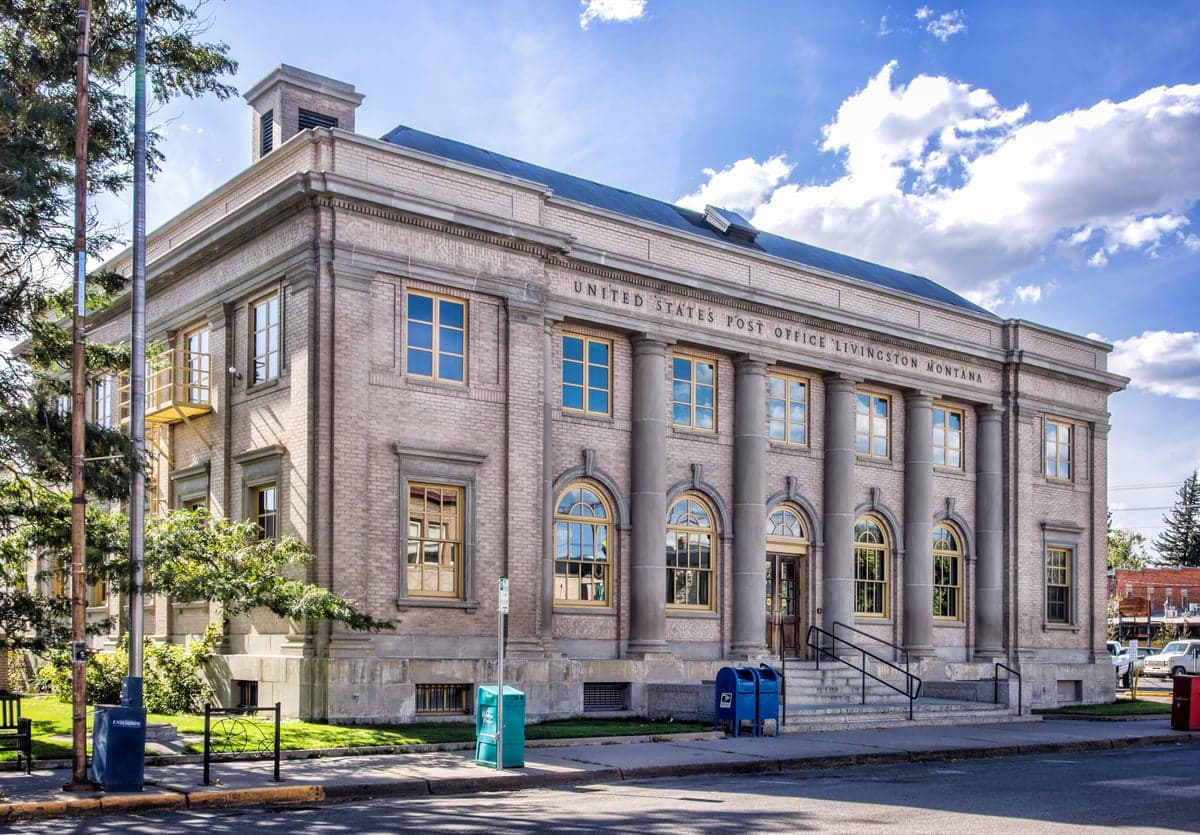
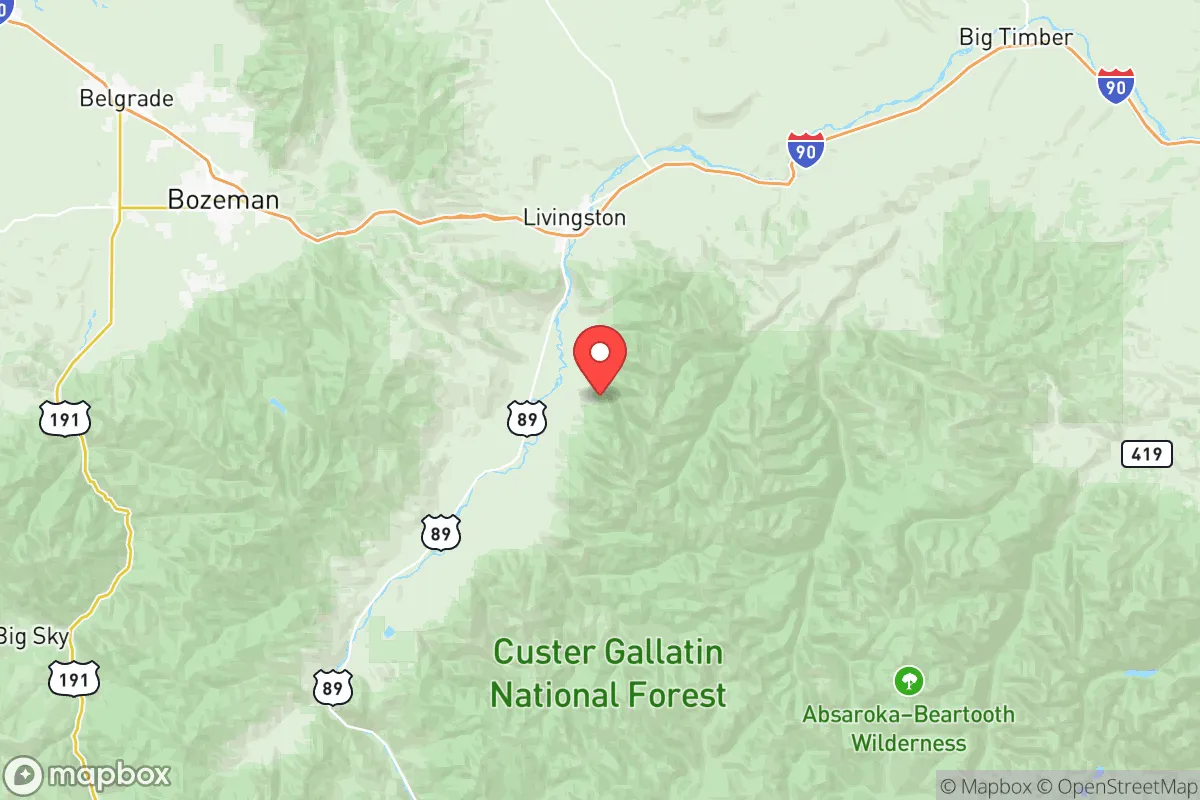
Today, Park County, Montana is home to roughly 17,500 residents, a population that is notably older and more racially homogeneous than the national average, with a strong conservative-leaning character rooted in its ranching and outdoor-recreation heritage. The county’s population is 91.7% white, with a foreign-born share of just 0.7%, and a college attainment rate of 38.1% that reflects the presence of both educated professionals drawn to the Yellowstone region and long-time agricultural families. The county’s identity is shaped by a deep sense of place—anchored by the historic railroad town of Livingston, the gateway community of Gardiner at Yellowstone’s north entrance, and a scattering of small unincorporated settlements like Emigrant, Pray, and Clyde Park. This is a place where the past is still visible in the landscape, and where the people who live here tend to value self-reliance, tradition, and wide-open spaces.
Settlement & growth (pre-1960)
Long before European settlement, the area now known as Park County was the seasonal hunting and gathering territory of several Native nations, including the Crow (Apsáalooke), the Blackfeet, and the Shoshone. The Yellowstone River valley provided abundant game, and the Absaroka Range to the south served as a natural corridor. The first non-Native presence came with the Lewis and Clark Expedition in 1806, but sustained contact did not begin until the 1860s, when prospectors drawn by the Montana gold rush pushed into the region. The discovery of gold at Emigrant Gulch in 1864 drew a wave of miners, many of them Irish and Cornish, who established the short-lived boomtown of Chico—now a ghost town site near present-day Emigrant. The U.S. Army’s Fort Ellis, established near Bozeman in 1867, provided a measure of security that encouraged more permanent settlement.
The arrival of the Northern Pacific Railway in 1883 transformed the region. The railroad selected Livingston as a major division point, building roundhouses, repair shops, and a depot that still anchors the town’s historic district. This brought a wave of skilled workers—many of them German, Irish, and Scandinavian immigrants—who built the town’s brick commercial blocks and Victorian homes. The railroad also opened the Yellowstone Valley to cattle ranching, drawing Scots-Irish and English ranchers who established the large spreads that still define the landscape around Clyde Park and Wilsall. By 1900, Park County’s population had reached roughly 7,000, with Livingston as the dominant commercial and civic center.
The early 20th century saw a second wave of agricultural settlement, driven by the Enlarged Homestead Act of 1909, which offered 320-acre parcels in the dryland farming areas north of Livingston. This attracted a mix of German-Russian Mennonites and Scandinavian homesteaders, who established small farming communities like Springdale and Ringling. The 1920s brought a modest influx of Italian and Slavic laborers who worked in the railroad yards and on the region’s expanding highway system. The Great Depression and the Dust Bowl of the 1930s hit the county hard, causing a population decline that lasted into the 1940s. World War II brought a brief economic boost from the construction of the U.S. Army’s Camp Livingston (a prisoner-of-war camp), but the post-war period saw continued outmigration as young people left for larger cities. By 1960, Park County’s population had fallen to just over 13,000, its economy still heavily dependent on the railroad and agriculture.
Modern era (post-1965)
The 1965 Hart-Cellar Act had minimal direct impact on Park County, given its already low foreign-born population. The county’s modern demographic story is instead one of domestic migration—specifically, the gradual arrival of newcomers drawn by the region’s natural amenities. The 1970s and 1980s saw the first wave of what demographers call “amenity migration”: retirees, second-home buyers, and outdoor enthusiasts who purchased former ranchland along the Yellowstone River near Emigrant and Pray. This trend accelerated after the 1988 Yellowstone fires, which paradoxically increased national awareness of the region, and the 1995 opening of the Yellowstone Airport in Livingston, which made the area more accessible to seasonal visitors.
The 1990s and 2000s brought a second wave of domestic migrants, many from California, Colorado, and the Pacific Northwest, who were priced out of those states’ mountain towns. These newcomers concentrated in Livingston’s historic district, where they renovated Victorian homes and opened galleries, breweries, and boutique shops, and in the Paradise Valley south of Livingston, where large-lot subdivisions replaced cattle ranches. The county’s Hispanic population, while still small at 3.4%, grew modestly during this period, driven by workers in the construction, hospitality, and agricultural sectors—many of whom settled in Livingston and Gardiner. The Asian population (East and Southeast Asian) remains tiny at 0.2%, and the Indian-subcontinent population is even smaller at 0.1%, reflecting the county’s limited economic draw for immigrant communities.
The most significant demographic shift of the modern era has been the county’s aging. The median age in Park County is now roughly 50, well above the national median of 38, as young adults continue to leave for education and employment opportunities in Bozeman, Billings, and beyond. The county’s population grew by only 3% between 2010 and 2020, compared to 12% growth in neighboring Gallatin County, as the high cost of housing in the Paradise Valley has priced out many working-age families. The Black population remains negligible at 0.2%, and the county’s overall racial diversity has changed little since 1960.
The future
Park County’s population is projected to grow slowly, if at all, over the next 10 to 20 years, constrained by limited housing supply, restrictive zoning in the Paradise Valley, and the absence of major employers outside of tourism and agriculture. The county is likely to become slightly more diverse, as the Hispanic share of the population continues its slow increase—projected to reach 5-6% by 2040—driven by natural increase and continued labor demand in the service and construction sectors. However, the county’s white share will remain above 85%, and the foreign-born share will likely stay below 2%, making Park County one of the least ethnically diverse counties in Montana.
The cultural identity of the county is evolving in subtle ways. The old divide between “locals” (ranchers, railroad retirees, and multi-generational families) and “newcomers” (remote workers, retirees, and second-home owners) is becoming less distinct as the two groups intermarry and as the local economy shifts further toward tourism and recreation. The county’s political character remains solidly conservative, but the influx of amenity migrants has introduced a small but vocal contingent of environmentalists and outdoor-recreation advocates who push for land conservation and limits on development. The most likely future is one of slow, managed change: a county that remains predominantly white, older, and rural, but with a slightly more diverse and economically stratified population than in the past.
For someone moving to Park County now, the bottom line is this: you are choosing a place that values its history, its open spaces, and its independence. The population is stable, not growing, and the community is tight-knit. If you are looking for ethnic diversity or a rapidly changing demographic landscape, this is not that place. But if you want to live in a county where the people are deeply connected to the land, where the pace of life is slow, and where the past is still present in the names on the mailboxes and the faces at the coffee shop, Park County offers exactly that.

* Values derived from national, state, county, city and local statistics and may differ in a specific area. Last updated: 2026-07-03T02:35:25.000Z
Narrative content on this page is AI-generated and may contain mistakes. Verify any details that matter before acting on them.
ReloMaps may earn a commission from affiliate links at no extra cost to you.

