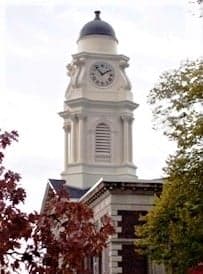
Photo: Wikipedia
Political ClimatePolitical Climate in Irvington, NY
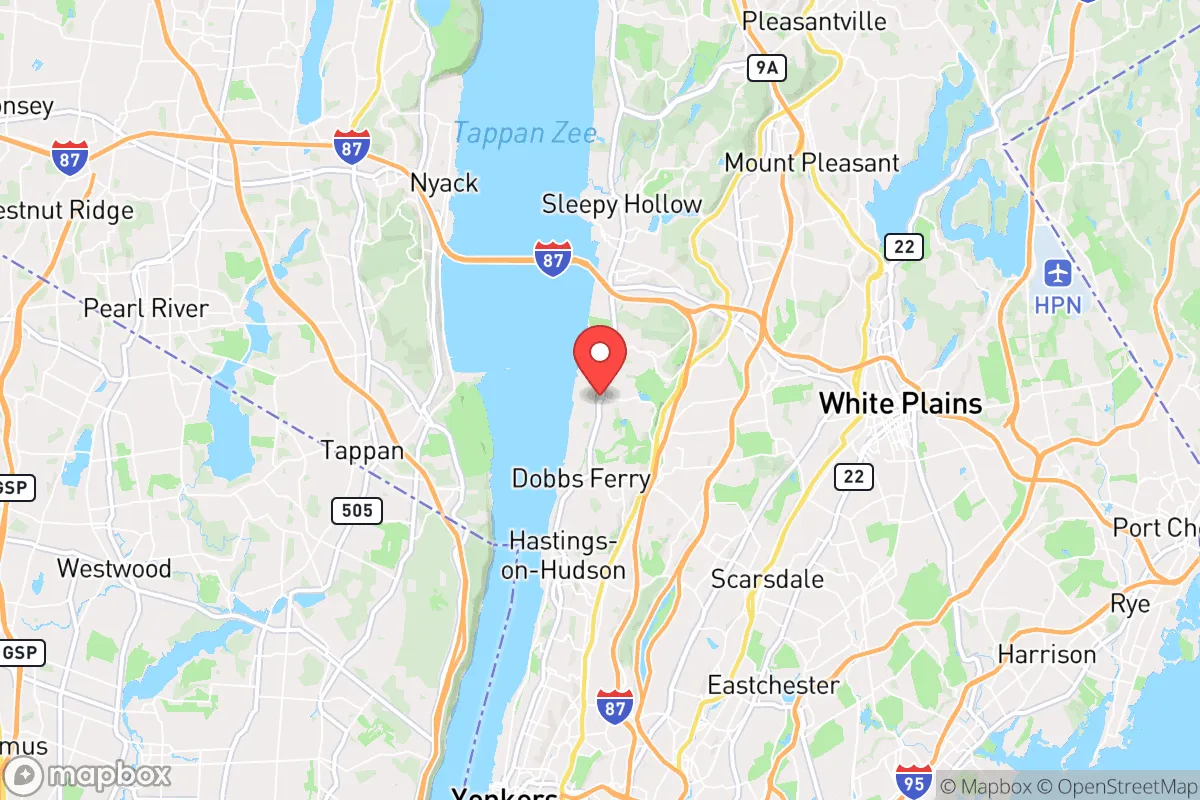
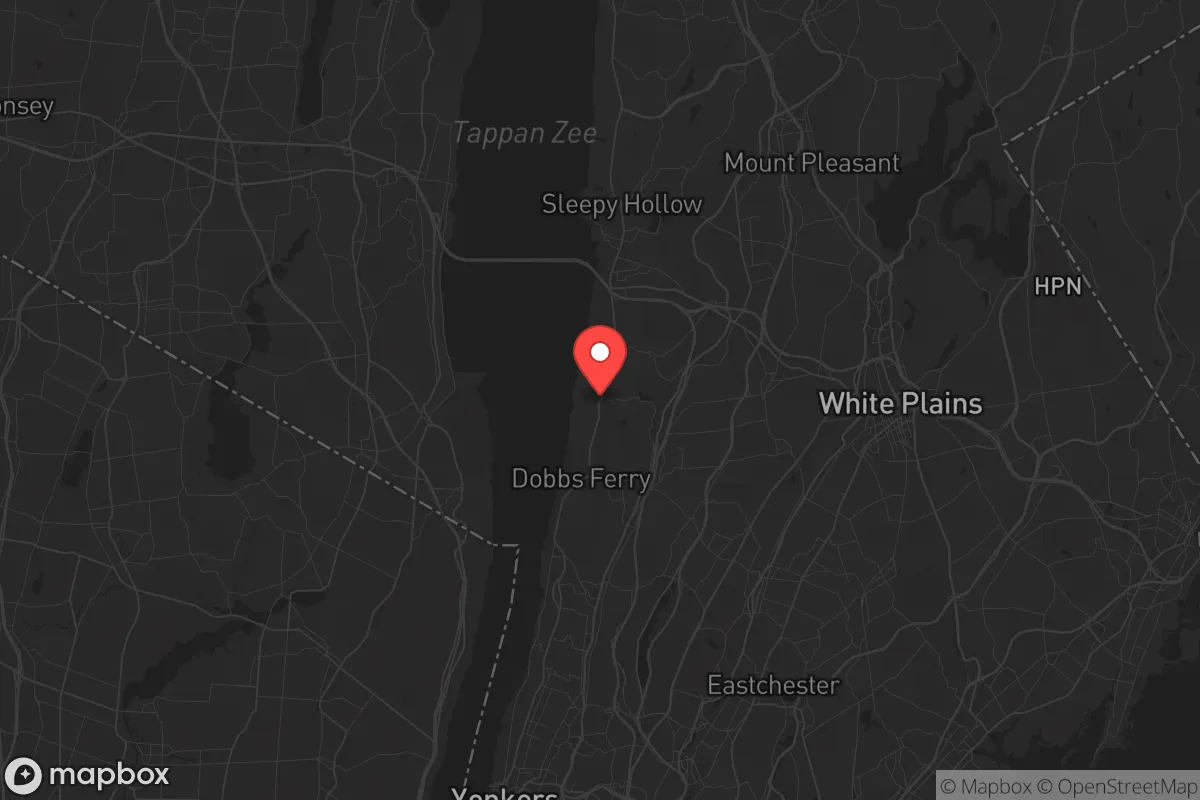
District shown is the primary district for this city’s centroid. Cities may span multiple districts.
Local Political AnalysisPolitical Analysis of Irvington, NY
Irvington leans strongly Democratic — its Cook Partisan Voting Index of D+18 places it among the most liberal suburbs in Westchester County. Over the past two decades the village has drifted steadily leftward, tracking the broader trend of affluent Hudson Valley towns. Where a generation ago you'd find a few more split-ticket households, today Democratic presidential candidates routinely carry Irvington by 65–70%. It's not as intensely progressive as parts of New York City, but it's decidedly blue; you'll see lawn signs for local school board candidates but rarely for a Republican down-ballot race. The trajectory feels stable rather than accelerating, because Irvington is already about as Democratic as a Westchester village can get.
How it compares
Compared to New York City, Irvington's politics are more homogenous. Manhattan's Upper West Side, for example, has a PVI around D+30 and a more activist, protest-oriented culture. Irvington is liberal in a quieter, suburban way — more PTA meetings than marches. Across the river, towns like Sleepy Hollow and Tarrytown are similarly blue (both around D+15 to D+18), but Irvington edges them out in consistent straight-ticket voting. The real contrast comes north of the county line: Putnam County leans Republican (R+8), so a quick 15-minute drive past Croton-on-Hudson takes you into territory where Trump flags still fly. Inside Westchester, you have to head east toward Scarsdale or Larchmont to find equally liberal enclaves, but those are more heavily Jewish and Asian, while Irvington's electorate is whiter and older. NYC itself is far more ideologically varied — you can find deeply leftist neighborhoods in Brooklyn, moderate enclaves in Staten Island, and everything in between. Irvington, by contrast, is consistently center-left on taxes, schools, and land use, with occasional splits over development density.
What this means for residents
For liberal residents, the local government aligns almost seamlessly with their values: the school board, village trustees, and library board are all reliably progressive, and the town prioritizes sustainability, affordable housing mandates, and diversity-equity initiatives. Property taxes are high — among the highest in the county — because the community votes for robust services and top-rated schools. For conservative residents, living in Irvington means being in the minority, but it's not hostile. Local discourse is civil, and you'll find that Republicans are often elected to the village board or school board if they run as moderates focused on fiscal restraint. The biggest challenge for conservatives is feeling unheard on cultural issues; most public comment sessions lean heavily left. But the day-to-day experience is more about local parks and library programs than partisan clashes.
Culturally, Irvington is distinct from New York City in its scale and pace. Policy priorities reflect a village mindset: preserving the historic downtown, maintaining the Hudson River waterfront, and controlling development height and density. Unlike NYC, where landlord-tenant politics dominate, Irvington's debates circle around sidewalk repairs, leaf-blower

State Political ClimatePolitical Climate in New York
State Political AnalysisPolitical Environment in the State
New York State has been a solidly Democratic stronghold for decades, with no Republican presidential candidate winning it since 1984. However, that blue veneer masks one of the most dramatic urban-rural political divides in the country. The state’s overall partisan lean is driven overwhelmingly by New York City and its immediate suburbs, which together cast roughly 60% of the state’s vote. Over the last 10-20 years, the Democratic coalition has consolidated in the downstate metros while upstate has shifted sharply rightward, creating a state that feels like two different countries politically.
Urban vs. rural divide
The political map of New York is essentially a tale of two regions. New York City’s five boroughs (Manhattan, Brooklyn, Queens, the Bronx, and Staten Island) vote about 75-80% Democratic, with Manhattan and Brooklyn being the most liberal. The immediate downstate suburbs—Nassau and Westchester counties—have trended blue over the last decade, flipping from swing to reliably Democratic. In contrast, upstate New York is overwhelmingly Republican outside of a few small cities. Counties like Allegany, Wyoming, and Orleans routinely vote 65-70% Republican. The major upstate cities—Buffalo, Rochester, Syracuse, and Albany—are Democratic islands in a red sea, but they lack the population to offset downstate. The Hudson Valley is a true battleground: Dutchess and Orange counties have swung back and forth, while Ulster and Columbia counties lean left. The net effect is that a conservative moving to, say, Buffalo’s suburbs will find a very different political environment than one moving to Manhattan.
Policy environment
New York’s policy environment is shaped by its Democratic supermajority in the state legislature and a series of progressive governors. State income tax rates range from 4% to 10.9%, among the highest in the nation, and property taxes are the highest in the country—averaging about 1.7% of home value annually. The state has a strict regulatory posture on business, including a $15 minimum wage (higher in NYC), paid family leave, and aggressive climate mandates. Education policy is heavily centralized, with the state controlling curriculum standards and funding formulas; charter schools are capped, and private school choice is limited. Healthcare is dominated by large hospital systems, and the state runs its own health insurance exchange. Election laws are among the most accessible in the country: no-excuse absentee voting, early voting, automatic voter registration, and same-day registration. For a conservative, the policy environment feels like a wall of high taxes and heavy regulation; for a liberal, it’s a model of social safety net and public investment.
Recent policy direction
Over the last five years, New York has moved decisively left on several fronts. Gun and self-defense law tightened significantly with the 2022 Concealed Carry Improvement Act (CCIA), which requires a “proper cause” showing for a permit, bans guns in “sensitive locations” (including Times Square and subways), and mandates 18 hours of training. This law was passed in direct response to the Supreme Court’s Bruen decision and is currently being litigated. Parental and education rights have been a flashpoint: the state mandates LGBTQ-inclusive curriculum and has resisted parental opt-out provisions for certain materials, leading to suburban school board battles in places like Westchester and Long Island. Speech is broadly protected under the state constitution, but a 2023 law expanded the definition of “hateful conduct” in public accommodations, raising free-speech concerns. Privacy and surveillance saw a mixed record: the state banned facial recognition in schools but expanded license-plate reader networks. Medical and bodily autonomy is strongly protected—abortion is legal up to viability, and the state has a “shield law” protecting providers who treat out-of-state patients. Property rights are constrained by rent stabilization in NYC and strict zoning in many suburbs, though upstate areas are more permissive. Taxation has not been cut; the top marginal rate was actually increased in 2021 for incomes over $5 million. Voting and ballot access expanded with early voting and no-excuse absentee, but a 2024 law requiring voter ID for absentee ballots was vetoed. The overall direction is toward more regulation, higher taxes, and broader social protections—a trend that shows no sign of reversing.
Civil unrest & political movements
New York has a long history of political activism, and recent years have been no exception. The Black Lives Matter protests of 2020 were massive, particularly in NYC, and led to significant police reform legislation, including the repeal of 50-a (which had shielded police disciplinary records). Pro-Palestinian protests at Columbia University and other campuses in 2024 drew national attention and resulted in arrests. On the right, the “Parents’ Rights” movement has been active in suburban school board elections, particularly in Nassau and Suffolk counties, where conservative slates have won seats. Immigration politics are a major flashpoint: New York is a “sanctuary state” (since 2017’s Executive Order 170), and NYC has seen tens of thousands of asylum seekers bused from Texas, straining shelters and sparking local backlash in places like Rochester and Albany. Secession or nullification rhetoric is mostly limited to fringe groups, though some upstate counties have passed symbolic resolutions declaring themselves “Second Amendment sanctuaries.” Election integrity controversies have been relatively muted compared to other states, but the 2020 and 2022 elections saw disputes over mail-in ballot counting in close races. A new resident will notice that political signs and bumper stickers are far more common upstate than in NYC, where political expression tends to be more institutional (protests, rallies) than personal.
Projection
Over the next 5-10 years, New York’s political trajectory is likely to remain blue, but with increasing internal tension. Demographic shifts are working against the Democratic coalition: the state is losing population (down about 600,000 since 2020), with most departures coming from upstate and the outer suburbs—areas that lean Republican. Meanwhile, NYC is seeing an influx of international immigrants, who tend to vote Democratic, and a slower outflow of domestic migrants. This means the state will become more downstate-dominated and more Democratic in statewide elections, but the urban-rural gap will widen. In-migration patterns from other states are negligible; most new residents are international. For a conservative moving in now, expect the policy environment to become more progressive on social issues and more expensive on taxes. The state’s fiscal situation is precarious—high debt and pension obligations—which may force tax increases or service cuts. A liberal moving in will find a state that continues to lead on climate, healthcare, and civil rights, but may face frustration with housing costs and bureaucratic inefficiency. The most likely scenario is a stable one-party Democratic state with periodic upstate revolts that don’t change the overall direction.
For a new resident, the bottom line is simple: New York is a state where your local experience will be shaped almost entirely by where you live. If you choose a conservative upstate suburb like Clarence (near Buffalo) or Victor (near Rochester), you’ll find low crime, good schools, and a community that shares your values—but you’ll still pay high state taxes and deal with state-level policies you may oppose. If you choose NYC or its inner suburbs, you’ll be in a deep-blue environment with all the costs and benefits that entails. The state’s political climate is not monolithic, but the state government in Albany is, and that’s the reality you’ll live under regardless of your address.
* Values derived from national, state, county, city and local statistics and may differ in a specific area. Last updated: 2026-06-20T16:23:44.000Z
Narrative content on this page is AI-generated and may contain mistakes. Verify any details that matter before acting on them.
ReloMaps may earn a commission from affiliate links at no extra cost to you.

