
Photo: Wikipedia
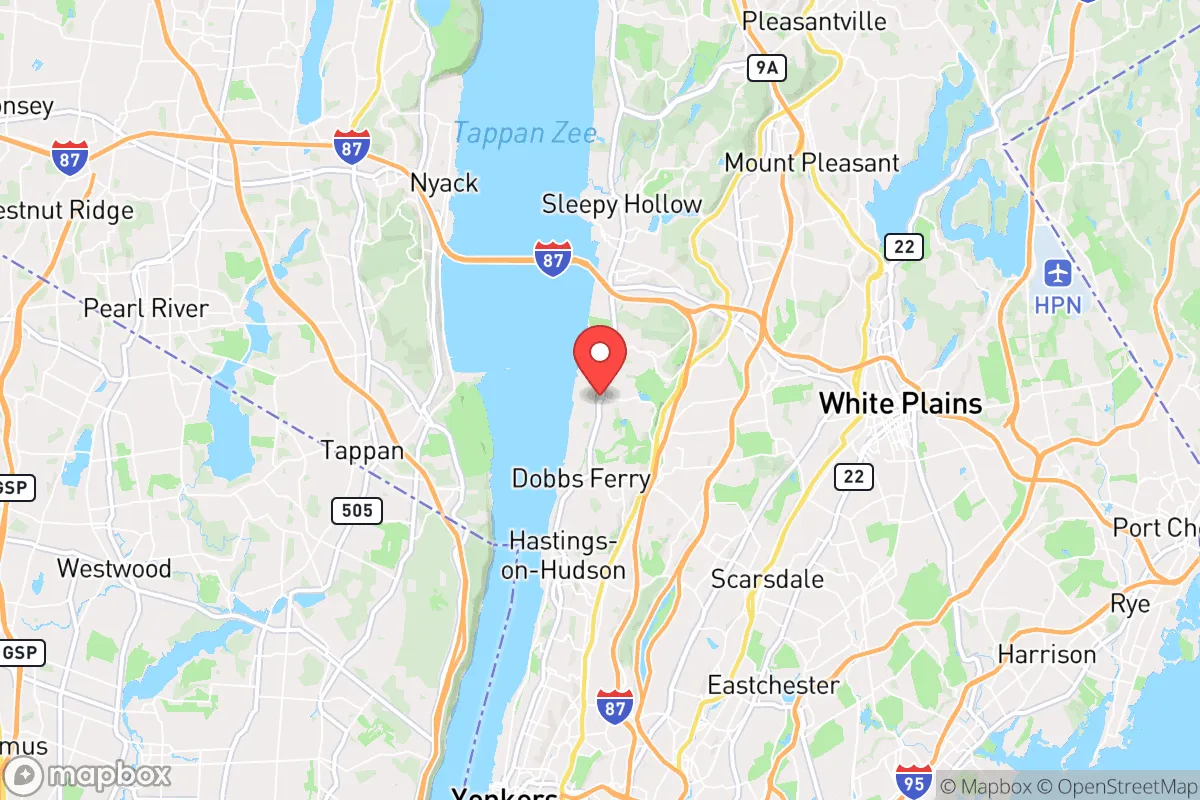
Personal Sovereignty in Irvington, NY
Moderate friction. Expect trade-offs in some aspect of personal liberty and independence.
What does Personal Sovereignty tell us?
Personal Sovereignty measures your capacity for self-reliance and independence with minimal government friction. Higher scores mean fewer barriers between you and the way you want to live... but it assumes you have the space you need and good neighbors.
What does this tell us?
Personal Sovereignty measures your capacity for self-reliance and independence with minimal government friction. Higher scores mean fewer barriers between you and the way you want to live... but it assumes you have the space you need and good neighbors.
State Policy
Energy independence: Importer (12% of energy produced in-state)
Personal Liberty
Homesteading

Personal Liberty Analysis
Irvington, New York, presents a constrained personal sovereignty environment shaped by Westchester County’s dense suburban governance and New York State’s expansive regulatory reach. For individuals and families prioritizing autonomy, the village offers limited room for self-directed living compared to less-regulated regions, with high taxes, restrictive gun laws, and zoning that discourages self-reliance. While the area provides strong public services and a safe, orderly community, those seeking maximum personal freedom will find the trade-offs significant, particularly in taxation, self-defense rights, and property use.
Tax burden and regulatory posture: How heavy are the costs and rules?
Irvington’s tax burden is among the highest in the nation, driven by New York State’s progressive income tax (top rate 10.9% as of 2026) and Westchester County’s property taxes, which average roughly 2.5% of assessed home value—one of the highest effective rates in the U.S. A median-priced home in Irvington (around $800,000) can carry annual property taxes exceeding $20,000. Combined state and local sales tax is 8.375%. The regulatory posture is dense: New York imposes strict environmental review under the State Environmental Quality Review Act (SEQRA) for most construction, and Westchester County enforces additional watershed protections due to its position in the New York City water supply system. Permitting for even minor home improvements (e.g., decks, sheds) requires village-level approval, often with multiple layers of review. For a self-reliant individual, this means every significant property decision—from adding a workshop to installing solar panels—faces bureaucratic hurdles and costs that can delay or deter projects. The village’s zoning code mandates minimum lot sizes of 10,000 to 20,000 square feet in most residential districts, limiting density but also restricting flexible land use.
Self-defense and gun law specifics: What are your rights to protect yourself?
New York State imposes some of the nation’s strictest firearm regulations, and Irvington residents must comply fully. The SAFE Act (2013) and subsequent 2022 CCIA (Concealed Carry Improvement Act) require a pistol permit for handgun possession, which involves a lengthy application process, background check, character references, and a 16-hour safety course. Concealed carry is permitted only with a “proper cause” showing, though the Supreme Court’s Bruen decision (2022) loosened this requirement; in practice, Westchester County issuing authorities still demand a strong self-defense justification. Open carry is effectively banned. Magazine capacity is capped at 10 rounds. Assault weapons—defined broadly to include many common semi-automatic rifles—are prohibited. Home defense is legally possible with a licensed handgun or compliant long gun, but the process to acquire one is time-consuming and costly (permit fees, training, fingerprinting). Stand-your-ground laws do not exist in New York; a duty to retreat applies outside the home before using deadly force. Castle doctrine protections inside the home are limited—you must reasonably believe deadly force is necessary to prevent imminent death or great bodily harm. For a family prioritizing self-defense autonomy, Irvington’s legal environment is restrictive, requiring proactive legal compliance and limiting the range of defensive tools available.
Self-reliance and homesteading viability: Lot sizes, zoning, and off-grid feasibility
Irvington’s suburban character and zoning codes make traditional homesteading or off-grid living largely impractical. Typical lot sizes range from 0.25 to 0.5 acres in the village core, with some larger parcels (1–2 acres) in the more rural northern sections near the Ardsley border. Chickens are permitted on lots of at least 10,000 square feet (most properties qualify), but roosters are banned, and coop placement must meet setback requirements. Goats, pigs, and larger livestock are prohibited in residential zones. Vegetable gardening is unrestricted, but front-yard gardens may face aesthetic complaints from neighbors or homeowners’ associations in some subdivisions. Off-grid feasibility is near zero: the village requires connection to municipal water and sewer systems, and New York’s building codes mandate grid-tied electrical service for habitable structures. Solar panels are allowed but must comply with historic district guidelines in Irvington’s designated historic areas (covering much of the village center). Rainwater collection for potable use is prohibited under state health codes, though non-potable collection for irrigation is allowed. Composting toilets are not permitted as primary sanitation. For a family seeking significant self-reliance—growing food, generating power, reducing utility dependence—Irvington’s regulatory framework is a substantial barrier. The area is better suited to those who value community amenities and convenience over independent resource production.
Personal liberties: Parental rights, medical autonomy, speech, and property
Parental rights in Irvington operate within New York’s broader legal context. The state mandates comprehensive sex education in public schools (starting in kindergarten under 2024 updates), and parents cannot opt children out of LGBTQ-inclusive curriculum—only specific lessons on human sexuality. Vaccine mandates for school attendance are strict: all required childhood immunizations must be up to date, with no philosophical exemption; only medical exemptions are accepted. Medical autonomy is limited: New York has no right-to-try law for terminally ill patients beyond federal provisions, and the state’s public health emergency powers (expanded post-COVID) allow mandatory masking, testing, or lockdowns during declared emergencies. Free speech is protected under the First Amendment, but Irvington’s village code restricts amplified sound and public demonstrations in residential areas without a permit. Property rights are constrained by historic district regulations: any exterior alteration to a building in the Irvington Historic District (covering roughly 30% of the village) must be approved by the Architectural Review Board, which can deny changes to windows, doors, paint colors, and landscaping. For a conservative-leaning family, these limitations on parental choice, medical decision-making, and property use represent significant encroachments on personal sovereignty compared to states like Texas, Florida, or New Hampshire.
Overall, Irvington offers a high-quality, safe, and well-managed community but at the cost of substantial personal sovereignty. The tax burden, gun restrictions, zoning constraints, and limits on parental and medical autonomy place it among the least freedom-oriented suburbs in the Northeast for those prioritizing self-reliance. Compared to rural upstate New York or states in the South and Mountain West, Irvington’s regulatory environment is heavy-touch across nearly every dimension of personal independence. For a family that values excellent schools, low crime, and proximity to New York City above all else, the trade-offs may be acceptable. For those who rank personal liberty—low taxes, broad self-defense rights, homesteading flexibility, and parental control—as primary, Irvington will feel restrictive. The village is best suited to individuals who prefer a structured, community-oriented lifestyle with strong public services, rather than a self-directed, low-regulation environment.

* Values derived from national, state, county, city and local statistics and may differ in a specific area. Last updated: 2026-06-20T16:23:44.000Z
Narrative content on this page is AI-generated and may contain mistakes. Verify any details that matter before acting on them.
ReloMaps may earn a commission from affiliate links at no extra cost to you.

