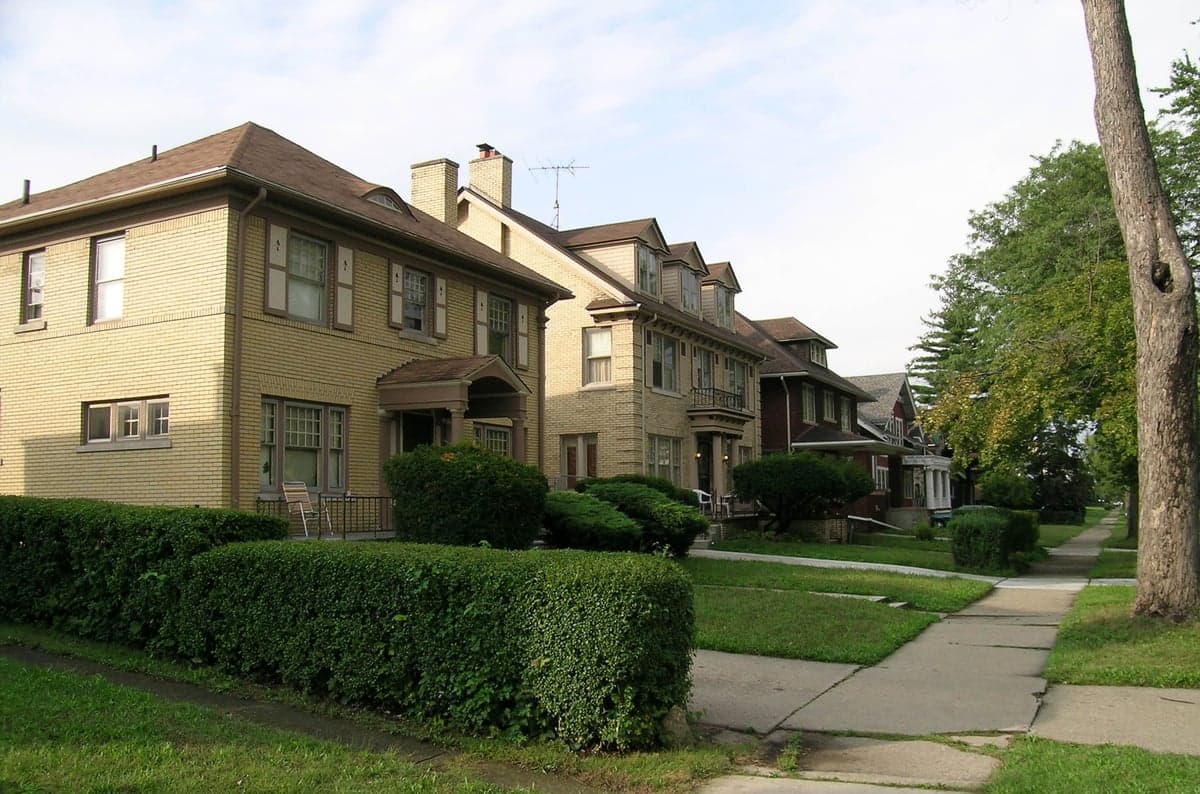
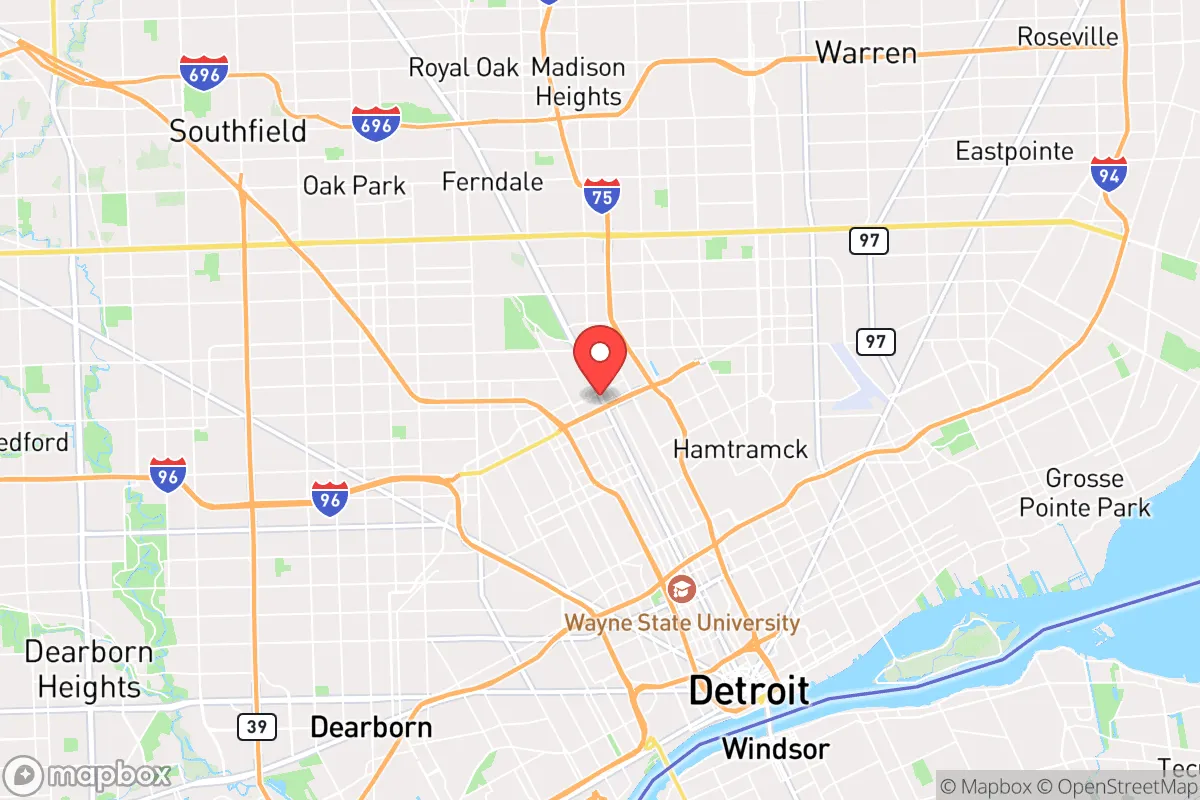
Photo: Wikipedia
Strategic Assessment of Highland Park, MI
Multiple tactical vulnerabilities. Population density, target proximity, or disaster risk are likely compounding. A retreat property and exit planning is required.
What does the Strategic Assessment tell us?
Our Strategic Assessment grades tactical survivability of an area. Major population centers, military targets, fallout zones, natural disasters, and border exposure all drive risk — lower exposure means a more defensible position in a crisis.
This is heavily inspired by Joel Skousen's Strategic Relocation book. Highly recommended you checkout the book ($)What does this tell us?
Our Strategic Assessment grades tactical survivability of an area. Major population centers, military targets, fallout zones, natural disasters, and border exposure all drive risk — lower exposure means a more defensible position in a crisis.
This is heavily inspired by Joel Skousen's Strategic Relocation book. Highly recommended you checkout the book ($)Strategic Pillars

Key Distances
Regional Safe Places
Below is our recommended "safe zones" in Michigan and the surrounding area based on our strategic heuristics. For most people, it's unrealistic to live in a “safe zone” full-time due to work, family or other personal reasons. They tend to be more rural. However, many of these areas are perfect for second homes and retreat properties that double as a vacation home or even a short-term rental.


Important Note: For informational purposes only. This does not mean nothing bad ever happens in the green zones. Please use common sense. This is based on public data and modeled with AI. We tried to take a conservative approach but mistakes happen. We update this regularly as new information becomes available.
Solar Generator Recommendations
Backup power matters more here than in safer locations. We've picked three solar generators across budgets and capacity tiers — start with the budget unit if you only need a few essentials, or step up if you want to run a fridge and HVAC for days at a time.

Jackery Portable Power Station Explorer 300
Budget OptionPower on the Go: Weighing only 11 lbs, it's convenient to set up and store with book-sized foldable solar panels

BLUETTI Portable Power Station AC180
Designed for both indoor and outdoor scenarios, AC180 is highly capable as it has a robost capacity and continuous output power.

EF ECOFLOW DELTA Pro Ultra Power Station
Upgraded PickEcoFlow DELTA Pro Ultra is a whole-home energy system designed to grow with your family. Integrated with the Smart Home Panel 2, it scales to meet your evolving energy needs — keeping your home powered, intelligent, and secure through every stage of life.
We earn a commission, at no additional cost to you.
Strategic Assessment Analysis
Highland Park, Michigan, presents a complex strategic picture for the relocation-minded individual or family prioritizing resilience and self-sufficiency. While its location within the Detroit metro area exposes it to significant man-made and logistical risks, the city's unique geography—situated on a high ridge along the Detroit River—offers genuine defensive and hydrological advantages that are rare in the region. For a conservative-leaning reader focused on practical preparedness, Highland Park is less a turnkey sanctuary and more a high-risk, high-reward proposition requiring substantial personal investment in hardening and community building.
Geographic position and natural advantages for self-sufficiency
Highland Park sits on a prominent glacial ridge, the "Highland" for which it is named, rising roughly 60 to 80 feet above the surrounding riverfront and the city of Detroit. This elevation provides a natural vantage point and, critically, a degree of separation from the floodplains of the Detroit River and Lake St. Clair. In a region where major flooding events—like the 2014 and 2021 storms that inundated thousands of basements in Detroit and Downriver communities—are a recurring hazard, Highland Park's higher ground is a tangible asset. The city's underlying geology is primarily clay and glacial till, which, while challenging for septic systems, offers a stable foundation and reduces the risk of liquefaction during seismic events, which are rare but not impossible in the Great Lakes region.
The area's natural advantages extend to water access. While the Detroit River is a major industrial waterway, its proximity means that a motivated resident with proper filtration and treatment knowledge could theoretically access a massive, renewable freshwater source. The river's flow is substantial, and its water quality, while impacted by industrial legacy, is monitored and treatable with modern methods. For a relocator willing to invest in a well, the glacial aquifer beneath the ridge is generally reliable, though depth and yield vary. The surrounding landscape, including the nearby Rouge River and numerous small lakes in Oakland County to the north, provides additional, if less secure, water catchment opportunities. The region's four distinct seasons and average annual rainfall of about 33 inches support rain barrel collection and small-scale gardening, though the short growing season (roughly May to October) limits year-round food production without greenhouse infrastructure.
Risks, exposures, and proximity to fallout-relevant landmarks
The most significant risk for a Highland Park relocator is its position within the Detroit urban core. The city is surrounded by Detroit to the south, east, and west, and by Hamtramck to the south. This creates a dense, built-up environment with limited natural buffers. In a scenario involving a major industrial accident, civil unrest, or a large-scale power outage, Highland Park's residents would face the same cascading failures as the broader metro area: overwhelmed emergency services, supply chain disruptions, and potential population movement. The city's own infrastructure—aging water mains, an outdated electrical grid, and a limited police force—is a vulnerability, not a strength.
More critically, the area is ringed by high-value, high-risk man-made targets. Within a 10-mile radius lie the Detroit Metropolitan Airport (DTW), the Ambassador Bridge and Detroit-Windsor Tunnel (critical international trade chokepoints), the Marathon Petroleum refinery in Detroit, and the Ford River Rouge Complex in Dearborn. These are not just economic assets; they are potential targets for sabotage, terrorism, or collateral damage in a conflict scenario. The refinery alone, one of the largest in the Midwest, stores and processes volatile hydrocarbons. A major incident there could produce a toxic plume or fire hazard affecting downwind communities, including Highland Park. Additionally, the presence of the U.S.-Canada border just across the river means the area is a focal point for border security and potential cross-border incidents. For a reader prioritizing fallout safety, being within the blast or fallout radius of these critical infrastructure nodes is a clear negative.
Practical resilience for a relocator: food, water, energy, and defensibility
For a relocator serious about self-sufficiency, Highland Park demands a proactive, almost fortress-like approach. The city's housing stock, primarily early 20th-century brick homes and some newer infill, offers mixed defensibility. Many older homes have solid masonry construction, which provides good thermal mass and some ballistic protection, but they often have large windows, outdated electrical systems, and basements prone to moisture. A defensible property would require reinforcing entry points, installing a backup power system (solar with battery storage is viable given the region's moderate sun exposure), and securing a reliable water source—either a deep well or a rainwater catchment system with UV filtration. The city's water supply comes from the Detroit Water and Sewerage Department, which is generally reliable but vulnerable to cyberattacks and system failures, as seen in the 2023 water main break that affected thousands.
Food resilience is a challenge. The city is a food desert, with limited grocery options and a heavy reliance on convenience stores. A relocator would need to establish a substantial pantry, consider a community garden plot (available through the Highland Park Community Garden), or invest in a greenhouse for year-round production. The nearby Eastern Market in Detroit is a major regional food hub, but its accessibility during a crisis is uncertain. Energy resilience is more feasible. Michigan's net metering policy and federal tax credits make rooftop solar a viable investment. A 5-7 kW system with battery backup could power a modest home's essentials—lights, refrigeration, well pump, and communications—for days. Natural gas is available in most of the city, providing a backup heating option, but a wood stove or pellet stove offers a more resilient, fuel-independent alternative.
Defensibility in an urban environment is about community and awareness. Highland Park has a small, tight-knit population (roughly 8,000 residents) and a history of civic activism. A relocator would benefit from building relationships with neighbors, participating in the city's neighborhood watch or block club programs, and understanding local social dynamics. The city's layout, with a grid of wide streets and some industrial corridors, offers good lines of sight but limited natural cover. A strategic property would be on a corner lot or near a park, providing multiple egress routes. The nearby I-75 and M-10 (Lodge Freeway) offer rapid evacuation routes north to less dense areas of Oakland County, but these same routes could become congested or blocked during an emergency.
The overall strategic picture for Highland Park is one of high potential but equally high demands. Its elevation and water access are genuine geographic assets that few urban areas in Michigan can match. However, its location within a dense, infrastructure-dependent metro area, surrounded by high-value targets and vulnerable to cascading failures, means that a relocator cannot rely on municipal services or regional stability. Success here requires a significant upfront investment in hardening a property, building a local network, and maintaining a high state of readiness. For a single individual or family willing to treat it as a long-term project—rather than a turnkey retreat—Highland Park offers a unique, if challenging, base for a resilient lifestyle. For those seeking immediate safety and low-maintenance self-sufficiency, the suburbs of northern Oakland County or rural areas of the Thumb region would present fewer immediate risks and lower barriers to entry.

* Values derived from national, state, county, city and local statistics and may differ in a specific area. Last updated: 2026-10-07T06:17:31.000Z
Narrative content on this page is AI-generated and may contain mistakes. Verify any details that matter before acting on them.
ReloMaps may earn a commission from affiliate links at no extra cost to you.

