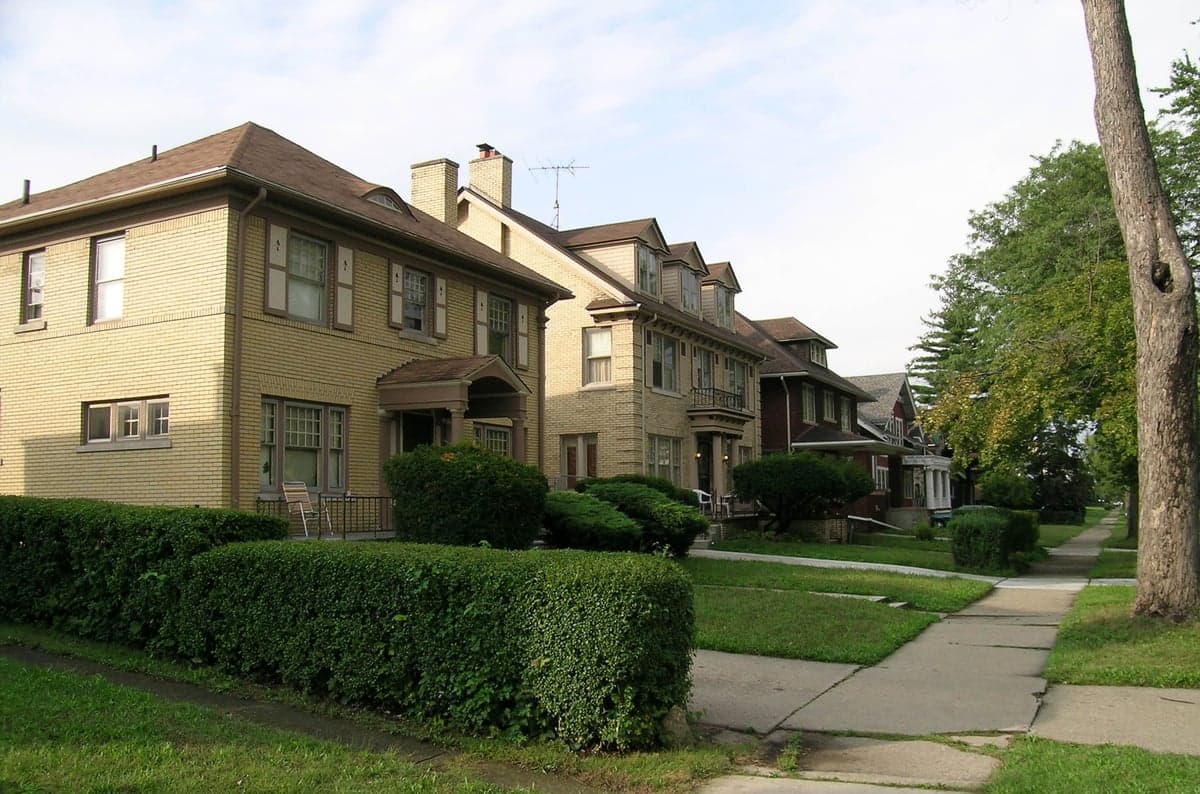
Photo: Wikipedia
Political ClimatePolitical Climate in Highland Park, MI
District shown is the primary district for this city’s centroid. Cities may span multiple districts.
Local Political AnalysisPolitical Analysis of Highland Park, MI
Highland Park is one of the most reliably Democratic strongholds in Michigan, with a Cook Partisan Voting Index (PVI) of D+22, meaning it votes about 22 points more Democratic than the national average. That’s a deep blue island in a state that’s essentially a toss-up—Michigan as a whole carries a PVI of EVEN, meaning it leans neither Republican nor Democratic on the national scale. The city has voted overwhelmingly for Democratic presidential candidates for decades, and that trend shows no sign of shifting. The political energy here is rooted in a long history of labor activism and civil rights organizing, and the local government is almost entirely Democratic, from the mayor’s office to the city council.
How it compares
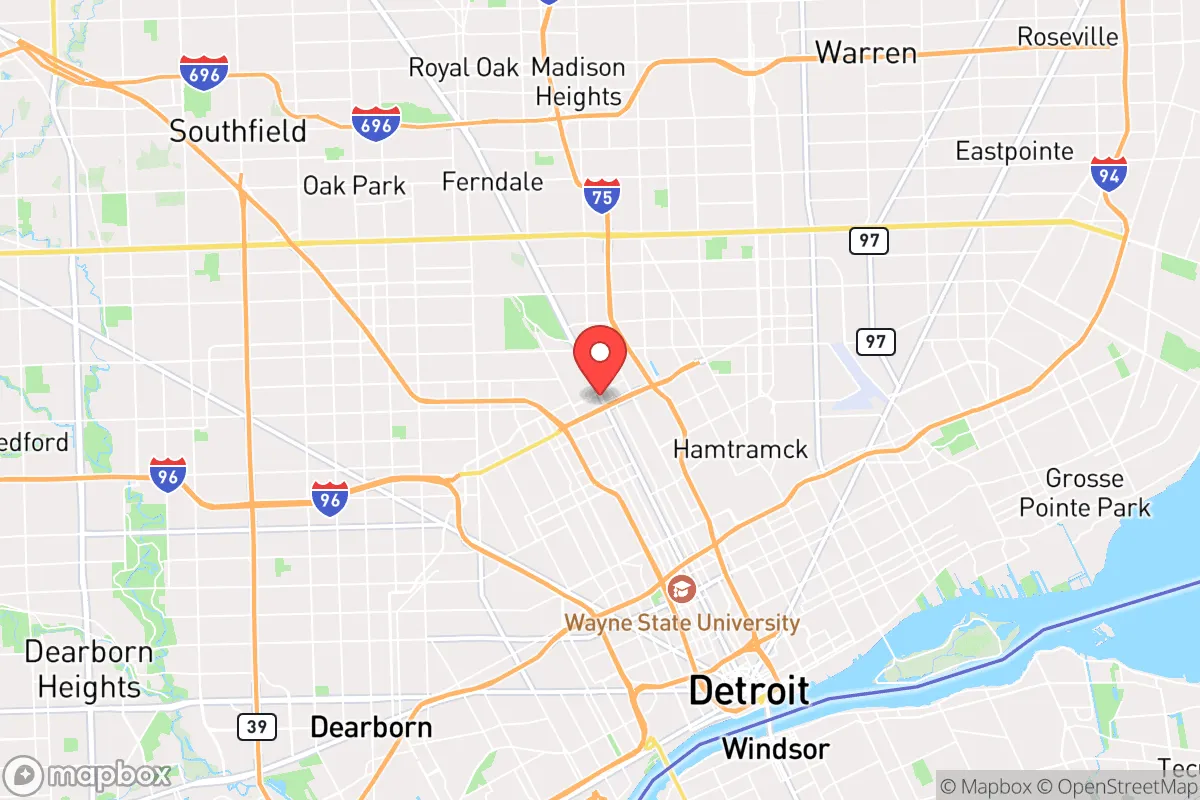
To understand how blue Highland Park really is, look at the surrounding communities. Just a few miles south, Detroit also votes heavily Democratic, but its PVI of D+28 is even more lopsided. The real contrast comes when you head north or west. Neighboring Ferndale and Oak Park are also reliably Democratic, but they’re more moderate, with PVIs around D+15 to D+18. Drive 15 minutes northwest to Royal Oak, and you’ll find a swingier area that’s been trending left but still has a significant Republican presence. Go 20 minutes north to Macomb County’s Sterling Heights or Warren, and you’re in classic Reagan Democrat territory—places that voted for Trump in 2016 and 2020. The difference is stark: Highland Park’s D+22 means a Republican candidate would need a historic wave to even be competitive here, while in those Macomb suburbs, races are often decided by a few points. Statewide, Michigan’s EVEN rating reflects its role as a perennial battleground, but Highland Park is a deep-blue anchor in that purple sea.
What this means for residents
For liberal residents, the political climate is comfortable and affirming. You’ll find strong support for progressive policies like expanded public transit, affordable housing initiatives, and criminal justice reform. The city council and school board are generally aligned with these priorities, so if you’re pushing for things like community policing reforms or green energy projects, you’ll have a receptive audience. For conservative residents, life here can feel isolating politically. You’re unlikely to find many like-minded neighbors, and local elections rarely feature competitive Republican candidates. That said, the practical impact is muted—property taxes and zoning rules are set by the city, and those are mostly nonpartisan issues. The bigger challenge for conservatives might be social: political conversations at block parties or PTA meetings will lean heavily left, so if you’re not comfortable with that, you might feel like an outsider. For everyone, the upside is a community that’s deeply engaged in local politics—voter turnout in Highland Park is high for a city its size, and people genuinely care about how things are run.
One cultural distinction worth noting: Highland Park has a strong tradition of Black political leadership and community organizing, which shapes everything from the city’s approach to public safety to its relationship with the state government. You’ll see this in things like the city’s push for reparations studies and its vocal opposition to state preemption laws on local ordinances. The city also has a more working-class, industrial feel compared to the hipster vibe of nearby Ferndale or the suburban sprawl of Southfield. That blue-collar identity keeps the politics grounded in bread-and-butter issues like jobs and infrastructure, even as the national conversation gets more polarized. In the near term, expect Highland Park to stay solidly Democratic, but watch for generational shifts—younger residents are more focused on climate and housing affordability, while older residents prioritize pensions and city services. Either way, the city’s political trajectory is stable, not volatile.

State Political ClimatePolitical Climate in Michigan
State Political AnalysisPolitical Environment in the State
Michigan is the ultimate swing state, with a Cook PVI of EVEN that perfectly captures its knife-edge political balance. Over the past 20 years, the state has lurched from reliably blue (voting for Gore, Kerry, Obama twice) to a Trump pickup in 2016, then back to Biden in 2020 by just 154,000 votes, and now sits in a perpetual tug-of-war between its union-heavy, urban Democratic base and its increasingly energized rural and exurban conservative population. The long-term trajectory is a slow rightward creep in the northern Lower Peninsula and western Michigan, offset by Democratic consolidation in the southeast, making every election a ground war fought in a handful of suburban counties.
Urban vs. rural divide
Michigan’s political map is a textbook study in geographic polarization. The Democratic stronghold is Wayne County (Detroit), which alone delivers about 30% of the party’s statewide vote, along with Washtenaw County (Ann Arbor) and Ingham County (Lansing). These three counties are deep blue, powered by auto industry unions, university towns, and a large Black population in Detroit. The Republican base is anchored in Ottawa County (Holland) and Kent County (Grand Rapids) — the latter has been trending redder as Grand Rapids’ suburbs fill with conservative families fleeing the coasts. The real battlegrounds are the “blue wall” counties that flipped to Trump in 2016: Macomb County (north of Detroit), Monroe County (south of Detroit), and Saginaw County. Macomb is the iconic bellwether — a working-class, union-heavy, culturally conservative county that went for Obama twice, then Trump twice, then narrowly back to Biden. The rural Upper Peninsula and northern Lower Peninsula (think Traverse City and Alpena) are reliably red, but low population density limits their statewide impact.
Policy environment
Michigan’s policy landscape is a mixed bag that reflects its swing-state status. The state income tax is a flat 4.25%, with no tax on Social Security benefits — a plus for retirees. Property taxes are moderate, capped by the Headlee Amendment and Proposal A, which limit annual increases to 5% or inflation, whichever is lower. Sales tax is 6%. The regulatory posture is generally business-friendly for manufacturing, but the state has a prevailing wage law (reinstated in 2023 after being repealed in 2018) that drives up construction costs. Education policy is a flashpoint: Michigan has a school choice system with charter schools and inter-district open enrollment, but the state’s third-grade reading law (retention for struggling readers) remains controversial. Healthcare is dominated by the Healthy Michigan Plan (Medicaid expansion under the ACA), which covers about 1 million residents. Election laws are relatively accessible: no-excuse absentee voting was approved by voters in 2018, and same-day voter registration is available. However, voter ID is required at the polls, and the state has a straight-ticket voting option.
Recent policy direction
The last two years under a Democratic trifecta (Governor Gretchen Whitmer, state House, and state Senate) have produced a flurry of legislation that signals a clear leftward shift on several fronts. Gun laws were tightened significantly: universal background checks, safe storage requirements, and a “red flag” law (extreme risk protection orders) were all passed in 2023. Parental rights took a hit with the repeal of the 2020 law requiring schools to notify parents about a child’s mental health or gender identity changes — the new law prohibits such notification without the student’s consent. Abortion rights were enshrined in the state constitution via Proposal 3 in 2022, which legalized abortion up to fetal viability and removed most restrictions. LGBTQ+ protections were expanded with the Elliott-Larsen Civil Rights Act amendment, adding sexual orientation and gender identity as protected classes. On the economic front, the state repealed the “right-to-work” law in 2023, allowing unions to require dues as a condition of employment. Property rights saw a win for homeowners with a new law capping rent increases at 7% annually (plus inflation) for certain properties. Voting access expanded with the Promote the Vote 2022 amendment, which established nine days of early voting and automatic voter registration. For conservatives, the direction is concerning: the gun restrictions, union revival, and parental notification repeal are major red flags. For liberals, the same policies are seen as overdue progress.
Civil unrest & political movements
Michigan has been a national flashpoint for political activism. The 2020 Whitmer kidnapping plot by a far-right militia group put the state in the headlines, and the Operation Gridlock protests at the state capitol (where armed protesters entered the building) became a symbol of pandemic-era civil unrest. On the left, the Michigan Democratic Party has been energized by the Rise Up Michigan coalition, which pushed Proposal 3 and the repeal of right-to-work. Immigration politics are relatively quiet — Michigan is not a border state, but Washtenaw County has a “safe haven” policy limiting cooperation with ICE. Election integrity remains a hot-button issue: the 2020 election in Michigan was subject to numerous audits and lawsuits, with Trump allies claiming irregularities in Detroit’s absentee ballot counting. The Antrim County error (a software glitch that initially showed Biden winning a Trump county) became a national conspiracy theory. Today, the Michigan Election Integrity Fund continues to push for stricter voter roll maintenance and signature verification. A new resident will notice the “Don’t Tread on Me” flags in rural areas and “We Stand with Planned Parenthood” signs in Ann Arbor — the cultural divide is visible in every bumper sticker.
Projection
Over the next 5-10 years, Michigan is likely to remain a competitive swing state, but the demographic trends favor a slow rightward shift in the exurbs and a leftward consolidation in the cities. The Grand Rapids metro area is growing fast, drawing conservative-leaning families from Illinois and California, while Detroit continues to lose population. The Macomb County working-class voters who flipped to Trump are not going back — they’re now a core part of the GOP coalition. The Upper Peninsula will stay red, but its population is aging and shrinking. The wildcard is Oakland County (north of Detroit), a wealthy, educated suburban county that has been trending blue — it may become the decisive battleground. Expect more ballot initiatives on issues like school choice, tax caps, and election rules, as the legislature remains gridlocked. A new resident moving in now should expect a state where every election is a nail-biter, where policy swings with each cycle, and where your neighbors’ political signs will tell you exactly which Michigan they believe in.
For a conservative relocator, Michigan offers low taxes, strong property rights, and a vibrant outdoor lifestyle, but the policy direction under the current trifecta is hostile to gun rights, parental notification, and union freedom. For a liberal relocator, the state provides strong abortion protections, LGBTQ+ rights, and union power, but the political map means those gains are never permanent. The bottom line: Michigan is not a place to move if you want political stability — it’s a place to move if you want to be in the fight, every single cycle.
* Values derived from national, state, county, city and local statistics and may differ in a specific area. Last updated: 2026-10-07T06:17:31.000Z
Narrative content on this page is AI-generated and may contain mistakes. Verify any details that matter before acting on them.
ReloMaps may earn a commission from affiliate links at no extra cost to you.

