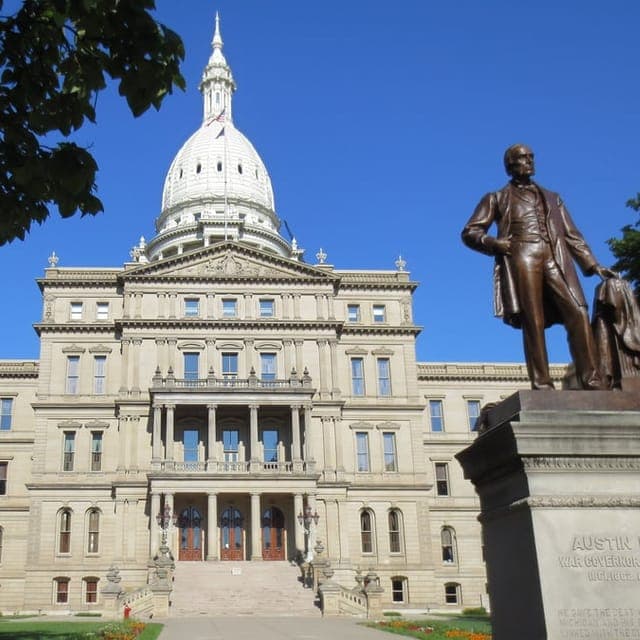
Photo: Wikipedia
Find The Best Places To Live in Ingham County
PRO TIP! You can paste a Zillow or Redfin link to get info on that property.
Best Places to Live in Ingham County
Cities & Towns in Ingham County
Cities in Ingham County
What It's Like Living in Ingham County, MI
Ingham County is the kind of place where the rhythms of a Big Ten university town bleed into quiet rural towns and working-class suburbs, all within a twenty-minute drive. Home to Michigan State University in East Lansing and the state capital in Lansing, the county has a young, transient energy from its 33.3 median age and a surprisingly affordable cost of living that lets people actually own a home on a median income of $64,354. You get the intellectual buzz of a college town, the steady pulse of government jobs, and the slower pace of places like Williamston or Dansville—all without the sticker shock that comes with most metro areas.
Where the Weekdays and Weekends Take You
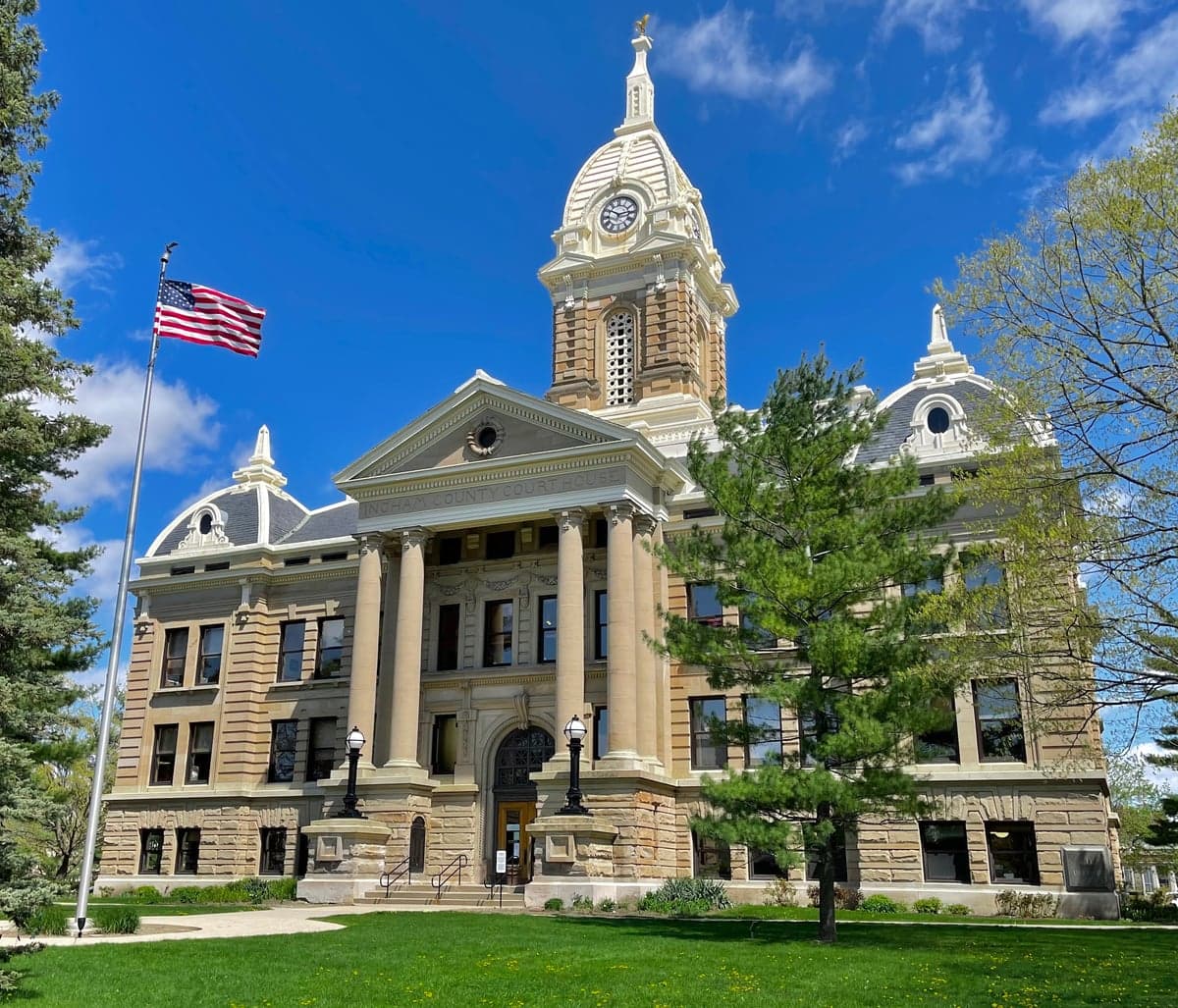
Daily life here is shaped by which part of the county you land in. In East Lansing, your Saturday morning might mean grabbing coffee at Strange Matter Coffee before walking through the MSU campus or catching a farmer's market at the Bailey Community Center. In the city of Lansing proper, the Old Town district draws a mix of state workers and creatives to places like the Avenue Café or the sprawling Lansing City Market. If you're in Mason, the county seat, life revolves around the courthouse square, the local high school football games, and the annual Mason Strawberry Festival—a genuine small-town tradition that packs the streets every June.
For families, the school districts are a major draw. Okemos Public Schools consistently rank among the top in the state, which pushes home values there above the county median of $187,500, but still reasonable compared to similar districts in Ann Arbor or Grand Rapids. Williamston and Haslett also have strong reputations, and you'll find that youth sports, band concerts, and PTA events are the social backbone of those communities. The average commute of just over 20 minutes means you can live in a rural area like Stockbridge or Dansville and still get to a job in Lansing or East Lansing without wasting your morning.
Sports, Festivals, and the MSU Gravity
You cannot understand Ingham County without understanding Michigan State University. On fall Saturdays, Spartan football turns the entire East Lansing area into a sea of green and white, with tailgates spilling out from campus into surrounding neighborhoods and bars like Crunchy's and Harper's Restaurant & Brewpub packed to the rafters. Even if you never set foot in a classroom, MSU sports are the closest thing the county has to a shared civic religion—men's basketball under Tom Izzo draws just as rabid a following. High school sports are big in their own right, particularly football at Mason High School and hockey at East Lansing High School, but they exist in the shadow of a Power Five program.
Outside of sports, the county punches above its weight for entertainment. The Wharton Center for Performing Arts brings Broadway tours and major concerts to East Lansing. The Lansing Lugnuts, a minor-league baseball team, offer cheap summer nights at Jackson Field. For outdoor recreation, the River Trail in Lansing runs for over 20 miles along the Grand and Red Cedar rivers, and Lake Lansing in Haslett is the go-to spot for kayaking, paddleboarding, and a beach that feels genuinely surprising for a landlocked county. The East Lansing Art Festival every May draws over 50,000 people, and the Ingham County Fair in Mason is a classic mid-Michigan summer staple with tractor pulls and 4-H livestock shows.
The Honest Trade-Offs of Living Here
The biggest upside is financial. With a cost of living index of 81—well below the national average—a median home price under $200,000 is attainable for a household earning the median income. You can buy a solid three-bedroom in Lansing's east side or a fixer-upper in a small town like Webberville without being house-poor. The downside is that the economy leans heavily on two employers: the state government and Michigan State University. If either sector takes a hit, the whole county feels it. There's not a booming private-sector tech or manufacturing base to fall back on, which limits upward mobility for some.
The violent crime rate of 414.4 per 100,000 is a real concern, though it's heavily concentrated in specific parts of Lansing. Most of the suburban and rural communities—Okemos, Haslett, Williamston, Mason—feel very safe, and residents there will tell you they rarely think about it. The weather is classic Michigan: long, gray winters that test your resolve from November through March, followed by genuinely beautiful summers and a spectacular fall color season. Locals cope by leaning into winter sports—ice fishing on Lake Lansing, skiing at nearby Bittersweet or Mount Holly—or simply by heading to a local brewery like Ellison Brewery in East Lansing to wait it out.
What frustrates longtime residents most is the lack of major retail and dining variety compared to Grand Rapids or Ann Arbor. You have the essentials, but if you want a high-end shopping mall or a truly diverse restaurant scene, you're driving an hour. What keeps people here is the balance: a real sense of community in the smaller towns, the cultural amenities of a university town, and the ability to afford a life that feels stable. It's a county that works best for people who want a solid, unpretentious place to raise a family or start a career without the pressure of a high-cost metro.

* Values derived from national, state, county, city and local statistics and may differ in a specific area. Last updated: 2026-06-15T19:40:47.000Z
Narrative content on this page is AI-generated and may contain mistakes. Verify any details that matter before acting on them.
ReloMaps may earn a commission from affiliate links at no extra cost to you.

