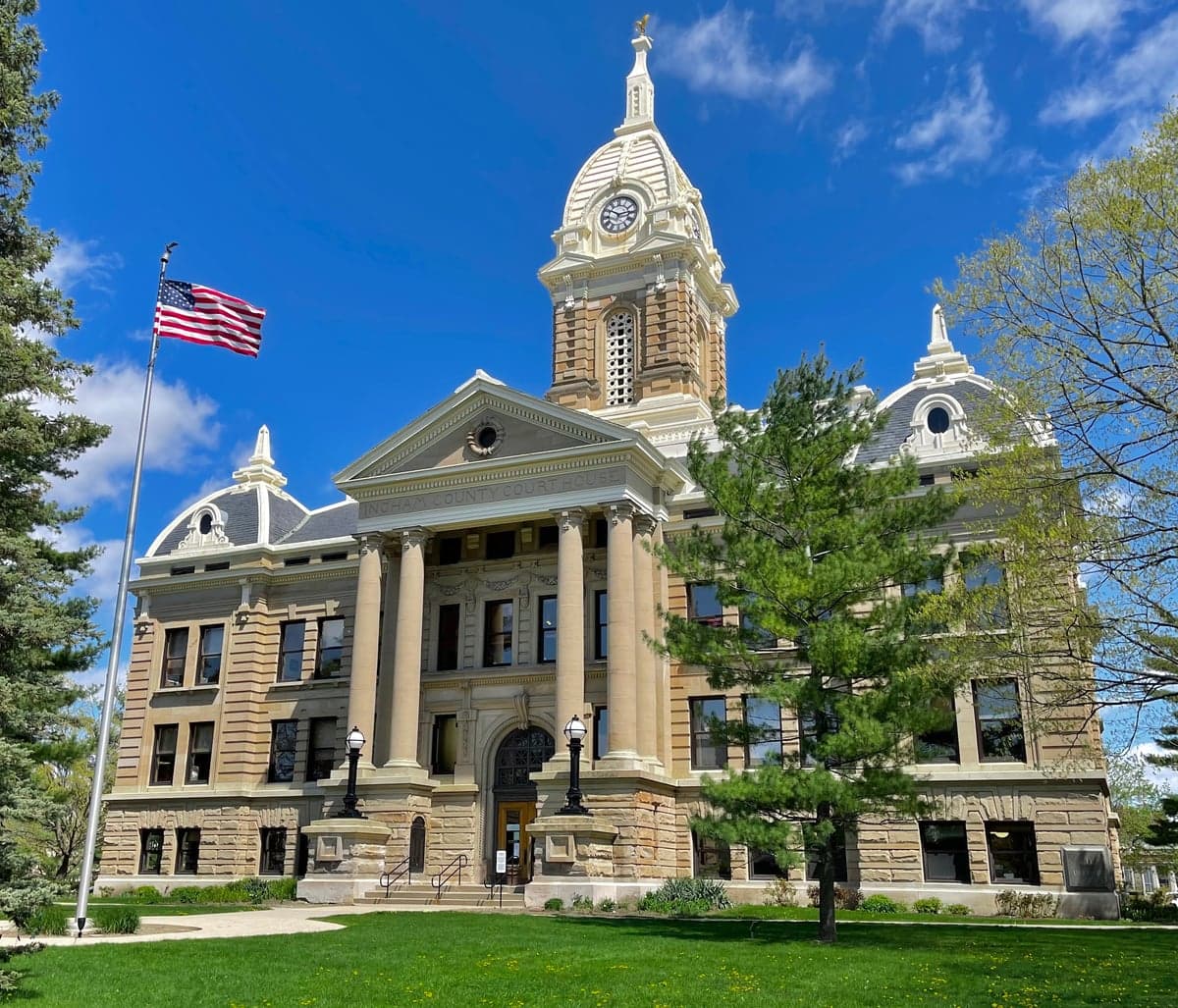
Photo: Wikipedia
Political ClimatePolitical Climate in Ingham County
Showing district-level results — no local-only data available.
Local Political AnalysisPolitical Analysis of Ingham County
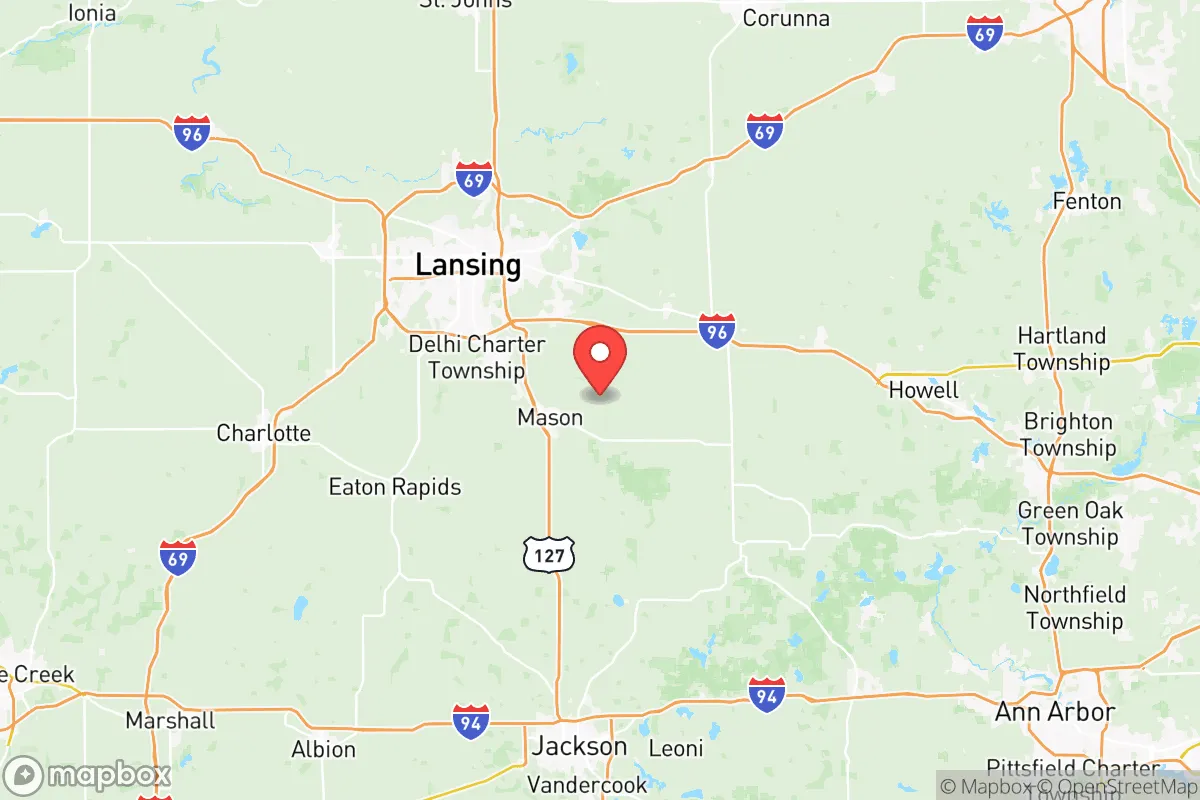
Ingham County, Michigan, is a classic swing county in a swing state, with a Cook Partisan Voting Index of EVEN that perfectly mirrors the state of Michigan's own EVEN rating. This means the county's political lean is essentially tied with the national average, making it a bellwether for both state and federal elections. However, that county-wide number masks a deep urban-rural divide: the city of Lansing and the campus of Michigan State University in East Lansing are deep blue strongholds, while the rural townships and smaller communities like Williamston, Stockbridge, and Leslie lean reliably red. The county's overall trajectory has been a slow drift leftward over the past decade, driven by population growth in the urban core and the student vote, but it remains one of the most competitive counties in the Midwest.
How it compares
Ingham County's EVEN rating puts it in a small group of counties nationwide that are true toss-ups, but its internal dynamics are unique. While the state of Michigan as a whole also sits at EVEN, Ingham's political center of gravity is pulled left by the Lansing-East Lansing corridor, which accounts for roughly 60% of the county's population. In the 2020 presidential election, Ingham County voted for Joe Biden by about 13 points, a margin significantly wider than the state's 2.8-point Biden win. This is because the county's rural precincts, like those in Alaiedon Township and Bunker Hill Township, vote Republican by margins of 20-30 points, but they are outnumbered by the dense, liberal precincts in downtown Lansing and near MSU's campus. The key swing precincts are in the suburban townships surrounding Lansing—Meridian Township, Delhi Township, and parts of Delta Township—where educated, moderate voters often decide local races. Ingham is less conservative than neighboring Livingston County (R+14) but more conservative than Washtenaw County (D+16), making it a transitional zone between deep red and deep blue Michigan.
What this means for residents
For conservative residents, living in a swing county means their votes carry real weight in local elections, but they are often in the minority in county-wide races. Republicans can reliably win seats on the Board of Commissioners in rural districts, but the county commission as a whole has been controlled by Democrats for most of the last decade. For liberal residents, the county's lean provides a comfortable majority in Lansing and East Lansing, but they must contend with a vocal and organized conservative minority in the outlying areas. Policy-wise, this balance means the county government tends toward moderation: tax rates are competitive with surrounding counties, and zoning debates often pit urban density advocates against rural property-rights advocates. The county's political split also means that ballot initiatives—like millages for roads, parks, or transit—often pass by narrow margins, reflecting the need for cross-party compromise.
Culturally, Ingham County's political divide is visible in daily life. Lansing and East Lansing have a progressive, college-town feel with a strong union presence, a thriving local food scene, and a visible LGBTQ+ community. The rural towns, by contrast, are more traditional, with a focus on agriculture, hunting, and church-centered social life. This split means residents can choose their environment: a conservative family might prefer the quiet of Williamston or Dansville, while a liberal professional might gravitate toward the Old Town or REO Town neighborhoods in Lansing. The county's status as a swing area also fosters a pragmatic political culture—local officials from both parties tend to work together on economic development and infrastructure, knowing that the next election could flip the balance of power. For newcomers, the key takeaway is that Ingham County offers a genuine cross-section of Michigan's political landscape, with all the tension and opportunity that entails.

State Political ClimatePolitical Climate in Michigan
State Political AnalysisPolitical Environment in the State
Michigan is the ultimate swing state in 2026, with a Cook PVI of EVEN that perfectly captures its knife-edge balance. The state has flipped from blue to red and back again over the past two decades: Barack Obama won it twice, Donald Trump flipped it in 2016 by a razor-thin 10,704 votes, Joe Biden reclaimed it in 2020, and the 2024 cycle saw it return to the toss-up column. The dominant coalitions are a shrinking union-and-auto-worker base in the southeast, a growing conservative exurban and rural vote in the west and north, and a rapidly diversifying suburban ring around Detroit that decides every election. For a conservative-leaning relocator, Michigan offers a mixed bag — blue-leaning executive power in Lansing has recently pushed a progressive agenda, but the state's geographic and cultural diversity means your experience of "Michigan politics" depends heavily on which county you choose to call home.
Urban vs. rural divide
The political map of Michigan is a textbook study in geographic polarization. The Democratic stronghold is the southeast corner anchored by Detroit, Ann Arbor, and the inner-ring suburbs of Wayne, Washtenaw, and Oakland counties. Detroit itself votes 95% Democratic in presidential races, while Ann Arbor's university-driven liberalism makes it one of the most progressive mid-sized cities in the Midwest. The flip side is western and northern Michigan, where Grand Rapids, Traverse City, and the rural Upper Peninsula vote reliably Republican. Grand Rapids, the state's second-largest city, has become a conservative anchor — Kent County, once a swing county, voted +8 for Trump in 2020 and has trended right as the city's evangelical and business communities have consolidated power. The real battleground is the suburban "blue wall" counties that ring Detroit: Macomb County famously flipped from Obama to Trump in 2016 and has become the most-watched swing county in America, while Oakland County — once a Republican stronghold — has trended blue as its professional-class suburbs like Birmingham and Royal Oak have grown more diverse and educated. Livingston County, northwest of Detroit, remains deep red and is one of the fastest-growing conservative exurban areas in the state.
Policy environment
Michigan's policy environment has shifted sharply leftward since Democrats won unified control of state government in 2022. The state has a flat income tax of 4.25%, which was actually reduced from 4.35% in 2023 under a 2015 law that triggers automatic cuts when revenues exceed inflation — a rare bright spot for fiscal conservatives. Property taxes are relatively high, with an average effective rate of 1.54%, but the Proposal A system from 1994 caps annual assessment increases at 5% or inflation, whichever is lower, which protects long-term homeowners. The regulatory posture has become more aggressive: Governor Gretchen Whitmer signed a repeal of the state's "right-to-work" law in 2023, a major win for unions that directly affects the construction and manufacturing sectors. Education policy is dominated by the state's 2015 third-grade reading law, which was repealed in 2023 and replaced with a less stringent retention requirement — a shift that has energized school-choice advocates who argue it weakens accountability. Healthcare policy is defined by the state's Medicaid expansion under the Healthy Michigan Plan, which covers roughly 1.2 million residents and enjoys broad bipartisan support despite its origins in the Affordable Care Act. Election laws are a flashpoint: Michigan now has no-excuse absentee voting, nine days of early in-person voting, and automatic voter registration, all passed by the Democratic legislature in 2023 and fiercely opposed by Republicans who argue they weaken ballot security.
Recent policy direction
The 2023-2024 legislative session was one of the most consequential in Michigan history, and the direction is unmistakably progressive. On gun policy, the state passed universal background checks, safe storage requirements, and a "red flag" extreme risk protection order law — a package that the NRA and Michigan Gun Owners have vowed to challenge in court. On education and parental rights, the Democratic majority repealed the state's 2012 ban on teaching about sexual orientation and gender identity in K-5 classrooms, a move that has galvanized conservative parents in districts like Rochester and Northville. On bodily autonomy, Michigan voters approved a constitutional amendment in 2022 (Proposal 3) that enshrines abortion rights up to fetal viability, overriding a 1931 law that had been on the books for decades. On property rights, the state has not passed any major reform to eminent domain or land-use regulation, but local zoning battles — particularly around short-term rentals in Traverse City and Harbor Springs — have become proxy fights for larger ideological divisions. On privacy and surveillance, Michigan has no comprehensive data privacy law, though a bipartisan bill is under consideration. On voting and ballot access, the 2022 Proposal 2 constitutional amendment established nine days of early voting, drop boxes, and post-election audits — changes that have increased turnout but also fueled ongoing election integrity debates in conservative counties like Ottawa and Midland.
Civil unrest & political movements
Michigan has been a national flashpoint for political activism since the pandemic. The 2020 "Operation Gridlock" protests at the state capitol in Lansing, where armed demonstrators opposed Governor Whitmer's COVID-19 restrictions, became a defining image of the national lockdown debate. The Whitmer kidnapping plot, foiled by the FBI in October 2020, further polarized the state and remains a live issue in local political discourse. On the left, the "Uncommitted" movement in the 2024 Democratic primary — a protest vote against Biden's Israel policy — drew over 100,000 votes in Michigan's large Arab American community, concentrated in Dearborn and Hamtramck. Immigration politics are particularly charged in southeast Michigan: Dearborn has one of the largest Muslim populations per capita in the Western Hemisphere, and local sanctuary policies have made it a target for conservative media. Election integrity remains a live issue: the 2020 "Stop the Steal" movement had deep roots in Michigan, with Republican-led county canvass boards in Antrim County initially refusing to certify results before a hand recount confirmed Biden's win. The 2024 cycle saw new controversies over voter roll maintenance and drop box surveillance, with conservative groups deploying poll watchers in unprecedented numbers in Detroit and Flint.
Projection
Over the next five to ten years, Michigan is likely to remain a battleground state, but the demographic trends favor a slow rightward shift. The state's population growth is concentrated in conservative-leaning exurbs like Fenton and Howell in Livingston County, while Detroit and much of the Upper Peninsula continue to lose residents. The net in-migration from other states — particularly from Illinois and California — has been modest but growing, and these newcomers tend to cluster in the Grand Rapids and Traverse City areas, reinforcing the existing conservative tilt. The wild card is the suburban vote: Oakland County's continued diversification and professionalization could push it further left, while Macomb County's working-class voters remain up for grabs in every cycle. The state's political geography means that control of the legislature and governor's office will likely flip back and forth every few cycles, producing a policy environment that lurches between progressive and conservative depending on turnout. A conservative relocator should expect that Michigan will never be a reliably red state, but that choosing the right county — Livingston, Ottawa, or Kent — can provide a local political environment that feels deeply conservative even as the state as a whole remains competitive.
For a new resident, the bottom line is that Michigan offers a genuine swing-state experience: your vote will matter, your local community will likely share your values if you choose carefully, and the state-level policy environment will shift with every election cycle. Conservative families will find strong school districts in red-leaning exurbs, a growing network of private and charter school options, and a gun culture that remains robust despite recent restrictions. Liberal residents will find strong labor protections, expanded voting access, and constitutional abortion rights. The practical takeaway is that Michigan rewards political engagement — if you show up and vote, your voice carries real weight in a state where elections are decided by margins of a few thousand votes.
* Values derived from national, state, county, city and local statistics and may differ in a specific area. Last updated: 2026-06-15T19:40:47.000Z
Narrative content on this page is AI-generated and may contain mistakes. Verify any details that matter before acting on them.
ReloMaps may earn a commission from affiliate links at no extra cost to you.

