Photo: Wikipedia
Demographics of Highland Park, MI
Affluence Level in Highland Park, MI
A low-income area with significant economic hardship. Household wealth and educational attainment are well below national averages.
People of Highland Park, MI
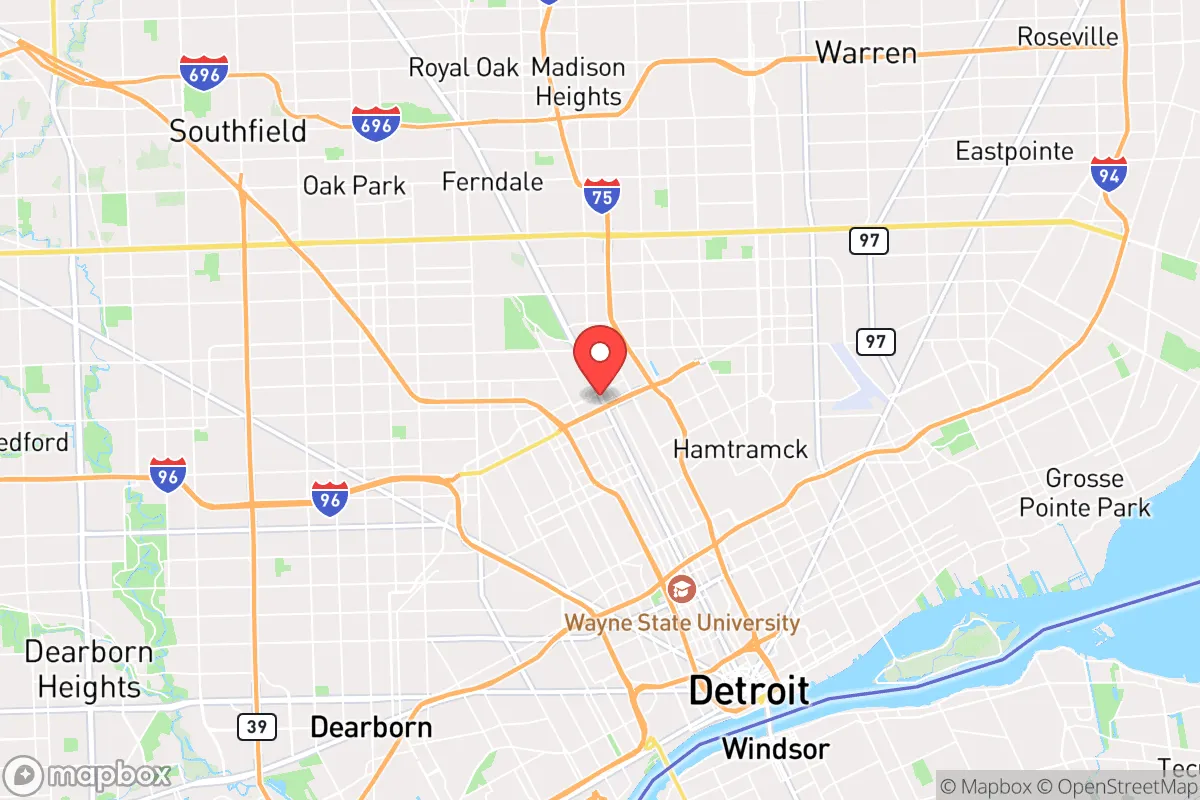
Today, Highland Park, Michigan is a city of 8,798 residents, overwhelmingly Black (85.8%) and notably homogenous, with a foreign-born population of just 0.6% and a college attainment rate of 17.0%. This small, landlocked enclave within Detroit carries a distinct identity: a once-thriving industrial powerhouse that has experienced severe population decline—from a peak of over 50,000 in the 1930s—and now faces the challenges of a shrinking tax base and aging housing stock. Its people are characterized by deep generational roots, a strong sense of local history, and a resilience shaped by decades of economic disinvestment.
How the city was settled and grew
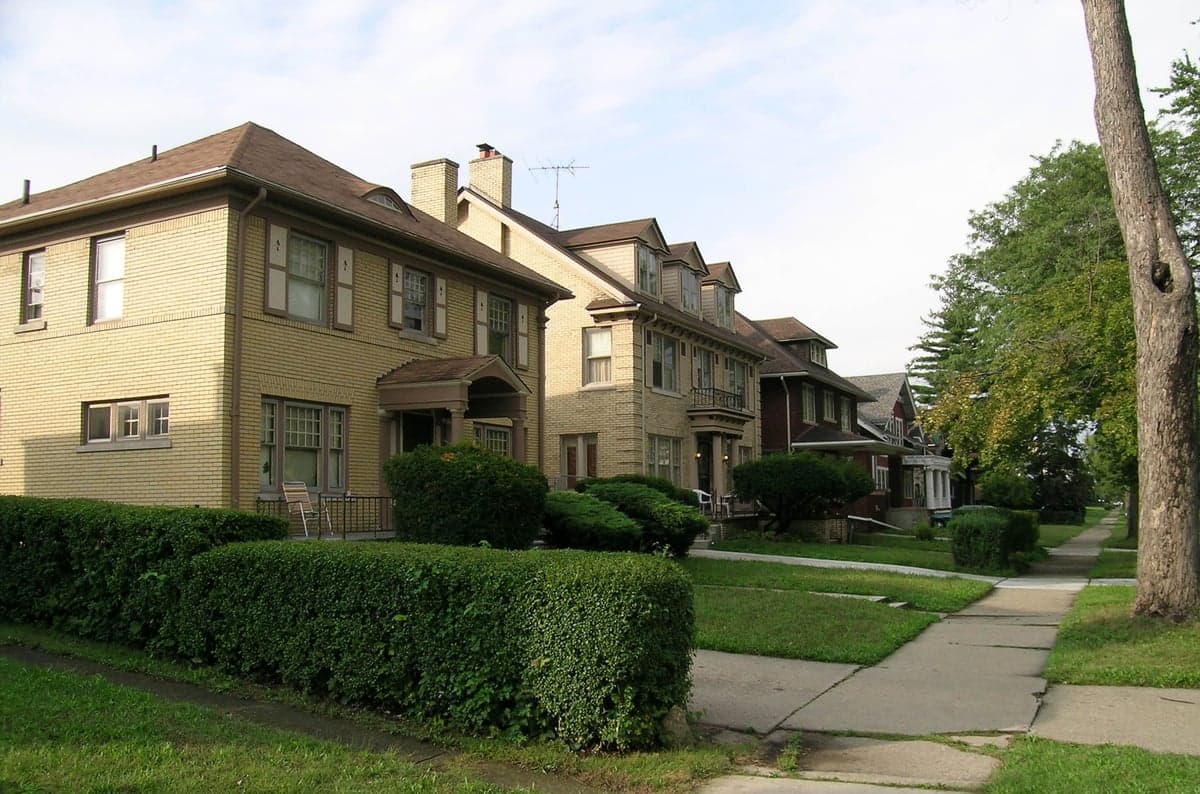
Highland Park’s population history is not one of gradual settlement but of explosive industrial growth. The city was originally part of Greenfield Township, a sparsely populated farming area. The first major wave of residents arrived after 1903, when the Ford Motor Company built its first large factory (the Piquette Avenue Plant) just south of the city limits. The real catalyst came in 1910 with the opening of the massive Ford Highland Park Plant on Woodward Avenue, where the Model T was mass-produced on the world’s first moving assembly line. This drew a flood of job seekers: first, native-born white migrants from rural Michigan and the Midwest, followed by waves of European immigrants. By the 1920s, Highland Park was a dense, working-class city of single-family homes and apartment buildings. The Ford Homes Historic District, a planned neighborhood of brick bungalows built by Ford for its workers, housed many of these early auto-industry families, predominantly of Polish, German, and Italian descent. The McDougall-Hunt District, a smaller area of tightly packed houses, also absorbed many of these immigrant workers. The city’s population peaked at 52,959 in 1930, making it one of the most densely populated places in Michigan.
Modern era (post-1965)
The post-1965 era brought a dramatic demographic transformation. The 1967 Detroit riot and the subsequent acceleration of white flight emptied large swaths of Highland Park. White residents, who had made up the vast majority of the population as late as 1950, departed rapidly for the suburbs. Simultaneously, the city became a destination for Black families leaving the segregated South during the Second Great Migration (1940–1970) and, later, for Black residents displaced from Detroit’s own urban renewal projects. By 1970, Highland Park’s population was already majority Black. The city’s industrial base collapsed in the 1970s and 1980s: Chrysler’s Highland Park headquarters closed in 1993, and the Ford plant had long since moved. This job loss triggered a second, more devastating population decline. Today, the Hamilton Avenue Corridor and the Woodward Avenue corridor contain the highest concentrations of the city’s remaining Black population, many of whom are descendants of the families who arrived during the 1950s–1970s. The Massachusetts Avenue area, once a mixed-ethnic neighborhood, is now predominantly Black and has seen significant housing abandonment. The city’s current racial composition—85.8% Black, 9.2% White, 1.1% Hispanic, and negligible Asian (0.0%) and Indian (0.1%) populations—reflects the near-total departure of the European-immigrant communities that built the city and the lack of new immigration to replace them.
The future
Highland Park’s population is projected to continue its long-term decline, though at a slower pace than in the 2000–2010 period (when it lost 20% of its residents). The city is not becoming more diverse; rather, it is becoming more uniformly Black and older. The foreign-born share (0.6%) is among the lowest in the region, and there is no significant influx of any new ethnic group. The small White population (9.2%) is concentrated in a few pockets, such as the Ford Homes Historic District, where a handful of preservation-minded newcomers have bought and restored historic houses. However, these are not large enough to shift the overall demographic trend. The city’s future depends heavily on two factors: whether it can attract new residents—likely younger Black families priced out of Detroit’s gentrifying neighborhoods—and whether it can retain its existing population. The McDougall-Hunt District, with its low home prices and proximity to Detroit’s New Center, has seen a small number of new buyers, but the city lacks the jobs, schools, and services to sustain a broad revival. Over the next 10–20 years, Highland Park will likely remain a predominantly Black, low-income, and depopulating city, with a cultural identity rooted in its automotive history and African American heritage.
For someone moving in now, Highland Park offers the lowest housing costs in the metro Detroit area and a strong sense of community among long-term residents, but it also means accepting a city with limited retail, few employment opportunities, and a school system that has struggled for decades. It is a place for those who value history and affordability over amenities and growth.

* Values derived from national, state, county, city and local statistics and may differ in a specific area. Last updated: 2026-10-07T06:17:31.000Z
Narrative content on this page is AI-generated and may contain mistakes. Verify any details that matter before acting on them.
ReloMaps may earn a commission from affiliate links at no extra cost to you.

