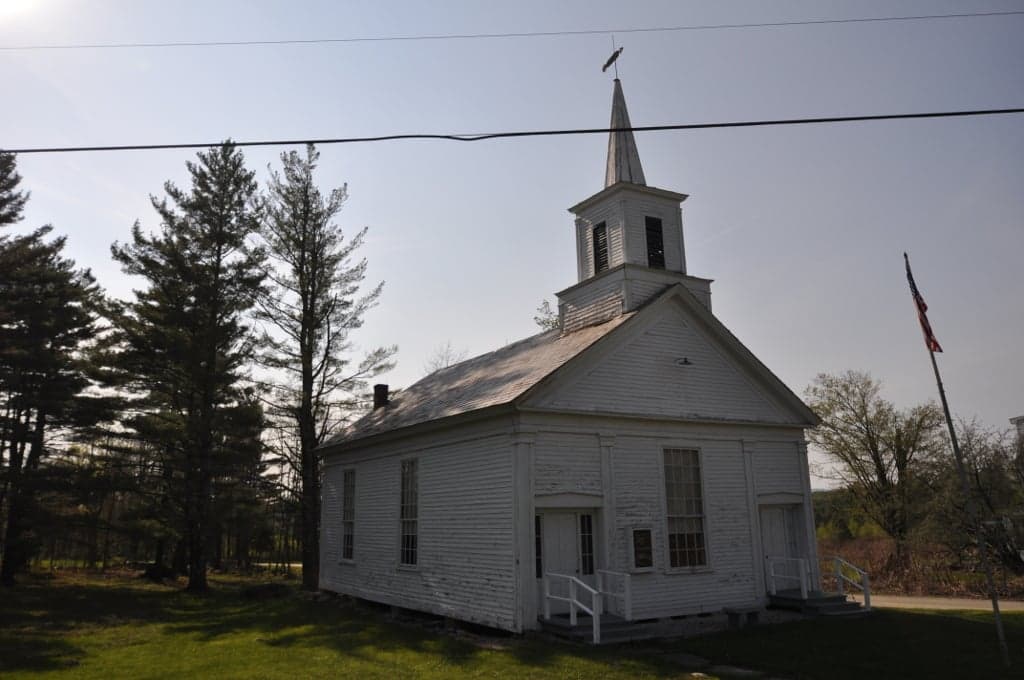
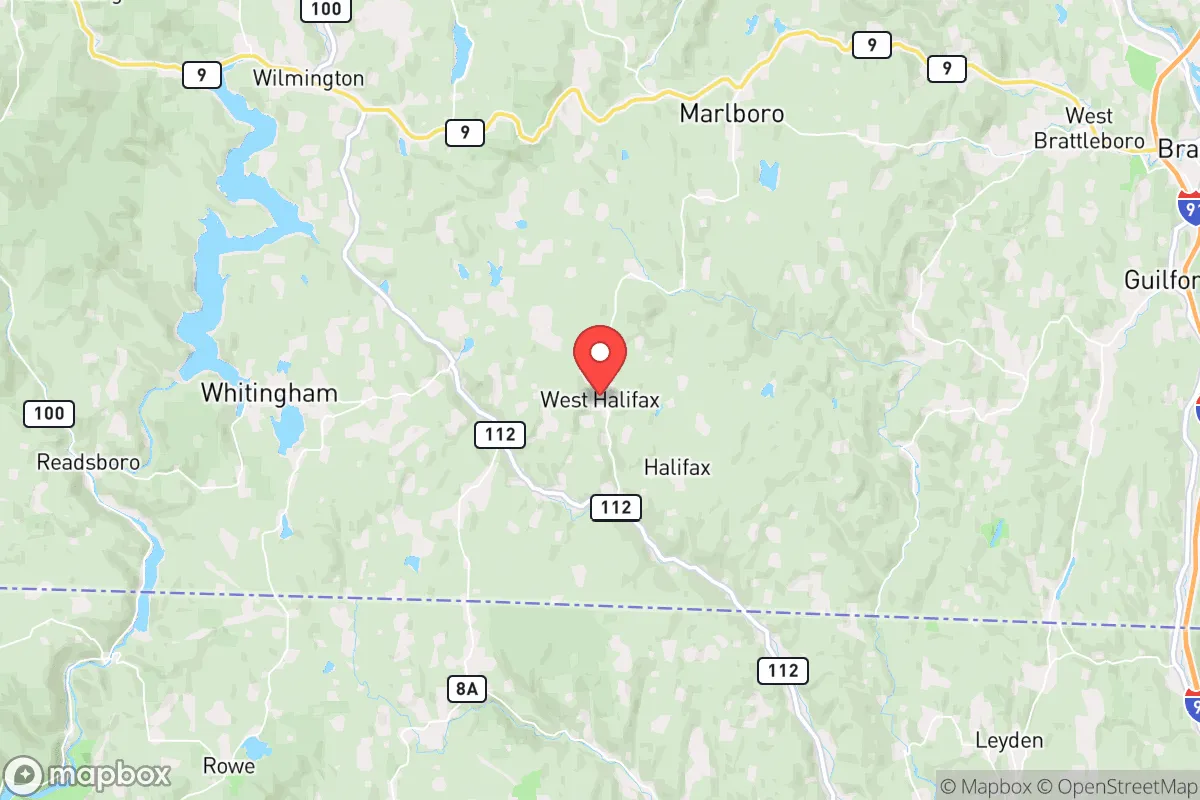
Photo: Wikipedia
Political ClimatePolitical Climate in Halifax, VT
District shown is the primary district for this city’s centroid. Cities may span multiple districts.
Inherited from parent state — no local data available.
Local Political AnalysisPolitical Analysis of Halifax, VT
Halifax, Vermont, leans heavily Democratic, mirroring the deep-blue character of Windham County and the state as a whole. With Vermont holding a Cook PVI of D+17, Halifax is even more progressive than that baseline, consistently delivering Democratic margins of 70% or higher in presidential elections. The town’s political trajectory has been stable for decades—there’s no recent swing toward the GOP, and local governance remains firmly in the hands of progressive and independent candidates who prioritize environmental policy, social services, and land conservation.
How it compares
Halifax stands in stark contrast to the more politically mixed towns just across the Massachusetts border. Drive 15 minutes south to Bernardston, MA, and you’ll find a community that votes more centrist, often splitting tickets between Democrats and Republicans. Head 20 minutes west to Bennington, VT, and the politics are still blue but with a noticeable libertarian streak—more gun-rights sentiment and skepticism of state-level housing mandates. Within Windham County itself, Halifax is to the left of Wilmington (which has a small but vocal conservative minority) and roughly on par with Guilford and Marlboro. The only nearby town that rivals Halifax’s progressive intensity is Newfane, where town meeting votes on climate resolutions and social equity measures routinely pass with 80% approval.
What this means for residents
For liberal residents, Halifax offers a political environment where their values are the default. Town meeting discussions focus on expanding renewable energy co-ops, funding local food shelves, and preserving open space—issues that rarely face serious opposition. Conservative residents, while a small minority, are not marginalized; they tend to be active in the volunteer fire department, road crews, and school boards, where practical concerns often override partisan divides. The practical effect of the town’s lean is that property taxes are higher than the state average (around $22 per $1,000 of assessed value) to fund robust social services and schools, but there’s little appetite for cutting those services. Gun laws are a point of friction: Vermont’s 2018 universal background check and red-flag law are broadly supported in Halifax, but a handful of longtime hunting families feel the regulations are overreach. Still, those families remain part of the community fabric—politics here is less about confrontation and more about quiet coexistence.
Culturally, Halifax is distinct from Vermont’s more tourist-driven towns like Brattleboro or Manchester. There’s no downtown strip, no boutique shopping—just winding roads, working forests, and a strong DIY ethos. The town’s political culture reflects that: residents expect government to be lean but effective, and they’re skeptical of outside developers or state mandates that feel top-down. The biggest policy distinction from the rest of Vermont is Halifax’s aggressive approach to land conservation—over 40% of the town’s acreage is permanently protected through conservation easements, a figure that’s double the state average. That’s a direct result of decades of progressive town planning, and it means new housing development is tightly constrained. For anyone moving here, the political climate translates into a community that values stability, environmental stewardship, and neighborly self-reliance—but also one where change comes slowly, and newcomers are expected to respect the existing rhythm of rural life.

State Political ClimatePolitical Climate in Vermont
State Political AnalysisPolitical Environment in the State
Vermont is one of the most reliably Democratic states in the nation, with a Cook Partisan Voting Index of D+17, meaning it votes about 17 points more Democratic than the country as a whole. The state hasn't voted for a Republican presidential candidate since George H.W. Bush in 1988, and both U.S. Senate seats and the single House seat have been held by Democrats or independents who caucus with them for over a decade. That said, the political reality is far more nuanced than the statewide numbers suggest—Vermont has a strong libertarian streak, a fiercely independent electorate, and a Republican governor (Phil Scott) who has been repeatedly reelected by wide margins, often winning over 40% of Democratic voters.
Urban vs. rural divide
The political map of Vermont is a textbook case of the urban-rural split, but with a New England twist. The Democratic stronghold is Chittenden County, anchored by Burlington (the state's largest city, population ~45,000) and its suburbs like South Burlington and Winooski. This county alone delivers about 20% of the state's vote and consistently goes 70-75% Democratic. The progressive wing of the party is strongest here—Burlington's mayor and city council are openly socialist-aligned, and the city has a long history of activist politics dating back to Bernie Sanders' tenure as mayor in the 1980s. Move just 20 miles south to Rutland (population ~15,000) or east to Barre, and you'll find working-class towns that have trended Republican in recent cycles, though they still lean slightly blue. The truly red parts of Vermont are the Northeast Kingdom—counties like Essex, Orleans, and Caledonia—where Trump won in 2016 and 2020, albeit with smaller margins than in neighboring New Hampshire. Newport and St. Johnsbury are the population centers here, and they feel culturally closer to northern New Hampshire than to Burlington. The divide isn't just about party registration; it's about lifestyle. Urban Vermonters tend to be younger, more educated, and more secular, while rural Vermonters are older, more likely to own guns, and more skeptical of government mandates—a sentiment that crosses party lines.
Policy environment
Vermont's policy environment is a mix of progressive ambition and fiscal caution, largely because Governor Scott has vetoed numerous tax increases and spending bills from the Democratic supermajority legislature. The state has a progressive income tax with rates up to 8.75% on income over $213,000, and property taxes are among the highest in the nation—averaging about 1.8% of home value, funding a school system that spends over $20,000 per pupil annually. There is no state sales tax, which is a major draw for conservatives who dislike consumption taxes. Healthcare is a perennial battleground: Vermont attempted a single-payer system in 2014 but abandoned it due to cost, and instead passed a public option law in 2022 that allows individuals to buy into the state's Medicaid program. Election laws are among the most accessible in the country—same-day voter registration, universal mail-in ballots for all elections since 2020, and no voter ID requirement. This has led to consistently high turnout (over 70% in presidential years) but also draws criticism from conservatives who worry about ballot security. Gun laws are relatively strict by national standards: universal background checks, a red flag law (passed in 2018 after a near-miss school shooting plot), a 10-round magazine limit, and a ban on carrying firearms in public buildings and schools. However, Vermont still allows permitless carry for concealed handguns, and there is no waiting period or registry for long guns—a compromise that reflects the state's rural hunting culture.
Recent policy direction
The last five years have seen Vermont move decisively left on social issues while holding the line on taxes. In 2023, the legislature passed a law requiring insurance companies to cover abortion and gender-affirming care without cost-sharing, and in 2024 it passed a "shield law" protecting providers who prescribe abortion pills via telehealth from out-of-state prosecution. Parental rights have been a flashpoint: a 2023 law requires schools to notify parents if a student changes their name or pronouns, but the state board of education has issued guidance that effectively nullifies it in many districts. On education, Vermont passed Act 173 in 2022, which eliminated the requirement for school districts to provide special education services in the least restrictive environment—a move that has drawn fire from disability advocates. Property rights are a major concern for relocators: Vermont has some of the strictest land-use regulations in the country, including Act 250, a 1970 law that requires state-level permits for any development over 10 acres or that creates more than 10 housing units. This has contributed to a severe housing shortage, with median home prices in Chittenden County exceeding $500,000. On the tax front, Governor Scott has successfully vetoed a payroll tax for a paid family leave program (2023) and a carbon tax on heating fuel (2024), though both remain on the legislative agenda. Voting access has expanded further: in 2024, Vermont became the first state to allow 16- and 17-year-olds to pre-register to vote, and it automatically mails ballots to all registered voters for every election.
Civil unrest & political movements
Vermont's political activism is intense but generally non-violent. The most visible flashpoint in recent years was the 2020-2021 Black Lives Matter protests in Burlington, which included the toppling of a statue of Christopher Columbus and a prolonged occupation of a city park. The state has a small but vocal far-left movement centered around the Vermont Progressive Party, which holds about 10% of legislative seats and advocates for rent control, a state bank, and the abolition of ICE. On the right, the Vermont Republican Party is a moderate, pro-business organization that has largely avoided the culture wars that dominate national GOP politics. However, there is a growing libertarian and constitutionalist movement in the Northeast Kingdom and southern Vermont, with groups like the Vermont Liberty Alliance organizing around gun rights and school choice. Immigration politics are relatively quiet: Vermont has no sanctuary city laws, but Burlington and Winooski have "welcoming city" ordinances that limit cooperation with federal immigration enforcement. The state's refugee resettlement program, run by the Vermont Refugee Resettlement Program, has brought about 500 refugees per year from Bhutan, Somalia, and Syria, concentrated in Burlington and Colchester. This has caused some tension in working-class neighborhoods but has not erupted into the kind of protests seen in larger states. Election integrity has not been a major controversy—Vermont's small size and paper ballot system (mandated by law since 2018) mean that recounts are rare and results are generally accepted by both parties.
Projection
Over the next 5-10 years, Vermont is likely to become more Democratic at the state level, but with a growing libertarian-conservative minority in rural areas. The key demographic driver is in-migration from out of state: since 2020, Vermont has seen a net gain of about 15,000 new residents, mostly from Massachusetts, New York, and Connecticut. These newcomers tend to be wealthier, more educated, and more liberal than native Vermonters, and they are concentrated in Chittenden County and the Upper Valley (the area around White River Junction and Norwich, which is essentially a bedroom community for Dartmouth College in New Hampshire). This is pushing housing prices up and accelerating the displacement of working-class families, which in turn is fueling resentment and a small but growing "Vermont First" movement that advocates for stricter land-use controls on second homes. The Republican Party is unlikely to win statewide office again soon—Governor Scott is 66 and has said he will not run again in 2026, and there is no obvious successor who can replicate his cross-party appeal. The legislature will remain under Democratic supermajority control, meaning that tax increases and new regulations are likely, though the governor's veto power will continue to moderate the most extreme proposals. The biggest wild card is the housing crisis: if the state cannot build enough housing to accommodate new residents, the cost of living will continue to rise, potentially slowing in-migration and exacerbating the urban-rural divide.
For a conservative-leaning relocator, Vermont offers a mixed bag. You'll find a state that respects individual privacy, has no sales tax, and allows permitless carry, but you'll also pay high property taxes, deal with strict land-use regulations, and live in a political environment where your vote for president or Senate is essentially meaningless. The practical takeaway is that Vermont is a good fit if you value personal freedom on issues like guns and government surveillance, but you'll need to be comfortable being in the minority politically and paying a premium for the privilege of living in a beautiful, low-crime state. If you're looking for a place where your conservative views are reflected in local policy, you're better off looking at the Northeast Kingdom or southern Vermont's smaller towns, but even there, the statewide political tide is against you.
* Values derived from national, state, county, city and local statistics and may differ in a specific area. Last updated: 2026-10-17T00:28:32.000Z
Narrative content on this page is AI-generated and may contain mistakes. Verify any details that matter before acting on them.
ReloMaps may earn a commission from affiliate links at no extra cost to you.

