Photo: Wikipedia
Demographics of Halifax, VT
Affluence Level in Halifax, VT
A middle-class area roughly in line with national averages across income, home values, education, and employment.
People of Halifax, VT
The people of Halifax, Vermont, today number just 152 residents, making it one of the state's smallest incorporated towns. The population is overwhelmingly white (97.4%) and entirely native-born, with zero foreign-born residents reported. Despite its tiny size, Halifax retains a distinctive character as a deeply rural, forested community where a relatively high share of adults—37.6%—hold college degrees, a figure that hints at a mix of remote workers, retirees, and second-home owners drawn to the town's seclusion along the Massachusetts border.
How the city was settled and grew
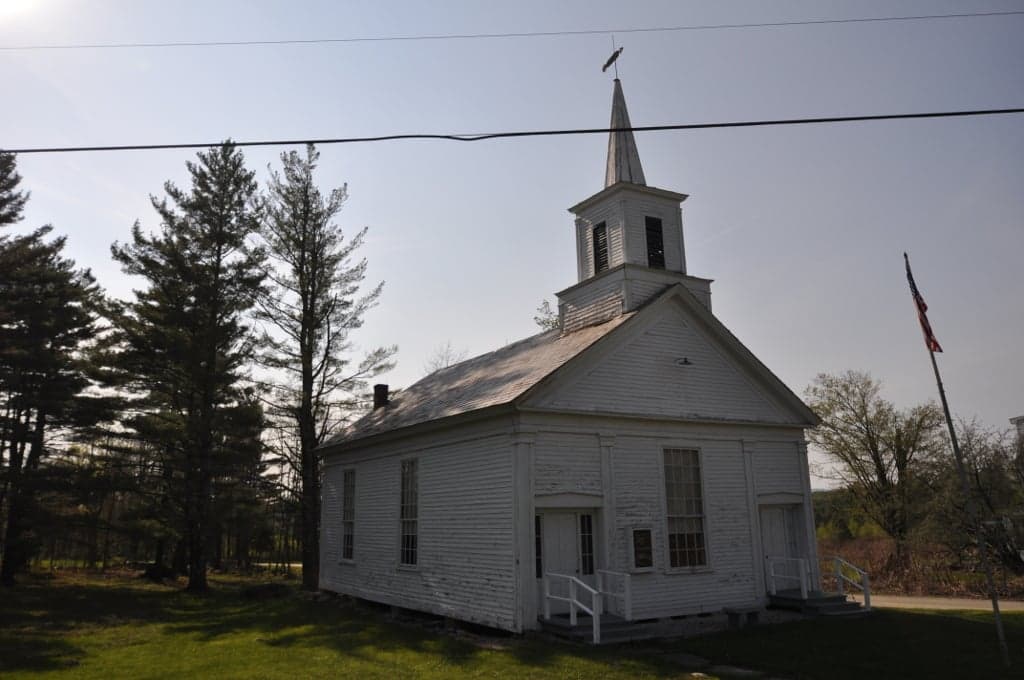
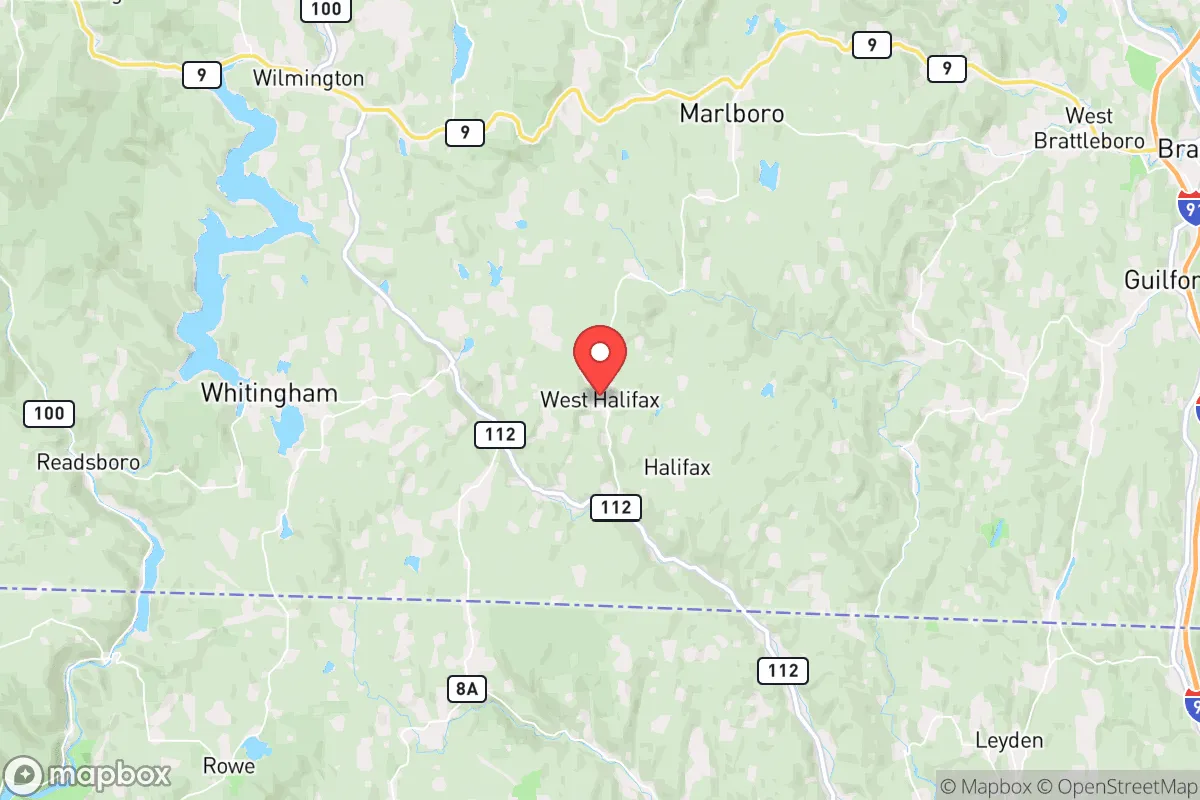
Halifax was chartered in 1750 by New Hampshire's colonial governor, Benning Wentworth, as part of a wave of land grants intended to populate the contested frontier between New Hampshire and New York. The town's name honored George Montagu-Dunk, 2nd Earl of Halifax, a British statesman who supported colonial expansion. Early settlers were primarily English and Scots-Irish farmers who arrived in the 1760s and 1770s, clearing dense hardwood forests for subsistence agriculture. The town's first meeting house was built near the geographic center, an area still known as Halifax Center, where a handful of historic homes and the town hall remain today. A second cluster, West Halifax, grew along the Deerfield River, where small mills harnessed water power for grist and lumber. By 1790, Halifax had roughly 600 residents, but the thin, rocky soil limited prosperity. The population peaked around 1,000 in the 1830s, then began a long decline as younger generations left for factory jobs in nearby mill towns like Greenfield and Brattleboro. The arrival of the railroad in the late 19th century bypassed Halifax entirely, cementing its isolation and accelerating out-migration. By 1900, the population had fallen below 400.
Modern era (post-1965)
The post-1965 era brought no significant immigration to Halifax, as the town's foreign-born population remains zero. Instead, the modern demographic story is one of domestic in-migration and counter-urbanization. Beginning in the 1970s, a small but steady stream of back-to-the-land homesteaders—many from Massachusetts and Connecticut—purchased cheap, abandoned farmsteads in areas like Houghton Road and Bray Hill. These newcomers were often college-educated and politically liberal, seeking self-sufficiency and privacy. They restored old houses, built off-grid cabins, and raised livestock, creating a quiet countercultural enclave within the otherwise conservative rural landscape. By the 1990s, a second wave arrived: remote workers and second-home buyers, drawn by low property taxes and proximity to the ski resorts of southern Vermont. This group concentrated in the Harriman Reservoir area, where lakefront properties offered recreational appeal. The town's racial composition has remained virtually unchanged—97.4% white—as the new arrivals have been overwhelmingly white. The Hispanic, Black, Asian, and Indian populations are all recorded at 0.0%. The college-educated share, however, has risen sharply from single digits in 1970 to 37.6% today, reflecting the selective nature of in-migration.
The future
Halifax's population is likely to remain very small and nearly all-white for the foreseeable future. The town has no rental housing stock, no public transportation, and no commercial district—only a town garage, a volunteer fire station, and a one-room library. New construction is rare, limited by Act 250 (Vermont's land-use law) and the high cost of building on steep, rocky lots. The few homes that come on the market are typically snapped up by out-of-state buyers, often from the Boston or New York metro areas, who pay cash and use the properties as vacation homes. This trend is concentrating new residents in the Harriman Reservoir and West Halifax areas, where lake and river frontage commands premium prices. Meanwhile, longtime local families—descendants of the original English and Scots-Irish settlers—are aging out or selling, as young adults cannot afford the $400,000+ median home price on local wages. The result is a slow demographic turnover: the population is becoming more transient, more affluent, and more educated, but not more diverse. The next 10-20 years will likely see a continued decline in year-round residents, replaced by seasonal occupants, unless zoning changes or affordable housing initiatives emerge—both unlikely in a town with no municipal budget for such efforts.
Halifax is becoming a place of retreat rather than a working community—a quiet, forested refuge for those who can afford to live far from neighbors and services. For someone moving in now, it offers extreme privacy and low taxes, but also isolation, a shrinking tax base, and virtually no demographic change on the horizon.

* Values derived from national, state, county, city and local statistics and may differ in a specific area. Last updated: 2026-10-17T00:28:32.000Z
Narrative content on this page is AI-generated and may contain mistakes. Verify any details that matter before acting on them.
ReloMaps may earn a commission from affiliate links at no extra cost to you.

