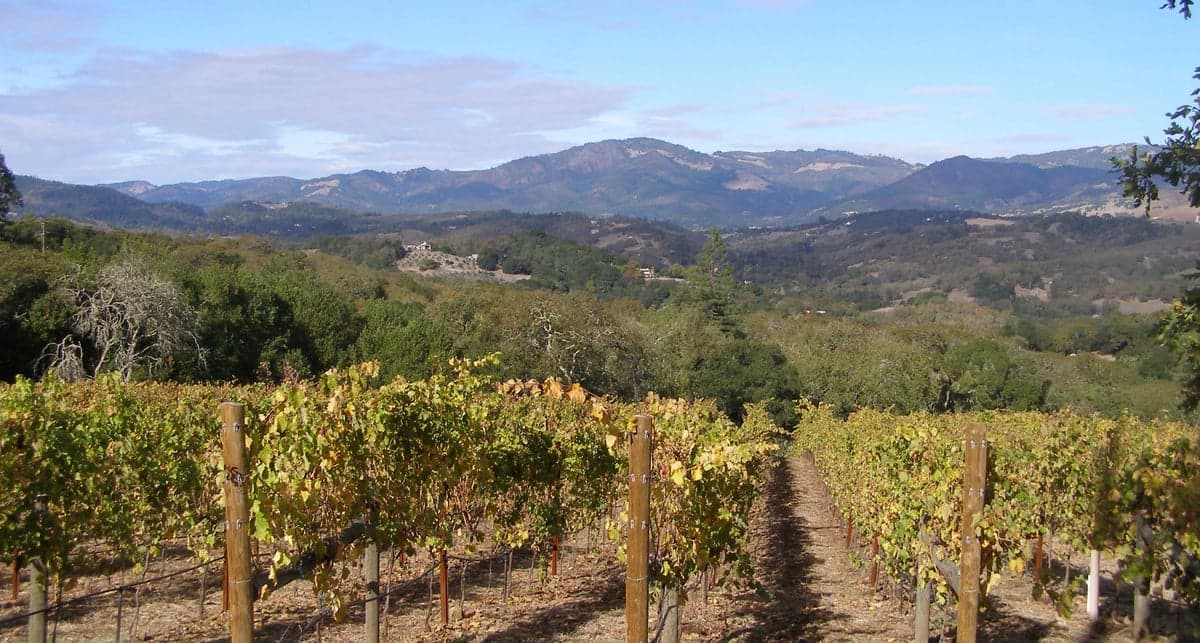
Photo: Wikipedia
Political ClimatePolitical Climate in Sonoma County
Showing district-level results — no local-only data available.
Local Political AnalysisPolitical Analysis of Sonoma County
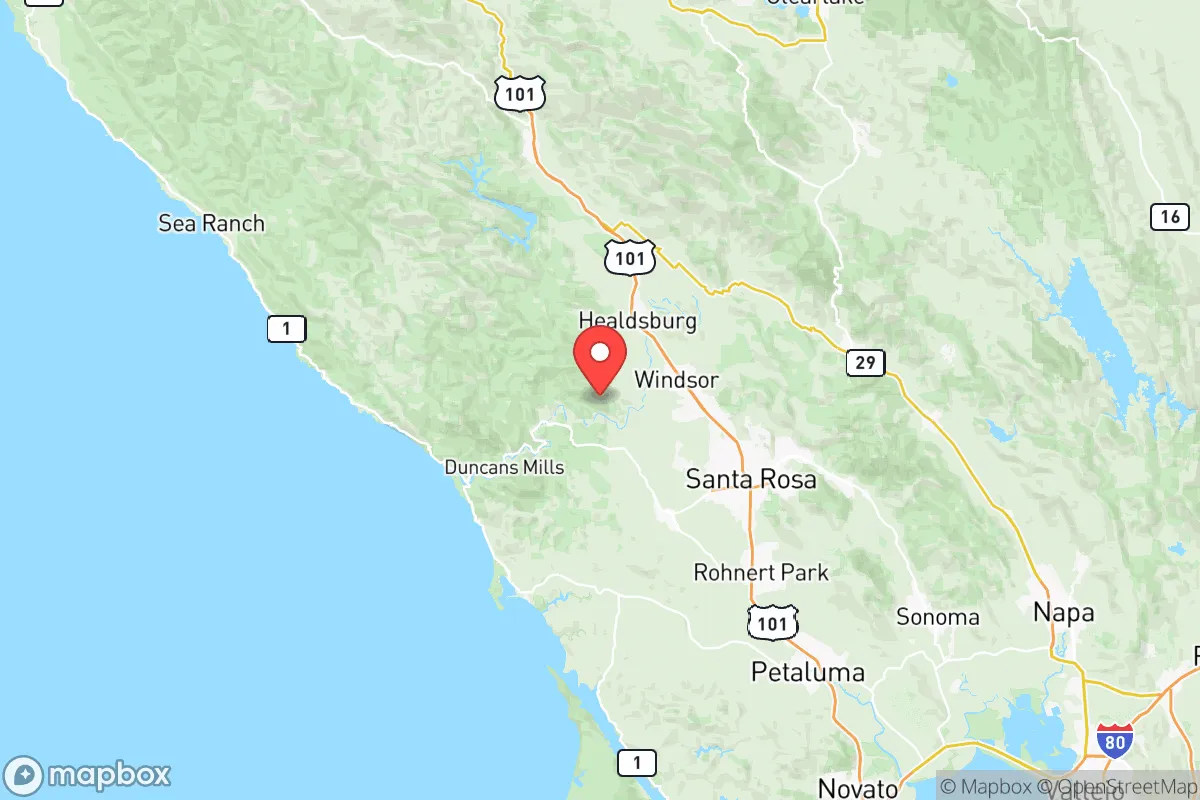
Sonoma County is one of the most reliably Democratic strongholds in California, with a Cook Partisan Voting Index (PVI) of D+24 — that's a full 12 points more liberal than the state's already deep-blue D+12 rating. In practice, this means the county hasn't voted for a Republican presidential candidate since 1988, and even then it was a squeaker. The real political story here isn't about whether Democrats win, but about the internal tug-of-war between the county's progressive urban core and its more moderate, rural edges. Places like Santa Rosa and Sebastopol are where you'll find the most consistently left-leaning voters, while Petaluma and Sonoma proper trend moderate-blue. The real outliers are Cloverdale and parts of Healdsburg and Windsor, where you'll occasionally see a Republican win a city council seat or a school board race — but even those towns have been trending left over the past decade.
How it compares
To put Sonoma County's D+24 PVI in perspective, it's more liberal than famously progressive cities like San Francisco (D+23) or Berkeley (D+22). The gap between Sonoma County and California as a whole (D+12) is stark: if Sonoma County were its own state, it would be the second-most Democratic state in the country, behind only Vermont. This isn't just about presidential elections — it shows up in down-ballot races too. In 2022, every single countywide office was won by a Democrat, and the county's state assembly and senate seats are all held by Democrats. The only real political competition happens in the June primaries, where the fight is between the county's establishment Democrats and its more progressive challengers. For example, in the 2024 primary for the 2nd State Assembly District, the race was between two Democrats — one backed by labor unions and the other by environmental groups — with the Republican candidate barely registering double digits in the general election.
What this means for residents
For liberal residents, Sonoma County is a place where their values are reflected in local policy — from the county's aggressive climate action plan to its sanctuary city ordinances in Santa Rosa and Petaluma. You'll find robust public transit investments, strong tenant protections, and a county government that regularly pushes for stricter environmental regulations than the state requires. For conservative residents, the reality is more about feeling politically isolated. There's no Republican club in the county that holds regular meetings, and conservative candidates often struggle to even get on the ballot for local races. That said, the county's rural areas — especially around Bodega Bay and the Russian River Valley — still have a libertarian streak, with residents who vote Republican on national issues but support local land-use restrictions that frustrate developers. The practical effect is that conservative residents often find themselves in the minority on school boards and city councils, but they can still influence specific issues like property taxes and water rights through local ballot measures.
Culturally, Sonoma County's politics are shaped by its dual identity as both a wine country playground for the wealthy and a working-class agricultural region. The Graton Rancheria casino and the Sonoma County Fairgrounds are rare neutral ground where political divides blur. The county's biggest policy fights in recent years haven't been about red vs. blue, but about growth vs. preservation — how many new housing units to approve, how to balance tourism with local affordability, and whether to allow more cannabis cultivation. These debates cut across party lines, with some of the most vocal anti-growth activists being wealthy liberals in Glen Ellen and Kenwood, while pro-development voices come from both moderate Democrats in Rohnert Park and a handful of libertarian-leaning farmers in the Sonoma Valley. The trajectory is clear: Sonoma County will only get bluer as younger, more diverse residents move in from the Bay Area, but the local flavor of that blue — whether it's the pragmatic, business-friendly kind or the activist, anti-corporate kind — remains the real political drama.

State Political ClimatePolitical Climate in California
State Political AnalysisPolitical Environment in the State
California is a solidly Democratic state with a Cook Partisan Voting Index of D+12, meaning it votes about 12 points more Democratic than the national average in presidential elections. This lean has been consistent for decades, but the coalition driving it has shifted noticeably over the past 10-20 years, with the state’s massive urban centers and growing Latino electorate now forming the core of Democratic power, while once-competitive inland areas have moved sharply right. For a conservative-leaning relocator, the practical reality is that you’ll be living in a state where Democrats hold every statewide office and supermajorities in both legislative chambers, but where local politics vary enormously depending on where you land.
Urban vs. rural divide
The political map of California is a study in extremes. The coastal metros — Los Angeles, San Francisco, San Jose, Oakland, and San Diego — are the engine of the state’s Democratic dominance, producing massive vote margins that overwhelm the rest of the state. In 2020, Los Angeles County alone gave Joe Biden over 1.6 million more votes than Donald Trump, more than the entire margin of victory statewide. Meanwhile, the Central Valley and inland regions have moved sharply Republican. Bakersfield, Fresno, and Redding are reliably red, with Trump winning Kern County (Bakersfield) by 16 points in 2020. The Inland Empire, including Riverside and San Bernardino, has become a true battleground within the state, flipping from reliably red to purple as Latino and Asian voters there have shifted left, though it still leans Republican in local races. The most dramatic shift has been in Orange County, once a national symbol of suburban conservatism, which flipped from red to blue in 2018 and now elects Democrats to most congressional seats. For a conservative, the best bet is the Central Valley, the Sierra foothills, or the far north — places like Placer County (Auburn, Roseville) or San Diego’s northern suburbs (Carlsbad, Oceanside) still have strong Republican representation at the local level.
Policy environment
California’s policy environment is defined by high taxes, heavy regulation, and a robust social safety net. The state has a progressive income tax with rates up to 13.3%, a state sales tax that averages 8.85% with local add-ons, and some of the highest gas taxes in the nation. Property taxes are capped at 1% of assessed value under Proposition 13, but reassessment on sale means new buyers face much higher bills than long-term owners. The regulatory posture is aggressive: California has its own environmental review process (CEQA) that can delay or kill development, strict emissions standards that effectively set national policy, and a labor-friendly legal environment with strong union protections. Education policy is dominated by the California Teachers Association, with per-pupil spending above the national average but outcomes that lag in many districts. Healthcare is heavily regulated, with the state running its own insurance exchange (Covered California) and expanding Medi-Cal to cover all low-income adults regardless of immigration status. Election laws are among the most accessible in the country: same-day voter registration, automatic voter registration via the DMV, universal vote-by-mail (every registered voter gets a ballot), and no-excuse absentee voting. For a conservative, the policy environment means higher costs and more bureaucracy, but also predictable services and strong consumer protections.
Recent policy direction
California’s recent legislative direction has been toward expanding government control and individual rights in specific areas, often in direct opposition to red-state trends. On gun and self-defense law, the state has passed some of the nation’s strictest measures: a 2023 law (SB 2) effectively bans carrying firearms in most public places, and a 2024 law (AB 28) imposes an 11% excise tax on guns and ammunition. On parental and education rights, the state has moved in the opposite direction of conservative states: a 2024 law (AB 1955) prohibits school districts from requiring teachers to notify parents if a child changes their gender identity, and the state has expanded ethnic studies requirements. On speech and privacy, California has a strong shield law for journalists and a comprehensive data privacy law (CCPA), but also allows for broad surveillance by law enforcement. On medical and bodily autonomy, the state is a safe haven for abortion, with a 2022 law (SB 523) protecting providers from out-of-state lawsuits, and it has legalized physician-assisted suicide. On property rights, rent control has been expanded statewide (AB 1482 caps annual rent increases at 5% plus inflation), and a 2024 law (SB 9) allows for duplexes on single-family lots in most cities. On taxation, the trend is toward higher taxes on the wealthy, with a 2024 ballot measure (Proposition 19) increasing property taxes on inherited homes. On voting and ballot access, the state has made it easier to vote, with universal vote-by-mail made permanent in 2021. For a conservative relocator, the key takeaway is that California is actively legislating in ways that expand government power and individual autonomy in specific areas, but often at the expense of traditional conservative priorities like gun rights and parental notification.
Civil unrest & political movements
California has a long history of political activism, and recent years have seen both left- and right-wing movements flare up. The 2020 George Floyd protests in Los Angeles, Oakland, and San Francisco were among the largest and most destructive in the country, with widespread looting and property damage. On the right, the state has seen a resurgence of the California Republican Party’s grassroots, particularly in the Central Valley and inland areas, with groups like the California Republican Assembly pushing for more conservative candidates. Immigration politics are a constant flashpoint: California is a sanctuary state (SB 54, 2017), limiting local law enforcement cooperation with federal immigration authorities, and the state has sued the Trump administration multiple times over immigration policy. The secession movement, CalExit, has fizzled after failing to qualify for the ballot in 2018, but the idea of a “State of Jefferson” in the rural north still has local support. Election integrity controversies have been less intense than in other states, but the 2020 election saw some Republican activists challenge the state’s universal vote-by-mail system, which was expanded due to COVID-19. For a new resident, the most visible flashpoints are likely to be homelessness in major cities, which has become a political battleground between progressive “housing first” advocates and more conservative “law and order” approaches, and the ongoing debate over water rights in the Central Valley.
Projection
Over the next 5-10 years, California’s political trajectory is likely to remain solidly Democratic, but with growing internal tension between the coastal progressive majority and the inland conservative minority. Demographic shifts are key: the state’s population has been declining since 2020, with net out-migration of about 500,000 people, many of them middle-class families and conservatives moving to Texas, Arizona, and Nevada. The remaining population is becoming more Latino, more Asian, and more urban, all groups that lean Democratic. However, the state’s high cost of living and housing shortage are pushing some working-class voters, particularly in the Central Valley, toward Republicans who promise lower taxes and less regulation. The most likely scenario is that California becomes even more Democratic at the statewide level, but with a more vocal and organized conservative minority concentrated in specific regions. For someone moving in now, expect to see continued Democratic dominance in Sacramento, but with more local variation and a growing sense of two Californias — the coastal, progressive, wealthy one, and the inland, conservative, working-class one. The state’s budget, which has swung from massive surpluses to projected deficits, will be a constant source of tension, and the housing crisis will likely force some policy changes, but don’t expect a fundamental shift in the state’s political direction.
For a conservative relocator, the bottom line is that California offers a high-quality life in many respects — great weather, strong economy, diverse culture — but you will be living in a state where your political views are in the minority at the state level. Your vote will have little impact on statewide races, but you can find like-minded communities in the Central Valley, the Sierra foothills, and parts of San Diego County. The key is to choose your location carefully: a conservative in Roseville or Bakersfield will have a very different experience than one in San Francisco or Berkeley. If you value low taxes, gun rights, and parental control over education, California will be a constant frustration. If you value environmental protection, social tolerance, and a strong safety net, you’ll find a lot to like. Either way, the state’s political reality is stable, predictable, and unlikely to change dramatically in the near future.
* Values derived from national, state, county, city and local statistics and may differ in a specific area. Last updated: 2026-07-24T05:22:58.000Z
Narrative content on this page is AI-generated and may contain mistakes. Verify any details that matter before acting on them.
ReloMaps may earn a commission from affiliate links at no extra cost to you.

