Photo: Wikipedia
Demographics of Sonoma County
Affluence Level in Sonoma County
An upper-middle-class area. Household wealth, education levels, and homeownership run ahead of national benchmarks.
People of Sonoma County
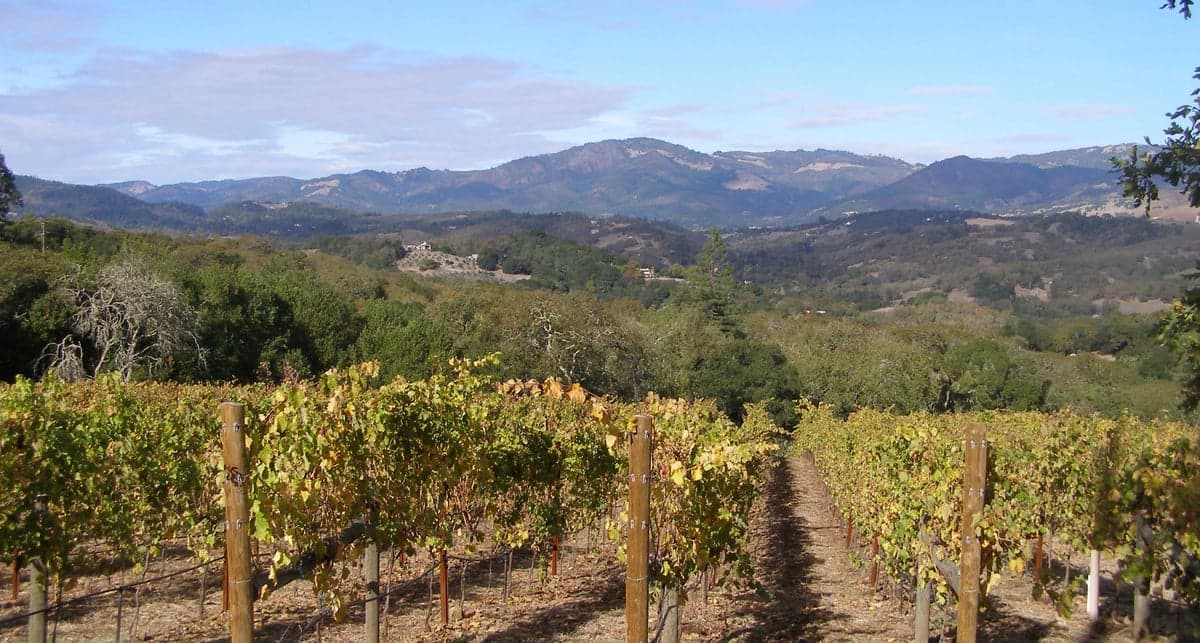
Sonoma County’s 485,642 residents today form a region defined by its agricultural roots, wine-country affluence, and a distinctly progressive political culture that coexists with a strong rural and small-town conservative streak. The county is less densely populated than the Bay Area core, with a population that is 59.1% white, 29.4% Hispanic, and 3.6% East/Southeast Asian, while 8.6% of residents are foreign-born. Its identity is shaped by a history of successive waves—from Indigenous stewardship to Russian fur traders, Mexican rancheros, Gold Rush migrants, Italian and Portuguese farmers, and post-1965 immigrants—that have layered distinct communities across its 1,768 square miles. For a relocation audience, understanding who lives here and why requires tracing the human story behind the vineyards and redwoods.
Settlement & growth (pre-1960)
The first human history of Sonoma County belongs to the Coast Miwok, Pomo, and Wappo peoples, who lived in dozens of villages along the Russian River, the Sonoma Creek, and the Pacific coast for thousands of years before European contact. The Spanish arrived in the early 19th century, establishing Mission San Francisco Solano in 1823 in the town of Sonoma, the northernmost mission in Alta California. After Mexican independence, large land grants—ranchos—were awarded to settlers like General Mariano Vallejo, whose 66,000-acre Rancho Petaluma stretched from present-day Petaluma to Santa Rosa. These ranchos relied on Indigenous labor and laid the groundwork for cattle ranching and wheat farming.
The American period began in earnest after the 1846 Bear Flag Revolt in Sonoma and the 1848 Treaty of Guadalupe Hidalgo. The California Gold Rush (1848–1855) drew a flood of Anglo-American settlers, many of whom bypassed the goldfields to farm the fertile Sonoma Valley. By the 1850s, Santa Rosa emerged as the county seat and commercial hub, while Healdsburg and Sebastopol grew as agricultural centers. The 1860s and 1870s saw a wave of Italian immigrants, particularly from Liguria and Tuscany, who brought grape-growing expertise and established the county’s first commercial vineyards around Glen Ellen and Kenwood. Portuguese immigrants from the Azores arrived in the same period, working as dairy farmers and fishermen in the Bodega Bay area and the Petaluma lowlands, where they built a thriving dairy industry that supplied San Francisco.
Chinese immigrants, who had built the railroads and worked in the goldfields, also settled in Sonoma County in the 1860s–1880s, laboring as farmhands and in the hop fields near Santa Rosa and Sebastopol. Anti-Chinese sentiment, however, led to their expulsion from many rural areas by the 1890s, and the Chinese population dwindled. The late 19th and early 20th centuries brought a smaller but notable wave of German and Irish immigrants, who worked as craftsmen, merchants, and farmers. The 1906 San Francisco earthquake drove a domestic migration of displaced families north to Sonoma County, particularly to Santa Rosa and Petaluma, which saw a population boom. By 1920, the county’s population had reached roughly 60,000, with a white, largely Protestant majority and a growing Catholic community of Italian and Portuguese descent.
The Dust Bowl and Great Depression of the 1930s brought a modest influx of white migrants from Oklahoma, Arkansas, and Texas—often called “Okies”—who found work in the apple orchards and hop fields of Sebastopol and the Russian River Valley. World War II and the postwar era (1940–1960) accelerated suburbanization, as returning veterans and Bay Area workers sought affordable housing in Santa Rosa and Rohnert Park, which was incorporated in 1962 as a planned community. The 1950s also saw the rise of the wine industry, with new wineries in Healdsburg and the Alexander Valley attracting a wave of educated, middle-class migrants from the East Coast and Midwest. By 1960, the county’s population had grown to 147,000, still overwhelmingly white (over 95%) and native-born.
Modern era (post-1965)
The 1965 Hart-Cellar Immigration Act fundamentally reshaped Sonoma County’s demographics, though the changes were slower and less dramatic than in the Bay Area’s urban core. The most significant post-1965 shift has been the growth of the Hispanic population, which rose from roughly 5% in 1970 to 29.4% today. This wave began in the 1970s and 1980s, driven by Mexican immigrants—primarily from Jalisco, Michoacán, and Oaxaca—who came to work in the vineyards, nurseries, and agricultural fields of the Sonoma Valley, Russian River Valley, and Petaluma area. Many settled in the unincorporated communities of Roseland (now part of Santa Rosa) and Graton, where Spanish-language businesses and Catholic parishes anchor the community. The 1990s and 2000s saw a second wave of Central American immigrants, particularly from Guatemala and El Salvador, who found work in construction, hospitality, and landscaping. Today, Hispanic residents are concentrated in Santa Rosa (where they make up roughly 35% of the city’s population), Sonoma, and Healdsburg, though they are dispersed across the county.
The East/Southeast Asian population (3.6%) grew more modestly, primarily through domestic migration from the Bay Area rather than direct immigration. Filipino Americans, many of whom arrived in the 1970s and 1980s as healthcare workers and military families, have a visible presence in Santa Rosa and Rohnert Park. A smaller but growing Vietnamese community has formed in Santa Rosa, centered around a handful of restaurants and grocery stores. The Indian subcontinent population (0.7%) is even smaller, with most residents working in tech or healthcare and living in Santa Rosa or Petaluma. The Black population (1.5%) has remained low and stable, with most Black residents concentrated in Santa Rosa and Petaluma, many of whom are descendants of mid-20th-century migrants from the South or recent arrivals from the Bay Area.
Domestic migration has been the dominant force shaping modern Sonoma County. The 1970s–1990s saw a steady influx of white, college-educated professionals from the San Francisco Bay Area, drawn by lower housing costs, the wine-country lifestyle, and the countercultural ethos of the Russian River and West County (Sebastopol, Occidental, Guerneville). This wave transformed the county’s political character, shifting it from a conservative agricultural stronghold to a reliably Democratic one. The 2000s and 2010s brought a second wave of Bay Area refugees, as tech wealth pushed families out of San Francisco and the Peninsula into Santa Rosa, Petaluma, and Windsor. This has driven up housing costs and contributed to a growing income divide between long-term residents and newcomers. The 2017 Tubbs Fire and 2020 Glass Fire, which destroyed thousands of homes in Santa Rosa and the Sonoma Valley, accelerated displacement of lower-income residents and reshaped settlement patterns, with many rebuilding in outlying areas like Cloverdale and Geyserville.
The future
Sonoma County is projected to become more diverse, but slowly. The Hispanic share of the population is expected to rise to roughly 35–38% by 2040, driven by higher birth rates and continued immigration from Mexico and Central America, though the pace of immigration has slowed since 2010. The white population will continue to decline as a share, but will remain the majority for the foreseeable future. The East/Southeast Asian and Indian populations are likely to grow modestly, primarily through domestic migration from the Bay Area, as tech workers seek more space and lower costs in Petaluma and Rohnert Park. The Black population is expected to remain small and stable, with little net migration.
The most significant demographic trend is the aging of the white population and the out-migration of younger families. Sonoma County’s median age (40.5) is higher than the national average, and many young adults leave for college or jobs in the Bay Area or beyond. The county is also becoming more economically stratified, with a growing gap between wealthy newcomers and long-term working-class residents, many of whom are Hispanic. New housing construction is concentrated in Santa Rosa and Petaluma, with some infill development in Windsor and Healdsburg, but affordability remains a major constraint on population growth. The county’s population is projected to grow slowly, reaching roughly 520,000 by 2040, with most growth occurring in the Hispanic and mixed-race categories.
Culturally, Sonoma County is becoming more polarized between its urban, progressive core (Santa Rosa, Petaluma, Sebastopol) and its rural, conservative periphery (Cloverdale, Geyserville, the coast). The wine industry, once a unifying economic force, is facing climate pressures and labor shortages, which may reshape the county’s identity. For a newcomer, Sonoma County offers a mix of natural beauty, agricultural heritage, and progressive politics, but it is also a place of rising costs, wildfire risk, and demographic change that is slower and more contested than in the Bay Area proper.

* Values derived from national, state, county, city and local statistics and may differ in a specific area. Last updated: 2026-07-24T05:22:58.000Z
Narrative content on this page is AI-generated and may contain mistakes. Verify any details that matter before acting on them.
ReloMaps may earn a commission from affiliate links at no extra cost to you.

