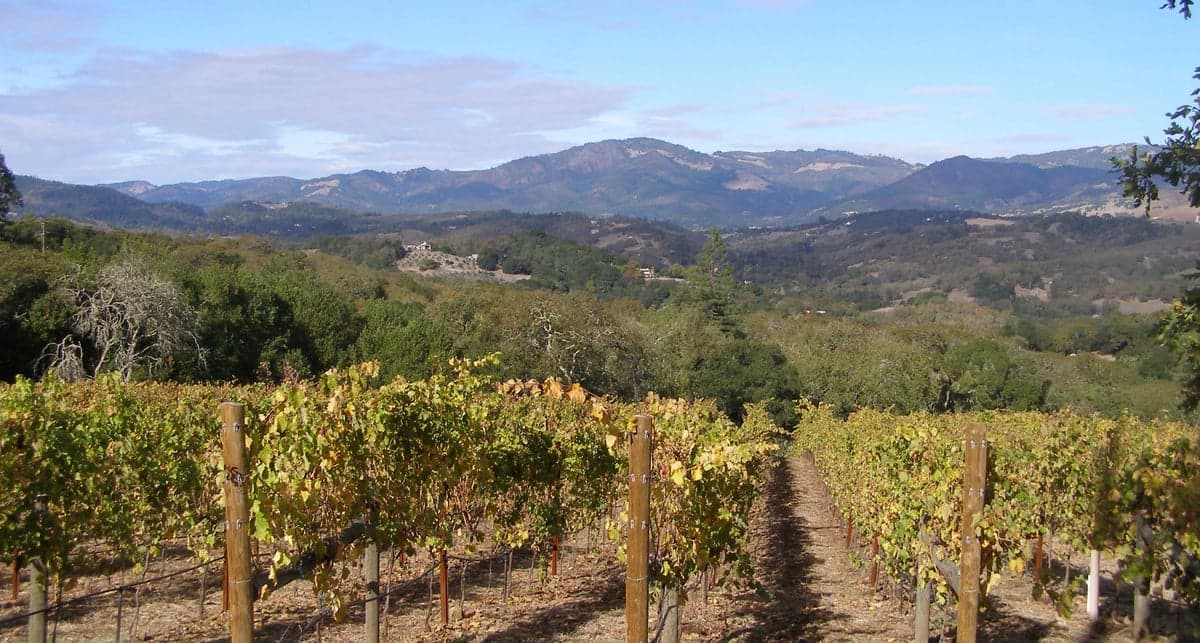
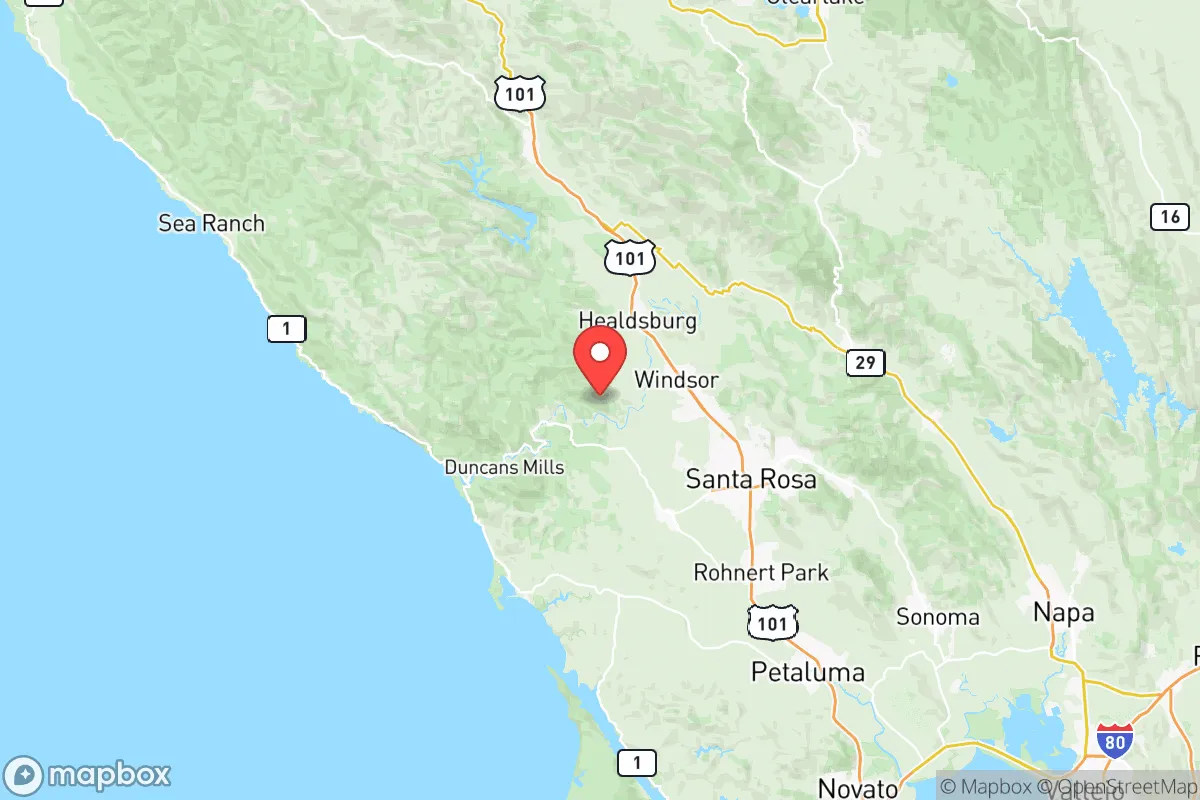
Photo: Wikipedia
Personal Sovereignty in Sonoma County
Viable for self-reliance. Generally workable, though some barriers may limit total independence.
What does Personal Sovereignty tell us?
Personal Sovereignty measures your capacity for self-reliance and independence with minimal government friction. Higher scores mean fewer barriers between you and the way you want to live... but it assumes you have the space you need and good neighbors.
What does this tell us?
Personal Sovereignty measures your capacity for self-reliance and independence with minimal government friction. Higher scores mean fewer barriers between you and the way you want to live... but it assumes you have the space you need and good neighbors.
State Policy
Energy independence: Importer (33% of energy produced in-state)
Personal Liberty
Homesteading

Personal Liberty Analysis
Sonoma County presents a complex environment for personal sovereignty, where California’s strong state-level regulatory framework meets a distinctly local, often rural, culture of self-reliance. For the individual or family prioritizing autonomy, the county offers significant opportunities for homesteading and personal liberty in its unincorporated areas and smaller towns, but these are balanced by some of the highest tax burdens and most restrictive gun laws in the nation. The key to navigating this landscape lies in choosing a specific location within the county, as the experience of personal freedom differs dramatically between, say, the coastal hamlet of Jenner and the inland agricultural hub of Healdsburg.
Tax burden and regulatory posture: what to expect from local and state government
Sonoma County’s tax and regulatory environment is a direct reflection of California’s broader posture, which ranks among the most heavily regulated and taxed in the U.S. The state’s top marginal income tax rate of 13.3% applies to high earners, and the combined state and local sales tax in Sonoma County reaches 8.625% in most areas. Property taxes, while capped at 1% of assessed value under Proposition 13, are supplemented by Mello-Roos community facilities districts in newer developments, particularly in expanding areas like Rohnert Park and Windsor, which can add hundreds to thousands of dollars annually. The county’s own regulatory posture is notably strict on land use and environmental review, with the Sonoma County Permit Sonoma department enforcing rigorous building codes, septic system standards, and fire safety requirements. For example, building a new home on rural land in the unincorporated areas near Sebastopol or Occidental often requires a lengthy discretionary permit process, including a California Environmental Quality Act (CEQA) review, which can add months and significant cost. This regulatory density is a primary driver of housing costs and can feel stifling to those accustomed to more permissive jurisdictions. However, for those who can navigate the system, the county’s strong agricultural protections and open space zoning in areas like the Russian River Valley and Sonoma Valley preserve a rural character that many find essential to their quality of life.
Self-defense and gun law specifics: understanding your rights in Sonoma County
California’s firearm laws are among the most restrictive in the nation, and Sonoma County fully enforces them. The state requires a 10-day waiting period, a Firearm Safety Certificate, and a background check for all firearm purchases. Assault weapons are banned, and the state’s roster of handguns certified for sale is limited. For concealed carry, Sonoma County is a “may-issue” jurisdiction, meaning the Sheriff’s Office has discretion in issuing a Concealed Carry Weapon (CCW) permit. While the legal landscape has shifted somewhat following the Supreme Court’s Bruen decision, the process remains rigorous: applicants must demonstrate “good cause” beyond simple self-defense, complete a 16-hour training course, and pass a live-fire qualification. The Sheriff’s Office in Santa Rosa processes applications, and approval rates have historically been low compared to more rural counties. In practice, this means that self-defense options are more limited than in states like Texas or Arizona. For those who prioritize the right to carry, the county’s stance is a significant constraint. However, the county’s strong hunting culture, particularly in the Sonoma Coast and Mayacamas Mountains, means that long guns for sport and home defense are common and generally accepted. The key distinction is that the legal and administrative hurdles are high, and the culture around firearms is more utilitarian (hunting, ranching) than defensive or political.
Self-reliance and homesteading viability: lot sizes, zoning, and off-grid feasibility
Sonoma County offers genuine opportunities for self-reliance, but they are tightly regulated. The county’s General Plan and zoning codes allow for agricultural and residential uses on parcels as small as 1 acre in some rural residential zones, particularly in areas like Forestville and Graton. However, the county’s Sonoma County Code requires that all dwellings have a permitted water supply and a sewage disposal system (septic) that meets strict health department standards. Off-grid living is legally challenging: while solar panels and rainwater catchment are permitted, the county generally requires a connection to a public water system or a permitted well, and composting toilets are not a standard alternative to a septic system. The Sonoma County Fire Prevention District also mandates defensible space and fire-resistant building materials, which can add cost but are a practical necessity. For those seeking true off-grid independence, the most viable areas are the remote, unincorporated parts of the county, such as the Sonoma Coast near Bodega Bay or the Mayacamas Mountains above Kenwood, where parcels are larger (often 20-160 acres) and enforcement is less intensive. However, even there, building a primary residence without a permit is illegal and can lead to fines and liens. The county’s strong agricultural zoning, particularly in the Russian River Valley and Sonoma Valley, does allow for farm stands, small-scale processing, and agritourism, which can support a homesteading lifestyle. The bottom line: homesteading is possible, but it requires navigating a complex permitting process and accepting that full off-grid autonomy is not legally straightforward.
Personal liberties: parental rights, medical autonomy, speech, and property
Sonoma County’s culture is generally progressive, which shapes the environment for personal liberties. Parental rights in education are a point of tension: the county’s school districts, including Santa Rosa City Schools and Petaluma City Schools, have adopted policies that align with state law on LGBTQ+ curriculum and gender identity, which some parents find conflicts with their values. The state’s California Healthy Youth Act mandates comprehensive sex education, and parents do not have a right to opt their children out of all content. Medical autonomy is similarly state-driven: California has strong vaccine mandates for school attendance and has expanded access to reproductive healthcare, including abortion. For those who prioritize medical freedom, the county’s regulatory environment is restrictive. Free speech is protected, but the county’s public spaces and local government are generally aligned with progressive viewpoints, which can create a social environment where conservative or libertarian perspectives are less common. Property rights are significantly constrained by the state’s California Environmental Quality Act (CEQA) and the county’s own zoning and building codes. The ability to use one’s property for short-term rentals, for example, is heavily restricted in unincorporated areas, with a cap on the number of permits and a requirement that the owner live on-site. This is a stark contrast to more permissive counties in other states. The overall environment for personal liberties is one where state law sets a high floor for regulation, and local culture reinforces a progressive consensus, leaving less room for individual deviation than in many other parts of the country.
In summary, Sonoma County offers a moderate-to-low level of personal sovereignty compared to other regions in the United States. The tax burden is high, the regulatory environment is dense, and gun laws are restrictive. However, for those who are willing to work within the system, the county’s strong agricultural zoning, large rural parcels, and established homesteading community provide a viable path to self-reliance, particularly in areas like Healdsburg, Sebastopol, and the Sonoma Coast. The trade-off is clear: you gain access to a beautiful, productive landscape and a community that values sustainability, but you must accept a higher degree of government involvement in your daily life. For the reader who prioritizes maximum autonomy, a county in a state like Texas or New Hampshire would be a better fit. For those who value the specific lifestyle and environmental benefits of Northern California and are willing to navigate its regulatory framework, Sonoma County can still be a place where personal freedom is exercised, albeit within defined boundaries.

* Values derived from national, state, county, city and local statistics and may differ in a specific area. Last updated: 2026-07-24T05:22:58.000Z
Narrative content on this page is AI-generated and may contain mistakes. Verify any details that matter before acting on them.
ReloMaps may earn a commission from affiliate links at no extra cost to you.

