Photo: Wikipedia
Political ClimatePolitical Climate in Brattleboro, VT
District shown is the primary district for this city’s centroid. Cities may span multiple districts.
Inherited from parent state — no local data available.
Local Political AnalysisPolitical Analysis of Brattleboro, VT
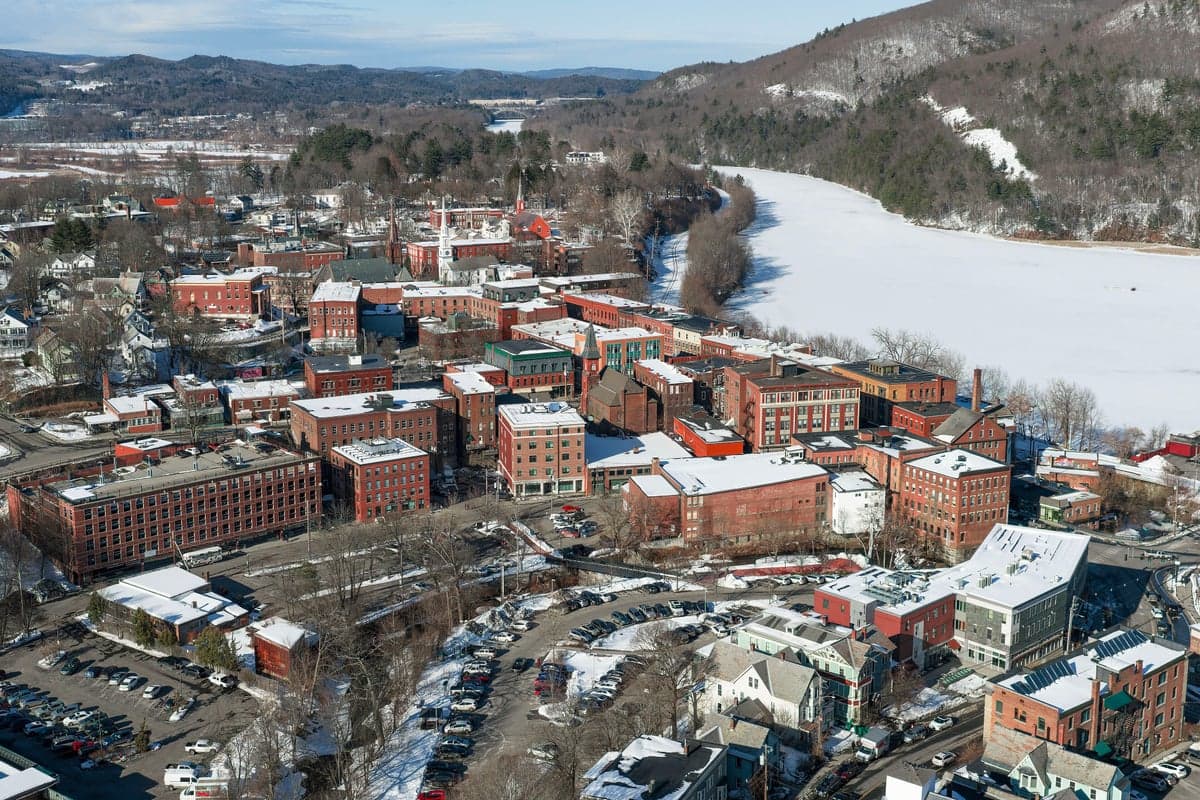
Brattleboro leans heavily Democratic, even by Vermont standards, with a political culture that has been consistently progressive for decades. While Vermont as a whole has a Cook PVI of D+17, Brattleboro’s local elections and voter registration data suggest it sits several points further left, often delivering margins of 70% or more for Democratic and Progressive candidates in state and federal races. The town’s trajectory has been steady rather than shifting—it was a liberal stronghold in the 1990s and remains one today, though the surrounding Windham County has seen some rural towns drift slightly more conservative in recent years.
How it compares
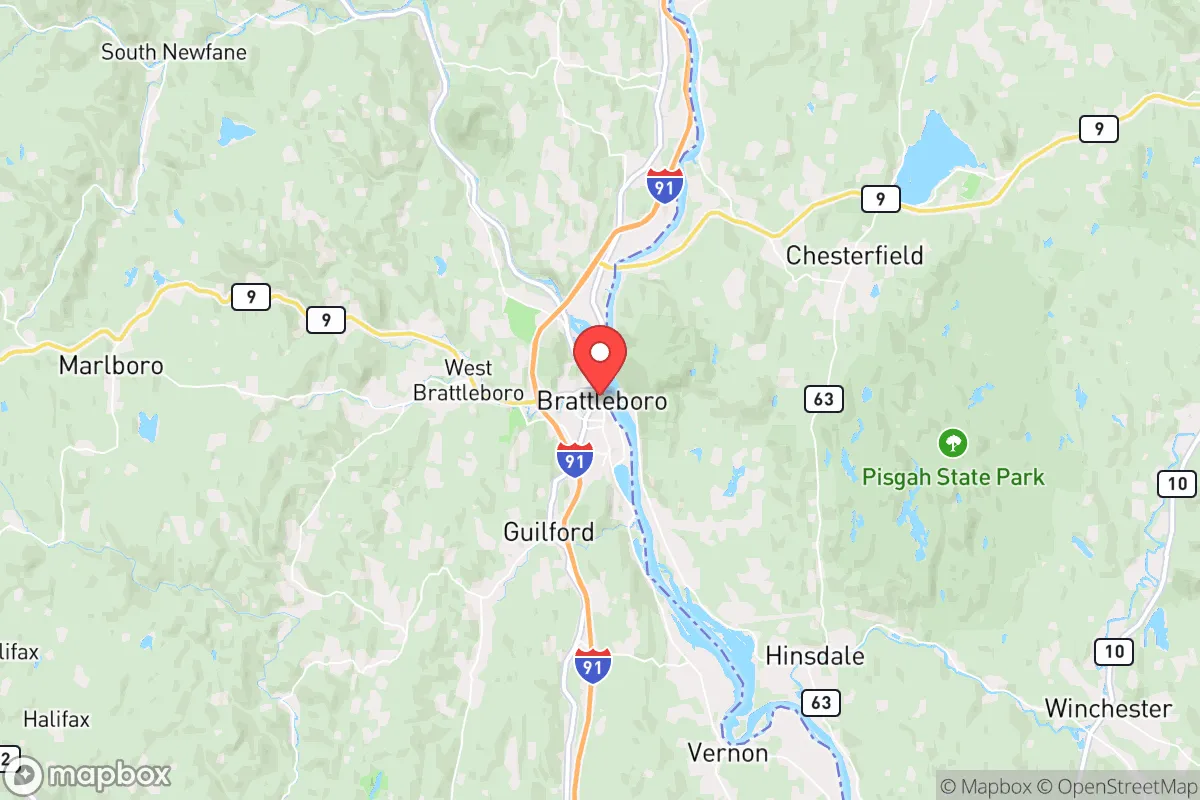
Compared to the rest of Vermont, Brattleboro stands out as a more concentrated progressive hub. Neighboring towns like Guilford and Putney share similar leanings, but drive 15 minutes north to Dummerston or west to Marlboro, and you’ll find a mix of libertarian-leaning independents and moderate Republicans who feel out of step with Brattleboro’s dominant politics. The contrast is sharper with places like Bennington (about 30 miles west), which has a more balanced split between Democrats and Republicans, or the rural Northeast Kingdom, where Trump won several towns outright in 2020. Within Windham County, Brattleboro’s politics resemble Burlington’s more than the rest of the county—meaning it’s a blue island in a region that’s still blue, but with deeper shades of purple at its edges.
What this means for residents
For liberal residents, Brattleboro offers a political environment where local policies align closely with their values—think strong tenant protections, a living wage ordinance, and active climate action committees. Conservative residents, while a minority, aren’t entirely isolated; they tend to find community in nearby rural towns or through state-level networks like the Vermont Republican Party, which holds occasional events in the area. In practice, the town’s lean means that local government decisions—like zoning for affordable housing or funding for social services—rarely face serious opposition from the right. However, property taxes, which fund many of these initiatives, are a common point of friction across the political spectrum, with both liberals and conservatives grumbling about rising rates.
Culturally, Brattleboro’s political climate shows up in everyday life: bumper stickers for Bernie Sanders and local food co-op membership are common, and the town’s annual “Strolling of the Heifers” parade celebrates agriculture with a distinctly progressive twist. Policy-wise, the town has been an early adopter of ranked-choice voting for local elections and maintains a strong police oversight board, reflecting a community that prioritizes transparency and equity. For newcomers, the key takeaway is that Brattleboro’s politics are woven into its identity—not in a combative way, but as a baseline assumption that most people share the same general worldview. If you’re looking for a place where political debate is lively but rarely hostile, and where your vote for a Green or Progressive candidate actually feels like it matters, this is it. If you’re a conservative who prefers a more mixed environment, you’ll likely feel more at home in nearby Wilmington or even across the river in Hinsdale, New Hampshire.

State Political ClimatePolitical Climate in Vermont
State Political AnalysisPolitical Environment in the State
Vermont is one of the most reliably Democratic states in the nation, with a Cook Partisan Voting Index of D+17, meaning it votes about 17 points more Democratic than the country as a whole. The state hasn't voted for a Republican presidential candidate since George H.W. Bush in 1988, and Democrats currently hold a supermajority in the state legislature, the governorship, and both U.S. Senate seats. However, this blue veneer masks a deeply independent and often contrarian political culture — Vermonters are famously skeptical of both national parties, and the state’s progressive tilt is driven overwhelmingly by Chittenden County (Burlington and its suburbs), while vast swaths of the Northeast Kingdom and southern counties remain competitive or even lean Republican at the local level.
Urban vs. rural divide
The political map of Vermont is a study in stark contrasts. Chittenden County, home to Burlington, South Burlington, and Essex, casts roughly a quarter of the state’s vote and delivers margins of 70-80% for Democrats. Burlington itself is a progressive stronghold — Bernie Sanders’ hometown — where local politics often center on housing policy, climate action, and police reform. Drive an hour east to the Northeast Kingdom (Caledonia, Essex, and Orleans counties), and you’ll find towns like Newport and St. Johnsbury that regularly vote Republican by 15-20 points. The divide isn’t just urban vs. rural; it’s also a cultural one. The southern counties of Bennington and Windham lean blue thanks to second-home owners and retirees from New York and Massachusetts, while the central and northern rural towns — places like Barre, Hardwick, and Randolph — are more libertarian-leaning, with a strong streak of fiscal conservatism and skepticism of Montpelier’s one-party rule. The state’s independent streak means that even in blue counties, local offices are often held by Republicans or independents who run on property tax relief and local control.
Policy environment
Vermont’s policy environment is defined by high taxes, strong social safety nets, and a regulatory posture that leans heavily toward environmental protection and public health. The state has a progressive income tax with a top rate of 8.75% (on income over $213,150), and property taxes are among the highest in the nation — averaging about 1.8% of home value, driven largely by school funding through a statewide education fund. There is no sales tax on most goods, but a 6% sales tax applies to prepared food, lodging, and some services. The regulatory climate is business-friendly in some respects (no right-to-work law, but a relatively low corporate tax rate of 8.5%), but strict land-use rules under Act 250 can make development slow and expensive. Education policy is centralized: Vermont has no charter schools and limited school choice, though towns can vote to merge districts. Healthcare is a perennial battleground — the state attempted a single-payer system in 2014 but abandoned it due to cost, and now operates a public option (Green Mountain Care) that is popular but expensive. Election laws are among the most accessible in the country: universal mail-in voting, same-day registration, and no voter ID requirement. Gun laws are relatively strict: universal background checks, a 10-round magazine limit, and a red-flag law (Extreme Risk Protection Order) passed in 2018. There is no permit requirement for concealed carry, but the state bans firearms in many public buildings and on school grounds.
Recent policy direction
Over the past five years, Vermont has moved decisively left on social and regulatory issues, while fiscal policy has remained a point of tension. In 2023, the legislature passed a paid family and medical leave program (Act 18) funded by a payroll tax, set to begin in 2025. The same year, they enacted a clean heat standard (Act 18) requiring heating fuel suppliers to reduce carbon emissions, which has drawn fierce opposition from rural towns worried about heating costs. On gun policy, the 2023 session saw a failed attempt to ban semi-automatic firearms, but a 2024 law (Act 179) tightened the state’s red-flag law and created a 72-hour waiting period for handgun purchases. On education, the legislature passed a universal school meals program (Act 147) in 2022 and expanded publicly funded pre-K. On bodily autonomy, Vermont was the first state to enshrine abortion rights in its constitution via a 2022 ballot measure (Article 22), and it has a shield law protecting providers who serve patients from states with abortion bans. On property rights, Act 250 reform has been debated for years but remains stalled — developers and rural landowners complain that the process is slow and unpredictable. On voting, the state expanded automatic voter registration through the DMV in 2023. For a conservative relocator, the bottom line is that Vermont’s policy direction is unapologetically progressive on social issues, but its fiscal conservatism and local control traditions mean that property taxes and land-use rules are the more immediate daily concerns.
Civil unrest & political movements
Vermont is not a state known for large-scale civil unrest, but it has a long history of grassroots activism on both sides. The most visible flashpoint in recent years was the 2020 Black Lives Matter protests in Burlington, which drew thousands and led to a city council vote to defund the police (later partially reversed). The state also saw a wave of school board meetings in 2021-2022 over COVID-19 mandates and critical race theory, particularly in rural towns like Milton and Fairfax, where parents organized against mask mandates and LGBTQ-inclusive curriculum. The Vermont Republican Party is small but vocal, with a libertarian wing that opposes vaccine mandates and gun control, and a more traditional conservative wing focused on tax cuts and school choice. The Vermont Progressive Party, which holds seats in the legislature, is a distinct third party that often pushes the Democrats further left on housing and climate. Immigration politics are relatively quiet — Vermont has no sanctuary city laws, but Burlington has a "trust policy" that limits cooperation with ICE. There have been no major election integrity controversies; the state’s mail-in voting system is widely trusted. A new resident would notice that political activism is mostly polite and town-meeting-style — Vermonters argue fiercely at school board and selectboard meetings, but it rarely spills into the streets.
Projection
Over the next 5-10 years, Vermont’s political trajectory is likely to remain solidly Democratic at the statewide level, but with growing internal friction between the progressive Chittenden County axis and the more moderate/libertarian rural towns. In-migration from out of state — particularly from New York, Massachusetts, and California — is slowly shifting the balance in formerly red towns like Stowe, Manchester, and Woodstock, where second-home owners and remote workers tend to vote Democratic. The Northeast Kingdom, by contrast, is losing population and aging, which could make it even more Republican but less influential. The biggest wild card is the housing crisis: if Montpelier fails to address affordability, it could fuel a backlash from younger Vermonters and newcomers alike. Property tax reform is the issue most likely to flip local races — several towns have already passed non-binding resolutions demanding a cap on school spending. Expect the state to continue leading on climate policy (a carbon tax is frequently discussed) and social issues, while fiscal fights over education funding and Act 250 reform will dominate local politics. For a conservative moving in, the realistic outlook is that Vermont will remain a blue state with a strong independent streak, where your vote matters most in local races and town meeting day.
Bottom line for a new resident: If you’re a conservative considering Vermont, you’ll find a state that respects your privacy and your property rights in practice, even if the state government leans left. The high taxes and strict land-use rules are the real daily friction points, not the social policies. You’ll have plenty of company in rural towns and the Northeast Kingdom, but you’ll need to be comfortable being in the minority at the state level. For liberals, Vermont offers a policy environment that aligns with your values, but be prepared for a slower pace of change and a political culture that values local control over state mandates. Either way, the state’s small size and town-meeting tradition mean that your voice — and your vote — carries more weight here than almost anywhere else in the country.
* Values derived from national, state, county, city and local statistics and may differ in a specific area. Last updated: 2026-10-17T00:31:53.000Z
Narrative content on this page is AI-generated and may contain mistakes. Verify any details that matter before acting on them.
ReloMaps may earn a commission from affiliate links at no extra cost to you.

