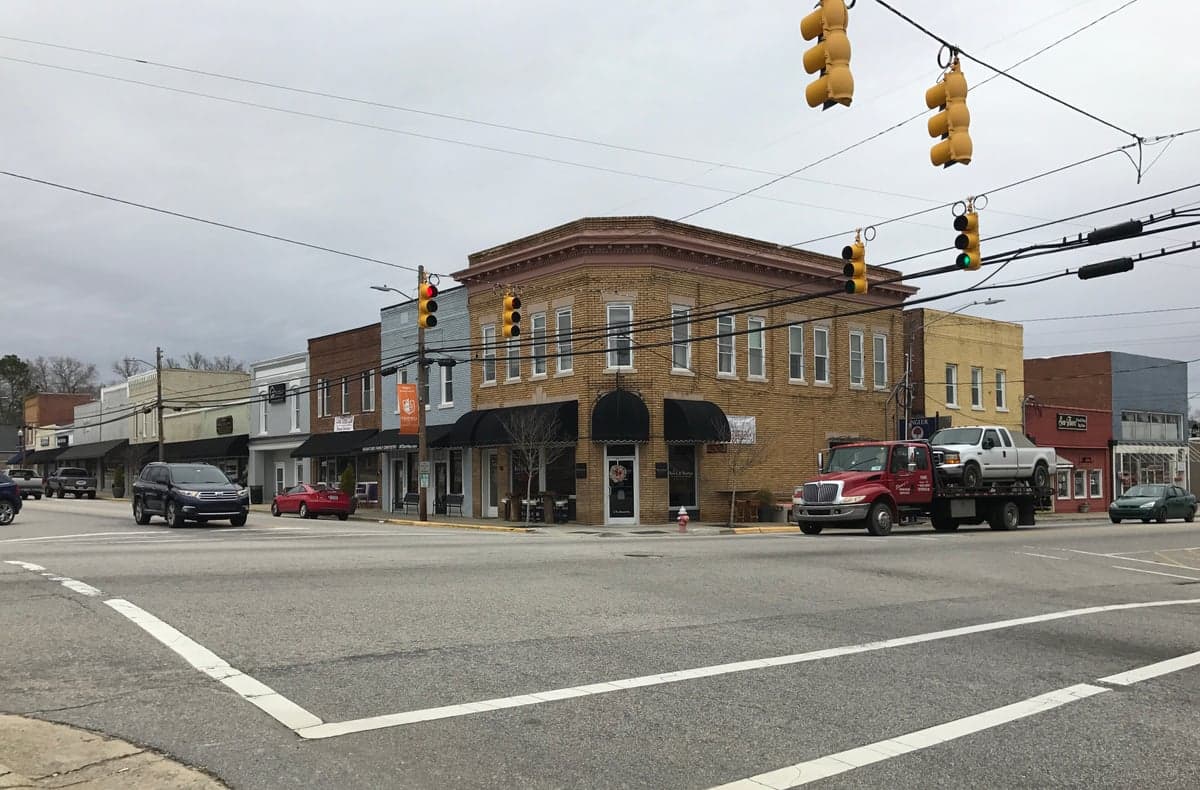
Photo: Wikipedia
Quality of Life in Angier, NC
Above-average quality of iife. The area offers a reasonable cost of living, decent mobility, and a mix of neighborhood amenities.
What does Quality of Life tell us?
Quality of Life blends cost of living, nearby amenities, socioeconomic signals, and neighborhood character. City-level scores represent the whole municipality; individual neighborhoods can differ.
What does this tell us?
Quality of Life blends cost of living, nearby amenities, socioeconomic signals, and neighborhood character. City-level scores represent the whole municipality; individual neighborhoods can differ.
Cost of Living
18% below national average
The Real Cost of Living in Angier, NC for 2026
| Tier | Individual | Family (4) |
|---|---|---|
| Survival | $15k | $28k |
| Comfortable | $46k | $67k |
| Luxury | $92k+ | $143k+ |
| Elite (Top 5%) | $112k+ | $174k+ |
76%
The Area Signal
A metric tracking the socioeconomic signals of the area.
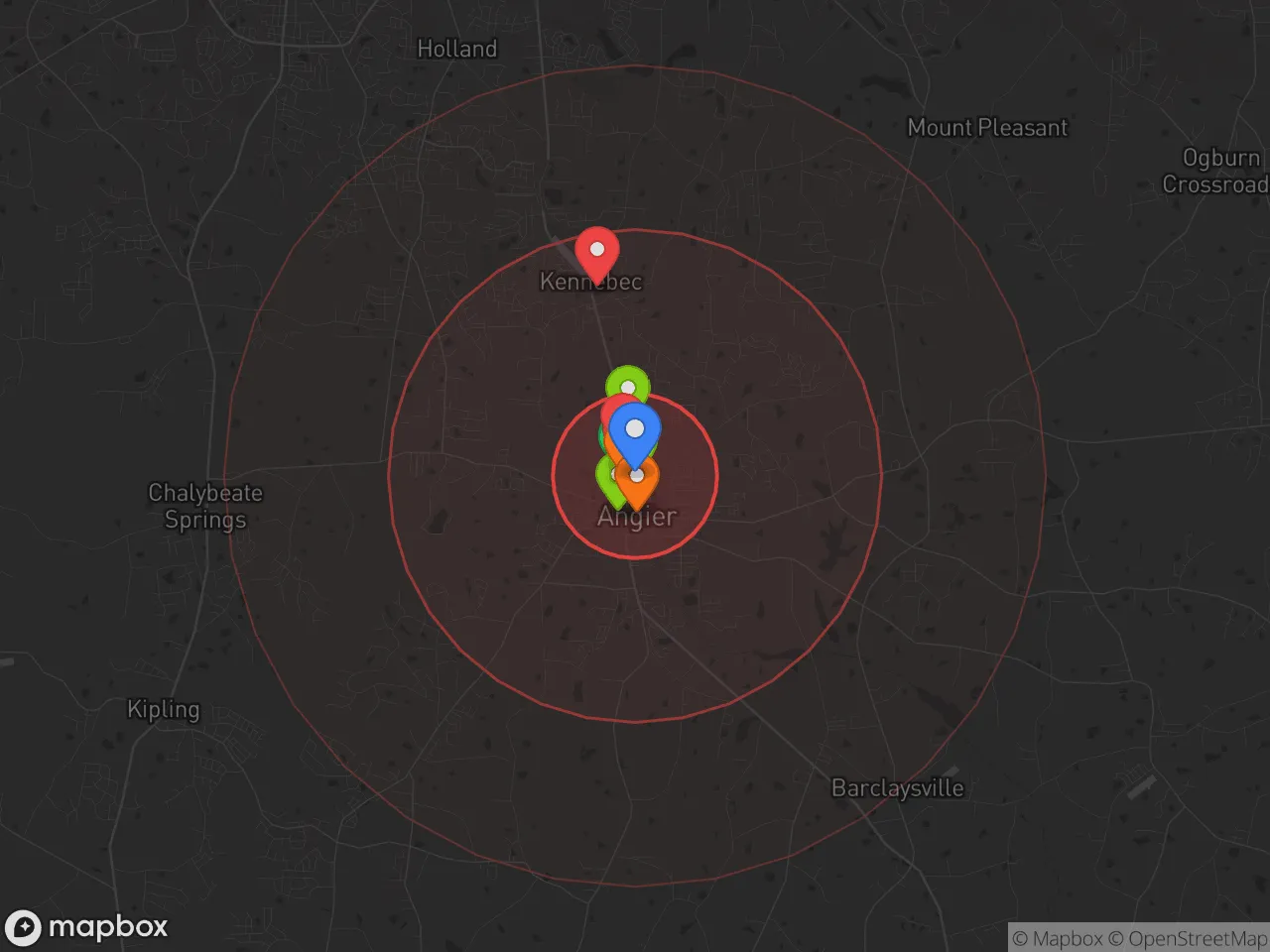
Hobbies
Explore the areaGroceries
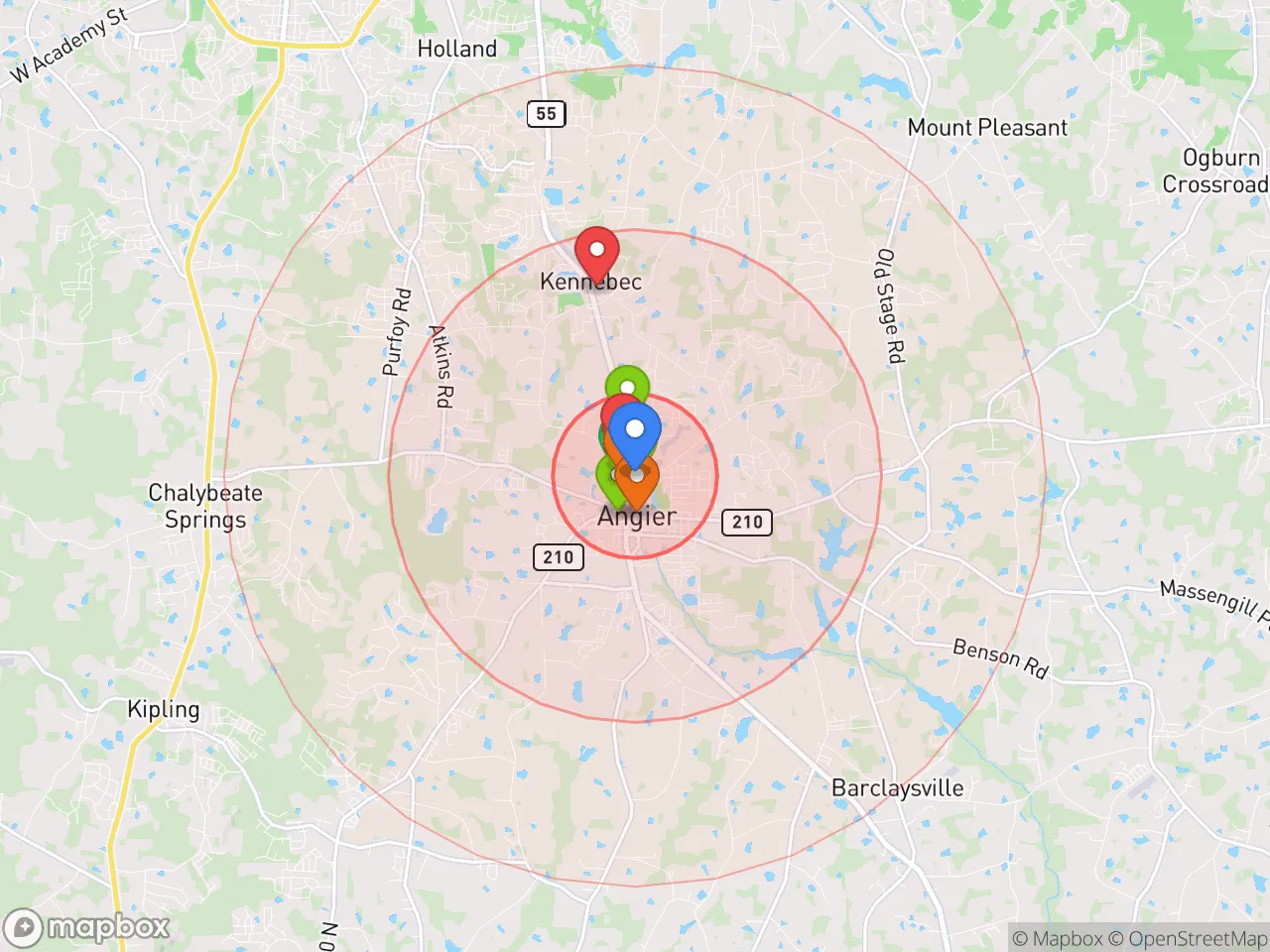
5 within 10 miles
Gas
20 within 10 miles
Hospital
6 within 20 miles
Airport
RDU — Raleigh–Durham International
Post Office
USPS — Angier, NC
Critical Amenities
Quality-of-Life Analysis
Angier, North Carolina, offers a notably affordable quality of life that attracts a mix of young families, long-term residents, and commuters seeking a quieter, lower-cost alternative to the booming Raleigh-Durham metro. With a cost of living index of 82 (18% below the U.S. average), the town provides a tangible financial cushion that allows residents to stretch their incomes further than in nearby hubs like Cary or Apex. The population skews toward middle-income households and those in trades or service industries, with a growing number of remote workers drawn by the balance of rural charm and proximity to urban job centers.
How housing costs and affordability compare to nearby towns
Housing in Angier is a primary driver of its affordability, with a median home value of $236,100—roughly half the median in Cary ($550,000+) and significantly below the national average. Median rent sits at $949, making it one of the most budget-friendly rental markets in the Triangle region. For context, a comparable two-bedroom apartment in Raleigh averages $1,400–$1,600, meaning Angier renters save 30–40% monthly. The trade-off is a smaller housing stock with fewer new-construction options, though older single-family homes and townhomes dominate the market. Property taxes in Harnett County are moderate, and the overall cost advantage allows many residents to afford a home here that would be out of reach in Wake or Durham counties. The average commute of 25 minutes to major employers in Fuquay-Varina, Holly Springs, and southern Raleigh is manageable, though longer drives to RTP (40–50 minutes) are common for tech and biotech workers.
What daily life is like for families and commuters
Daily life in Angier revolves around a small-town pace with essential amenities within a short drive. The town’s public schools are part of Harnett County Schools, with Angier Elementary and Harnett Central High School serving most families; performance is average compared to state benchmarks, but many parents opt for charter or private options in nearby Fuquay-Varina. Grocery shopping is limited to a Food Lion and a few local markets, while most retail, dining, and healthcare are found along US-401 in Fuquay-Varina (10 minutes north) or in Lillington (15 minutes south). The town itself has a handful of local restaurants, a public library, and community parks like Angier Park, but lacks a downtown core with nightlife or cultural venues. For recreation, residents rely on the Cape Fear River for kayaking and fishing, or drive 30 minutes to Jordan Lake for hiking and boating. The rhythm is quiet and residential—weekends often involve yard work, church activities, or trips to larger stores in nearby towns.
Angier is best suited for those who prioritize affordable homeownership and a slower pace over urban amenities and walkability. It works well for budget-conscious families, remote workers who can tolerate a longer commute to RTP, and retirees seeking a low-cost base within reach of medical care in Raleigh. Professionals who need daily access to downtown Raleigh or Research Triangle Park may find the 40–50 minute drive wearing, but for anyone willing to trade convenience for significant housing savings, Angier delivers a stable, low-stress foundation. The town’s growth is steady but not explosive, meaning newcomers can still find value without the bidding wars common in Wake County.

Crime in Angier, NC
Lower crime rates than 83% of comparable U.S. locations.
Violent CrimeViolent Crime Analysis
Property CrimeProperty Crime Analysis
Crime Analysis
Angier, North Carolina, presents a mixed safety profile for prospective residents. With a violent crime rate of 186.9 per 100,000 residents and a property crime rate of 824.4 per 100,000, the town is safer than the national average for violent offenses but faces property crime rates that are slightly elevated compared to some neighboring communities. However, as a small town within commuting distance of the Raleigh-Durham metro area, Angier is subject to the broader criminal justice trends of a large, progressive-leaning region, which can undermine public safety by prioritizing offender rehabilitation over victim protection and incarceration.
Crime in context
Angier’s violent crime rate of 186.9 per 100,000 is significantly lower than the U.S. national average of approximately 380 per 100,000, placing it in a safer bracket for offenses like homicide, assault, and robbery. Its property crime rate of 824.4 per 100,000 is below the national average of roughly 1,950 per 100,000, but it is higher than the North Carolina state average of about 1,700 per 100,000. This suggests that while Angier is not a high-crime hotspot, property theft—including burglary and larceny—is a more pressing concern than violent acts. The town’s proximity to the Raleigh-Durham metro area means it is influenced by the policies of Wake and Johnston County district attorneys, who operate in a state where progressive prosecutors have increasingly emphasized diversion programs and reduced sentencing for non-violent offenders. Such approaches, while well-intentioned, can lead to higher recidivism and more criminals on the street, directly impacting communities like Angier.
What residents experience
Residents of Angier typically report feeling safe in their daily routines, with violent crime being a rare occurrence. However, property crime—such as vehicle break-ins, package theft, and shed burglaries—is the most common complaint, often concentrated near major roads like NC-55 and US-401. The town’s small size (population roughly 5,000) means that most crime is opportunistic rather than organized. Yet, the broader regional context is a concern: the Raleigh-Durham metro area has seen a rise in property crime linked to repeat offenders released under progressive bail reform and sentencing guidelines. For Angier residents, this translates into a higher likelihood of encountering individuals with prior records who are not held accountable, undermining the sense of security that small-town life should provide.
Neighborhood-level variation in Angier is modest but notable. The older, established areas near downtown Angier (around East McIver Street) tend to have lower crime rates due to tighter community oversight and higher homeownership. In contrast, newer subdivisions along the town’s expanding periphery—such as those near Angier Elementary School—experience more property crime, likely due to transient populations and less established neighborhood watch networks. Overall, while Angier is statistically safer than many U.S. towns, the influence of progressive criminal justice policies from the surrounding metro area means residents should remain vigilant and advocate for stricter enforcement to protect their community.
* Values derived from national, state, county, city and local statistics and may differ in a specific area. Last updated: 2026-10-09T15:44:37.000Z
Narrative content on this page is AI-generated and may contain mistakes. Verify any details that matter before acting on them.
ReloMaps may earn a commission from affiliate links at no extra cost to you.

