Photo: Wikipedia
Political ClimatePolitical Climate in Dallas County
Showing district-level results — no local-only data available.
Local Political AnalysisPolitical Analysis of Dallas County
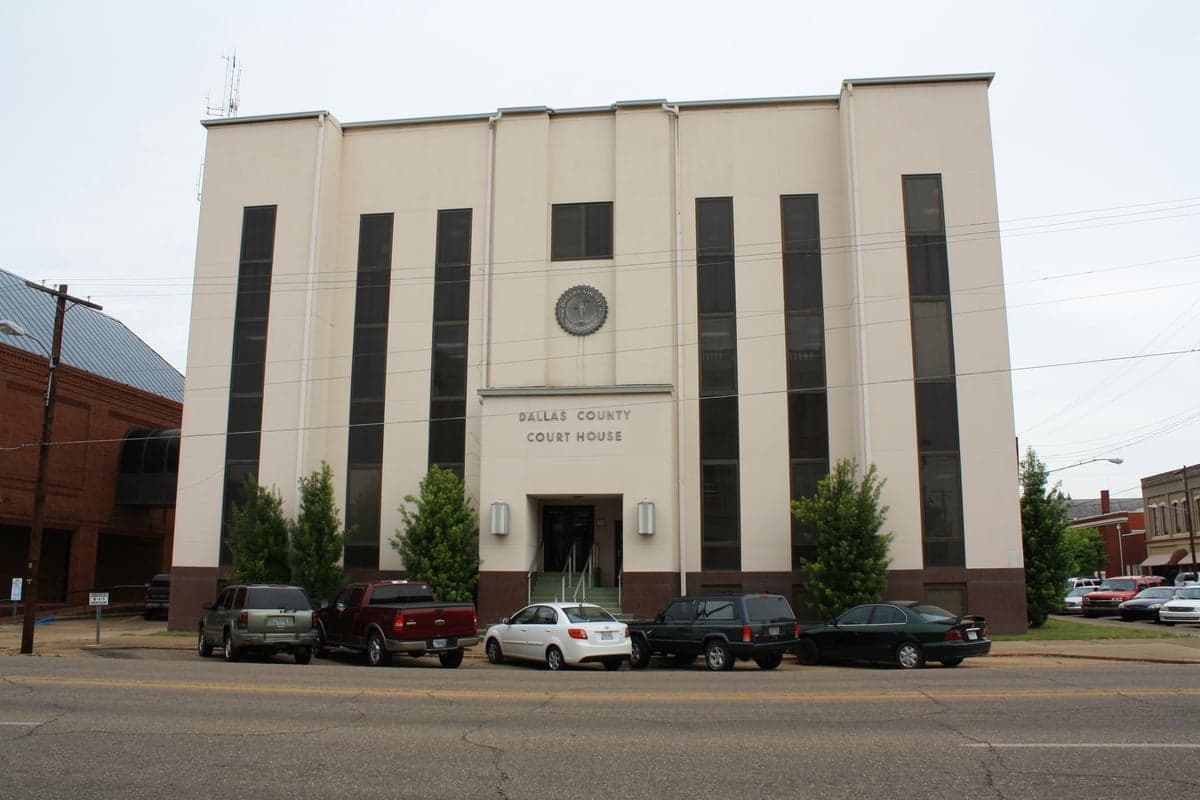
Dallas County, Alabama, anchored by the historic Black Belt city of Selma, is a Democratic stronghold in an otherwise deeply red state, carrying a Cook Partisan Voting Index of D+13. This isn't a recent shift; the county has voted reliably Democratic in presidential elections for decades, a pattern rooted in the high percentage of African American voters who make up the majority of the electorate. While the rest of Alabama has moved sharply rightward since the 1980s, Dallas County has held steady, making it one of the few remaining blue dots on the state's political map. The real action isn't in whether the county goes blue—it's in the margins and the local dynamics between the city of Selma and the surrounding rural areas.
How it compares
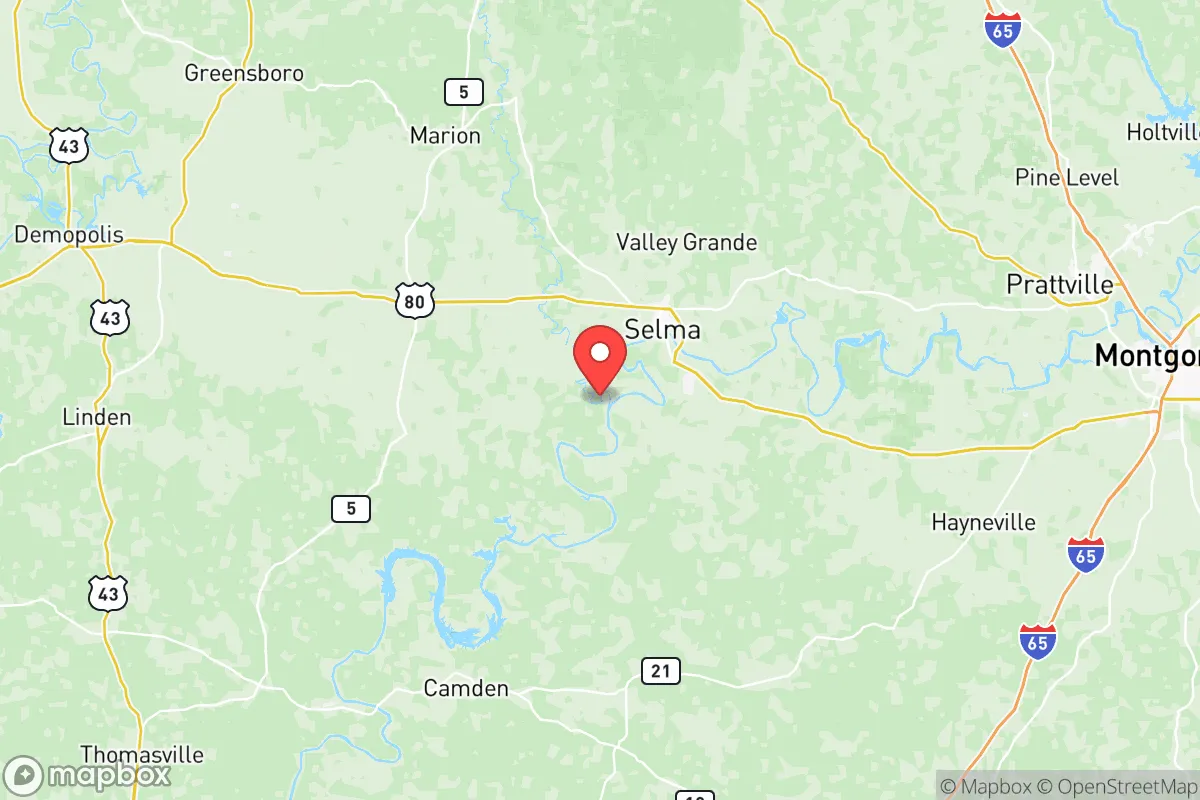
The contrast between Dallas County and the rest of Alabama is stark. Statewide, Alabama's Cook PVI is effectively R+15 or higher, meaning Dallas County is roughly 28 points more Democratic than the state average. This isn't a purple county; it's a deep blue island. Within the county itself, there's a clear urban-rural split. Selma itself is overwhelmingly Democratic, with precincts routinely delivering 80-90% of the vote for Democratic candidates. Drive a few miles out to Orrville or Valley Grande, and you'll find precincts that lean Republican, sometimes by double digits. The swing precincts are in the unincorporated areas along Highway 80 west of Selma, where a mix of rural white voters and Black farming communities can produce closer races in local elections. In statewide races, however, the sheer turnout from Selma's Black precincts usually overwhelms the rural Republican vote, ensuring the county stays blue.
What this means for residents
For a liberal resident, living in Dallas County means your vote carries weight in local Democratic primaries, which are often the de facto general election for county commission and school board seats. You'll find a supportive community in Selma, with active NAACP chapters and civil rights organizations. For a conservative resident, the reality is different: you're in the minority countywide, but your vote is still decisive in local races in Valley Grande and Orrville. Many conservatives in the county have simply accepted that their presidential and U.S. Senate votes won't carry the county, but they remain engaged in municipal elections and school board races where their precinct-level turnout can swing outcomes. The practical effect is that local governance tends to be more moderate than the county's Democratic label suggests, with both parties needing to build cross-racial coalitions to win countywide office.
Cultural and policy distinctions
The political climate here isn't just about voting—it shapes daily life in tangible ways. Selma's identity as the birthplace of the Voting Rights Movement means that civil rights history is woven into the civic fabric, with the Edmund Pettus Bridge serving as a constant reminder. This creates a political culture that is more openly progressive on racial justice issues than anywhere else in Alabama. On economic policy, however, the county's Democratic leadership has often been pragmatic, working with Republican state officials to secure funding for infrastructure and the new Selma-Dallas County Riverfront development. The biggest friction point is state preemption: local ordinances on things like minimum wage or housing regulations that pass in Selma often get challenged in Montgomery. For residents, this means the political conversation is less about national culture wars and more about local survival—jobs, healthcare access, and keeping the hospital open. Looking ahead, the county's political trajectory is stable: it will remain Democratic as long as Selma's Black population stays engaged, but the surrounding rural areas will continue to trend red, keeping local politics competitive and interesting.

State Political ClimatePolitical Climate in Alabama
State Political AnalysisPolitical Environment in the State
Alabama is a deeply conservative state, with Republicans holding every statewide elected office and supermajorities in both legislative chambers, a reality that has solidified over the past 20 years. The state voted for Donald Trump by a margin of +25 points in 2024, a shift from the +14-point margin in 2012, reflecting a steady rightward drift even as the rest of the country has polarized. This isn't a purple state in any meaningful sense—it's a place where conservative values dominate policy, culture, and daily life, though the intensity of that conservatism varies sharply between the booming suburbs of the I-65 corridor and the rural Black Belt.
Urban vs. rural divide
The political map of Alabama is a study in contrasts. The state's largest metro, Birmingham (Jefferson County), is a Democratic stronghold, delivering about 60% of its vote to Joe Biden in 2020, driven by a large Black population and a growing professional class. Montgomery and Mobile are more competitive but still lean Democratic in local races, while Huntsville—the state's fastest-growing city—is a unique outlier: a conservative-leaning tech hub where defense contractors and NASA engineers create a libertarian-tinged Republicanism that supports low taxes and gun rights but is less focused on social issues. The rural counties, particularly in the Black Belt (like Greene and Sumter), are overwhelmingly Black and vote Democratic, but they have little statewide influence due to low population. Meanwhile, the white rural counties in north Alabama, like DeKalb and Marshall, are among the most Republican in the nation, often voting 80%+ for Trump. The suburbs of Auburn and Opelika in Lee County are reliably red, driven by the university's conservative student body and a growing retiree population.
Policy environment
Alabama's policy environment is designed to minimize government interference in business and personal life, at least for those who align with conservative norms. The state has no state income tax on retirement income, a flat 5% corporate tax, and a state sales tax of 4% (though local add-ons can push it to 10%+ in cities like Birmingham). Property taxes are among the lowest in the nation, averaging about 0.4% of assessed value. Education policy is dominated by school choice: the Alabama Accountability Act provides tax credits for private school tuition, and the 2024 CHOOSE Act created education savings accounts (ESAs) worth up to $7,000 per child for families leaving public schools. Healthcare is a mixed bag—the state has not expanded Medicaid, leaving about 300,000 low-income adults in a coverage gap, but rural hospitals are struggling, with Greene County losing its only hospital in 2023. Election laws are strict: voter ID is required, absentee ballot applications are not automatically mailed, and the state has a 10-day early voting window (no same-day registration).
Recent policy direction
The last five years have seen Alabama double down on conservative priorities across the board. On guns, the 2022 permitless carry law (HB 272) allows anyone 19 or older to carry a concealed firearm without a permit, and the 2023 "Second Amendment Preservation Act" prohibits state enforcement of any future federal gun bans. On education and parental rights, the 2022 "Don't Say Gay" law (HB 322) bans classroom discussion of sexual orientation and gender identity in K-5, and the 2024 "Transgender Sports Ban" (HB 261) applies to college athletics. On abortion, the state's near-total ban (HB 314, 2019) has no exceptions for rape or incest, only for the life of the mother, making it one of the strictest in the nation. On property rights, the 2023 "Regulatory Takings" law (HB 237) requires the state to compensate landowners if a regulation reduces property value by more than 20%. On voting, the 2021 "Voter Integrity Act" (SB 1) made it a crime to distribute absentee ballot applications to voters who didn't request them, a response to 2020 election concerns. On privacy and surveillance, the state has no comprehensive data privacy law, but the 2023 "Biometric Privacy Act" (HB 47) restricts private companies from collecting facial recognition data without consent.
Civil unrest & political movements
Alabama has a history of civil rights activism that continues today, though the flashpoints have shifted. The 2020 George Floyd protests in Birmingham and Montgomery were large but largely peaceful, leading to the removal of Confederate monuments in both cities. The state's immigration politics are less heated than in border states—Alabama's foreign-born population is only about 4%—but the 2011 HB 56 law, which required police to check immigration status during traffic stops, was largely gutted by courts. There is a small but vocal secessionist movement, mostly online, but no serious political traction. Election integrity remains a live issue: the 2022 Secretary of State race saw the Republican nominee, Wes Allen, campaign on "election security" and win by 25 points, and the state has since purged about 3,000 non-citizens from voter rolls. You won't see daily protests, but the political divide is visible in the stark difference between the liberal enclaves of Birmingham's Lakeview district and the conservative churches of Mobile's west side.
Projection
Over the next 5-10 years, Alabama will likely become even more Republican, driven by two demographic trends. First, the state is attracting conservative retirees and remote workers from California and the Northeast, particularly to the Gulf Shores area and the Lake Martin region, who are drawn by low taxes and gun-friendly laws. Second, the Black Belt's population is declining as younger residents leave for Atlanta or Birmingham, reducing the Democratic base. The Huntsville metro, growing at about 2% annually, will continue to pull the state toward a more tech-friendly, libertarian conservatism that prioritizes economic growth over social issues. However, the state's refusal to expand Medicaid will strain rural hospitals further, potentially creating a healthcare crisis in the Black Belt that could shift some voters toward pragmatism. Expect more school choice expansion, further restrictions on abortion access, and continued resistance to federal gun laws. A new resident moving in now should expect a state that is politically stable, with no chance of flipping blue, but with internal tensions between the old-guard social conservatives and the new-wave economic conservatives.
For a new resident, the bottom line is this: if you're conservative, you'll find Alabama deeply aligned with your values—low taxes, strong gun rights, school choice, and a culture that respects traditional family structures. If you're liberal, you'll find yourself in a clear minority, especially outside of Birmingham and Montgomery, but you won't face active hostility in most daily interactions. The state's politics are predictable, stable, and unlikely to surprise you. Just know that the policy environment is designed for people who want to be left alone by government, and it delivers on that promise—as long as you're not relying on public healthcare or expecting a robust social safety net.
* Values derived from national, state, county, city and local statistics and may differ in a specific area. Last updated: 2026-07-06T09:38:45.000Z
Narrative content on this page is AI-generated and may contain mistakes. Verify any details that matter before acting on them.
ReloMaps may earn a commission from affiliate links at no extra cost to you.

