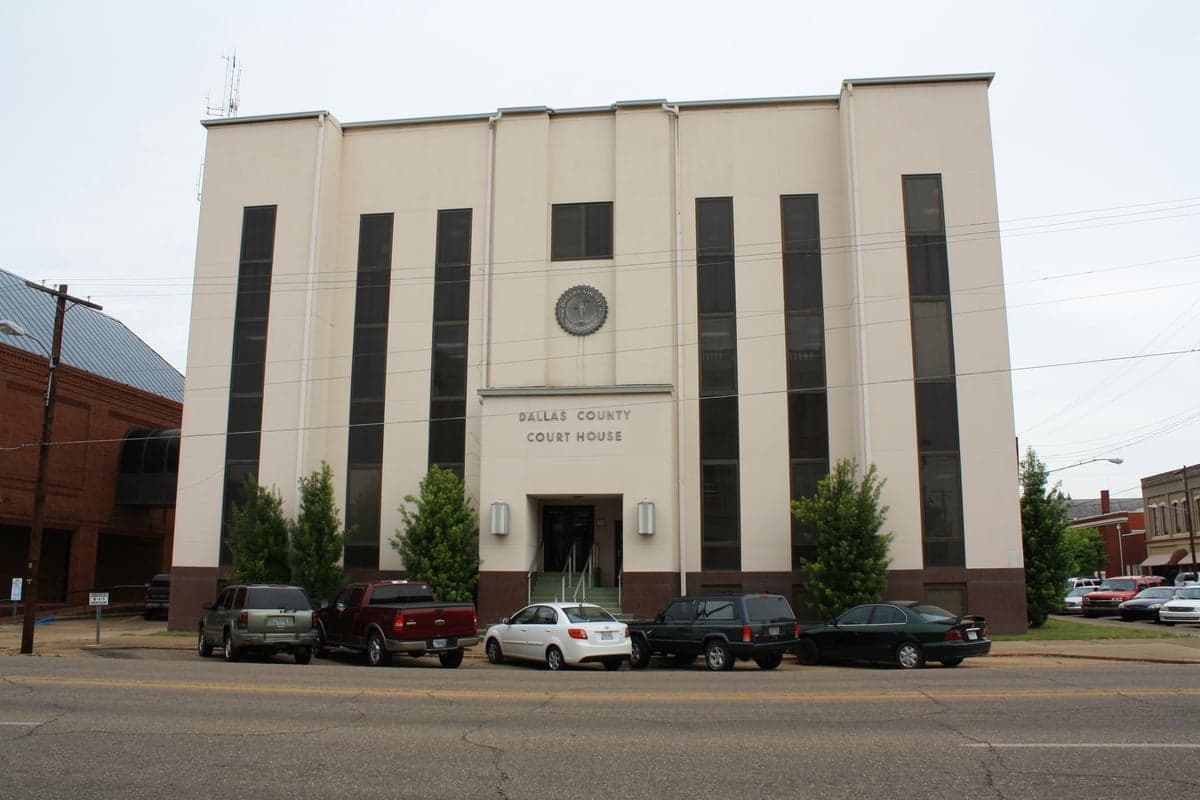
Photo: Wikipedia
Quality of Life in Dallas County
A livable area that tracks near national norms for affordability, walkability, and neighborhood health.
What does Quality of Life tell us?
Quality of Life measures an area by evaluating factors like cost of living, nearby amenities, country club access, airport proximity, socioeconomic signals and neighborhood character. For large states, this is a general average — quality of life can vary dramatically between metro areas, suburbs, and rural communities within the same state.
What does this tell us?
Quality of Life measures an area by evaluating factors like cost of living, nearby amenities, country club access, airport proximity, socioeconomic signals and neighborhood character. For large states, this is a general average — quality of life can vary dramatically between metro areas, suburbs, and rural communities within the same state.
Cost of Living
48% below national average
123%
The Real Cost of Living in Dallas County for 2026
| Tier | Individual | Family (4) |
|---|---|---|
| Survival | $12k | $22k |
| Comfortable | $20k | $30k |
| Luxury | $66k+ | $103k+ |
| Elite (Top 5%) | $96k+ | $149k+ |
Quality-of-Life Analysis
Dallas County, Alabama, offers a spectrum of quality-of-life options that range from the historic, walkable river town of Selma to deeply rural, unincorporated communities where agriculture and quiet country living define daily life. The county’s overall cost of living index sits at 52 (well below the US average of 100), with a median home value of $97,400 and median rent of $749, making it one of the most affordable places in the state. This broad affordability attracts a mix of retirees seeking low property taxes, young families looking for starter homes, and workers commuting to Montgomery or Prattville for higher wages while enjoying a slower pace at home.
Largest town(s) & population centers
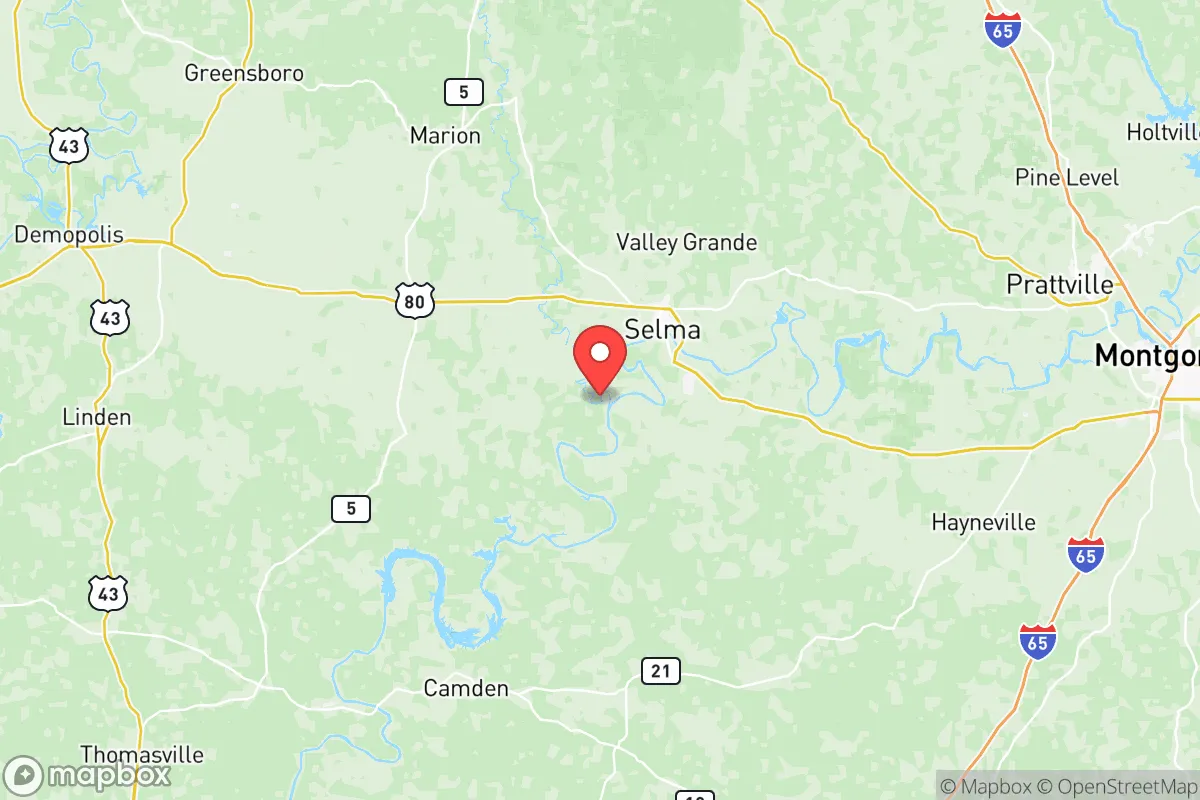
Selma is the county seat and by far the largest population center, home to roughly 17,000 residents. Daily life here centers on the historic downtown district along the Alabama River, with landmarks like the Edmund Pettus Bridge and the Selma Interpretive Center drawing heritage tourism. Residents have access to a regional hospital (Vaughan Regional Medical Center), a Walmart Supercenter, and a handful of local grocery stores and restaurants. The average commute in the county is 25.9 minutes, which for Selma residents typically means a short drive to work within town or a 40-minute eastward commute to Montgomery. Housing stock is older, with many Victorian and Craftsman homes available for under $100,000, though some renovated properties near the river command higher prices. The town has a modest but functional public school system (Dallas County Schools) and a small campus of Wallace Community College.
Smaller towns & rural pockets
Outside Selma, the county spreads into a patchwork of unincorporated communities and tiny incorporated towns. Valley Grande, just north of Selma, is the second-largest incorporated place with about 4,000 residents, offering newer subdivisions and a more suburban feel with quick access to Selma’s amenities. Orrville (pop. ~200) is a quiet farming community with a single gas station and post office, while Benton (pop. ~50) is little more than a crossroads with a historic church and scattered homes. Plantersville and Minter are unincorporated areas where residents live on large lots or working farms, often with well water and septic systems. These rural pockets offer extreme privacy and land at prices that can fall below $50,000 for a 1-2 acre lot with a mobile home. Internet access is limited in the most remote areas, with many households relying on satellite or mobile hotspots.
Cost & lifestyle range
The cost and lifestyle spread across Dallas County is wide. At the lower end, rural areas like Benton or Minter offer the cheapest real estate in the county, with median home values well below the county average of $97,400 — often under $60,000 for a fixer-upper. Renters in these areas pay as little as $500-$600 per month for a two-bedroom house. At the higher end, Valley Grande and the Selma Country Club area feature newer construction homes in the $150,000-$250,000 range, with larger lots and access to a golf course. Selma itself sits in the middle: a mix of historic homes needing renovation ($70,000-$120,000) and move-in-ready bungalows ($100,000-$150,000). Amenities follow the same gradient — Valley Grande residents can be at a Selma grocery store in 10 minutes, while someone in Orrville faces a 20-minute drive to the nearest pharmacy. Property taxes are uniformly low across the county, typically $400-$800 annually on a median-priced home.
This county works best for people who prioritize affordability and space over urban amenities and job density. Retirees on fixed incomes, remote workers who can tolerate limited broadband, and families willing to commute to Montgomery for employment will find the most value here. Those seeking nightlife, high-end dining, or top-tier public schools should look elsewhere, but for anyone wanting a low-cost, low-stress base in Alabama’s Black Belt, Dallas County delivers a genuine range of options from river town to farmstead.

Crime in Dallas County
Crime rates similar to the national median for U.S. locations.
Violent CrimeViolent Crime Analysis
Property CrimeProperty Crime Analysis
Crime Analysis
Dallas County, Alabama, presents a safety picture that is markedly more dangerous than both state and national averages, with violent and property crime rates that demand careful consideration from potential residents. The county's overall crime rate is driven by challenges in its largest city, Selma, while smaller communities and unincorporated areas offer a notably different experience. Understanding these local dynamics is essential for anyone evaluating a move to this historic region of Alabama's Black Belt.
Crime in context
Dallas County's violent crime rate stands at 348.1 incidents per 100,000 residents, significantly exceeding the national average of roughly 380 per 100,000 and the Alabama state average of approximately 410 per 100,000. Property crime is reported at 1,479.9 per 100,000, which is above the national benchmark of 1,954 per 100,000 but still elevated relative to many rural Alabama counties. These figures, however, mask a stark divide within the county. The city of Selma, which accounts for the majority of the county's population, concentrates the vast majority of reported offenses. By contrast, smaller towns like Valley Grande and Orrville consistently report far lower crime rates, often approaching or falling below state averages. The county's proximity to the larger metro area of Montgomery, about 45 minutes east, also introduces some regional crime spillover, particularly property crime along the I-65 corridor.
What residents experience
For those living in Selma, property crime—especially burglary and larceny—is a routine concern, with many residents investing in security systems and neighborhood watch participation. Violent crime, while less frequent, is concentrated in specific Selma neighborhoods and is often linked to drug activity and interpersonal disputes. The Dallas County District Attorney's Office, which operates under a more traditional prosecutorial approach compared to some urban Alabama jurisdictions, has maintained a focus on felony prosecutions. However, the broader judicial environment in Alabama's 4th Judicial Circuit, which includes Dallas County, has seen increasing pressure from progressive reform advocates. This has led to some concern among residents that lenient sentencing and diversion programs for repeat property offenders may be contributing to a cycle of recidivism, particularly in Selma. Residents in Valley Grande and the rural areas around Plantersville and Sardis report a much lower incidence of crime, with many describing their communities as safe and close-knit, where neighbors look out for one another.
Neighborhood-level variation
The safety experience in Dallas County is highly localized. Selma's downtown and historic district, while undergoing some revitalization, still sees higher rates of both violent and property crime, especially after dark. The Selma Police Department has struggled with staffing and resources, which can affect response times. In contrast, the town of Valley Grande, incorporated in 2003, has its own police department and has deliberately cultivated a low-crime environment through zoning and code enforcement. Unincorporated areas near the Alabama River and along Highway 80 east of Selma tend to be safer, though property crime from transient populations remains a concern. For families and retirees, the safest bet is typically the suburban-style developments in Valley Grande or the quiet rural communities around Minter and Benton, where violent crime is rare and property crime is manageable with standard precautions. Anyone considering a move to Dallas County should prioritize visiting specific neighborhoods at different times of day and speaking directly with local law enforcement about block-level conditions.
* Values derived from national, state, county, city and local statistics and may differ in a specific area. Last updated: 2026-07-06T09:38:45.000Z
Narrative content on this page is AI-generated and may contain mistakes. Verify any details that matter before acting on them.
ReloMaps may earn a commission from affiliate links at no extra cost to you.

