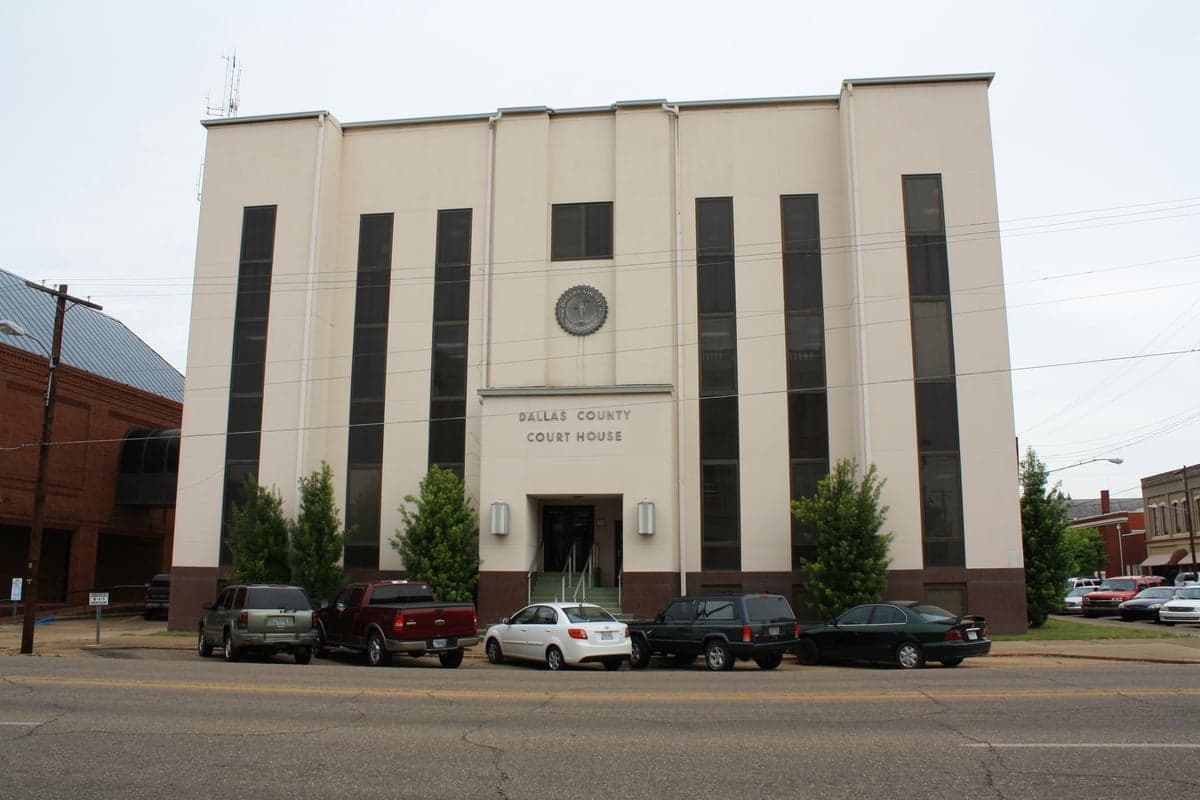
Photo: Wikipedia
Strategic Assessment of Dallas County
Workable tactical position. Some exposure to population density or targets, but generally defensible in a crisis.
What does the Strategic Assessment tell us?
Our Strategic Assessment grades tactical survivability of an area. Major population centers, military targets, fallout zones, natural disasters, and border exposure all drive risk — lower exposure means a more defensible position in a crisis.
This is heavily inspired by Joel Skousen's Strategic Relocation book. Highly recommended you checkout the book ($)What does this tell us?
Our Strategic Assessment grades tactical survivability of an area. Major population centers, military targets, fallout zones, natural disasters, and border exposure all drive risk — lower exposure means a more defensible position in a crisis.
This is heavily inspired by Joel Skousen's Strategic Relocation book. Highly recommended you checkout the book ($)Strategic Pillars

Key Distances
Strategic Assessment Analysis
Dallas County, Alabama, anchored by the historic Black Belt town of Selma, presents a mixed strategic picture for relocation-minded readers prioritizing resilience and self-sufficiency. Its location offers genuine geographic buffers—far from coastal hurricane zones and major metropolitan blast radii—but carries its own set of exposures tied to aging infrastructure, regional industrial corridors, and the socioeconomic realities of the rural Deep South. For a single individual or family weighing disaster readiness, the county demands a clear-eyed assessment of its natural advantages against its practical vulnerabilities.
Geographic position and natural advantages: buffers, water, and the Black Belt terrain
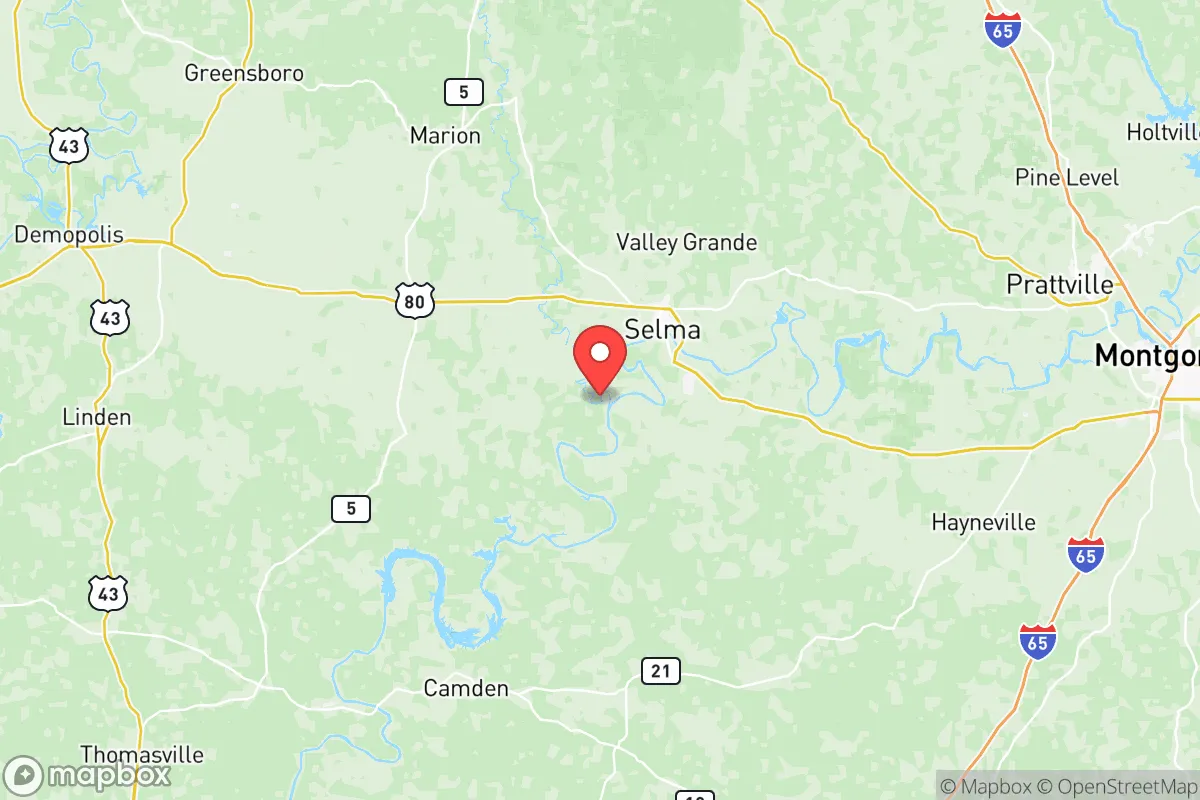
Dallas County sits roughly 50 miles west of Montgomery and 90 miles east of Meridian, Mississippi, placing it outside the immediate fallout zones of any major city. The county’s defining natural feature is the Alabama River, which cuts through Selma and provides a substantial freshwater resource—a critical asset for long-term self-sufficiency. The surrounding Black Belt soil, historically prized for cotton, is heavy clay that drains poorly but offers fertile ground for small-scale agriculture once amended. The terrain is gently rolling, with no significant elevation, but the river bluffs near Selma provide modest defensible high ground. The county is also within a two-hour drive of Fort Novosel (formerly Fort Rucker) to the southeast, a major Army aviation base that could serve as a logistical or medical resource in a crisis, though its presence also introduces a potential military target consideration. The region’s low population density—roughly 38 people per square mile—means fewer neighbors and less competition for resources in a grid-down scenario, but also fewer hands for mutual aid.
Risks, exposures, and proximity to fallout-relevant landmarks
The most significant man-made risk for Dallas County is its proximity to the Tennessee-Tombigbee Waterway and the industrial corridor along the Alabama River. Upstream, the James M. Barry Electric Generating Plant (a coal and gas facility) near Bucks, Alabama, and the Alabama Power coal ash ponds along the river present contamination hazards in the event of flooding or structural failure. Downstream, the Port of Mobile and the chemical refineries along the Mobile River—including the massive BASF and Evonik facilities—are roughly 170 miles south, far enough to avoid direct fallout but close enough that a major industrial accident or terrorist event could send toxic plumes or contaminated water upriver. Closer to home, the Selma Army Ammunition Plant, a decommissioned but still monitored facility on the city’s eastern edge, contains unexploded ordnance and residual hazardous materials; a wildfire or tornado breaching its perimeter could release contaminants. Natural disaster risks are moderate: the county lies in Tornado Alley’s southern extension, with a history of strong EF2-EF3 tornadoes (the 2020 Easter outbreak produced a long-track tornado that struck near Selma). Flooding along the Alabama River is a recurring issue, with the 1979 and 1990 floods causing major damage in low-lying areas of Selma and Valley Grande. Hurricanes rarely reach this far inland with destructive force, but the remnants of storms like Hurricane Katrina (2005) brought sustained tropical-storm-force winds and power outages lasting days. The county’s aging power grid, much of it above-ground and maintained by Alabama Power, is vulnerable to ice storms and high winds, making extended blackouts a realistic concern.
Practical resilience for a relocator: food, water, energy, and defensibility
For a relocator serious about self-sufficiency, Dallas County offers genuine strengths and notable gaps. Water access is excellent: the Alabama River is a reliable surface water source, and the county’s shallow groundwater aquifers (typically 20-50 feet deep) make hand-dug or driven wells feasible in most areas outside the river floodplain. Rainwater catchment is viable, with Selma averaging about 54 inches of precipitation annually. Food production potential is high: the Black Belt soil, while heavy, is nutrient-rich and supports gardens, orchards, and pasture. The county has a strong hunting tradition—white-tailed deer, wild turkey, and feral hogs are abundant—and the Alabama River offers catfish, bass, and crappie. Local farmers’ markets in Selma and the surrounding communities of Orrville and Marion Junction provide seasonal produce, but year-round food security requires personal growing and preservation skills. Energy independence is more challenging: the county has no significant solar incentives or community solar programs, and off-grid solar installations are rare. Wood heating is viable given the county’s extensive pine and hardwood forests, but air quality regulations in Selma’s city limits may restrict outdoor burning. Defensibility is mixed: the open, flat terrain of the Black Belt offers few natural chokepoints, and the county’s many rural roads and dirt tracks make perimeter security difficult. However, the river bluffs near Selma, the dense pine plantations south of the city, and the isolated farmsteads in the county’s western reaches (toward the Perry County line) provide options for a low-profile, defensible homestead. The Selma Police Department and Dallas County Sheriff’s Office are understaffed relative to national averages, with response times in rural areas often exceeding 20 minutes; this places a premium on personal security measures and community watch networks.
The overall strategic picture for Dallas County is one of genuine opportunity tempered by real limitations. Its geographic isolation from major population centers and coastal storm zones is a clear resilience advantage, and the abundance of water, arable land, and game makes it one of the more naturally self-sufficient areas in Alabama. The risks—aging industrial infrastructure, tornado exposure, a strained power grid, and limited local law enforcement—are manageable with preparation, but they are not trivial. For a relocator willing to invest in off-grid water and power systems, develop a serious food-production plan, and build ties with the existing rural community, Dallas County offers a viable base for long-term resilience. The key is to avoid the flood-prone river bottoms, secure a property with good road access and defensible sightlines, and accept that the county’s economic challenges (poverty rates above 30% in parts of Selma) mean that self-reliance is not a luxury but a necessity. It is not a prepper’s paradise, but it is a place where a determined individual or family can carve out a genuinely resilient life—provided they come with skills, supplies, and a realistic understanding of the trade-offs.

* Values derived from national, state, county, city and local statistics and may differ in a specific area. Last updated: 2026-07-06T09:38:45.000Z
Narrative content on this page is AI-generated and may contain mistakes. Verify any details that matter before acting on them.
ReloMaps may earn a commission from affiliate links at no extra cost to you.

