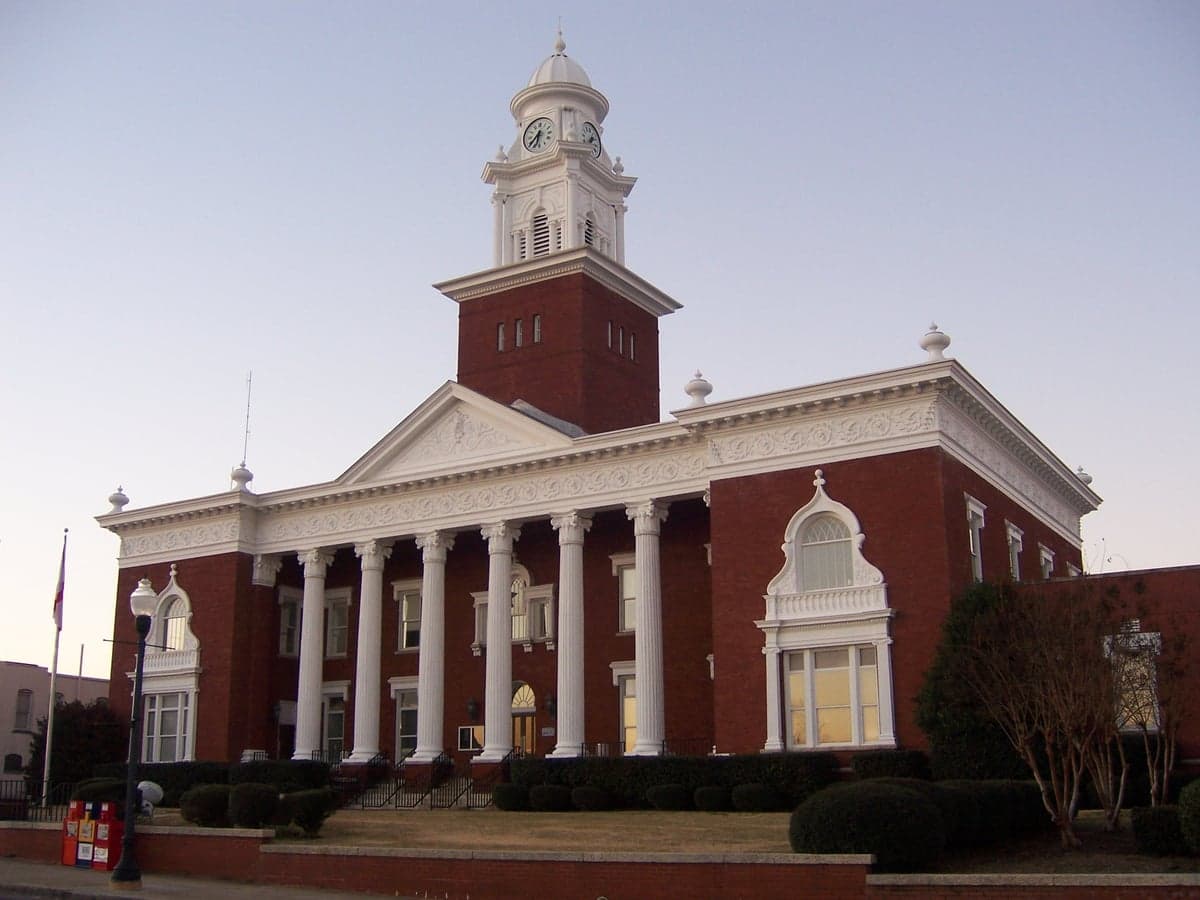
Photo: Wikipedia
Find The Best Places To Live in Lee County
PRO TIP! You can paste a Zillow or Redfin link to get info on that property.
Best Places to Live in Lee County
Cities & Towns in Lee County
Cities in Lee County
What It's Like Living in Lee County, AL
Lee County, Alabama, has a split personality that somehow works. Auburn and Opelika give it a young, energetic, college-town pulse, while the smaller communities like Loachapoka, Salem, and Smiths Station hold onto a slower, rural rhythm. If you’re looking for a place where you can catch an SEC football game on Saturday and be fishing on a quiet lake by Sunday afternoon, this corner of east Alabama might be your fit.
Daily Rhythm: From Campus Energy to Country Quiet
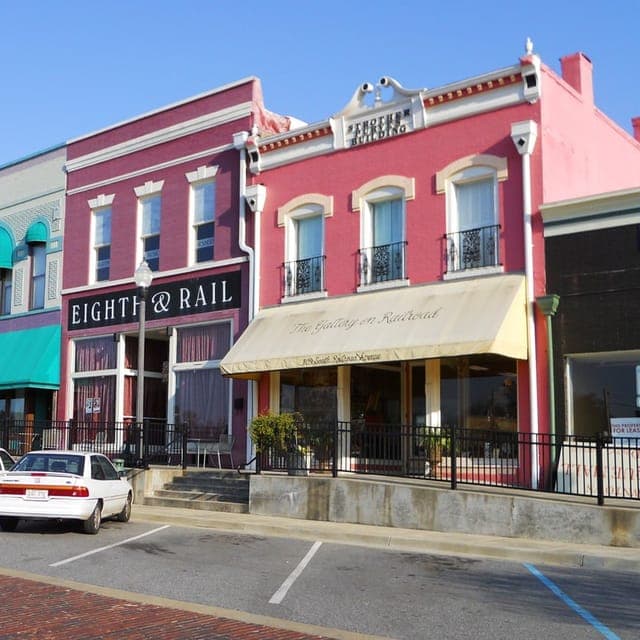
Life in Lee County revolves around two distinct centers. Auburn is the engine, dominated by Auburn University’s 30,000-plus students and the massive ripple effect of game-day traffic. During the school year, downtown Auburn is packed with students grabbing coffee at Mama Mocha’s or dinner at The Hound, and the energy is unmistakable. Opelika, just a ten-minute drive away, offers a more grown-up alternative. Its revitalized downtown—with spots like the John Emerald Distillery and the quirky, retro Zazu’s Gastropub—draws locals who want a night out without the college crush. For everyday errands, most people stick to the main corridors: South College Street in Auburn or the retail hubs along I-85 in Opelika. The average commute here is a manageable 22 minutes, which means you can live on a few acres in Salem and still get to work in Auburn without feeling like you’re wasting your life in the car.
The kind of person who thrives here is often in a specific life stage. You’ve got the student crowd, of course, but also a large number of young families and mid-career professionals drawn by the strong school systems and relatively affordable housing. With a median home value of $238,700 and a cost of living index of 85 (well below the national average), a family can buy a solid three-bedroom in Opelika or a newer subdivision in Smiths Station for what a one-bedroom apartment costs in Atlanta or Nashville. The median income of $61,123 goes further here, especially if you’re willing to live a few miles outside the city limits.
Sports & Community: More Than Just Football
Let’s be honest: football is the civic religion. Auburn University’s Jordan-Hare Stadium holds over 87,000 people, and on seven Saturdays a year, the county’s population effectively doubles. Tailgating is a multi-generational event, with families setting up RVs days in advance. But the sports culture runs deeper than the Tigers. High school football is a huge deal in Opelika and Smiths Station, where Friday-night games are the social event of the week. For the non-football crowd, the Auburn University softball and baseball teams draw strong, loyal followings, and the city’s parks and rec leagues for soccer and youth baseball are always packed with families.
Beyond the stadiums, the community identity is built around a few key traditions. The Loachapoka Syrup Soppin’ Festival, held every November, is a genuine slice of old Alabama—think cane syrup making, crafts, and a crowd that’s been coming for decades. In Opelika, the annual Opelika Songwriters Festival brings a more laid-back, artsy vibe to the downtown streets. For outdoor life, Chewacla State Park just south of Auburn offers hiking and mountain biking trails that get heavy use, and the Saugahatchee Creek provides decent fishing spots for locals who know the back roads.
What’s There to Do: Honest Pros and Cons
The biggest pro is the balance. You can have a career at the university, at the East Alabama Medical Center (the county’s largest employer), or at one of the growing manufacturing plants in Opelika, and still afford a house with a yard. The schools—especially in Auburn and Opelika—are a major draw for families, with strong community support and active PTA groups. The weather is classic Southern: hot, humid summers that push everyone to the lakes or the air conditioning, and mild winters that rarely see snow.
The biggest con? Violent crime is a real concern, with a rate of 348.1 per 100,000—above the national average. This is concentrated in specific areas, but it’s a fact that longtime residents will mention over coffee. Property crime, especially around the university, is also an issue. Another frustration is the traffic on game days. If you live near the stadium or on a main artery like Glenn Avenue, you simply don’t leave your house between 10 AM and 4 PM on a home football Saturday. It’s a trade-off: you get the excitement of a major college town, but you also get the gridlock.
For nightlife, the options are decent for a county of 177,663 people. Auburn has the standard college bars (Skybar, Quixote’s) and a few nicer spots like The Depot. Opelika’s downtown has a more mature scene, with craft breweries and wine bars. But if you’re looking for a major concert venue or a Michelin-starred restaurant, you’re driving to Atlanta (about 90 minutes) or Birmingham (about 90 minutes). That’s the trade-off for living in a place that’s not a big city. The median age of 33.6 reflects the youthful energy, but also means the dating scene can feel heavily skewed toward the under-25 crowd if you’re outside that bracket.
Ultimately, Lee County works best for people who want a strong sense of community, a lower cost of living, and a life that’s anchored by either the university or the surrounding rural landscape. It’s not for everyone—the heat, the game-day chaos, and the crime stats are real downsides. But for the right person, it’s a place where you can put down roots, know your neighbors, and still have a reason to wear orange and blue on Saturday.

* Values derived from national, state, county, city and local statistics and may differ in a specific area. Last updated: 2026-07-08T01:52:37.000Z
Narrative content on this page is AI-generated and may contain mistakes. Verify any details that matter before acting on them.
ReloMaps may earn a commission from affiliate links at no extra cost to you.

