
Photo: Wikipedia
Strategic Assessment of Lee County
Workable tactical position. Some exposure to population density or targets, but generally defensible in a crisis.
What does the Strategic Assessment tell us?
Our Strategic Assessment grades tactical survivability of an area. Major population centers, military targets, fallout zones, natural disasters, and border exposure all drive risk — lower exposure means a more defensible position in a crisis.
This is heavily inspired by Joel Skousen's Strategic Relocation book. Highly recommended you checkout the book ($)What does this tell us?
Our Strategic Assessment grades tactical survivability of an area. Major population centers, military targets, fallout zones, natural disasters, and border exposure all drive risk — lower exposure means a more defensible position in a crisis.
This is heavily inspired by Joel Skousen's Strategic Relocation book. Highly recommended you checkout the book ($)Strategic Pillars

Key Distances
Strategic Assessment Analysis
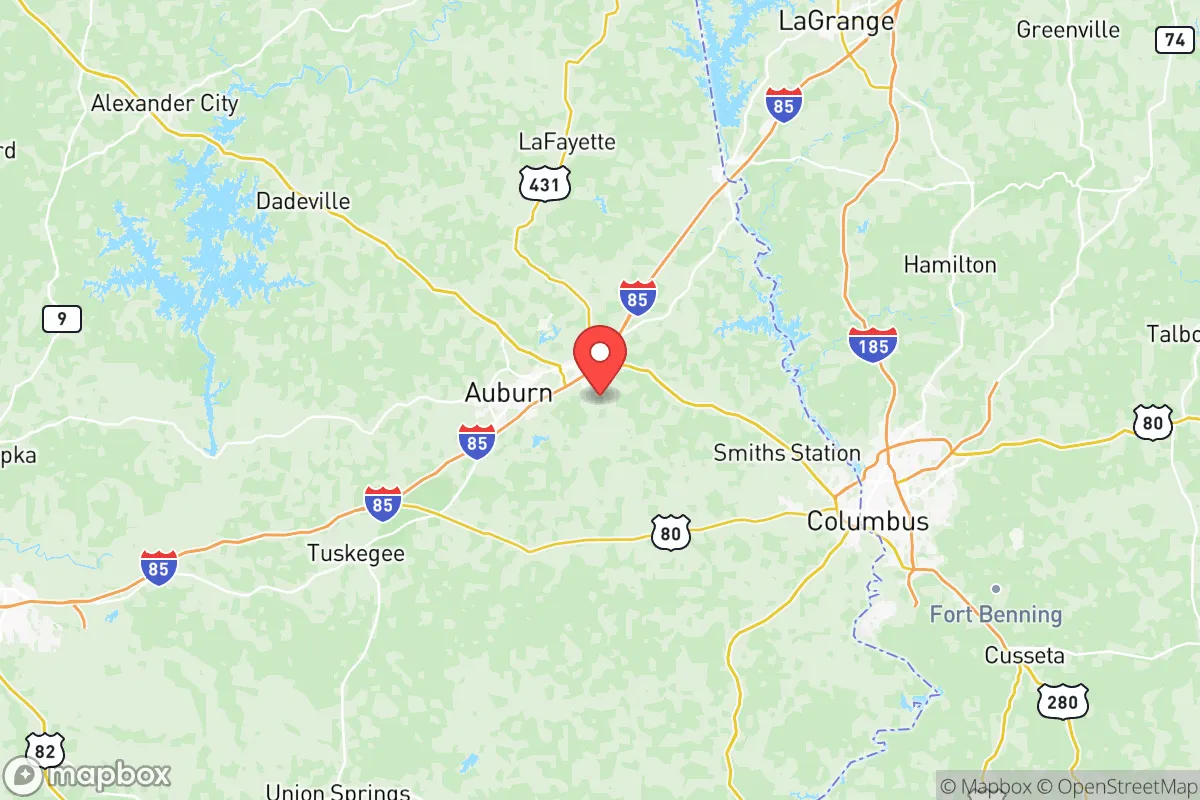
Lee County, Alabama, offers a compelling strategic position for relocators prioritizing resilience and self-sufficiency, balancing proximity to major regional assets with a lower-density, inland setting that avoids the most acute risks of coastal or metropolitan areas. The county’s anchor city, Auburn, along with Opelika and the smaller communities of Loachapoka and Salem, sit roughly 60 miles northeast of Montgomery and 100 miles southwest of Atlanta, placing them within a day’s drive of critical infrastructure while remaining outside the immediate blast or fallout zones of major targets. This geographic sweet spot, combined with the area’s robust local economy anchored by Auburn University and a growing manufacturing base, makes it a practical choice for those seeking a stable, prepared lifestyle without the congestion and vulnerability of a large urban center.
Geographic position and natural advantages for disaster preparedness
Lee County’s inland location in east-central Alabama provides a significant natural buffer against hurricane storm surge, which is the most destructive and frequent natural disaster threat along the Gulf Coast. The county sits at an average elevation of around 700 feet above sea level, with the Piedmont region’s rolling hills and clay-based soils offering good drainage and minimal flood risk compared to the coastal plains. The area is not prone to earthquakes, tsunamis, or wildfires of the scale seen in the western U.S. The primary natural hazard is severe thunderstorms and tornadoes, which are a reality across the Deep South; however, Lee County’s terrain—characterized by mixed hardwood and pine forests—provides natural windbreaks and defensible positions for rural homesteads. The county’s water resources are a notable advantage: the Tallapoosa River runs along its western border, and the Saugahatchee Creek and Chewacla Creek systems provide multiple surface water sources. The Lake Martin reservoir, a major regional water body, lies just 20 miles west of Auburn, offering a reliable backup water supply for communities and a potential resource for those with off-grid water collection plans. The local climate supports a 7-month growing season, with average annual rainfall of 52 inches, making small-scale agriculture and food gardening viable for self-sufficiency-minded relocators.
Risks, exposures, and proximity to fallout-relevant landmarks
While Lee County avoids the highest-risk zones, it is not without strategic vulnerabilities. The most significant man-made risk comes from its proximity to the Fort Moore (formerly Fort Benning) military installation, located roughly 45 miles southwest in Columbus, Georgia. Fort Moore is a major Army training center, including the Maneuver Center of Excellence and the Western Hemisphere Institute for Security Cooperation, making it a potential target in a conflict scenario. Fallout patterns from a strike on Fort Moore would likely drift east-northeast with prevailing winds, placing Lee County on the periphery of any downwind contamination zone. Additionally, the county lies within 100 miles of the Farley Nuclear Plant in Houston County, Alabama, a two-unit pressurized water reactor facility. While the plant has a strong safety record, a major incident could affect Lee County depending on wind direction. The county’s own industrial assets—including the Koch Foods poultry processing plant in Opelika and the WestRock paper mill in nearby Columbus—are not high-value strategic targets but could be secondary economic disruption points. The interstate highway I-85, which runs through Auburn and Opelika, is a critical logistics corridor connecting Atlanta to Montgomery; in a crisis, this route could become a choke point for evacuation or supply movement. The county’s population density is moderate—about 175 people per square mile in the Auburn-Opelika metro area—but rural areas like Salem and Loachapoka offer much lower density, which is a positive for those seeking defensible space. The risk of civil unrest or resource competition is lower than in major cities, but the presence of a large university population (Auburn University has over 30,000 students) means that local resources could be strained during a regional emergency.
Practical resilience for a relocator: food, water, energy, and defensibility
For a relocator serious about self-sufficiency, Lee County offers a practical mix of resources and infrastructure. Water access is the strongest asset: the county’s aquifer is generally reliable, and many rural properties have access to well water. The Tallapoosa River and Lake Martin provide surface water for filtration and storage, though relocators should test well water for agricultural runoff and iron content common in Piedmont geology. Food production is viable year-round, with local extension services through Auburn University offering expert guidance on gardening, livestock, and permaculture. The county has a strong agricultural tradition, with active farmers’ markets in Auburn and Opelika, and the Lee County Farmers Market provides a local food network. For those raising animals, the area’s mild winters reduce the need for expensive heated shelters. Energy resilience is mixed: the local grid is served by Alabama Power, which has a moderate reliability record, but the county’s tree canopy makes it susceptible to power outages from ice storms and thunderstorms. Solar potential is good, with the region averaging 4.5 peak sun hours per day, and many rural properties have south-facing slopes suitable for panel installation. The county’s building codes are not particularly stringent for disaster resilience, so relocators should prioritize reinforced roofing and storm shelters for tornado safety. Defensibility is best in the rural areas south of Opelika and around Salem, where properties on 5-20 acres with tree cover and limited road access offer natural security. The local law enforcement presence is adequate, with the Lee County Sheriff’s Office and Auburn Police Department maintaining response times under 10 minutes in urban areas, but rural response can be 20-30 minutes. The community culture is generally self-reliant and neighborly, with a strong tradition of volunteer fire departments and mutual aid networks, which is a practical advantage for those building a resilient lifestyle.
The overall strategic picture for Lee County is one of moderate-to-high resilience for a relocator who is intentional about location and preparation. Its inland position, abundant water resources, and agricultural viability make it a strong candidate for those seeking a balanced, self-sufficient life away from the highest-risk coastal and metropolitan zones. The primary trade-offs are the tornado risk, which can be managed with proper shelter, and the proximity to Fort Moore and the Farley Nuclear Plant, which introduce a low but real man-made risk. For a family or individual willing to invest in a well-built home, a storm shelter, and a small-scale food system, Lee County offers a defensible, resource-rich base that avoids the extreme vulnerabilities of cities like Atlanta or Birmingham. The presence of Auburn University also provides a unique advantage: access to research, education, and a community of like-minded individuals focused on sustainability and preparedness. In a world of increasing uncertainty, Lee County represents a pragmatic, grounded choice—not a fortress, but a solid, livable position with room to grow and adapt.

* Values derived from national, state, county, city and local statistics and may differ in a specific area. Last updated: 2026-07-08T01:52:37.000Z
Narrative content on this page is AI-generated and may contain mistakes. Verify any details that matter before acting on them.
ReloMaps may earn a commission from affiliate links at no extra cost to you.

