Photo: Wikipedia
Political ClimatePolitical Climate in Wisconsin
Political Environment in the State
Wisconsin is a true battleground state, with a Cook PVI of EVEN, meaning it is perfectly split between the two major parties. Over the last 20 years, the state has shifted from a reliably blue-leaning state (voting for Democrats in every presidential election from 1988 to 2012) to a dead-even toss-up, with Donald Trump carrying it in 2016 by less than 1% and Joe Biden flipping it back in 2020 by a similarly razor-thin margin. The dominant political coalitions are a deeply conservative, rural and exurban base concentrated in the WOW counties (Waukesha, Ozaukee, Washington) outside Milwaukee, and a highly motivated, urban progressive base in Madison and Milwaukee proper. The long-term trajectory is a slow, grinding rightward shift in the exurbs and small towns, offset by rapid leftward movement in the core cities, making the state a perpetual knife-edge.
Urban vs. rural divide
The political map of Wisconsin is a textbook example of the urban-rural chasm. Milwaukee County and Dane County (home to Madison) are the Democratic strongholds, delivering margins of 70%+ for Biden in 2020. These two counties alone account for roughly a third of the state's vote. In contrast, the WOW counties — Waukesha, Ozaukee, and Washington — are among the most Republican suburbs in the nation, routinely giving GOP candidates 60-65% of the vote. The real story, however, is the Rust Belt swing counties like Brown County (Green Bay), Outagamie County (Appleton), and Racine County. These areas were once union-heavy Democratic territory but have shifted hard to the right over the past decade, driven by working-class voters abandoning the Democratic Party over trade, cultural, and Second Amendment issues. The Driftless Region in the southwest (Vernon, Crawford, Richland counties) remains a quirky mix of old-school populist Democrats and libertarian-leaning independents, but even there, the trend is toward the GOP.
Policy environment
Wisconsin's policy environment is a mixed bag for conservatives. On the plus side, the state has a flat income tax (currently 4.4% as of 2026, down from 7.75% in 2011 under Governor Scott Walker), and the legislature has passed right-to-work legislation and Act 10, which effectively ended collective bargaining for most public employees. Property taxes are relatively low compared to neighboring Illinois and Minnesota. On the concerning side, the state has a Democratic governor (Tony Evers, elected in 2018 and re-elected in 2022) who has vetoed numerous conservative bills, including a flat tax reduction and school choice expansion. The state also has a blue-tinged Supreme Court after the 2023 election of Janet Protasiewicz, which has already led to the overturning of the state's heavily gerrymandered legislative maps. Election laws are a flashpoint: Wisconsin has no-excuse absentee voting and same-day voter registration, which conservatives view as ripe for fraud, though the 2020 election audits found no widespread irregularities. The state also has a highly regulated medical marijuana program (only low-THC oil for specific conditions) and no recreational cannabis, which frustrates libertarians.
Trajectory & freedom
The trajectory of freedom in Wisconsin is a tug-of-war. On the positive side, the state has a constitutional carry law (permitless concealed carry, passed in 2011) and a strong Castle Doctrine statute. The legislature has also passed parental rights bills requiring schools to notify parents of curriculum changes and allowing them to opt their children out of sex education. However, the 2023 Supreme Court flip has already led to the redrawing of legislative maps, which will likely result in a more Democratic legislature in 2026, threatening the conservative policy gains of the last decade. The Evers administration has also used executive orders to expand DEI initiatives in state government and universities, and has pushed for abortion access after the Dobbs decision (the 1849 abortion ban was struck down by a state court in 2023). On medical freedom, Wisconsin has no vaccine passport mandate, but the governor did impose a mask mandate during COVID that was struck down by the conservative-controlled Supreme Court at the time. The property rights picture is decent: the state has strong eminent domain protections and no statewide rent control, though some cities like Madison have imposed local rent stabilization measures.
Civil unrest & political movements
Wisconsin has a history of intense political activism. The 2011 Act 10 protests in Madison drew over 100,000 people to the Capitol, and the 2020 Kenosha riots (following the Jacob Blake shooting) saw two nights of arson and looting, culminating in the Kyle Rittenhouse shooting. The state has a vibrant grassroots conservative movement, anchored by groups like the Wisconsin Family Action and the Tea Party Patriots, which have been effective at turning out voters in the WOW counties and the Fox Valley. On the left, Indivisible and Progressive Dane are highly organized, particularly in Madison. Immigration politics are a hot-button issue: the state has a sanctuary city in Madison (which limits cooperation with ICE), and the legislature has repeatedly passed bills to ban sanctuary policies, only to have them vetoed by Governor Evers. Election integrity remains a live issue, with the 2020 election leading to a partisan review by former Supreme Court Justice Michael Gableman, which found no fraud but did recommend changes to election administration. The 2024 election saw record turnout and no major incidents, but the trust deficit remains.
Projection
Over the next 5-10 years, Wisconsin is likely to become more competitive, not less. The in-migration pattern is a double-edged sword: retirees and remote workers from Illinois and Minnesota are moving to the Lake Geneva area and the Door County peninsula, bringing their blue-state voting habits with them. Meanwhile, the Milwaukee suburbs are slowly diversifying and trending left, while the rural counties are depopulating and aging, which hurts the GOP's base. The new legislative maps (likely to be in place for the 2026 election) will probably give Democrats a structural advantage in the state Assembly for the first time in a decade, which could lead to a blue wave of progressive policies on taxes, education, and energy. However, the presidential race will remain a toss-up, as the state's demographics are remarkably stable. A conservative moving here should expect a permanent campaign — every election will be close, and the policy environment will swing wildly depending on which party controls the governor's mansion and the legislature.
Bottom line for a new resident: If you're a conservative looking for a stable, reliably red state, Wisconsin is not that. You will be in a constant political fight. The upside is that your vote genuinely matters — Wisconsin is one of the few states where a single ballot can actually tip a presidential election. The downside is that the policy environment is unpredictable: you might get a flat tax cut one year and a DEI mandate the next. If you value low property taxes and strong gun rights, the WOW counties or the Fox Valley are your best bet. If you want to avoid the political chaos entirely, look at the Driftless Region or Door County, where the politics are more libertarian and the pace of life is slower. Just know that wherever you land, you'll be living in a state that is perpetually 50-50, and the culture war will be at your doorstep.

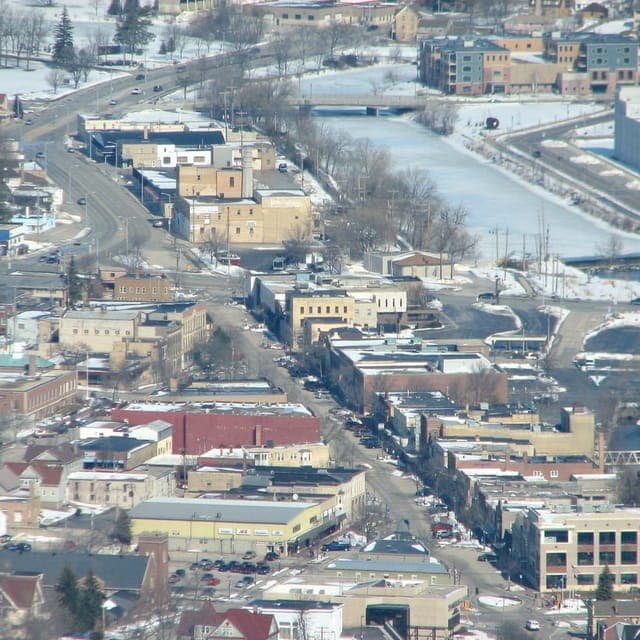
Most Conservative Cities in Wisconsin
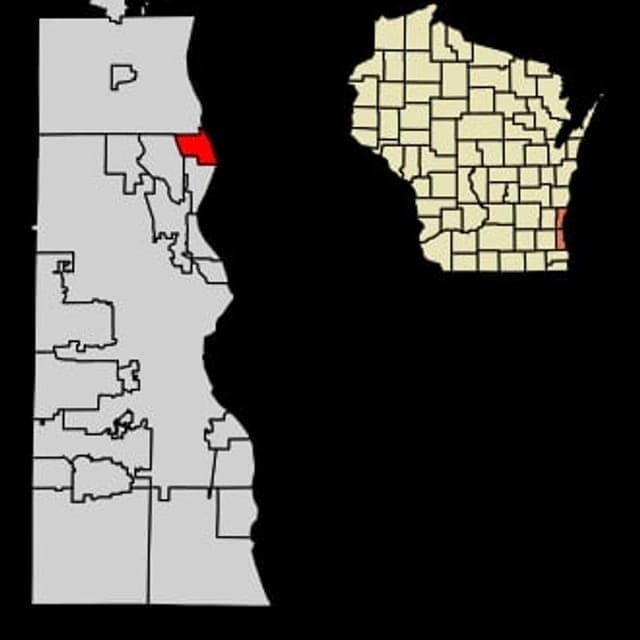
Most Liberal Cities in Wisconsin
* Values derived from national, state, county, city and local statistics and may differ in a specific area. Last updated: 2026-04-19T01:54:13.000Z
Narrative content on this page is AI-generated and may contain mistakes. Verify any details that matter before acting on them.
ReloMaps may earn a commission from affiliate links at no extra cost to you.

