Photo: Wikipedia
Demographics of Wisconsin
Affluence Level in Wisconsin
An upper-middle-class area. Household wealth, education levels, and homeownership run ahead of national benchmarks.
People of Wisconsin
Wisconsin’s population of 5,892,023 is predominantly white (79.2%) and native-born (only 2.7% foreign-born), giving the state a demographic character that is more ethnically homogeneous than the national average. Its people are shaped by a deep legacy of 19th-century European immigration, particularly from Germany and Scandinavia, which created a distinctive Upper Midwestern culture of hard work, civic engagement, and a strong attachment to place. Today, the population is aging, slowly diversifying through Hispanic and Hmong growth, and increasingly concentrated in the southeastern corner anchored by Milwaukee and Madison, while vast rural areas face stagnation or decline.
Settlement & growth (pre-1960)
Before European arrival, Wisconsin was home to several Native American nations, including the Ojibwe (Chippewa) in the north, the Menominee in the northeast, the Ho-Chunk (Winnebago) in the central region, and the Potawatomi and Fox in the south and east. French explorers and fur traders, notably Jean Nicolet in 1634, established the first European presence, but permanent settlement remained sparse under French and later British control. The region passed to the United States after the War of 1812, and the Black Hawk War of 1832 forcibly removed most remaining Native tribes, opening the land for American settlers.
The first major American wave was the Yankee migration from New York and New England between the 1830s and 1850s. These settlers, often of English and Scots-Irish descent, founded the territorial government and established towns like Milwaukee, Madison, and Kenosha. They brought a tradition of abolitionism, education, and small-scale industry, and they dominated the state’s early political and economic life. By 1850, Yankees were the largest single group in Wisconsin, but their influence was soon eclipsed by a far larger wave.
German immigration began in earnest in the 1840s and accelerated through the 1880s, making Wisconsin the most German state in the Union. Unlike the Yankees, Germans came in massive numbers—over 300,000 by 1900—and they settled in distinct clusters. Milwaukee became known as the “German Athens of America,” with entire neighborhoods like the near south side speaking German in daily life. Sheboygan and Fond du Lac became heavily German, as did the rural counties of Ozaukee and Washington. These immigrants were a mix of Protestants, Catholics, and Jews, and they brought brewing, farming, and a strong commitment to parochial schools and cultural preservation. By 1910, Germans and their descendants made up roughly 40% of the state’s population.
Simultaneously, Scandinavian immigrants arrived in large numbers, particularly Norwegians. They concentrated in the western and northern parts of the state, founding towns like Stoughton (Norwegian), Mount Horeb (Norwegian), and Racine (Danish). Norwegians were the second-largest immigrant group, and they shaped the state’s Lutheran identity, its dairy industry, and its populist political tradition. Swedes, Finns, and Icelanders also settled in smaller communities, especially in the northern forested counties like Polk and Burnett.
Later waves included Polish immigrants, who arrived from the 1880s through the 1920s and concentrated in Milwaukee’s south side and in Stevens Point. They were predominantly Catholic and working-class, employed in manufacturing and meatpacking. Italian and Irish immigrants also settled in Milwaukee and in mining towns like Platteville. By 1920, Wisconsin’s population was overwhelmingly European-born or of European descent, with African Americans comprising less than 1% of the state. The Great Migration brought some Black families to Milwaukee and Beloit for industrial jobs, but the numbers remained small compared to northern industrial states like Illinois or Michigan.
Modern era (post-1965)
The 1965 Hart-Cellar Act had a modest effect on Wisconsin compared to coastal states, but it did open the door to two significant new groups. The most distinctive is the Hmong community, refugees from Laos who began arriving in the late 1970s after the Vietnam War. Wisconsin now has the third-largest Hmong population in the United States, concentrated in Wausau, Green Bay, Appleton, and Milwaukee’s north side. The Hmong have brought a strong entrepreneurial spirit, with many families operating small farms, grocery stores, and auto repair shops. They are the state’s largest East/Southeast Asian group, and their population continues to grow through both birth rates and secondary migration from other states.
Hispanic growth has been the most transformative demographic shift since 1990. The Hispanic share of Wisconsin’s population is now 7.8%, up from just 1.9% in 1990. This growth is driven primarily by Mexican immigration, both documented and undocumented, for agricultural and manufacturing jobs. The largest concentrations are in Milwaukee’s south side, Racine, Kenosha, and in rural dairy counties like Clark and Marathon, where Hispanic workers have become essential to the cheese and meatpacking industries. The Hispanic population is younger and has higher birth rates than the white population, making it a key driver of future growth.
Domestic migration patterns have been mixed. Wisconsin has not experienced the explosive Sun Belt growth of Texas or Florida, but it has seen steady in-migration from Illinois, particularly from the Chicago suburbs, as families seek lower taxes and more space. This “Illinois exodus” has boosted population in southeastern counties like Walworth, Kenosha, and Racine. Meanwhile, rural northern counties—Iron, Florence, Price—have lost population for decades as young people leave for urban jobs and the remaining population ages. The state’s overall growth rate has been sluggish, averaging less than 0.5% per year since 2010.
The Indian (subcontinent) population is small at 0.7% but growing, concentrated in Milwaukee’s western suburbs like Brookfield and Waukesha, and around the University of Wisconsin in Madison. These are predominantly professionals in medicine, engineering, and information technology. The Black population (6.0%) remains heavily concentrated in Milwaukee, where it makes up nearly 40% of the city’s residents, and in smaller industrial cities like Beloit and Racine. The Black population has not grown significantly in recent decades, and Milwaukee remains one of the most segregated metropolitan areas in the United States.
The future
Wisconsin’s demographic future is one of slow diversification and geographic polarization. The white population is aging and declining in absolute numbers, while the Hispanic and Hmong populations are growing through both immigration and higher birth rates. The state’s foreign-born share (2.7%) is among the lowest in the nation, but it will likely rise slowly as employers in dairy, manufacturing, and healthcare recruit immigrant labor to offset native-born workforce shortages. The Indian and East/Southeast Asian populations will continue to grow modestly, primarily in the Madison and Milwaukee suburbs, but they will remain small relative to the Midwest average.
The most significant trend is the urban-rural divide. The southeastern corridor—Milwaukee, Madison, Kenosha, Racine, and their suburbs—will continue to gain population and diversify, while the northern and western rural counties will shrink and become older and whiter. This is already visible in school enrollment data: rural districts are consolidating, while suburban districts in Waukesha County and Dane County are adding new schools. The state’s cultural identity, long rooted in small-town German and Scandinavian farming communities, is gradually shifting toward a more suburban, multiethnic, and service-oriented society.
For a conservative-leaning individual or family considering relocation, Wisconsin offers a stable, safe, and family-oriented environment with strong schools in many suburban and small-town areas. The state’s political culture remains competitive, with a Republican-leaning rural and exurban base and a Democratic-leaning urban core. The key trade-off is between the economic opportunity and diversity of the southeast and the slower pace, lower cost, and cultural homogeneity of the north and west. The state is not being transformed by immigration in the way that Texas or California are, but it is slowly becoming less white and less rural with each passing decade.

Most Diverse Cities in Wisconsin
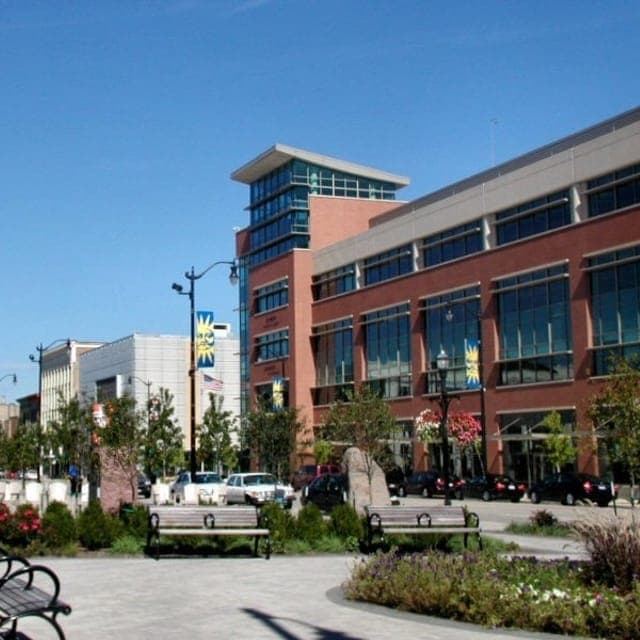
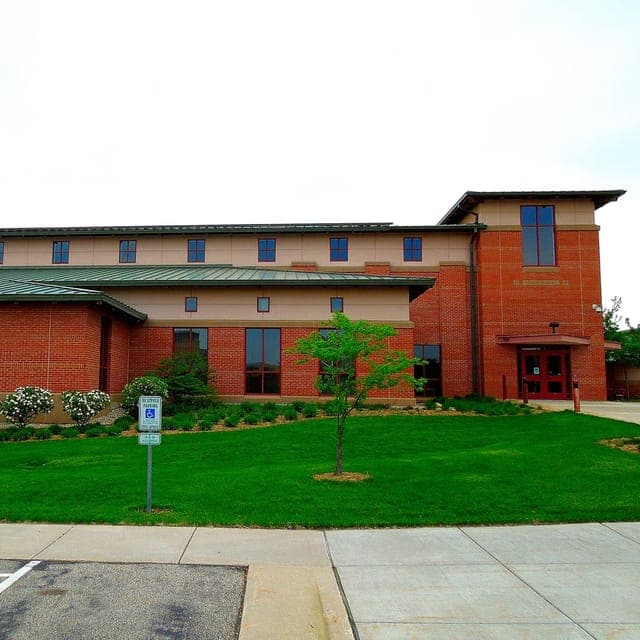
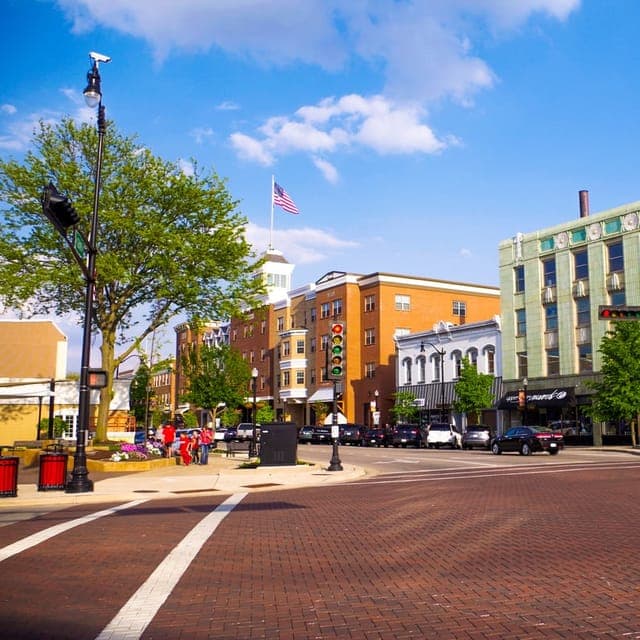
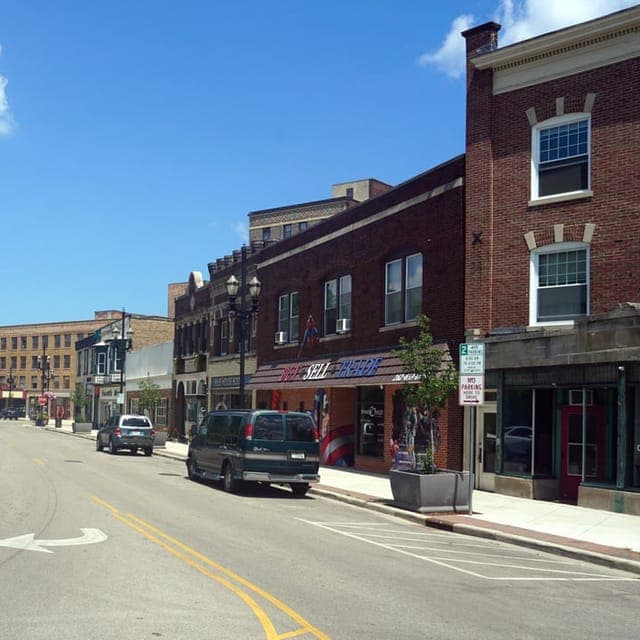
Most Homogenous Cities in Wisconsin


* Values derived from national, state, county, city and local statistics and may differ in a specific area. Last updated: 2026-04-19T01:54:13.000Z
Narrative content on this page is AI-generated and may contain mistakes. Verify any details that matter before acting on them.
ReloMaps may earn a commission from affiliate links at no extra cost to you.

