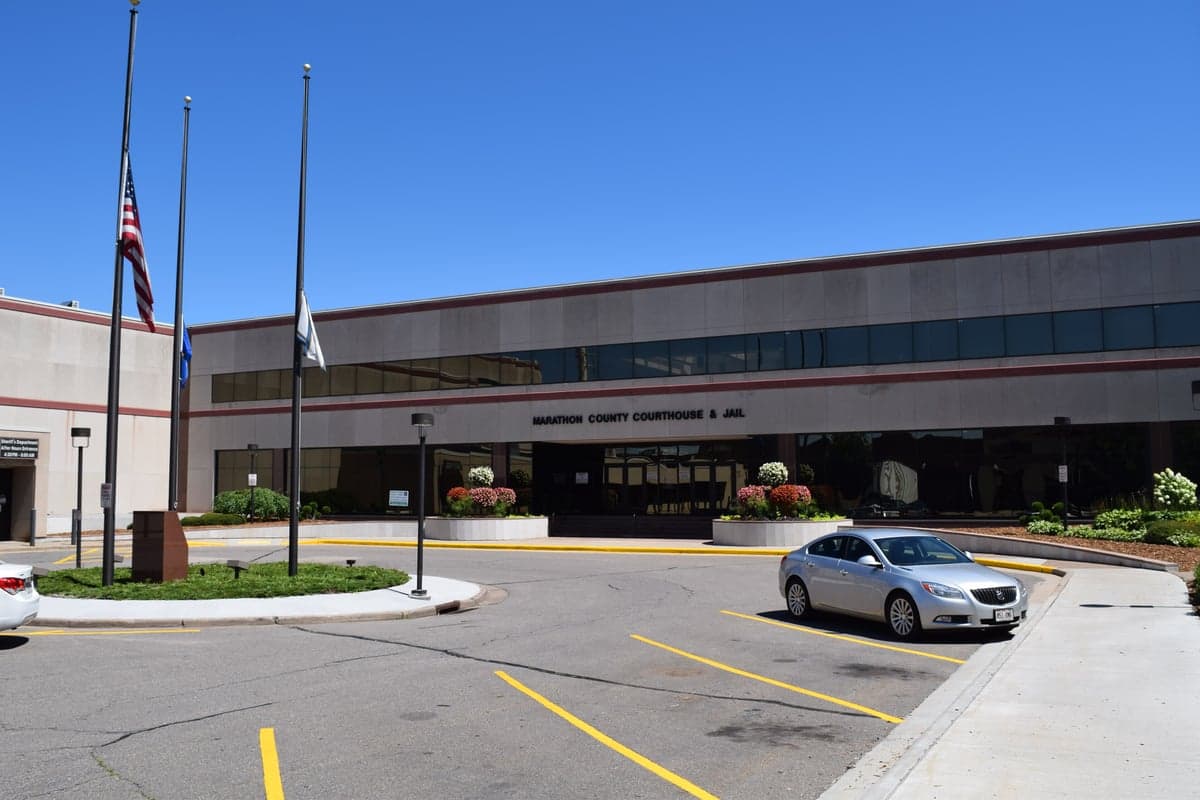
Photo: Wikipedia
Political ClimatePolitical Climate in Marathon County
Showing district-level results — no local-only data available.
Local Political AnalysisPolitical Analysis of Marathon County
Marathon County has been a reliably Republican stronghold for decades, with a Cook Partisan Voting Index of R+11, meaning it votes about 11 points more Republican than the national average. That’s a solid red lean, but it’s not a monolith—the county has shifted rightward in recent presidential cycles, even as the state of Wisconsin as a whole has become a pure toss-up (Cook PVI: EVEN). In 2020, Donald Trump carried Marathon County by about 15 points, while Joe Biden narrowly won Wisconsin statewide. The trend here is toward deeper red, driven by rural and exurban voters, while the city of Wausau and a few smaller towns have become more competitive.
How it compares
Compared to Wisconsin’s statewide EVEN rating, Marathon County is significantly more conservative. The county’s R+11 PVI places it among the more Republican-leaning counties in the state, alongside places like Washington and Ozaukee counties near Milwaukee. But within Marathon County, the political geography is stark. Wausau, the county seat and largest city, is a genuine swing area—its central and near-west side precincts often vote Democratic, while the outer wards lean Republican. The city’s mayoral elections have flipped between parties in recent years. Rib Mountain and Weston are reliably red, with GOP margins often exceeding 20 points. Mosinee and Schofield are more moderate, sometimes breaking for Democrats in local races but trending red in presidential years. The rural townships—like Berlin, Cassel, and Hamburg—are deeply conservative, often voting 70-80% Republican. The county’s overall R+11 masks this internal split: Wausau’s blue pockets are outvoted by the surrounding red countryside.
What this means for residents
For conservative residents, Marathon County feels like home turf. Republican candidates dominate local offices—the county board, sheriff, and most municipal positions—and conservative values shape public policy, from land-use decisions to school board debates. The county’s Republican lean means that conservative voters rarely feel their views are marginalized. For liberal residents, the picture is more nuanced. Wausau provides a blue island where Democratic candidates can win local races, and progressive activism is visible on issues like environmental protection and affordable housing. But outside the city, liberal voices are sparse, and statewide Democratic candidates often struggle to gain traction. The practical effect is that conservative residents enjoy broad political alignment with their neighbors, while liberal residents must work harder to find community and influence. The county’s trajectory suggests this gap may widen: rural areas are becoming more Republican, while Wausau’s urban core is slowly diversifying and becoming more Democratic.
Culturally, Marathon County’s political lean is reflected in its policy priorities. The county has been a stronghold for the state’s Republican Party, with local legislators like Rep. Pat Snyder and Sen. Patrick Testin often championing conservative fiscal and social policies. Property taxes are relatively low compared to neighboring counties, and the county has resisted major new spending on public transit or social services. At the same time, Wausau has pursued its own progressive initiatives, like a city-wide sustainability plan and a housing trust fund, showing that local politics can diverge from the countywide trend. The county’s large Hmong community, concentrated in Wausau, has also become a political force, with increasing representation on the city council and school board. This demographic shift is slowly reshaping the county’s political landscape, but for now, Marathon County remains a reliably red anchor in a purple state.

State Political ClimatePolitical Climate in Wisconsin
State Political AnalysisPolitical Environment in the State
Wisconsin is the quintessential swing state, with a Cook PVI of EVEN that perfectly captures its razor-thin margins and deeply entrenched partisan split. Over the past 20 years, the state has shifted from a reliably blue-leaning battleground (voting for Democrats in every presidential election from 1988 to 2012) to a true toss-up, with Donald Trump flipping it in 2016 by less than 23,000 votes, Joe Biden reclaiming it in 2020 by about 20,000 votes, and the 2024 race again decided by a margin under one percentage point. The dominant coalitions are a classic urban-rural standoff: Milwaukee and Madison drive Democratic turnout, while the WOW counties (Waukesha, Ozaukee, Washington) and vast stretches of northern and western Wisconsin anchor the Republican base. What makes Wisconsin unique is that neither side can build a durable majority — every election is a ground war fought over a tiny slice of suburban and exurban voters in places like Brown County (Green Bay) and the Fox Valley.
Urban vs. rural divide
The political map of Wisconsin is a study in geographic polarization. Milwaukee County is the Democratic stronghold, delivering roughly 70% of its vote to Democratic candidates, powered by the city's large Black and Latino populations and union-heavy working-class base. Dane County (Madison) is even more lopsided, often hitting 75-80% Democratic, driven by the University of Wisconsin system, state government workers, and a growing tech and biotech sector. On the other side, the WOW counties — Waukesha, Ozaukee, and Washington — are among the most Republican suburban counties in the nation, routinely giving GOP candidates 60-65% of the vote. The Fox Valley (Appleton, Oshkosh, Green Bay) is the true battleground: Brown County flipped from Obama to Trump to Biden, and its fast-growing exurbs like Suamico and Hobart are where elections are won. The Northwoods (Vilas, Oneida, Lincoln counties) and western Wisconsin (St. Croix, Pierce, Polk counties) are reliably red, though the western edge has seen some suburban drift toward Democrats as Twin Cities commuters move in. The Driftless Region (Vernon, Crawford, Richland counties) is a rare rural Democratic holdout, with a strong populist tradition that still votes for moderate Democrats.
Policy environment
Wisconsin's policy landscape is a patchwork of divided government outcomes. The state has a flat income tax of 4.4% (down from 7.65% in 2011), with a 5% sales tax (plus local option up to 0.5%). Property taxes are above the national median but capped by state levy limits. The state is a right-to-work state (2015) and a constitutional carry state (permitless carry since 2023). Education policy is dominated by the school choice movement: Wisconsin has the nation's oldest private school voucher program (Milwaukee, 1990) and a robust charter sector. The state has no abortion ban — a 2023 Wisconsin Supreme Court ruling struck down the 1849 law, leaving abortion legal up to 20 weeks. Election laws are a flashpoint: Wisconsin has no-excuse absentee voting, same-day voter registration, and voter ID requirements. The state's election administration is decentralized, with 1,800+ municipal clerks, which creates both flexibility and friction. The Wisconsin Economic Development Corporation (WEDC) offers business incentives, but the state's regulatory posture is moderate — not as business-friendly as Indiana or Iowa, but less restrictive than Minnesota or Illinois.
Recent policy direction
The last five years have seen Wisconsin lurch between Republican legislative dominance and Democratic gubernatorial vetoes. Act 10 (2011) — which effectively ended collective bargaining for most public employees — remains the defining policy battle, and its legacy still animates state politics. In 2023, the Republican legislature passed a flat tax reduction from 5.3% to 4.4%, signed by Democratic Governor Tony Evers after a compromise. On gun rights, the 2023 permitless carry law was a major win for conservatives, though the state still has a universal background check requirement for handgun purchases. On education, the 2023-25 budget expanded school choice eligibility to all income levels and increased voucher funding by 20%. On abortion, the 2023 Supreme Court election (won by liberal Justice Janet Protasiewicz) effectively preserved abortion access, but the legislature has passed a 20-week ban that remains in effect. On voting, the legislature has attempted to ban drop boxes and limit absentee voting, but Evers vetoed those bills. On parental rights, the state has no explicit "parents' bill of rights," but school boards in conservative areas like Waukesha and Kenosha have adopted policies requiring parental notification for curriculum changes. On property rights, Wisconsin has a strong private property rights law (2017) that limits eminent domain for economic development. On privacy, the state has no comprehensive data privacy law, but a 2024 law restricts the use of facial recognition by law enforcement without a warrant.
Civil unrest & political movements
Wisconsin has a long history of political activism, from the Wisconsin Uprising of 2011 (the massive protests against Act 10 that occupied the Capitol for weeks) to the Kenosha unrest of 2020 following the shooting of Jacob Blake, which saw two nights of rioting and the fatal shooting of two protesters by Kyle Rittenhouse. The 2020 election remains a live controversy: Trump's legal challenges in Wisconsin failed, but the state's election integrity has been a persistent issue, with a 2023 audit finding no widespread fraud but recommending tighter chain-of-custody rules. The Wisconsin Republican Party has a strong grassroots base, with active county parties in Waukesha, Washington, and Ozaukee counties that host regular "trumpet" rallies and door-knocking operations. On the left, Indivisible and Our Wisconsin Revolution have active chapters in Madison and Milwaukee, and the Wisconsin Democratic Party has invested heavily in rural organizing in the Driftless Region. Immigration politics are less heated than in border states, but the 2023 influx of migrants to Chicago has led to some busing to Milwaukee, sparking local debates. There is no sanctuary city policy in Wisconsin, though Milwaukee and Madison have "welcoming city" ordinances that limit cooperation with ICE. Secession or nullification rhetoric is minimal — Wisconsin is too purple for that — but the Wisconsin Sovereignty Movement (a small libertarian group) has pushed for nullification of federal gun laws, with no success.
Projection
Over the next 5-10 years, Wisconsin is likely to remain a toss-up, but the demographic trends favor Democrats in the long run. In-migration from Illinois and Minnesota is bringing more moderate and liberal voters to the western suburbs (St. Croix County grew 15% from 2010-2020) and the Fox Valley (Brown County grew 8%). The Milwaukee suburbs are slowly diversifying: Waukesha County's non-white population grew from 8% in 2010 to 14% in 2020, though it still votes heavily Republican. The rural population is aging and shrinking, which hurts the GOP's base. The 2024 Supreme Court election (which gave liberals a 4-3 majority) will shape redistricting for the next decade — the court is likely to strike down the current heavily gerrymandered legislative maps, which could flip the state Assembly and Senate to Democratic control by 2026 or 2028. That would unlock a wave of progressive legislation: a higher minimum wage, expanded Medicaid, and a repeal of right-to-work. However, the Republican legislature has shown it can adapt, and the state's strong local government tradition means that even under Democratic control, policy changes will be incremental. The wild card is presidential politics: Wisconsin will remain a top-tier battleground, and the state's 10 electoral votes will attract massive outside spending and attention every two years.
For a new resident, the bottom line is that Wisconsin offers a genuine swing-state experience — your vote actually matters, and the political climate is intense but not toxic in daily life. Conservatives will find a state with low taxes, strong gun rights, and a robust school choice system, but they'll need to accept that the state's largest cities and the state Supreme Court lean left. Liberals will find a state with strong unions (outside Act 10's reach), abortion access, and a vibrant university town, but they'll have to contend with a legislature that has been gerrymandered to the right for a decade. The practical takeaway: if you want to live in a place where politics is a constant, high-stakes game but where your neighbors are generally civil, Wisconsin is it. Just be prepared for the fact that every election will feel like a national crisis — because in Wisconsin, it often is.
* Values derived from national, state, county, city and local statistics and may differ in a specific area. Last updated: 2026-06-17T00:48:27.000Z
Narrative content on this page is AI-generated and may contain mistakes. Verify any details that matter before acting on them.
ReloMaps may earn a commission from affiliate links at no extra cost to you.

