
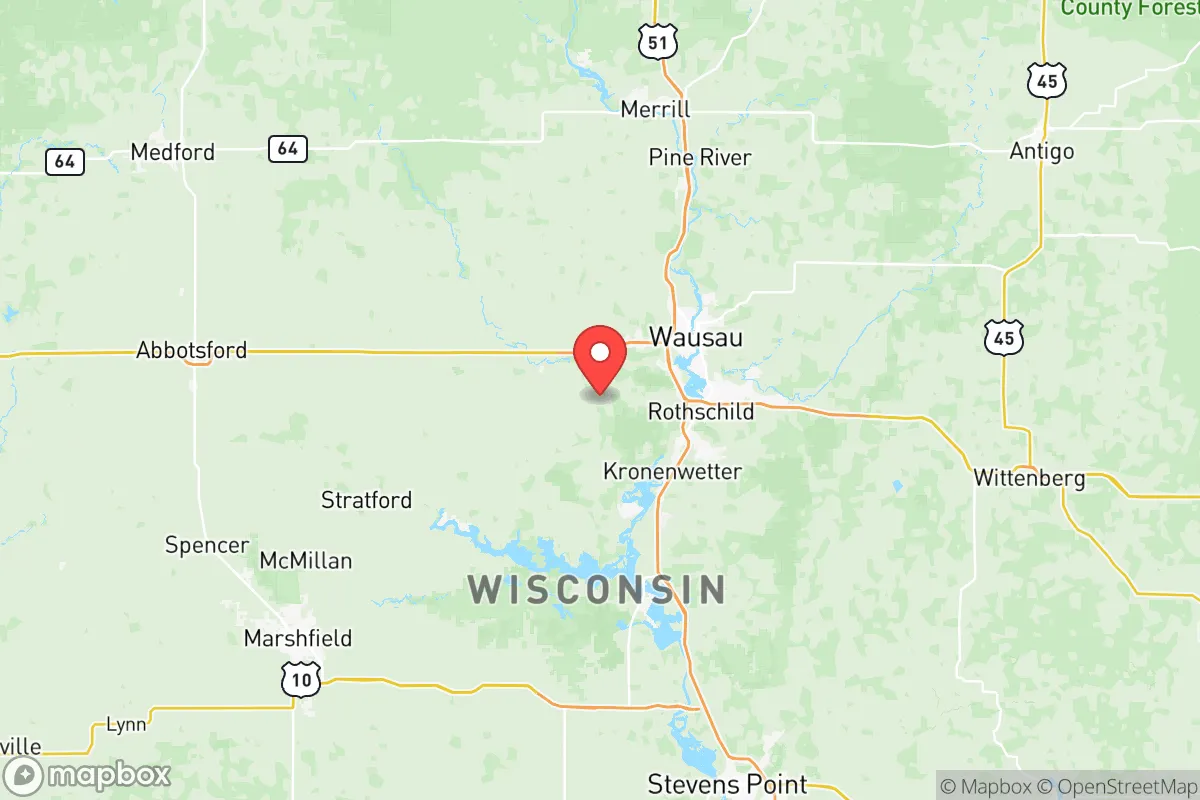
Photo: Wikipedia
Personal Sovereignty in Marathon County
Moderate friction. Expect trade-offs in some aspect of personal liberty and independence.
What does Personal Sovereignty tell us?
Personal Sovereignty measures your capacity for self-reliance and independence with minimal government friction. Higher scores mean fewer barriers between you and the way you want to live... but it assumes you have the space you need and good neighbors.
What does this tell us?
Personal Sovereignty measures your capacity for self-reliance and independence with minimal government friction. Higher scores mean fewer barriers between you and the way you want to live... but it assumes you have the space you need and good neighbors.
State Policy
Energy independence: Importer (15% of energy produced in-state)
Personal Liberty
Homesteading

Personal Liberty Analysis
Marathon County, Wisconsin, offers a notably high degree of personal sovereignty, particularly for those who value self-reliance and limited government interference in daily life. The county’s regulatory environment is generally light-touch compared to urban centers like Madison or Milwaukee, with local governance in towns such as Wausau, Mosinee, and Edgar leaning toward a hands-off approach on property use, business operations, and personal conduct. For a relocation-minded individual or family with a conservative-leaning preference for autonomy, Marathon County presents a balanced mix of rural freedom and small-city convenience, where state-level protections on gun rights and parental authority are reinforced by a community culture that prizes independence.
Tax burden and regulatory posture: how Marathon County compares to urban Wisconsin
Wisconsin’s overall tax burden is moderate, but Marathon County sits below the state average in property tax rates, with the median effective property tax rate around 1.6% of home value in 2025, compared to roughly 1.8% in Dane County (Madison). The county’s regulatory posture is notably permissive: there is no countywide zoning overlay in unincorporated areas, meaning towns like Stratford and Athens have minimal building codes or land-use restrictions beyond basic septic and well requirements. Business licensing is straightforward, with no county-level occupational licensing beyond state mandates, and the local permitting process for home-based businesses in Wausau’s outskirts is typically a one-step approval. Sales tax in Marathon County is 5.5% (state plus county), lower than the 5.6% in Milwaukee County, and there is no local income tax beyond the state’s flat 4.4% rate. For a family or individual seeking to minimize tax and regulatory friction, the county’s posture is decidedly light-touch, especially when compared to the stricter environmental and land-use rules found in Door County or the Fox Valley.
Self-defense and gun law specifics: what Wisconsin’s Castle Doctrine means in Marathon County
Wisconsin is a strong Second Amendment state, and Marathon County reflects that culture with high rates of concealed carry permits and a local sheriff’s office that does not impose additional restrictions beyond state law. The state’s Castle Doctrine, codified in Wis. Stat. § 939.48, provides a legal presumption of reasonable fear of death or great bodily harm when a person uses force against an unlawful intruder in their home, vehicle, or workplace. There is no duty to retreat in any place where the individual is lawfully present. Open carry is legal without a permit, and concealed carry requires a license issued by the county sheriff, which in Marathon County is processed with typical turnaround times of 30-45 days. The county has no local ordinances restricting firearm possession in parks or public buildings beyond state preemption, which prohibits municipalities from enacting their own gun laws. In towns like Mosinee and Edgar, gun ranges and hunting clubs are common, and the local culture strongly supports self-defense training and firearm ownership as a personal responsibility. For a reader prioritizing self-defense autonomy, Marathon County offers a legal environment that is among the most permissive in the Midwest, with no local barriers to carrying or storing firearms.
Self-reliance and homesteading viability: lot sizes, zoning, and off-grid feasibility
Marathon County is a strong candidate for homesteading and off-grid living, particularly in its rural townships. Minimum lot sizes in unincorporated areas are typically 1 to 5 acres for residential use, with no countywide minimum dwelling size or building permit requirement for structures under 200 square feet (e.g., sheds, tiny houses on wheels). Towns like Athens and Stratford have no zoning ordinances at all, meaning residents can legally build a home, install solar panels, and collect rainwater without county approval, provided state health codes for wells and septic are met. Off-grid feasibility is high: Wisconsin law allows private wells on parcels of 1 acre or more, and solar panel installation is permitted without special county permits. The county does not enforce building codes in unincorporated areas, though state electrical and plumbing codes apply. For a family seeking to live independently, Marathon County’s regulatory environment is far more accommodating than the strict zoning found in Wausau’s city limits or in neighboring Portage County. The local extension office offers soil testing and agricultural resources, and the county’s agricultural zoning allows for livestock, beekeeping, and small-scale farming on parcels as small as 5 acres without special permits.
Personal liberties: parental rights, medical autonomy, speech, and property
Marathon County’s culture and legal environment strongly support parental rights and medical autonomy, reflecting broader Wisconsin trends. The state’s Act 20 (2023) requires school districts to notify parents of any changes in a student’s health or emotional well-being, and Marathon County school boards in Wausau, Mosinee, and Edgar have adopted policies that emphasize parental consent for any non-emergency medical or mental health services. Vaccine mandates are not enforced at the county level, and Wisconsin law allows for religious and philosophical exemptions to school immunization requirements. Medical freedom is further supported by the state’s lack of a prescription drug monitoring program that restricts patient access, and the county has no local ordinances limiting alternative medicine or supplement sales. Free speech protections are robust, with no county-level restrictions on political signage, public gatherings, or expressive conduct beyond state trespass laws. Property rights are strong: Wisconsin’s right-to-farm law protects agricultural operations from nuisance lawsuits, and Marathon County’s planning department does not impose rent control or short-term rental bans in unincorporated areas. For a family or individual who values the ability to make independent decisions about health, education, and property use, the county’s legal framework is permissive and aligned with a high degree of personal sovereignty.
Overall, Marathon County ranks among the more sovereignty-friendly areas in Wisconsin, offering a regulatory environment that is lighter than the state’s urban centers and comparable to other rural counties like Clark or Taylor. The combination of low property taxes, minimal zoning in unincorporated towns, strong gun rights, and robust parental and medical autonomy creates a landscape where self-reliance is not just tolerated but actively supported by local governance. For a relocation-minded reader seeking a place where personal freedom is the default rather than the exception, Marathon County provides a practical, data-grounded option that balances rural independence with access to Wausau’s amenities.

* Values derived from national, state, county, city and local statistics and may differ in a specific area. Last updated: 2026-06-17T00:48:27.000Z
Narrative content on this page is AI-generated and may contain mistakes. Verify any details that matter before acting on them.
ReloMaps may earn a commission from affiliate links at no extra cost to you.

