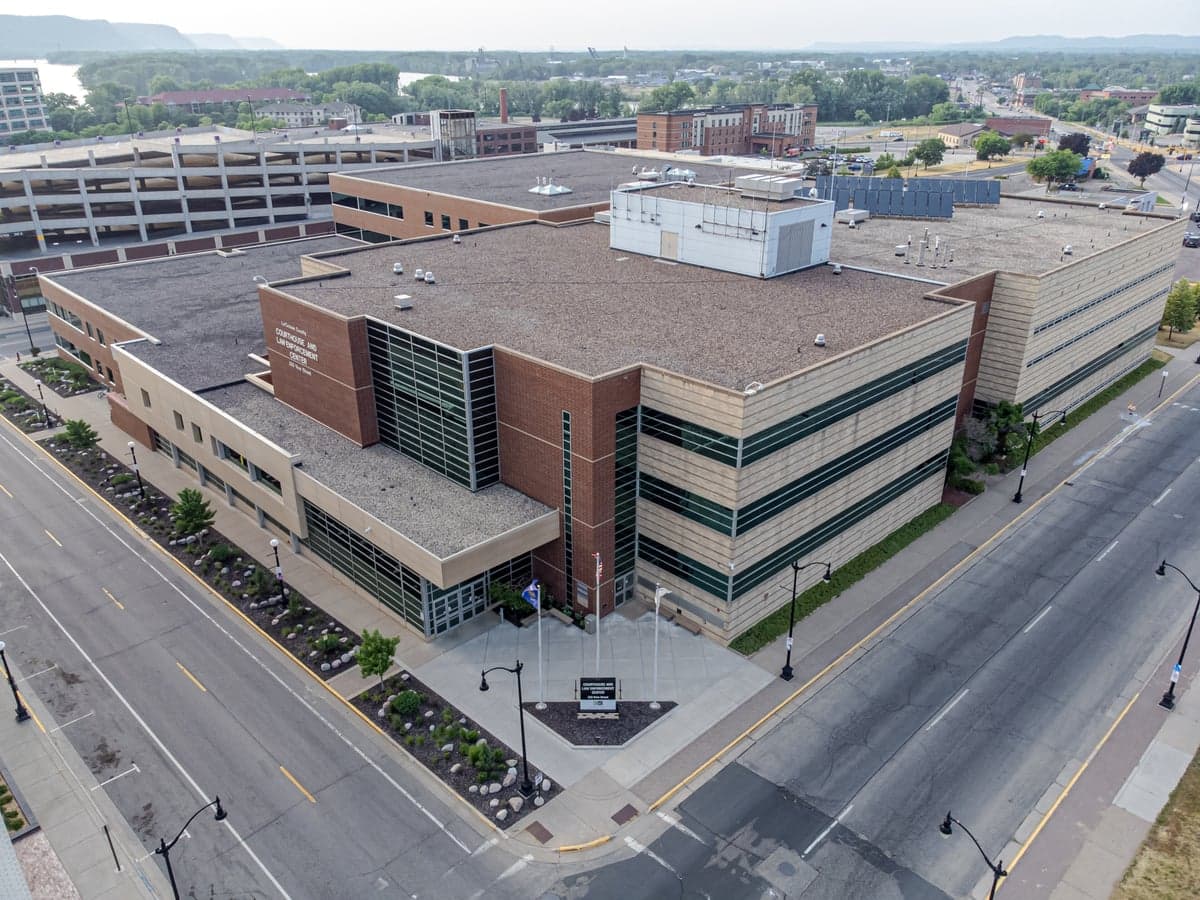
Photo: Wikipedia
Political ClimatePolitical Climate in La Crosse County
Showing district-level results — no local-only data available.
Local Political AnalysisPolitical Analysis of La Crosse County
La Crosse County has been a classic swing county in a swing state for decades, but the ground has shifted noticeably. While the county as a whole has a Cook PVI of R+3, that number masks a deep urban-rural split that has only widened since 2016. The city of La Crosse itself, home to the University of Wisconsin-La Crosse and a growing healthcare and tech sector, has trended reliably blue, while the surrounding townships and smaller communities like Onalaska, Holmen, and West Salem have moved right, pulling the county's overall lean slightly redder than the state's EVEN rating.
How it compares
Wisconsin as a whole is the ultimate battleground, with a Cook PVI of EVEN and a history of flipping between parties by razor-thin margins. La Crosse County, at R+3, is actually a bit more Republican-leaning than the state average, which might surprise people who only know the city's liberal reputation. The key difference is that the county's rural precincts—places like the Town of Farmington, the Town of Greenfield, and the Town of Shelby outside the city limits—vote heavily Republican, often by 60-70% margins. Meanwhile, the city's 1st, 2nd, and 3rd wards consistently deliver Democratic margins of 65-75%. The swing precincts are in the suburbs and exurbs: Onalaska, Holmen, and the Town of Medary, where races are often decided by a few hundred votes. In 2020, Trump actually improved his margin in the county compared to 2016, even as Biden won the state, which tracks with the county's slight rightward drift relative to the state.
What this means for residents
For conservative residents, the county's R+3 lean means they are not a marginalized minority. The county board and local school boards in Onalaska and Holmen have a strong conservative presence, and the area's gun culture and hunting traditions are widely respected. For liberal residents, the city of La Crosse provides a solid blue base, with a progressive city council and a strong union presence, particularly in healthcare and education. The practical effect is that both sides have to engage in genuine coalition-building. No single party dominates the county the way they do in Milwaukee County or the WOW counties. This creates a political culture that is more pragmatic than ideological, at least at the local level. The county's swing status also means that national campaign attention is intense—expect multiple visits from presidential candidates and a flood of ads every two years.
Culturally, the county's political split mirrors its geography. The Mississippi River bluffs and the rural townships have a distinct "driftless region" identity—independent, skeptical of government overreach, and deeply rooted in farming and outdoor recreation. The city of La Crosse, with its three universities and growing medical hub anchored by Gundersen Health System and Mayo Clinic Health System, has a more cosmopolitan, educated, and diverse feel. This creates a tension that is both a challenge and a strength. Policy-wise, the county has been a testing ground for bipartisan initiatives on water quality and farmland preservation, but it has also seen heated debates over COVID-19 restrictions and school curriculum. Looking ahead, the county's trajectory is likely to follow the state's: a slow but steady polarization, with the city getting bluer and the townships getting redder, but the overall swing status persisting for at least another decade.

State Political ClimatePolitical Climate in Wisconsin
State Political AnalysisPolitical Environment in the State
Wisconsin is the ultimate swing state, with a Cook PVI of EVEN, meaning it’s perfectly balanced between the two major parties. Over the past 20 years, the state has been decided by margins of less than one percentage point in presidential elections, flipping from blue to red and back again. The dominant coalitions are a classic Rust Belt split: a heavily unionized, urban Democratic base in Milwaukee and Madison, versus a growing, populist-leaning Republican majority in the suburbs, exurbs, and rural farm country. This isn’t a state that’s trending decisively one way—it’s a state that’s locked in a perpetual, high-stakes tug-of-war.
Urban vs. rural divide
The political map of Wisconsin is a textbook case of the urban-rural chasm. Milwaukee County and Dane County (home to Madison) are the Democratic strongholds, delivering massive margins that often exceed 70% for Democratic candidates. Together, these two counties account for roughly 20% of the state’s vote, making them essential for any statewide Democratic win. In contrast, the rest of the state—from the Northwoods down to the Driftless Region—is solidly Republican. The key battlegrounds are the WOW counties (Waukesha, Ozaukee, and Washington) surrounding Milwaukee. These suburbs were once reliably Republican, but they’ve shifted slightly toward Democrats in recent cycles, especially in the post-Trump era. Meanwhile, rural counties like Marathon (Wausau) and Brown (Green Bay) have moved further right, powered by a mix of manufacturing workers, farmers, and cultural conservatives. The result is a state where the outcome hinges on turnout in Milwaukee and Madison versus the rest of the state, with the WOW counties acting as the swing within the swing.
Policy environment
Wisconsin’s policy environment is a patchwork of conservative and liberal priorities, reflecting its divided government. The state has a flat income tax rate of 4.4% (down from 7.65% a decade ago), and property taxes are moderate relative to the national average. The regulatory posture is generally business-friendly, with a right-to-work law on the books since 2015 and a relatively low corporate tax rate. Education policy is a flashpoint: the state has a robust school choice program (vouchers and charter schools) that is popular in Milwaukee and conservative areas, but public school funding remains a perennial issue. Healthcare is mixed—Wisconsin expanded Medicaid under the Affordable Care Act, but the state has not pursued a state-based exchange. Election laws are moderately restrictive: voter ID is required, and absentee voting rules have been tightened since 2020, but same-day registration is still allowed, which keeps turnout high. The state’s legislative maps, drawn by Republicans in 2011, are among the most gerrymandered in the country, giving the GOP a structural advantage in the Assembly and Senate even when Democrats win statewide races.
Recent policy direction
Over the last five years, Wisconsin has moved in a distinctly conservative direction on several fronts, though the pace is checked by Democratic Governor Tony Evers’ veto pen. On gun and self-defense law, the state is a shall-issue concealed carry state with no permit required for open carry, and in 2023, the legislature passed a bill allowing school staff to carry firearms (vetoed by Evers). On parental and education rights, the state has seen a surge in school board activism, with conservative majorities in many suburban districts pushing for curriculum transparency and parental opt-out rights for sex education. Speech and privacy are generally protected, though the state has no comprehensive data privacy law. On medical and bodily autonomy, Wisconsin is a post-Dobbs battleground: a 1849 law banning nearly all abortions was challenged in court, and as of 2026, abortion is legal up to 20 weeks due to a court ruling, but the issue remains volatile. Property rights are strong, with no statewide rent control and limited eminent domain abuse. Taxation has been trending downward: the flat tax was cut from 5.3% to 4.4% in 2023, and further cuts are likely if Republicans maintain control of the legislature. Voting and ballot access have been tightened: drop boxes were effectively banned by the state Supreme Court in 2022, and the legislature has passed bills requiring more stringent absentee ballot verification, though Evers has vetoed some of the more restrictive measures.
Civil unrest & political movements
Wisconsin has been a flashpoint for political movements on both sides. The 2011 Act 10 protests in Madison, which drew over 100,000 people to the Capitol to oppose collective bargaining restrictions, were a defining moment for the state’s labor movement. More recently, the 2020 Kenosha unrest following the Jacob Blake shooting—and the subsequent Kyle Rittenhouse trial—put Wisconsin at the center of national debates on self-defense, racial justice, and civil unrest. On the right, the Wisconsin Republican Party has been heavily influenced by the Trump-aligned grassroots, with groups like the Wisconsin Conservative Voters PAC pushing for election integrity reforms. Immigration politics are less heated than in border states, but there is a growing debate over sanctuary policies in Milwaukee and Madison, both of which have been designated as “welcoming cities” for immigrants. Election integrity remains a top concern for conservatives, with the 2020 election in Wisconsin being one of the most contested in the nation, leading to a partial recount and ongoing legislative investigations. A new resident would notice the political polarization in everyday life—yard signs, bumper stickers, and local news coverage are heavily partisan, and it’s common for neighbors to avoid discussing politics at social gatherings.
Projection
Over the next 5-10 years, Wisconsin is likely to remain a toss-up, but the demographic trends favor a slight shift toward Democrats. The Milwaukee and Madison metros are growing, while many rural counties are losing population. In-migration from Illinois (especially Chicago) is bringing more moderate-to-liberal voters to the southeastern part of the state, particularly in Racine and Kenosha counties. However, the rural exodus is also accelerating, and the Republican base is becoming more entrenched in the areas that remain. The wild card is the state Supreme Court, which flipped to a 4-3 liberal majority in 2023 after the election of Janet Protasiewicz. This court is likely to strike down the current legislative maps, which could lead to a more competitive state legislature and potentially shift the policy direction toward the center. A new resident moving in now should expect a state that remains deeply divided, with no clear path to a permanent majority for either party. The practical reality is that your vote will matter more here than in almost any other state, and the political climate will continue to be shaped by a handful of swing counties and court decisions.
For a new resident, the bottom line is that Wisconsin offers a unique mix of conservative governance on taxes and business regulation, balanced by liberal policies on healthcare and abortion access. You’ll find a state where your political views are likely to be represented somewhere—but not everywhere. If you’re a conservative, you’ll appreciate the low taxes, school choice, and gun rights, but you’ll need to accept that your vote for president may not always win. If you’re a liberal, you’ll find a strong progressive base in the cities, but you’ll be frustrated by the gerrymandered legislature and the ongoing battles over voting access. The key takeaway: Wisconsin is a state where politics is personal, local, and ever-changing, and that’s exactly what makes it both challenging and rewarding to call home.
* Values derived from national, state, county, city and local statistics and may differ in a specific area. Last updated: 2026-07-12T00:21:09.000Z
Narrative content on this page is AI-generated and may contain mistakes. Verify any details that matter before acting on them.
ReloMaps may earn a commission from affiliate links at no extra cost to you.

