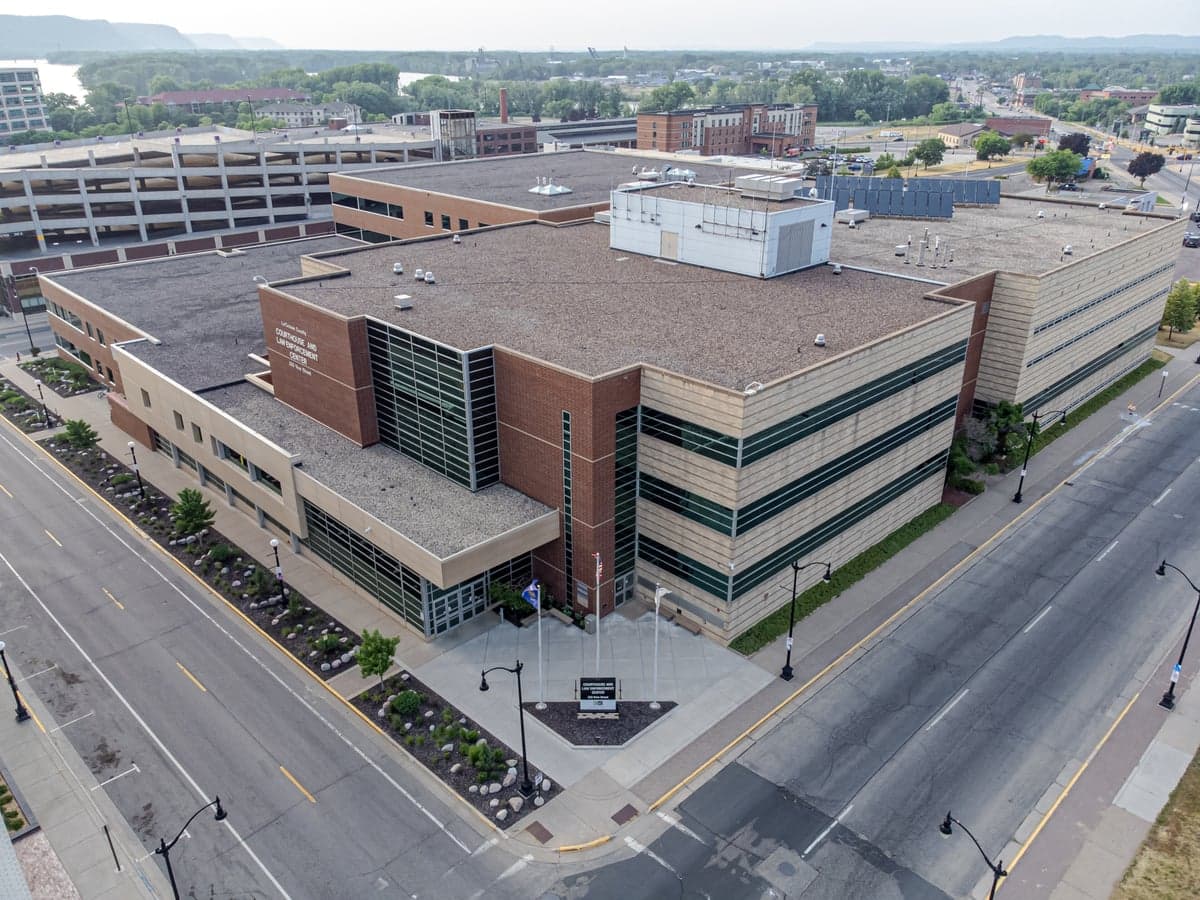
Photo: Wikipedia
Personal Sovereignty in La Crosse County
Moderate friction. Expect trade-offs in some aspect of personal liberty and independence.
What does Personal Sovereignty tell us?
Personal Sovereignty measures your capacity for self-reliance and independence with minimal government friction. Higher scores mean fewer barriers between you and the way you want to live... but it assumes you have the space you need and good neighbors.
What does this tell us?
Personal Sovereignty measures your capacity for self-reliance and independence with minimal government friction. Higher scores mean fewer barriers between you and the way you want to live... but it assumes you have the space you need and good neighbors.
State Policy
Energy independence: Importer (15% of energy produced in-state)
Personal Liberty
Homesteading

Personal Liberty Analysis
La Crosse County, Wisconsin, offers a nuanced personal sovereignty environment that balances state-level protections with local regulatory realities, making it a mixed bag for those prioritizing autonomy. While Wisconsin is a shall-issue concealed carry state with strong preemption laws limiting local firearm restrictions, La Crosse County's more urbanized areas like the city of La Crosse impose tighter zoning and property regulations compared to rural townships such as Holland or Shelby. For relocation-minded individuals and families with a conservative-leaning focus on self-reliance, the county provides a workable but not libertarian-friendly baseline, with key differences between the Mississippi River corridor and the county's agricultural interior.
Tax burden and regulatory posture in La Crosse County
Wisconsin's overall tax burden ranks in the middle nationally, but La Crosse County adds a layer of local property tax that pushes the combined rate above the state median. The county's effective property tax rate hovers around 2.1% of assessed home value, which is higher than neighboring rural counties like Vernon or Monroe but lower than Dane County (Madison). The city of La Crosse imposes its own wheel tax and has relatively strict rental property inspection requirements, while towns like Onalaska and Holmen have more business-friendly permitting processes. Wisconsin's state income tax is progressive (3.5% to 7.65%), and the state maintains a flat corporate income tax of 7.9%. Regulatory posture is moderate: environmental rules from the DNR affect shoreline development along the Mississippi and Black Rivers, but inland townships like Farmington and Greenfield have minimal land-use restrictions beyond basic agricultural zoning. For a reader weighing tax burden, La Crosse County is not a low-tax haven but offers predictable, stable rates without the volatility seen in high-growth Sun Belt counties.
Self-defense and gun law specifics for La Crosse County residents
Wisconsin is a strong shall-issue state for concealed carry, with no discretionary denial by local sheriffs. La Crosse County's sheriff's office processes permits efficiently, typically within the statutory 21-day window. The state has no universal background checks for private sales, no waiting periods, and no magazine capacity restrictions, though open carry is legal without a permit. Stand-your-ground protections apply statewide, with no duty to retreat in any place where the individual is lawfully present. Local nuance: the city of La Crosse has passed symbolic resolutions supporting "safe storage" ordinances, but state preemption law (Wis. Stat. § 66.0409) prevents any municipality from enacting its own firearm regulations. This means gun laws are uniform across the county, from the urban core to rural towns like Bangor and West Salem. Shooting ranges are accessible, with public ranges in the Coulee Region and private clubs near Onalaska. For a self-defense-focused reader, La Crosse County offers the full suite of Wisconsin's gun-friendly statutes without local carve-outs.
Self-reliance and homesteading viability across the county
Homesteading and off-grid living viability varies significantly within La Crosse County due to zoning and lot size differences. Rural townships like Holland, Shelby, and Farmington allow agricultural and residential lots as small as 1-2 acres with minimal permitting for accessory structures, while the city of La Crosse requires minimum lot sizes of 6,000-8,000 square feet and has strict building codes. Off-grid feasibility is limited by Wisconsin's uniform dwelling code, which mandates connection to a septic system (no composting toilets allowed as primary systems) and compliance with state well regulations. Solar panels are permitted statewide, but net metering rules cap residential systems at 20 kW, and some HOAs in subdivisions near Onalaska and Holmen restrict visible solar installations. Rainwater collection is legal but regulated for potable use. For serious homesteaders, the county's northern and eastern townships (Greenfield, Burns) offer the best combination of affordable land ($4,000-$8,000 per acre) and light enforcement of building codes, though all structures must meet state minimum habitability standards. The county's soil quality is good for small-scale farming, and farmers' markets in La Crosse and West Salem provide direct-to-consumer sales channels.
Personal liberties: parental rights, medical autonomy, speech, and property
Wisconsin law provides strong parental rights in education, with a parental opt-out statute for sex education and a school choice program that includes vouchers for private and religious schools. La Crosse County's school districts (La Crosse, Onalaska, Holmen, West Salem) generally comply with state law, though the La Crosse School District has been more proactive in implementing LGBTQ+ inclusive curricula, which some conservative parents view as overreach. Medical autonomy is moderate: Wisconsin requires parental consent for minors' medical procedures, including abortion, but the state has no religious exemption for vaccine mandates in schools (though philosophical exemptions exist). Free speech protections are standard First Amendment, with no notable local ordinances restricting public expression. Property rights are robust, with Wisconsin's right-to-farm law protecting agricultural operations from nuisance lawsuits, which benefits homesteaders in rural townships. However, the county's shoreland zoning regulations (Wis. Admin. Code NR 115) restrict development within 300 feet of navigable waterways, affecting property owners along the Mississippi and La Crosse River. For a reader prioritizing personal liberties, La Crosse County offers a solid baseline with some urban-progressive friction points in the city itself.
Overall, La Crosse County presents a moderate-to-favorable personal sovereignty environment compared to other Upper Midwest regions, falling short of the libertarian-leaning freedom of rural Montana or Idaho but exceeding the regulatory density of Illinois or Minnesota. The county's key advantage is uniformity: state preemption on firearms and consistent property laws mean that choosing a rural township like Holland or Farmington provides essentially the same legal autonomy as the city of La Crosse, minus the local zoning friction. For a conservative-leaning individual or family seeking a balance of personal freedom, reasonable tax burden, and access to healthcare and employment in a mid-sized metro, La Crosse County is a viable option — but those seeking minimal government involvement in daily life should target the county's unincorporated townships rather than its incorporated cities.

* Values derived from national, state, county, city and local statistics and may differ in a specific area. Last updated: 2026-07-12T00:21:09.000Z
Narrative content on this page is AI-generated and may contain mistakes. Verify any details that matter before acting on them.
ReloMaps may earn a commission from affiliate links at no extra cost to you.

