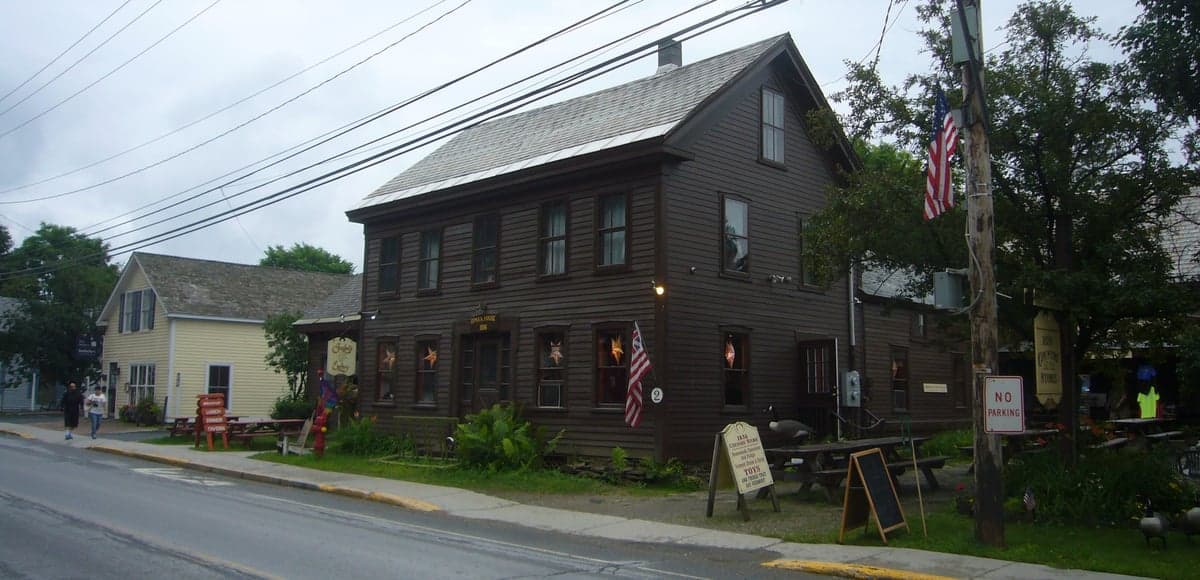
Photo: Wikipedia
Political ClimatePolitical Climate in Wilmington, VT
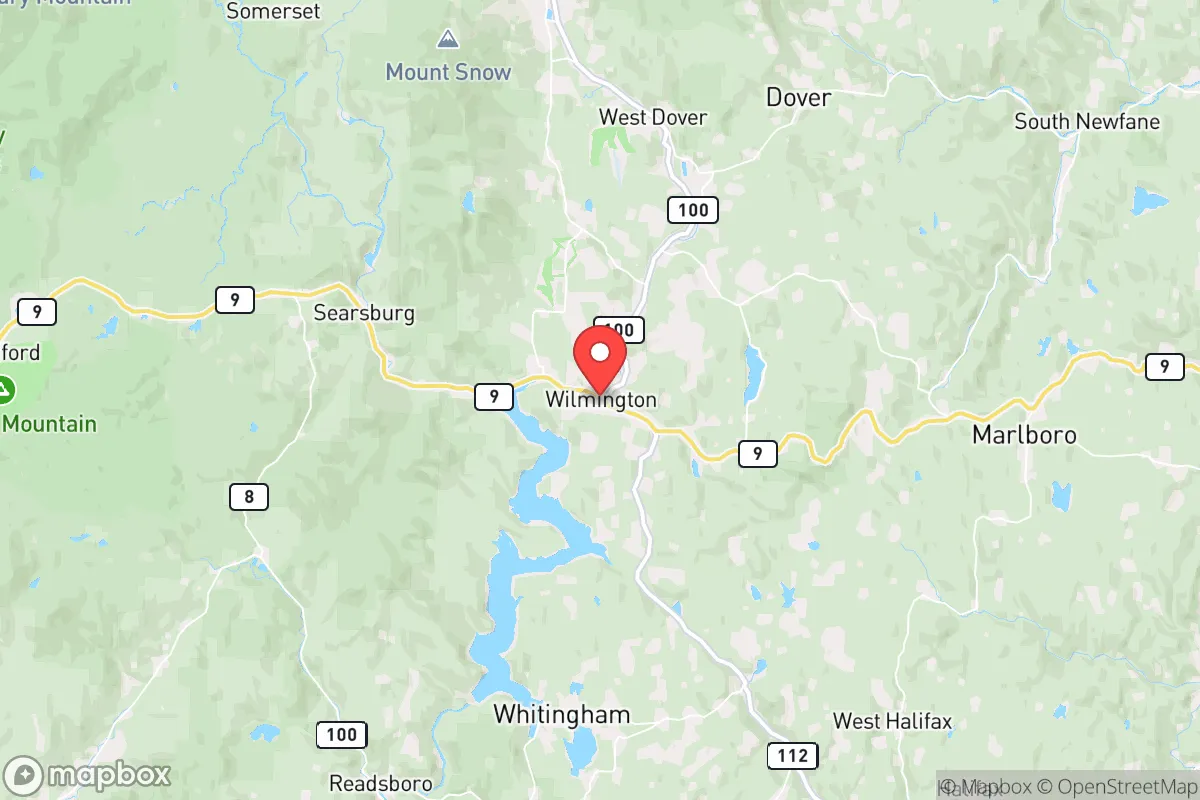
District shown is the primary district for this city’s centroid. Cities may span multiple districts.
Inherited from parent state — no local data available.
Local Political AnalysisPolitical Analysis of Wilmington, VT
Wilmington, Vermont, leans solidly Democratic, reflecting the broader political character of Windham County and the state as a whole, which carries a Cook PVI of D+17. The town has trended bluer over the past decade, with local elections often uncontested or decided in Democratic primaries, and national races here typically see Democratic candidates winning by margins of 20 to 30 points. That said, Wilmington isn’t a monolith—there’s a noticeable libertarian streak among some long-timers and second-home owners, and the town’s small size means personal relationships often matter more than party labels in local governance.
How it compares
Compared to the rest of Vermont, Wilmington is slightly more moderate than the state’s most liberal enclaves like Burlington or Montpelier, but it’s still firmly in the blue column. The real contrast comes when you look at nearby towns: Dover, just north, is similarly Democratic, while Whitingham to the west and Readsboro to the south lean more conservative, often splitting tickets in state races. In the 2022 gubernatorial election, Wilmington gave Democrat Peter Shumlin a comfortable win, but Whitingham and Readsboro both favored Republican Phil Scott—a reminder that the Deerfield Valley has a rural-conservative undercurrent. Over the last 20 years, Wilmington’s Democratic margin has grown by about 10 points, mirroring the statewide shift as Vermont’s Republican base has contracted to the Northeast Kingdom and a few southern towns.
What this means for residents
For liberal residents, Wilmington feels like a natural fit: town meetings often focus on environmental initiatives, affordable housing, and supporting local agriculture, and you’ll find plenty of neighbors who share your views on social issues. Conservative residents aren’t isolated, though—they’re a vocal minority, especially around property rights and school funding debates. The local Republican committee is small but active, and many conservatives find common ground with independents on fiscal matters. In practice, the political climate means town decisions tend to prioritize sustainability and community services, which can frustrate those who want lower taxes or less regulation. But because Wilmington is a tourist and second-home hub, there’s also a pragmatic streak—business owners and town officials often work across party lines to keep the ski economy humming and the downtown vibrant.
Culturally, Wilmington stands out for its blend of old Vermont and new. The town has a strong arts scene and a visible LGBTQ+ community, but it also holds onto traditions like the annual Wilmington Bluegrass Festival and the Deerfield Valley Farmers Day. Policy-wise, Wilmington has been ahead of the curve on renewable energy, with a town-wide solar initiative and a ban on single-use plastics that predated the state law. Gun laws here follow Vermont’s relatively permissive state framework, but local sentiment is mixed—you’ll see “Gun Owner” signs next to “In This House We Believe” signs on the same street. For newcomers, the key takeaway is that Wilmington’s politics are generally progressive but not aggressively partisan; most people are more concerned with keeping the town’s character intact than with national culture wars. If you’re looking for a place where your vote aligns with the majority, you’ll find it here—but if you’re on the other side, you’ll still have a seat at the table, as long as you’re willing to talk about the potholes and the snow removal first.

State Political ClimatePolitical Climate in Vermont
State Political AnalysisPolitical Environment in the State
Vermont is one of the most reliably Democratic states in the country, with a Cook PVI of D+17, meaning it votes about 17 points more Democratic than the national average in presidential elections. The state hasn’t backed a Republican for president since George H.W. Bush in 1988, and the Democratic trifecta in Montpelier has been in place for most of the last decade. That said, the political reality is far more nuanced than the statewide numbers suggest—Vermont’s brand of liberalism is deeply libertarian, fiscally cautious in practice, and heavily shaped by a rural, independent-minded electorate. Over the last 20 years, the state has shifted left on social issues while maintaining a surprisingly pragmatic streak on taxes and land use, creating a political environment that can frustrate both hardline conservatives and progressive activists.
Urban vs. rural divide
The political map of Vermont is a textbook study in urban-rural polarization. The Democratic stronghold is Chittenden County, anchored by Burlington (the state’s largest city, population ~45,000) and its suburbs like South Burlington and Winooski. This metro area alone delivers roughly 25% of the state’s vote and consistently goes 70-80% Democratic. Burlington is home to the University of Vermont, a robust tech and healthcare sector, and a young, educated population that drives progressive policy on climate, housing, and social justice. Drive 30 minutes south to Rutland (population ~15,000) or east to St. Johnsbury, and the picture flips: these post-industrial towns and surrounding hill towns lean Republican, often by 10-20 points. The most conservative counties are Essex (northeast kingdom), Orleans, and Franklin (northwest), where Trump won in 2020 with 55-60% of the vote. The divide isn’t just about population density—it’s cultural. In the Northeast Kingdom, you’ll find strong support for gun rights, local control, and skepticism of Montpelier mandates, while Burlington’s city council debates ranked-choice voting and reparations. The suburbs of Williston and Colchester are the swingiest areas, often deciding state legislative races with their moderate, family-focused voters.
Policy environment
Vermont’s policy environment is a mix of high-tax progressivism and New England libertarianism. The state has a progressive income tax with a top rate of 8.75% (on income over $213,150), and property taxes are among the highest in the nation—averaging about 1.8% of home value, funding a school system that spends over $20,000 per pupil annually. There is no sales tax, which is a major draw for conservatives who dislike consumption taxes. The regulatory posture is generally business-friendly for small farms and local manufacturing, but land-use regulations (Act 250) are notoriously strict, making large-scale development difficult and expensive. On education, Vermont has a universal pre-K program and a school choice system that allows students in towns without a public high school to attend private or neighboring schools at public expense—a feature that appeals to some conservative families. Healthcare is dominated by the state’s Green Mountain Care system, a public-private hybrid that has kept uninsured rates below 4% but struggles with high costs and provider shortages. Election laws are among the most accessible in the nation: automatic voter registration, same-day registration, no-excuse absentee voting, and universal mail-in ballots for all elections since 2020. This low-barrier system is popular across the political spectrum, though some conservatives worry about ballot security in rural towns where drop boxes are common.
Recent policy direction
Over the last five years, Vermont has moved decisively left on social and environmental issues while holding the line on some fiscal matters. In 2023, the legislature passed a landmark paid family leave program (funded by a 0.55% payroll tax) and a clean heat standard that requires fossil fuel suppliers to reduce emissions. Gun laws have tightened significantly: in 2018, after the school shooting in Parkland, Vermont passed universal background checks, a red flag law, and a ban on high-capacity magazines (over 10 rounds). In 2024, the legislature added a ban on carrying firearms in public buildings and on public transit. These laws are deeply unpopular in rural counties—many towns have passed resolutions declaring themselves “Second Amendment sanctuaries,” though these have no legal force. On education and parental rights, Vermont has gone the opposite direction of many red states: in 2024, the legislature passed a law requiring schools to adopt policies supporting transgender students, including allowing them to use preferred names and pronouns without parental consent. This has sparked organized opposition from conservative parents, particularly in Essex Junction and Milton. On property rights, Act 250 remains a flashpoint: developers and some landowners argue it stifles housing construction, while environmentalists defend it as essential to preserving Vermont’s rural character. The state has also legalized recreational cannabis (2018) and decriminalized small amounts of other drugs, reflecting a live-and-let-live ethos that many conservatives appreciate, even if they disagree with the specifics.
Civil unrest & political movements
Vermont’s political activism is generally low-key compared to larger states, but there have been notable flashpoints. The most visible recent movement is the “Rural Resistance” network, a loose coalition of gun rights advocates and local control activists that has organized rallies at the Statehouse in Montpelier, drawing 500-1,000 people. In 2020, Black Lives Matter protests in Burlington were large (several thousand) and led to the removal of a statue of Christopher Columbus, but they were largely peaceful. Immigration politics are relatively quiet: Vermont is a sanctuary state (by executive order since 2017), but the small immigrant population (about 6% foreign-born) means the issue rarely dominates headlines. There have been no major election integrity controversies—Vermont’s all-mail voting system has run smoothly, with audits showing no significant fraud. A secessionist movement called the “Second Vermont Republic” has existed for decades but remains fringe, with no real political influence. The most visible political tension today is between the progressive Burlington city council and the more moderate state legislature over housing policy and police funding, but this rarely spills into civil unrest.
Projection
Over the next 5-10 years, Vermont’s political trajectory is likely to continue its slow leftward drift, but with significant friction from rural areas. In-migration is accelerating—the state grew by about 3% between 2020 and 2025, with many newcomers from Massachusetts, New York, and California drawn by remote work and the state’s natural beauty. These new residents tend to be more liberal and wealthier, reinforcing the Democratic lean in Chittenden County and the ski towns of Stowe and Manchester. However, the rural counties are aging and shrinking, which could amplify their political voice through the state’s town-based legislative districts (each town gets one representative in the House, regardless of population). This means conservative rural towns will retain disproportionate power in the legislature, potentially blocking the most ambitious progressive proposals. The biggest wildcard is housing: if the state fails to build enough units (Act 250 reform is stalled), the cost of living will push out younger families and workers, accelerating demographic decline in rural areas and concentrating growth in Burlington’s suburbs. A conservative relocator should expect to live in a state where their vote for president is effectively meaningless, but where their local voice in town meeting and state legislative races can still carry real weight—especially on property taxes, gun laws, and school policy.
For a new resident, the bottom line is this: Vermont is a blue state with a red streak, and that red streak is strongest in the small towns and hill farms that define its character. If you’re conservative, you’ll find allies in the Northeast Kingdom and the rural southwest, but you’ll need to accept that state policy will continue to move left on guns, education, and social issues. If you’re liberal, you’ll find Burlington and the college towns welcoming, but you’ll also encounter a stubborn independent streak that resists high taxes and top-down mandates. The practical takeaway: choose your town carefully. A move to Hardwick or Newport will feel politically different from a move to Montpelier or Middlebury, even though they’re all in the same state. Vermont rewards local engagement—town meeting day in March is still a real thing—and your quality of life will depend more on your neighbors than on who’s in the governor’s office.
* Values derived from national, state, county, city and local statistics and may differ in a specific area. Last updated: 2026-10-16T23:54:53.000Z
Narrative content on this page is AI-generated and may contain mistakes. Verify any details that matter before acting on them.
ReloMaps may earn a commission from affiliate links at no extra cost to you.

