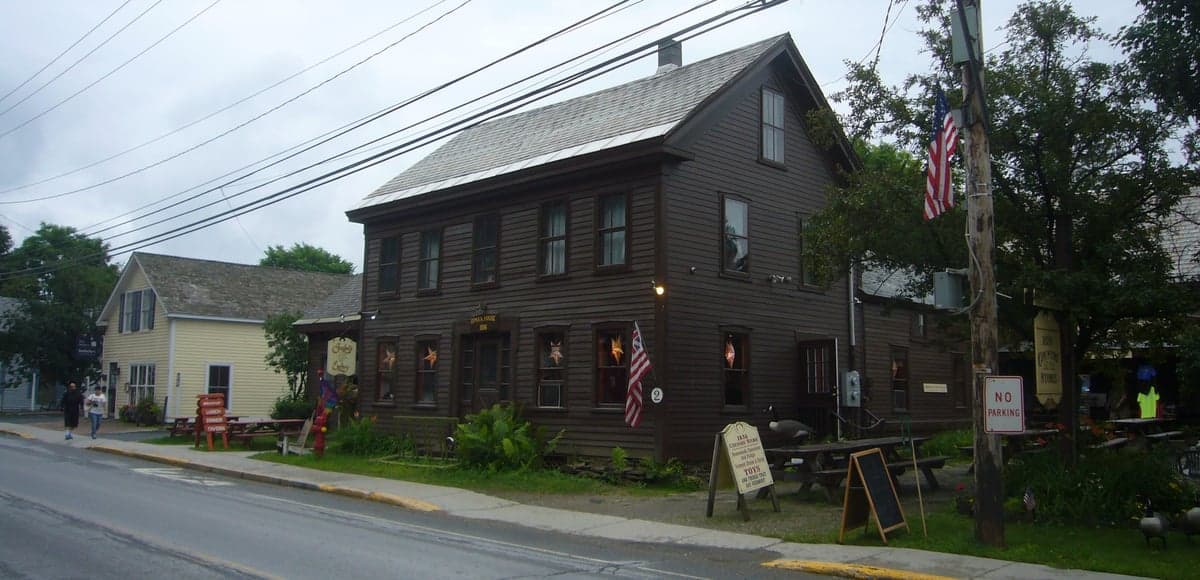
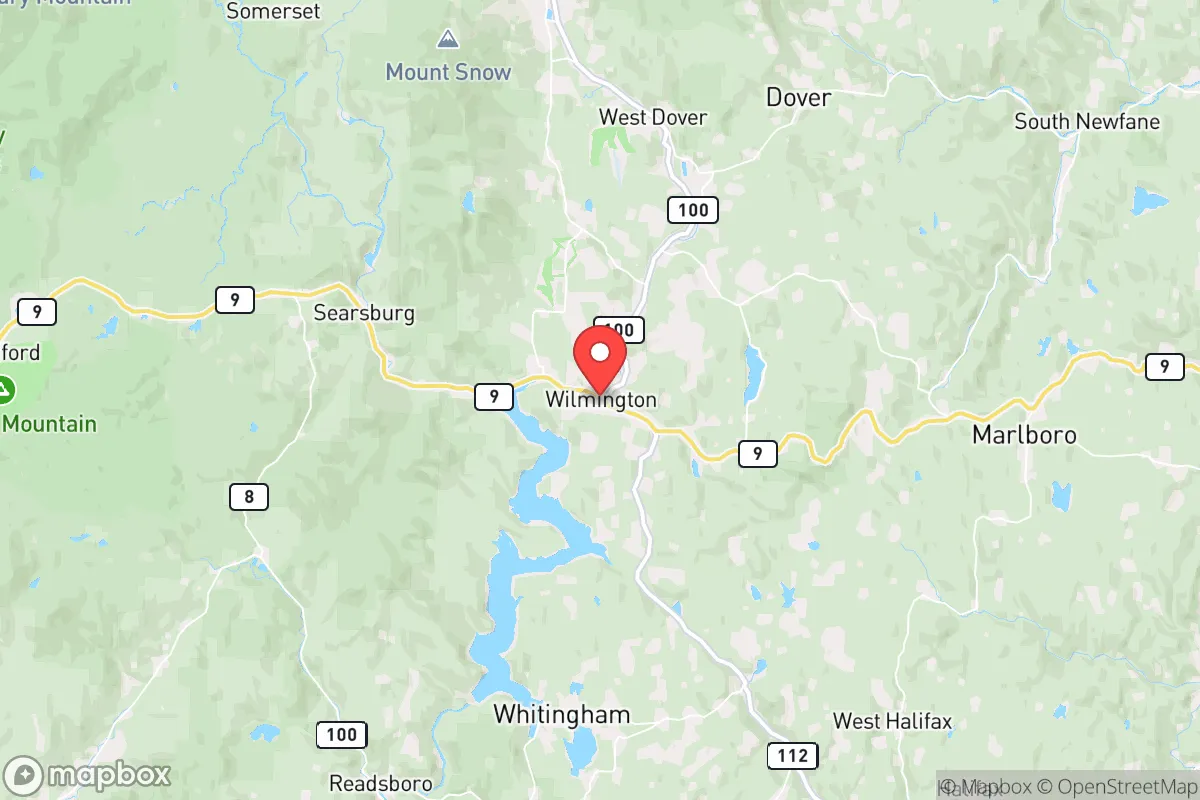
Photo: Wikipedia
Personal Sovereignty in Wilmington, VT
Moderate friction. Expect trade-offs in some aspect of personal liberty and independence.
What does Personal Sovereignty tell us?
Personal Sovereignty measures your capacity for self-reliance and independence with minimal government friction. Higher scores mean fewer barriers between you and the way you want to live... but it assumes you have the space you need and good neighbors.
What does this tell us?
Personal Sovereignty measures your capacity for self-reliance and independence with minimal government friction. Higher scores mean fewer barriers between you and the way you want to live... but it assumes you have the space you need and good neighbors.
State Policy
Energy independence: Importer (15% of energy produced in-state)
Personal Liberty
Homesteading

Personal Liberty Analysis
Wilmington, Vermont, offers a distinctive personal sovereignty environment that balances the state’s famously progressive regulatory framework with a deep-rooted local culture of self-reliance and rural independence. For the freedom-minded individual or family, the town provides meaningful autonomy in daily life—particularly around property use and community governance—but operates within a state-level context that imposes higher taxes and stricter regulations than many conservative-leaning areas. Understanding this tension between local liberty and state oversight is key to evaluating whether Wilmington aligns with your personal freedom priorities.
Tax burden and regulatory posture in Wilmington and Vermont
Vermont’s tax burden is among the highest in the nation, and Wilmington residents feel this directly. The state levies a progressive income tax with rates from 3.35% to 8.75% (2025), and property taxes are notably high—averaging roughly $2.00 to $2.50 per $100 of assessed value in Windham County, depending on school district and municipal budgets. Wilmington’s town budget and local school spending can push effective rates toward the upper end of that range. There is no county-level sales tax, but the state sales tax is 6%, and meals and rooms tax adds 9% (10% in some towns). For a relocation audience, this means a significant portion of income and property value goes to government, which funds robust public services—including well-regarded schools, road maintenance, and emergency services—but leaves less room for discretionary savings or investment.
Regulatory posture in Wilmington is mixed. The town has a zoning ordinance that governs land use, but it is relatively permissive compared to more developed parts of southern Vermont. Permitting for new construction, additions, or septic systems is required and can be time-consuming, but the town’s small staff and volunteer boards often work pragmatically with residents. Vermont’s Act 250, a statewide land-use law, applies to larger developments (typically over 10 acres or involving subdivision), but most single-family homes and small-scale projects in Wilmington are exempt. The state’s environmental regulations—particularly around water quality, wetlands, and forestry—are strict, so any activity near streams or steep slopes will require additional review. Overall, the regulatory environment is moderate-to-heavy by national standards, but local officials in Wilmington tend to be accessible and practical, reducing friction for residents who engage proactively.
Self-defense and gun law specifics in Wilmington and Vermont
Vermont is a constitutional carry state—no permit is required to carry a firearm openly or concealed for any law-abiding adult 18 or older. This is a significant advantage for personal sovereignty advocates. Wilmington has no local ordinances restricting firearm possession, use, or storage beyond state law. The state does not require registration, licensing, or waiting periods for firearm purchases, though federal background checks apply at licensed dealers. Private sales between individuals are legal without a background check. Magazine capacity is not restricted, and there is no state-level assault weapons ban. However, Vermont law does prohibit carrying firearms in certain places—schools (with limited exceptions), courthouses, and federal buildings—and allows private property owners to ban firearms on their premises. Use of force laws follow a “stand your ground” principle: there is no duty to retreat before using deadly force if you are lawfully present and reasonably believe it is necessary to prevent death or great bodily harm. Castle doctrine protections extend to your home, vehicle, and place of business. For the self-defense-minded, Wilmington offers a light-touch legal environment that respects the right to keep and bear arms with minimal bureaucratic interference.
Self-reliance and homesteading viability: lot sizes, zoning, and off-grid feasibility
Wilmington’s rural character makes it a viable location for homesteading and self-reliant living, but with important caveats. Minimum lot sizes in the town’s rural residential zones are typically 2 to 5 acres for a single-family home with a septic system, though smaller lots exist in the village center. Larger parcels—10, 20, or more acres—are available in the surrounding hills and valleys, often with forest, pasture, or stream frontage. Zoning allows for keeping livestock (chickens, goats, horses) on parcels of 2 acres or more, though specific setbacks and manure management rules apply. Gardening, beekeeping, and small-scale farming are generally permitted without special permits, as long as they don’t create nuisances.
Off-grid living is legally possible but practically challenging. Vermont law requires all dwellings to have a potable water supply and a wastewater disposal system approved by the state. Off-grid water (well, spring, or rainwater collection) is allowed, but must meet state drinking water standards. Solar panels, wind turbines, and battery storage are permitted and common—net metering is available through Green Mountain Power, but going fully off-grid (no utility connection) requires demonstrating that the alternative systems meet state building codes. Composting toilets are allowed in lieu of septic systems on a case-by-case basis, but approval from the Vermont Department of Environmental Conservation is required. Wood heat is the primary heating source for many rural homes, and firewood cutting on your own land is unrestricted. Overall, Wilmington is moderately friendly to homesteading: you can raise food, generate your own power, and reduce reliance on utilities, but you must navigate state health and environmental regulations that add cost and paperwork.
Personal liberties: parental rights, medical autonomy, speech, and property
Parental rights in Vermont are generally strong but subject to state oversight. Parents have broad authority over their children’s education, healthcare, and upbringing, but Vermont law requires school attendance (public, private, or homeschool) and mandates certain immunizations for school entry (medical and religious exemptions are allowed; philosophical exemptions were eliminated in 2015). Homeschooling is legal and relatively straightforward—parents must submit an enrollment notice and provide a “detailed curriculum” annually, but there is no standardized testing requirement. Medical autonomy for adults is robust: Vermont has no state-level restrictions on vaccine mandates for adults, and the state allows medical aid-in-dying (Act 39) for terminally ill patients. However, Vermont’s health insurance mandate and the state’s active public health campaigns can feel intrusive to those who prioritize medical freedom.
Free speech and assembly are protected under the Vermont Constitution, which is more expansive than the U.S. Constitution in some areas (e.g., it explicitly protects the right to hunt and fish). Wilmington’s small-town character means that local political discourse is generally civil, but the area leans left politically, so conservative viewpoints may be in the minority. Property rights are strong in principle—Vermont’s constitution protects against takings without compensation—but the state’s land-use regulations (Act 250, shoreland protection, wetland rules) can limit what you can do with your land. Wilmington’s town government is relatively hands-off on property use, but state agencies have significant authority over environmental and health matters. For the freedom-minded, the key trade-off is that local autonomy is high, but state-level regulation is a constant factor.
Overall, Wilmington offers a moderate-to-high level of personal sovereignty compared to other rural New England towns, but it falls short of the libertarian-friendly environments found in parts of New Hampshire, Idaho, or Alaska. The town’s strengths are in self-defense rights, homesteading potential, and local governance accessibility. Its weaknesses are the high tax burden and state-level regulatory density. For a conservative-leaning individual or family who values rural independence and is willing to pay for strong public services and environmental protections, Wilmington represents a viable compromise—but those seeking maximum autonomy with minimal government involvement should look elsewhere in the region.

* Values derived from national, state, county, city and local statistics and may differ in a specific area. Last updated: 2026-10-16T23:54:53.000Z
Narrative content on this page is AI-generated and may contain mistakes. Verify any details that matter before acting on them.
ReloMaps may earn a commission from affiliate links at no extra cost to you.

