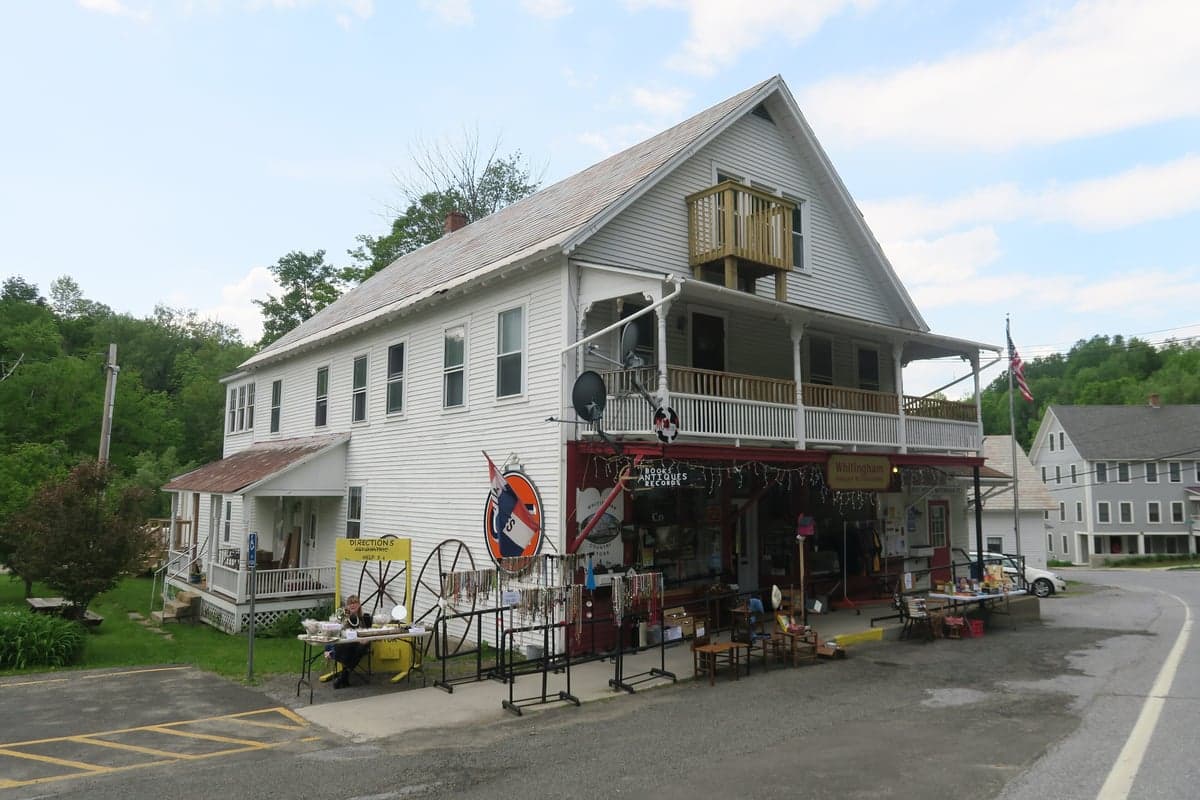
Photo: Wikipedia
Political ClimatePolitical Climate in Whitingham, VT
District shown is the primary district for this city’s centroid. Cities may span multiple districts.
Inherited from parent state — no local data available.
Local Political AnalysisPolitical Analysis of Whitingham, VT
Whitingham, Vermont, leans conservative relative to the rest of the state, but it’s not a deep-red stronghold. The town’s voting patterns have shifted slightly leftward over the past decade, mirroring a broader trend in rural Windham County, but it still reliably votes more Republican than the statewide average. In 2024, Whitingham gave roughly 55% of its vote to the Republican presidential candidate, while Vermont as a whole went for the Democrat by a wide margin—the state’s Cook PVI is D+17, meaning it’s about 17 points more Democratic than the national average. That gap tells you everything: Whitingham is an outlier in a deeply blue state, but it’s not a place where partisan battles dominate daily life.
How it compares
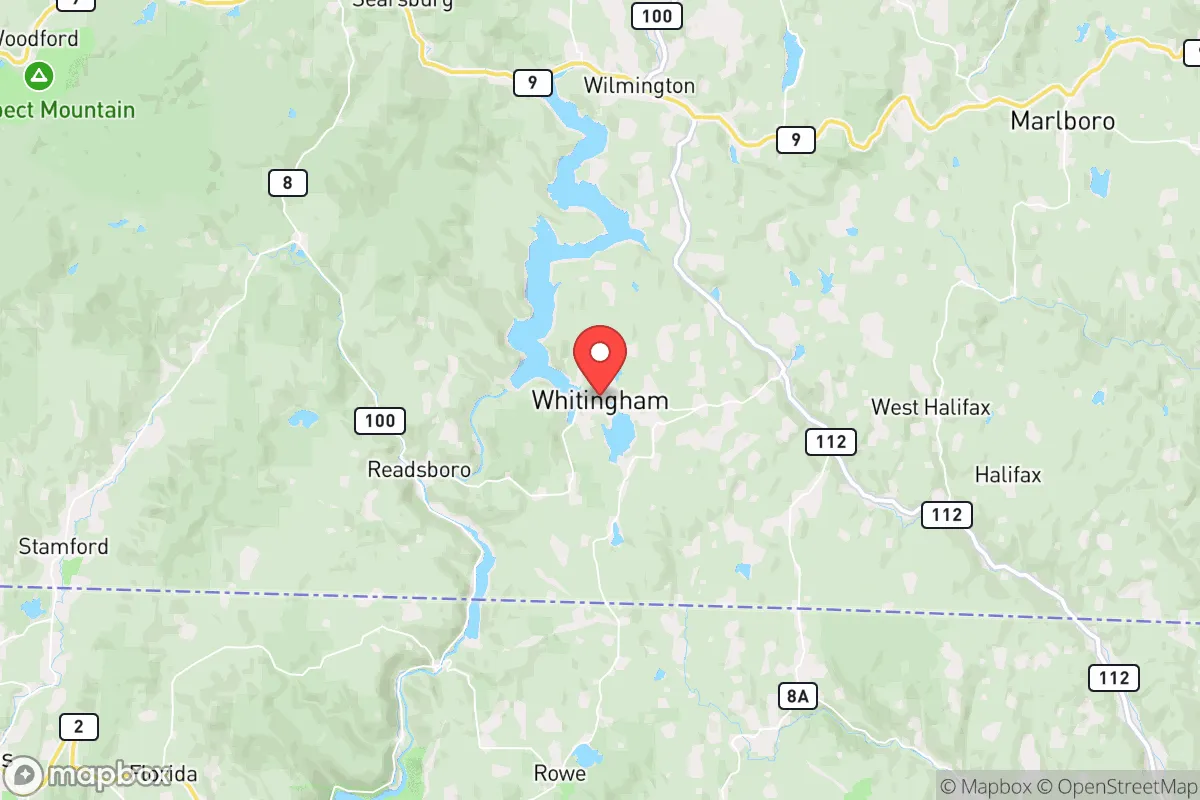
Compared to Vermont as a whole, Whitingham is a political island. The state’s D+17 rating reflects the dominance of Burlington, Montpelier, and the Chittenden County suburbs, where Democrats and progressives hold overwhelming majorities. Whitingham, by contrast, sits in the southwestern corner of Windham County, near the Massachusetts border, and its politics are closer to those of neighboring towns like Readsboro and Stamford—places where independent and Republican voters are more common. Drive 30 minutes east to Brattleboro, and you’ll hit a town that’s as liberal as any in New England, with a strong progressive activist scene. Whitingham’s trajectory has been a slow drift toward the center: in 2016, it gave Trump about 60% of the vote; by 2024, that slipped to 55%, as younger residents and remote workers moved in from more liberal areas. Still, it remains one of the few towns in Windham County where a Republican can win a local office without much trouble.
What this means for residents
For conservative residents, Whitingham offers a rare pocket where their views aren’t automatically dismissed. Local town meetings tend to focus on practical issues—road maintenance, school budgets, land use—rather than partisan fights, and conservative voices are heard on the selectboard and in the school district. For liberal residents, the town’s lean means they’re in the minority locally, but they’re still part of a state that enacts progressive policies like universal school meals, paid family leave, and strict gun laws. The practical effect is that Whitingham feels less polarized than many small towns in swing states. Neighbors disagree on national politics but cooperate on local matters, like keeping the volunteer fire department staffed or maintaining the town’s gravel roads. The biggest tension point is property taxes: Vermont’s high property tax rates, driven by statewide education funding, are a frequent complaint among Whitingham’s more fiscally conservative residents, but even that doesn’t break the community’s basic civility.
Culturally, Whitingham stands apart from Vermont’s more urbanized areas. There’s no farmer’s market or co-op here—you drive to Wilmington or Brattleboro for that—and the town’s identity is rooted in hunting, snowmobiling, and outdoor recreation rather than the craft-beer-and-yoga scene that defines much of the state. Policy-wise, Whitingham residents tend to favor local control over state mandates, whether it’s on land use or education. The town has pushed back on some state housing and energy siting rules, but it hasn’t become a flashpoint like some towns in the Northeast Kingdom. Looking ahead, the gradual influx of out-of-state buyers and remote workers will likely nudge Whitingham a few points leftward over the next decade, but it’ll probably remain a place where a Republican can still win a local race—and where both sides can share a beer at the Whitingham Community Club without arguing about politics.

State Political ClimatePolitical Climate in Vermont
State Political AnalysisPolitical Environment in the State
Vermont is one of the most reliably Democratic states in the nation, with a Cook Partisan Voting Index of D+17, meaning it votes about 17 points more Democratic than the country as a whole. The state hasn't voted for a Republican presidential candidate since George H.W. Bush in 1988, and both U.S. Senate seats and the single House seat have been held by Democrats or independents who caucus with them for over a decade. However, the political reality is far more nuanced than a simple blue-state label — Vermont has a deep libertarian streak, a fiercely independent electorate, and a rural-conservative tradition that still holds sway in many towns, creating a political climate that can surprise newcomers from either party.
Urban vs. rural divide
The political map of Vermont is a textbook case of the urban-rural split, but with a New England twist. The Democratic stronghold is Chittenden County, anchored by Burlington (the state's largest city, population ~45,000) and its suburbs like South Burlington and Winooski. This county alone delivers roughly a quarter of the state's vote and routinely goes 70-75% Democratic. The other liberal hubs are the college towns of Middlebury (home to Middlebury College) and Northfield (Norwich University), along with the state capital Montpelier. In contrast, the more conservative areas are the rural, working-class towns of the Northeast Kingdom — Newport, St. Johnsbury, and Lyndon — along with much of the southern tier near the Massachusetts border. In the 2022 gubernatorial race, Republican Phil Scott (who is notably moderate) won 31 of Vermont's 246 towns with over 70% of the vote, nearly all of them in these rural pockets. The divide isn't just about population density; it's also about economic base. The liberal areas are driven by education, healthcare, and tech, while the conservative towns rely on logging, dairy farming, and tourism. A relocator from a red state might find the rural areas politically familiar, but they should know that even these towns are culturally distinct — gun ownership is high, but so is support for environmental regulation and social safety nets.
Policy environment
Vermont's policy environment is defined by high taxes and expansive government services, but with a pragmatic, small-state execution. The state has a progressive income tax with rates from 3.35% to 8.75%, and property taxes are among the highest in the nation — the statewide average effective rate is about 1.8%, though it varies significantly by town. There is no sales tax, which is a notable relief for consumers. The regulatory posture is generally business-friendly in tone but strict in practice, especially around land use (Act 250, the state's development review law) and environmental standards. Education policy is dominated by the Act 46 school consolidation law, which forced many small districts to merge, a move that remains controversial in rural areas. Healthcare is a major issue: Vermont has a publicly funded health insurance system for low-income residents (Dr. Dynasaur) and was the first state to pass a single-payer bill in 2011, though it was never implemented due to cost. Election laws are among the most accessible in the country — universal mail-in voting was made permanent in 2021, and same-day voter registration is available. For a conservative relocator, the tax burden is the biggest shock, but the lack of sales tax and the high quality of public services (roads, schools, broadband) are compensating factors.
Recent policy direction
Vermont's recent legislative sessions have pushed the state further left on social issues while maintaining a moderate, pro-business stance on economics under Governor Phil Scott. In 2023, the legislature passed Act 47, which codified abortion rights and protected providers from out-of-state lawsuits, and Act 14, which banned the sale of flavored tobacco and nicotine products. On gun policy, Vermont — once one of the most permissive states in the nation — has tightened laws significantly since 2018: Act 94 raised the purchase age to 21, banned bump stocks, and required background checks on private sales, while Act 69 (2023) banned carrying firearms in hospitals, schools, and courthouses. For conservatives, these gun laws are a major point of contention. On parental rights and education, Vermont has gone the opposite direction of many red states: Act 1 (2022) requires schools to adopt policies supporting transgender students, and the state has no parental notification requirement for a minor's abortion. Property rights are constrained by Act 250, which gives regional commissions broad authority to deny development. On privacy and surveillance, Vermont passed Act 171 in 2018, one of the nation's strongest data privacy laws, limiting how companies can collect and sell personal information. The overall direction is clear: Vermont is becoming more progressive on social and civil liberties issues, but the fiscal restraint of Governor Scott (a Republican who has vetoed tax increases and spending bills) has kept the state from going as far as Massachusetts or New York.
Civil unrest & political movements
Vermont has a long tradition of peaceful protest and civic engagement, but the political temperature has risen in recent years. The most visible flashpoint has been around the Burlington homeless encampment at the "Welcome Center" on the waterfront, which became a focal point for debates over housing policy, drug use, and public safety. In 2023, the city's decision to clear the encampment led to protests from housing advocates and counter-protests from residents concerned about crime. On the right, the Vermont Republican Party has been split between moderate Scott supporters and a more conservative, Trump-aligned faction that gained influence after 2020. The Vermont Liberty Union and local gun rights groups have organized rallies at the Statehouse, particularly during the 2018 gun bill debates, which drew thousands of protesters. Immigration politics are relatively quiet — Vermont has no sanctuary city policies, but Burlington has a "Welcoming City" ordinance that limits cooperation with ICE. There have been no major election integrity controversies; Vermont's universal mail-in system has been widely accepted across party lines. A new resident would notice that political activism is more issue-driven than partisan — you'll see as many "Save the Lake" signs as campaign yard signs, and local town meetings remain the primary venue for political engagement.
Projection
Over the next 5-10 years, Vermont's political trajectory points toward continued Democratic dominance at the statewide level, but with growing internal friction between the progressive Burlington wing and the moderate Scott wing of the electorate. Demographic trends are working against the GOP: Vermont is the second-oldest state in the nation (median age 43.2), and in-migration from Massachusetts, New York, and Connecticut — largely remote workers and retirees — is tilting the balance further left. The Burlington metro area is growing, while rural towns in the Northeast Kingdom are shrinking. However, the state's high cost of living and housing shortage (the vacancy rate is under 1% in many towns) may slow this trend. The most likely scenario is that Vermont becomes more like its New England neighbors: solidly blue, with a progressive social agenda and high taxes, but with enough moderate Republican influence to keep the extremes in check. A conservative moving in now should expect that their vote will rarely matter in statewide races, but they will find plenty of like-minded neighbors in rural towns and may have more influence at the local level through town meetings and school board elections.
For a new resident, the bottom line is that Vermont offers a high-quality, safe, and environmentally conscious lifestyle, but at a significant financial and political cost if you lean conservative. You'll pay high property taxes and live under increasingly strict gun laws, but you'll also enjoy excellent schools, low crime, and a political culture that values pragmatism over partisanship. If you can handle being in the minority politically and focus on the local issues that matter most — school budgets, land use, and town roads — Vermont can be a rewarding place to live regardless of your party affiliation.
* Values derived from national, state, county, city and local statistics and may differ in a specific area. Last updated: 2026-10-16T21:51:01.000Z
Narrative content on this page is AI-generated and may contain mistakes. Verify any details that matter before acting on them.
ReloMaps may earn a commission from affiliate links at no extra cost to you.

