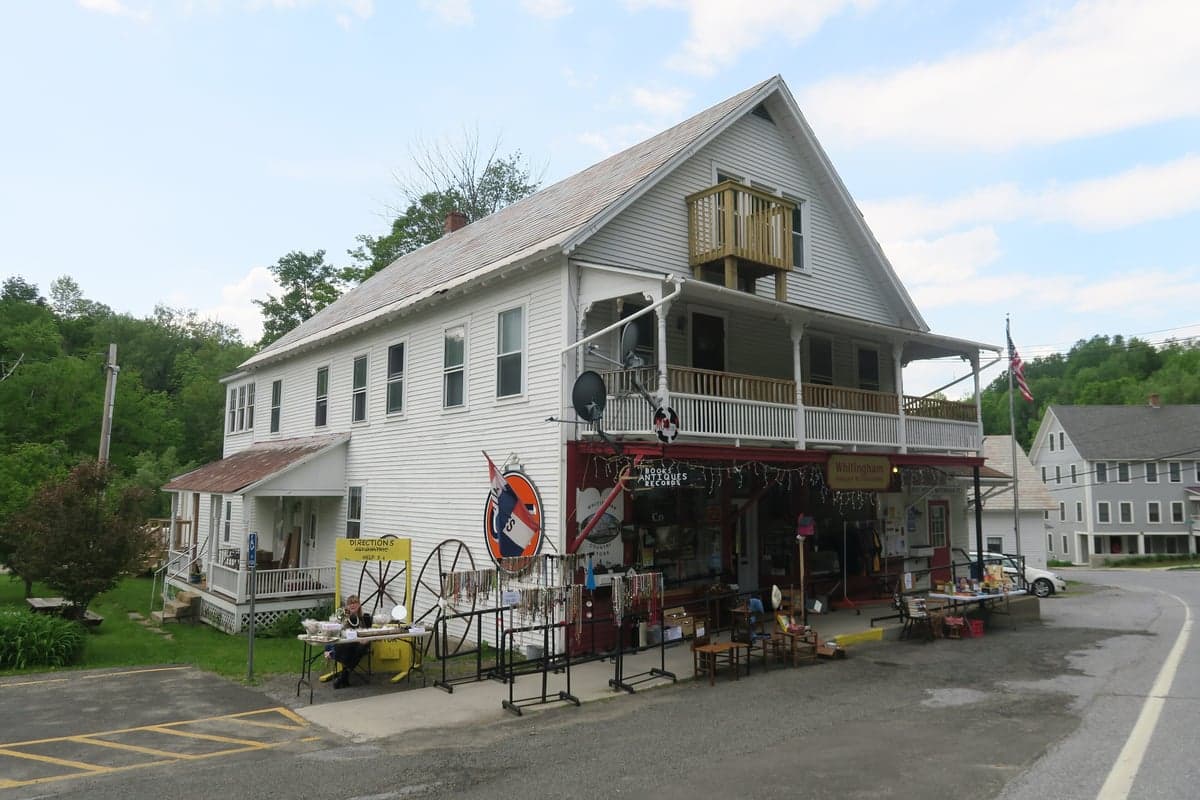
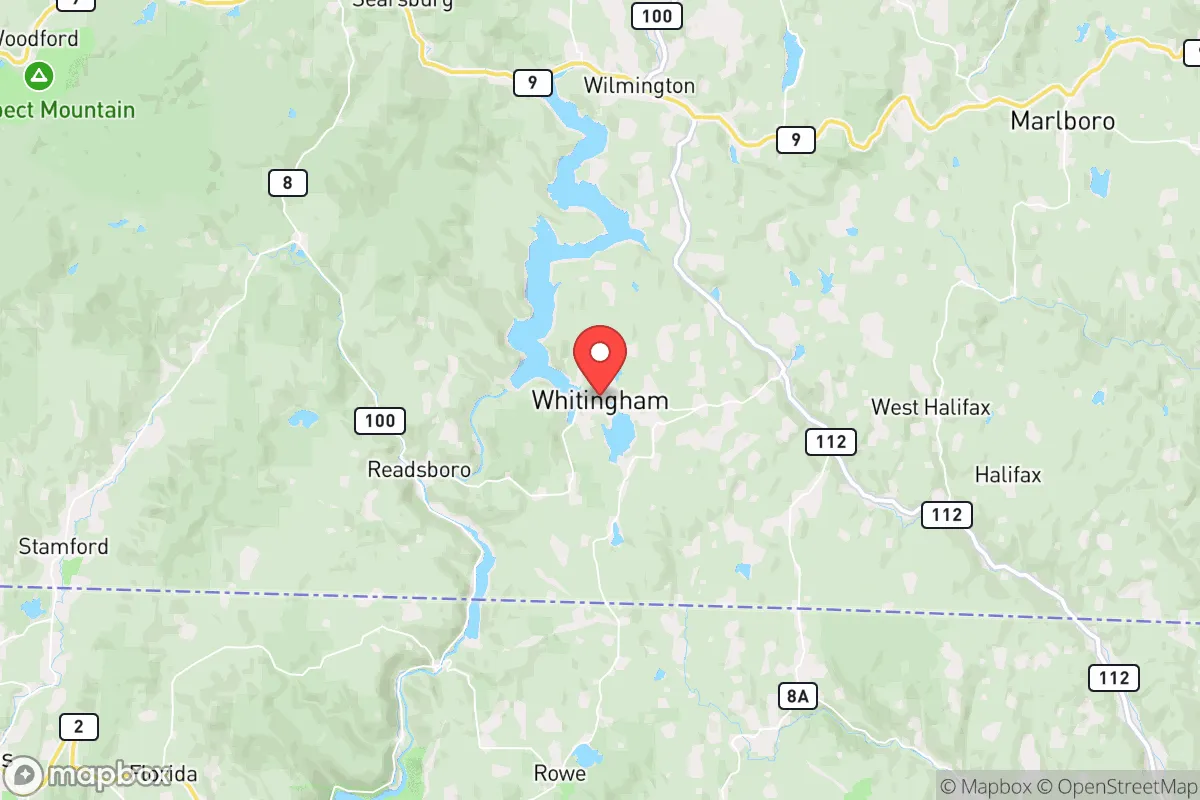
Photo: Wikipedia
Demographics of Whitingham, VT
Historical data isn't available for Whitingham, VT. Trends shown are for Windham County, VT.
Affluence Level in Whitingham, VT
A middle-class area roughly in line with national averages across income, home values, education, and employment.
People of Whitingham, VT
Today, Whitingham, Vermont, is a tiny, deeply rural community of 147 residents, characterized by its near-total racial homogeneity and a population that skews older and less formally educated than the state average. The town’s identity is rooted in its 18th-century Yankee settlement patterns, with a strong sense of place tied to the Deerfield River valley and the historic villages of Jacksonville and Whitingham Center. With a 97.3% White population, zero foreign-born residents, and a 22.4% college-educated rate, Whitingham remains one of the most demographically stable and culturally traditional corners of southern Vermont. For a relocation audience, this is a place where family roots run deep, newcomers are few, and the social fabric is defined by longstanding local networks rather than diversity or influx.
How the city was settled and grew
Whitingham was chartered in 1770 as a New Hampshire Grant, named after Governor Benning Wentworth’s secretary, John Whiting. The first settlers were predominantly English-descended farmers from Massachusetts and Connecticut, drawn by the promise of cheap land along the Deerfield River. The town’s early economy revolved around subsistence agriculture, small gristmills, and sawmills, with the village of Jacksonville emerging as the commercial hub due to its location on the river and later the railroad. The village of Whitingham Center, centered around the town common and the historic 1830s church, became the civic and religious heart, settled by the same Yankee stock. A distinct sub-area, Houghtonville, grew in the mid-19th century as a cluster of farms and a schoolhouse on the town’s eastern ridge, populated by second- and third-generation families branching out from the valley. The population peaked around 1,200 in the 1850s, then steadily declined as industrialization drew younger generations to mill towns like Brattleboro and beyond. No significant immigrant waves arrived; the town remained ethnically static through the 20th century, with the population dropping below 300 by 1950.
Modern era (post-1965)
After 1965, Whitingham’s demographic trajectory was one of continued shrinkage and aging, not diversification. The 1965 Hart-Cellar Act had no measurable effect here: the foreign-born population remains 0.0%, and the town saw no influx from Asia, Latin America, or the Indian subcontinent. Domestic in-migration was minimal, limited to a handful of retirees and second-home buyers from Massachusetts and Connecticut seeking rural seclusion. These newcomers tended to settle in the Deerfield River corridor, particularly around the Harriman Reservoir (created in 1924), where seasonal camps and modern homes were built on former farmland. The villages of Jacksonville and Whitingham Center saw little new construction; most housing stock dates to the 19th and early 20th centuries. The Hispanic population, at 2.7%, is the only non-White presence, likely tied to seasonal agricultural or service work in the broader region, but no distinct Hispanic neighborhood emerged. The Black and East/Southeast Asian populations remain at 0.0%. The college-educated share, at 22.4%, is well below Vermont’s state average of roughly 40%, reflecting the town’s blue-collar and retired demographic base.
The future
Whitingham’s population is projected to continue its slow decline, with no major development or demographic shift on the horizon. The town’s age structure—heavily weighted toward residents over 55—and the lack of employment opportunities (the nearest job centers are in Wilmington, Brattleboro, or across the border in Massachusetts) mean that younger families are unlikely to move in at scale. The 0.0% foreign-born rate is unlikely to change given the absence of immigrant-supportive infrastructure or housing stock. The small Hispanic share may grow slightly if regional dairy or maple operations expand, but it will remain a thin minority. The cultural identity will remain overwhelmingly Yankee and rural, with the town’s character defined by its volunteer fire department, town meeting governance, and seasonal recreation (fishing, hiking, snowmobiling). New residents will likely continue to be retirees or remote workers buying existing homes in Jacksonville or along the reservoir, rather than in any new subdivision. The town’s school, Whitingham Elementary, serves a tiny student body and feeds into Twin Valley High School in Wilmington, reinforcing the area’s low-density, low-turnover character.
For someone moving in now, Whitingham offers a stable, quiet, and ethnically uniform community where privacy and tradition are valued over growth or change. It is not a place of demographic transformation or cultural mixing—it is a place where the population is slowly contracting, and the people who remain know each other by name. The bottom line: Whitingham is becoming more of a retirement and second-home enclave, not a destination for young families or diverse populations, and its future looks much like its past.

* Values derived from national, state, county, city and local statistics and may differ in a specific area. Last updated: 2026-10-16T21:51:01.000Z
Narrative content on this page is AI-generated and may contain mistakes. Verify any details that matter before acting on them.
ReloMaps may earn a commission from affiliate links at no extra cost to you.

